Fern in Helsinki: Paiva Numero Kolme (Day 3) October 23, 2013
Hei Hei –
Woke up to a very dreary day.. cold, sort of damp, and absolutely no sun.. so it seemed like it was dusk all day.. I think I understand even more now than before the purpose of Marimekko and how it combats the bad months (November and December are really the worst times of year because there’s not much sun and the snow hasn’t come yet.. Once the snow comes, it can be pretty magical)
So, not sure where I left off, but I think I explained that I walked to where we lived when we were in Finland so many years ago. The area has gentrified, but not our street and definitely not our building. Lots of memories.
The neighborhood is now considered the “arts district” — I guess we were ahead of our time. Several galleries and crafts places, but also struggling a bit. The little bread shop (leipa kauppa) that was on the street is gone, as is the bar where the local drunks used to hang out (I said it was the seedy part of town in those days). Then took a leisurely stroll (Did I mention that it’s cold? It was about 30 yesterday; today it’s a bit warmer) back to the center (keskus). And then I was to meet other old friends for lunch and catch up with Anne and Tapani in the evening.
Many of the little shops have disappeared.. there used to be a little flower stand (kukka kauppa) or shop on nearly every corner — all through the year. The Finns always bring fresh flowers when they visit and everyone has fresh flowers in vases at their home.. all the time. So now you have to go into supermarkets and other shops to get the flowers (which I faithfully did before I headed to Anne’s the day before). And there were also tons of newsstands (sort of like Manhattan) where I could be sure I’d get the International Tribune. Now there seem to be fewer of those stands and I wound up getting the paper at the train station.
I met up with two other friends — Antti and Heidi (Antti is a very well-known interior architect responsible for — among other things, the design of the president’s official home and office, the opera house, and many town halls; Heidi is a physical therapist by training and has held a number of public health positions) — and we had a chance to talk politics (US, world, and of course Finland) and to catch up on personal lives. I was last in Finland four years ago… and somehow although we are good friends there isn’t much communication between trips. Still, once in Finland, it’s as if we were just talking the day before.
Our lunch lasted about four hours.. with a good deal of wine and also some special starting drink that Heidi said was very very healthy and loaded with Vitamin C.. made from buckthorn berries (??)
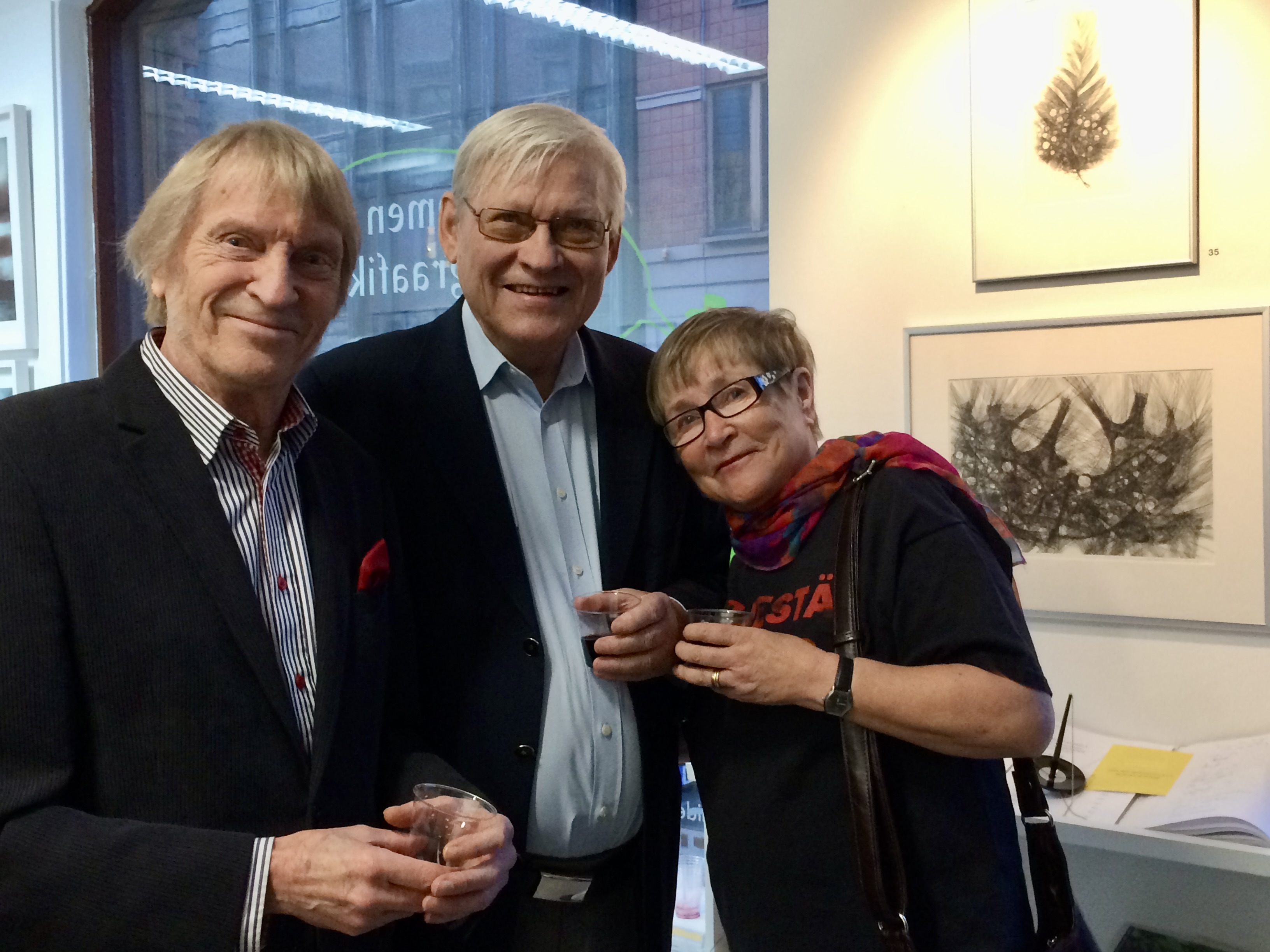
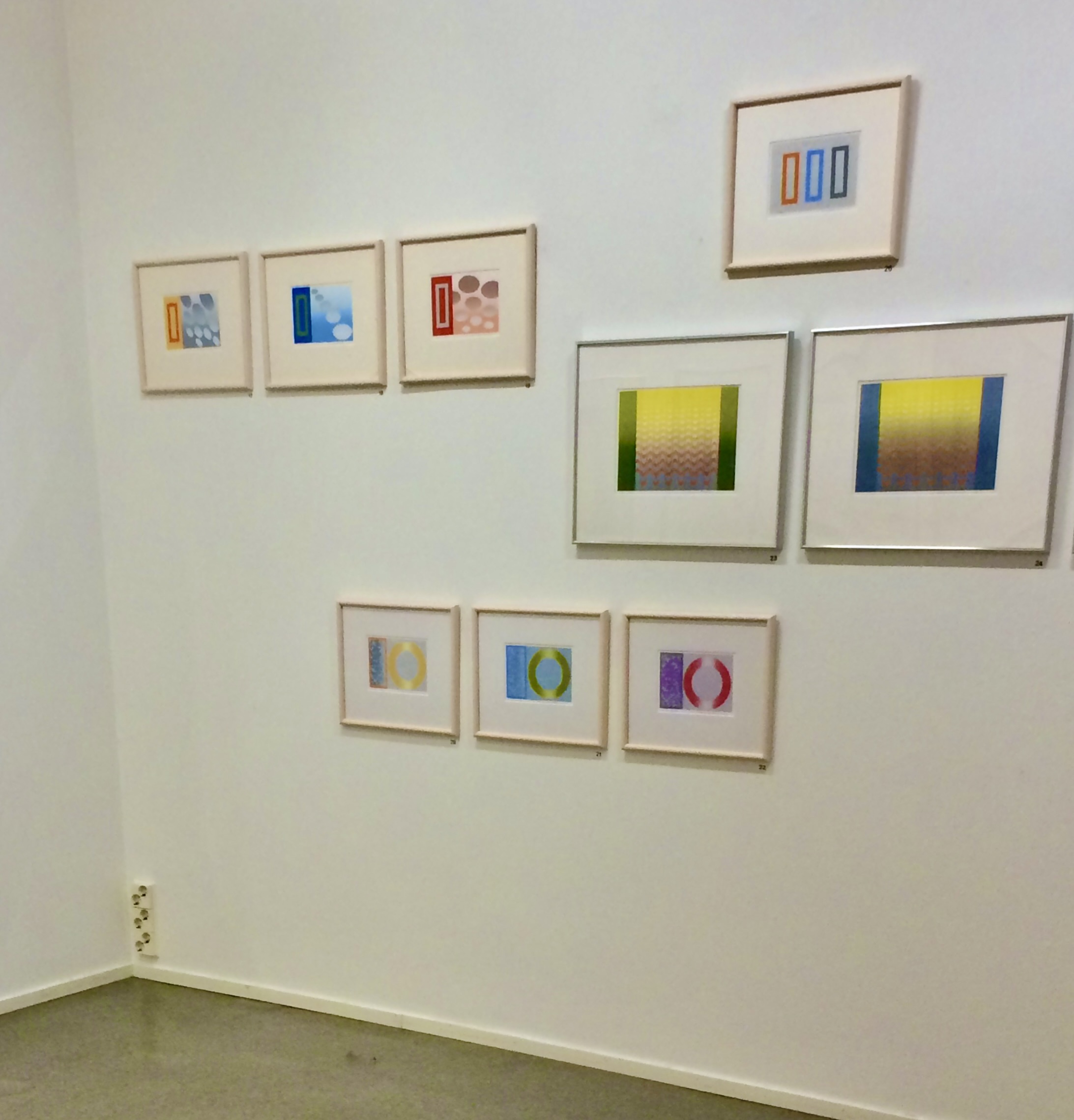
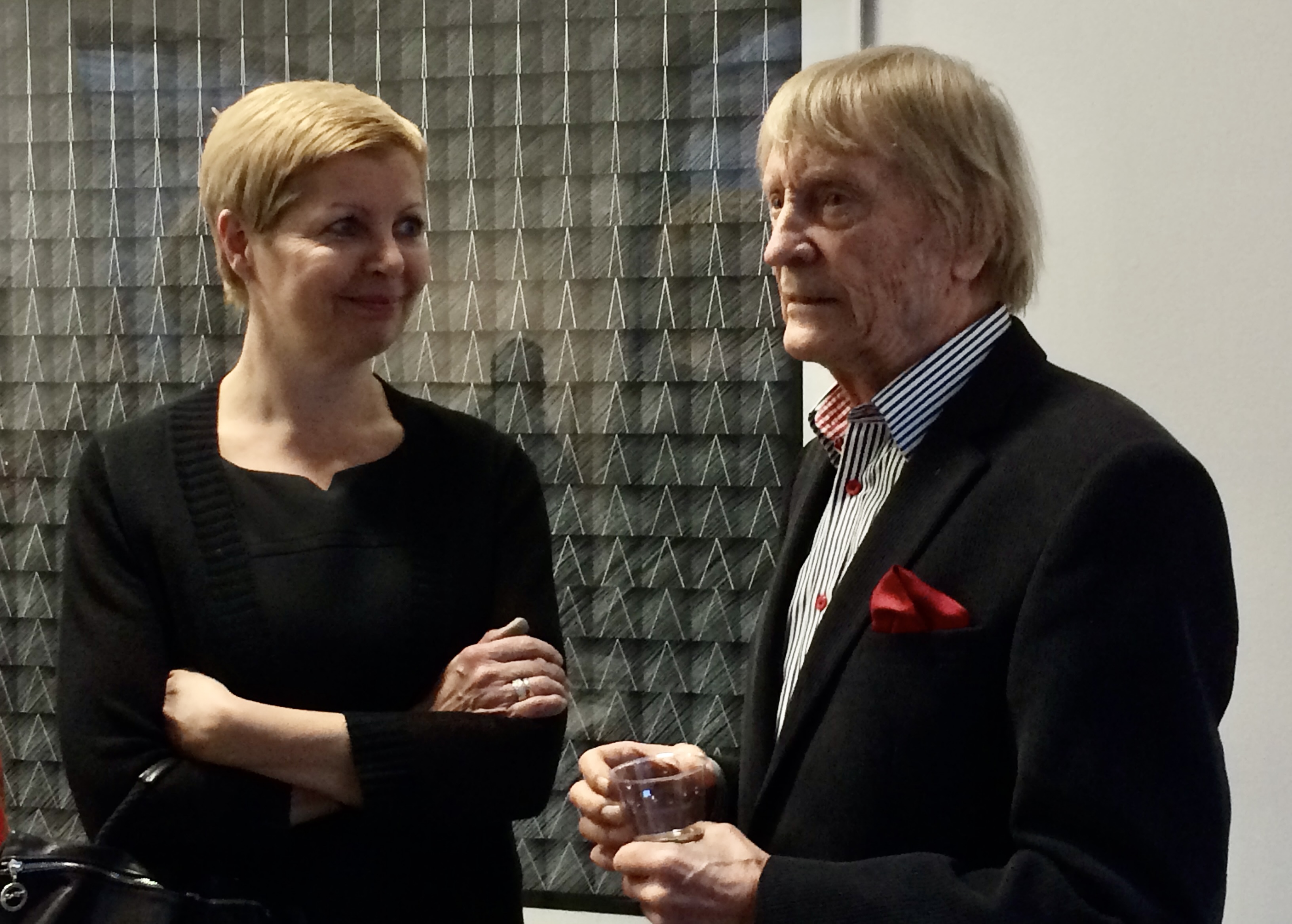
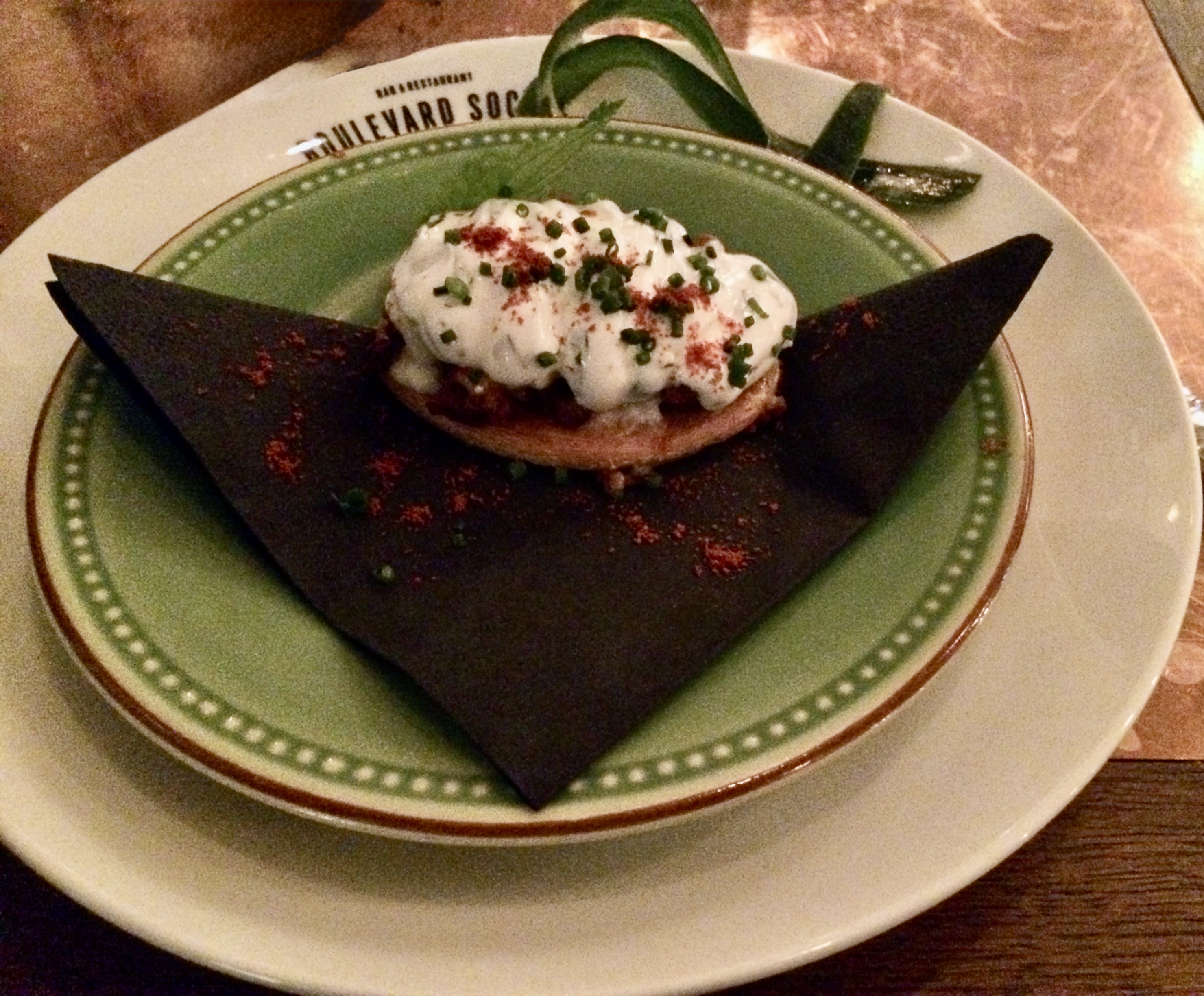
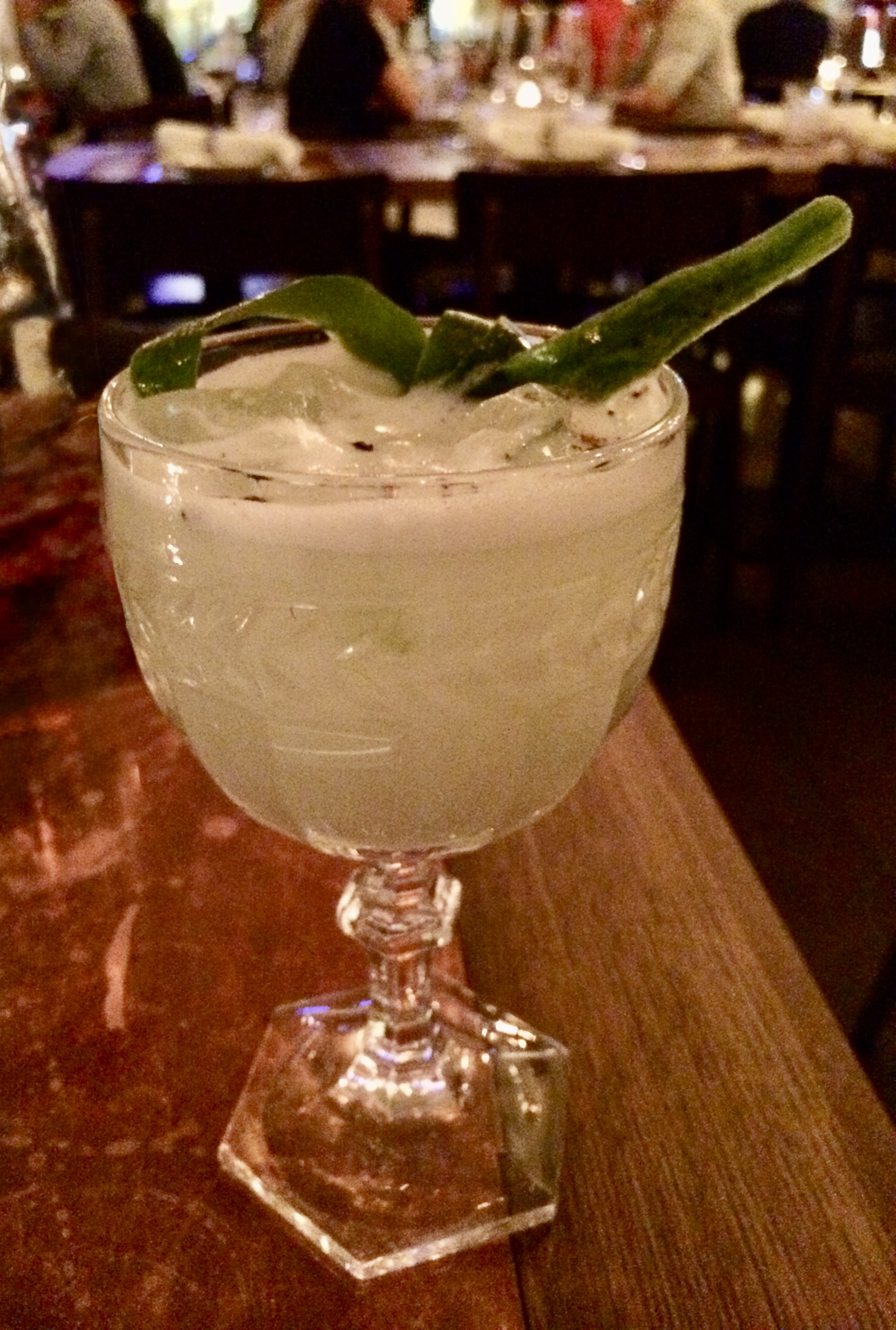
From there, I headed to meet up with Anne and Tapani at an art gallery where there was to be a retrospective of an artist – Matti Koskela – who is now 80 year old – who I met when I lived in Helsinki. Matti was shocked to see me after all these years and immediately proclaimed that the event was international and that I had come for the event. Following the reception, I had dinner at Boulevard Social… the sister restaurant to Ganjin where I had eaten the night before… this one was a Mediterranean theme, and I began with a tsatziki martini! The meal was great and afterwards I walked back to the hotel again..
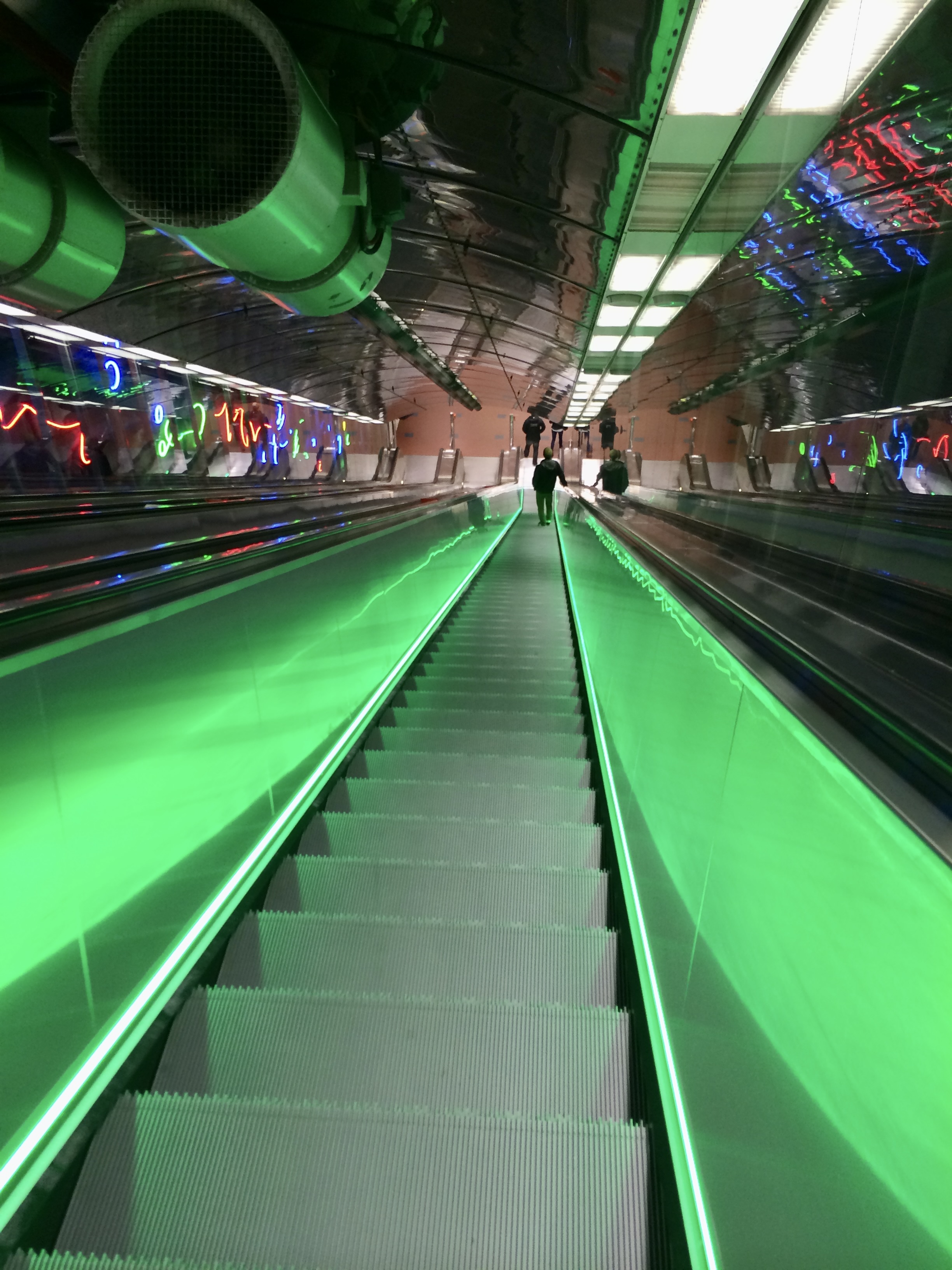
Today, (not having any plans until afternoon) I did some work and then walked to some other neighborhoods.. but the weather was so bad you couldn’t take any photos and it felt like it would rain any minute… Then I heard that there was a big special annual Marimekko sale at their outlet store in Hertiniemi (about 10 miles from the center)… so given the weather and the few free hours, I decided to head out there. Took the tram and then walked about a half mile to a warehouse type space.. a building amid lots of industrial buildings — but recognizable with all the bright red Marimekko branding, including big picnic umbrellas (naturally with Marimekko patterns). OK.. I entered.. it was a mad house by Finnish standards, but definitely polite and low key by American/NY standards. There were a lot of good things available at great prices, things like winter coats (which I would have loved to have purchased) but when I thought about lugging these things on the plane I opted for a few very small, light items. Headed back to catch up with Antii and Heidi again — this time at their flat.
After some afternoon champagne and discussions about the Finnish economy (which is apparently not in great shape) and public education (they only have public schools, no private schools) and Obamacare (which is of great interest to Heidi who was a member of the Finnish General Assembly on Health) and why Americans don’t want to support Obamacare, and other miscellaneous topics.. I got to see their two adorable grandchildren – 2-1/2 year old twins who are totally infatuated with Angry Birds… Unknown to me, Angry Birds is a Finnish company. So there are Angry bird stuffed animals and Angry Bird candy and Angry Bird parks… Learn something every day.
From their flat, I walked downtown (in the rain) where I met Anne and Tapani for the final dinner. More political conversation about US, Russia, Finland. We ate at Kosmo, a nearly-century-old restaurant that was once a favorite of artists and writers and lefties. On May Day, all Finns eat out. When we lived in Helsinki we went to Kosmo for dinner with friends on May Day.. Everyone was Finnish in the restaurant except us.. and our table was speaking English.. And, given that this was during the Vietnam War, some young guy came up to us over lunch and asked “Why are you killing little yellow people?” He was a bit drunk, and although a Finn, his English was perfect American English. We responded that we were not killing anyone; we were having dinner.
OK.. so it’s an old restaurant with lots of tradition, but the menu has been updated and prices match all the other high end restaurants.
I walked back to the hotel.. It’s now nearly midnight. I’m packing and heading back.
Tomorrow morning, just before I head to the airport, I’m meeting with a Finn who has written a book about urban branding… He’s on the faculty of one of the newer colleges. We meet at a café at the railroad station, and then I will check out of the hotel and catch a taksi to the airport..
See you stateside.
Terve Terve
Fern
Final Days in Bucharest, Romania. April 17-18, 2005
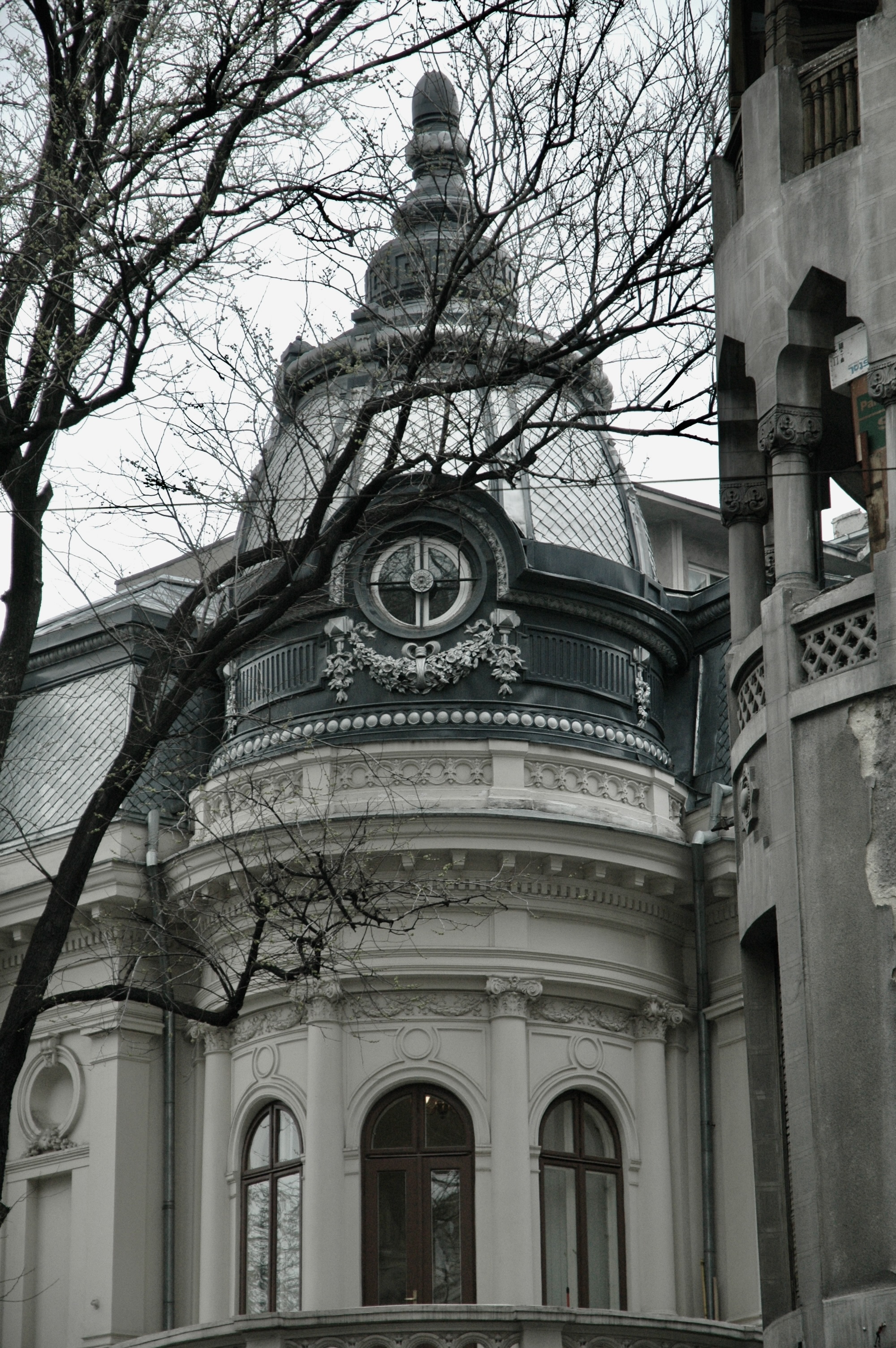
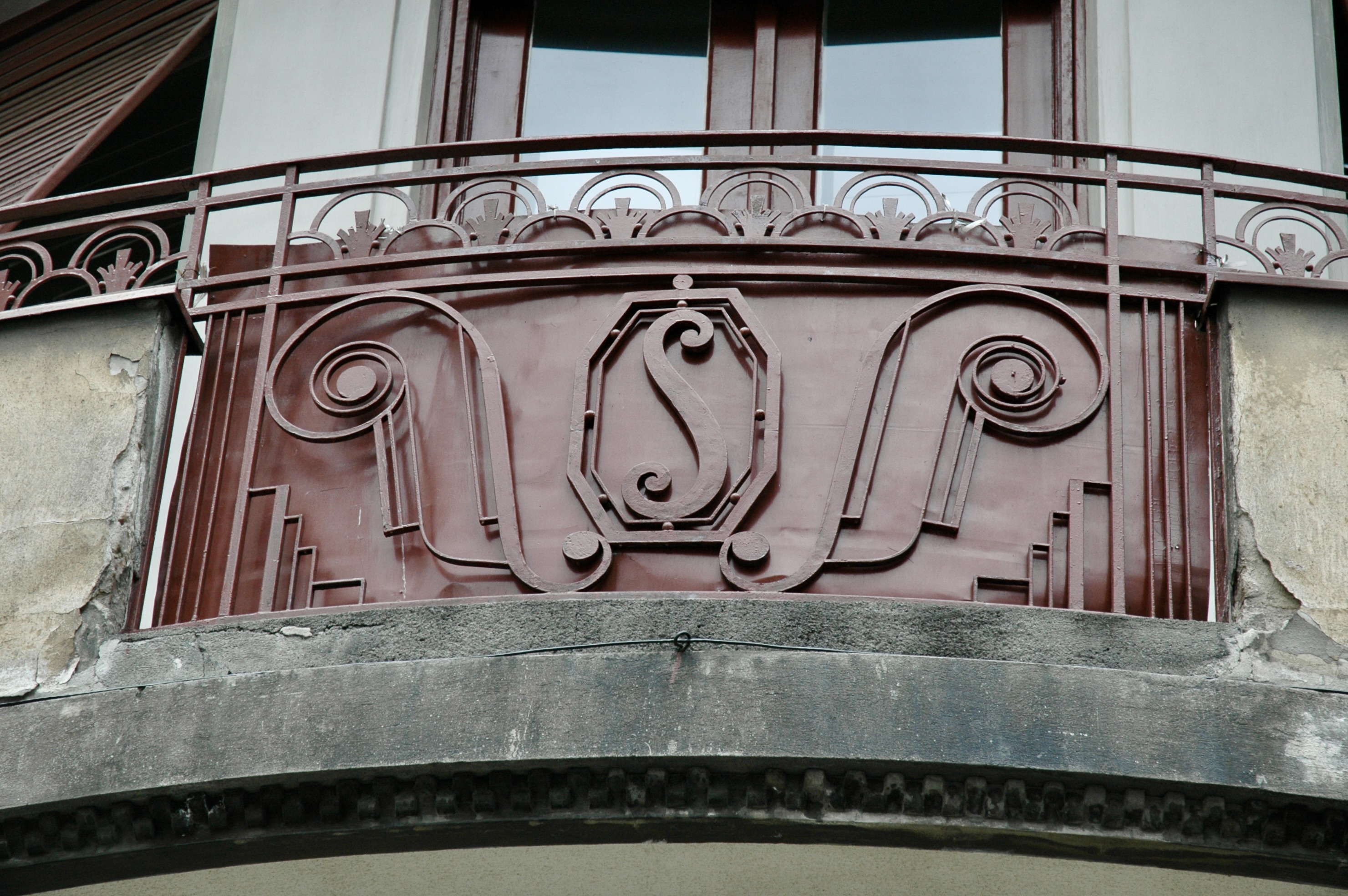
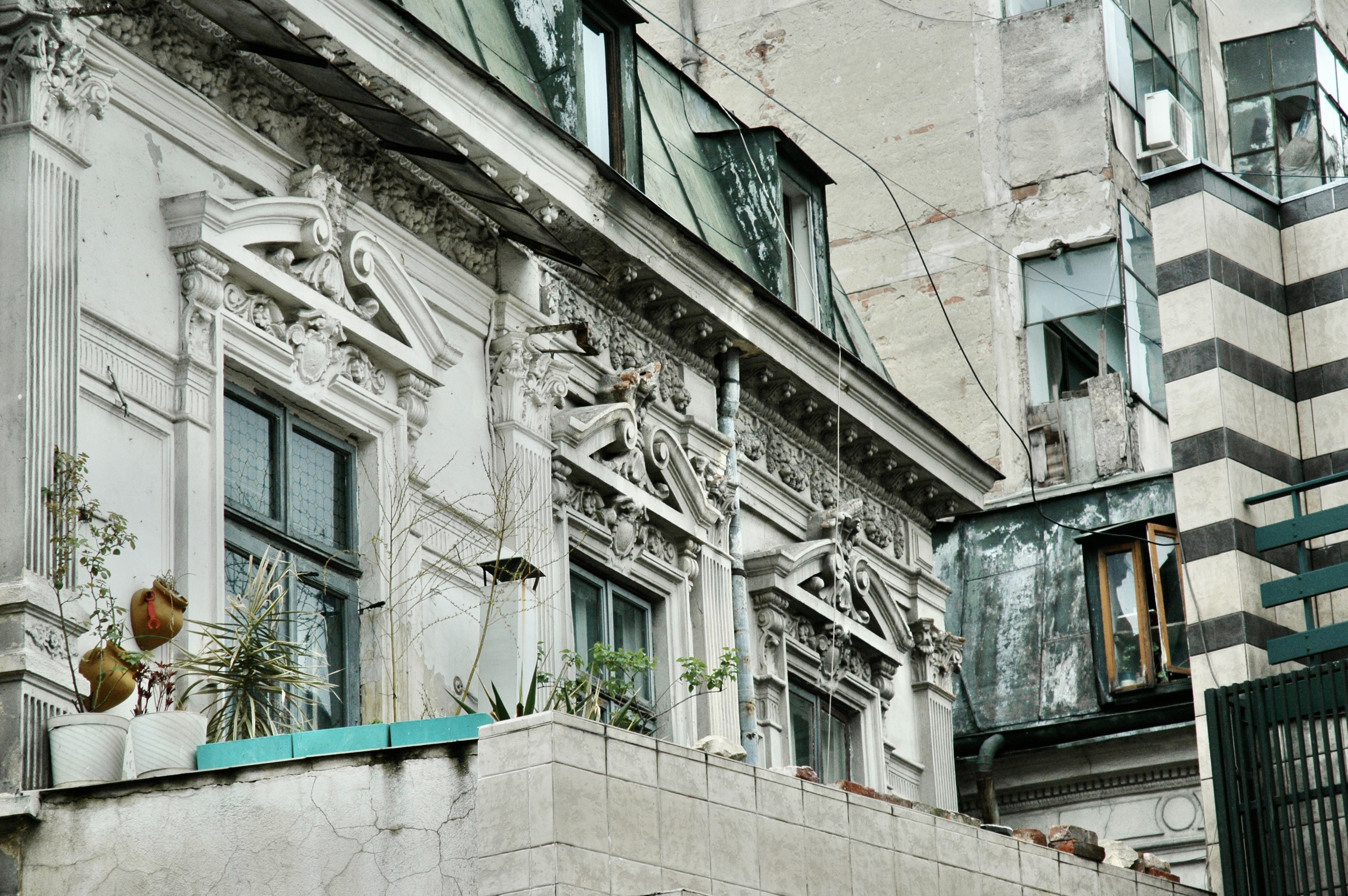
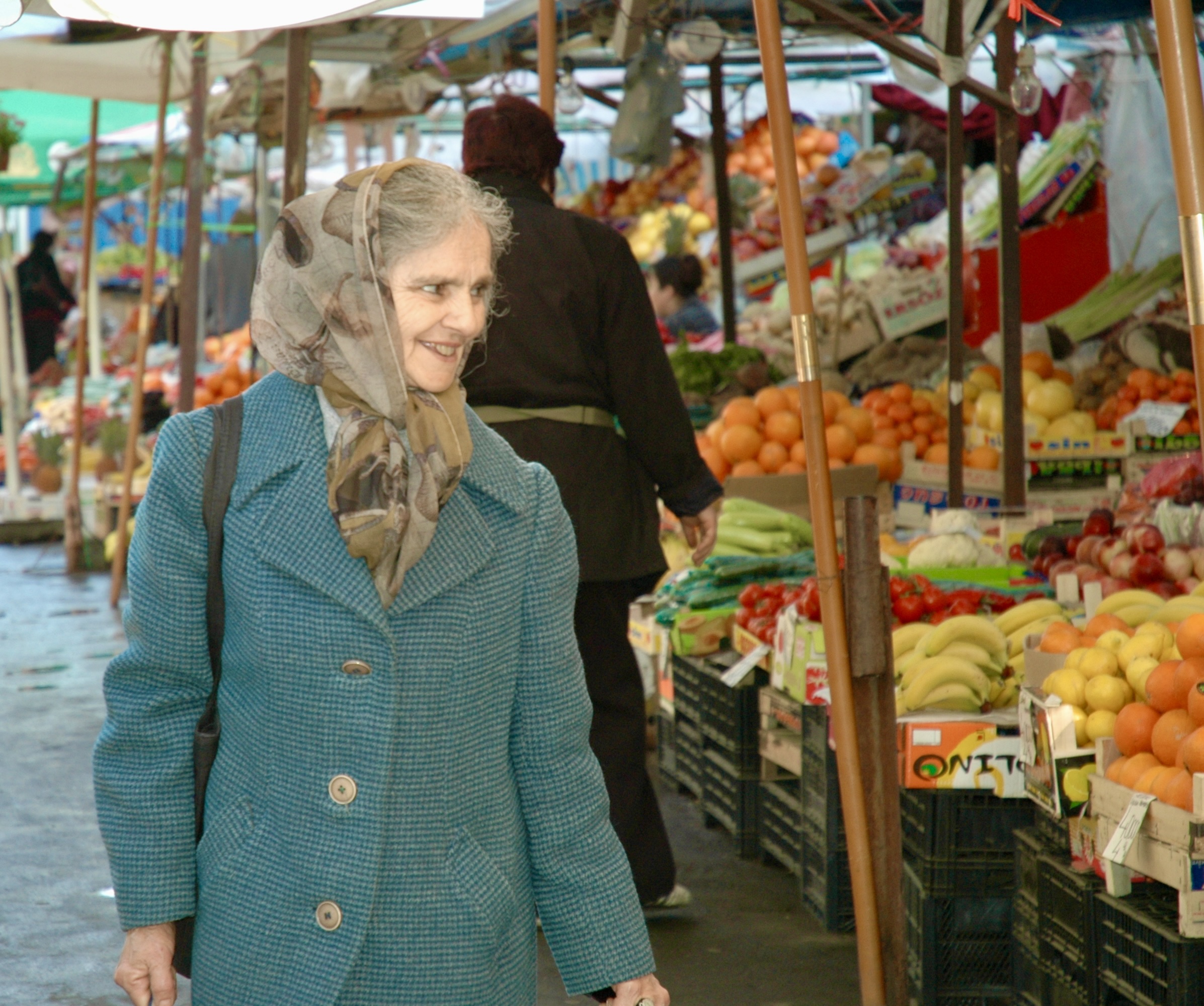
We spent the final days in Bucharest walking around, taking trams, ducking out of the rain, and visiting with some of the friends of friends. We stumbled on a soon-to-be-renovated upscale, hip coffee shop where the proprietor spoke Italian. Apparently there is now a lot of Italian money coming into Bucharest, thinking it will become a new tourist destination. While the cafe wasn’t yet open and there were ladders everywhere, they served us and it looks like the emerging cafe scene will be interesting to watch. It’s important to remember that this was 2005 just about 15 years after the revolution and overthrow (and execution) of Ceaucescu so a new country was emerging, but the physical plant would take years to restore or remake.
The city of Bucharest, was still haunted by the legacy of the country’s dictator. Roumania has a complex history, a multi-ethnic population, and a rich cultural heritage. Bucharest was gritty (and maybe it still is) and was filled with dreary apartment buildings which overtake some impressive 19th century architecture, when it was called the “Little Paris of the East,” but there’s also a lot of charm. I remember that my grandfather (who arrived in the states around 1912) talked about the beautiful city. But Ceacescu demolished many of those buildings and replaced them with Soviet-style residential areas (long blocks of apartments) as well as the Palace of the Parliament (we only saw it from the outside). While we were told that the “old town” was dangerous, we walked there anyway (without any incidents) and you could see that the bones of this neighborhood had potential. I’m told that it is now a lively nighttime area with restaurants and clubs. The Old Town was deserted and dilapidated during our visit.
I have read that after a visit to North Korea in the 1980s, Ceaușescu tore down 80 percent of the historical center including houses, schools, churches—to create wide boulevards, stone-facade housing blocks, and fountains– like what he had seen in North Korea.
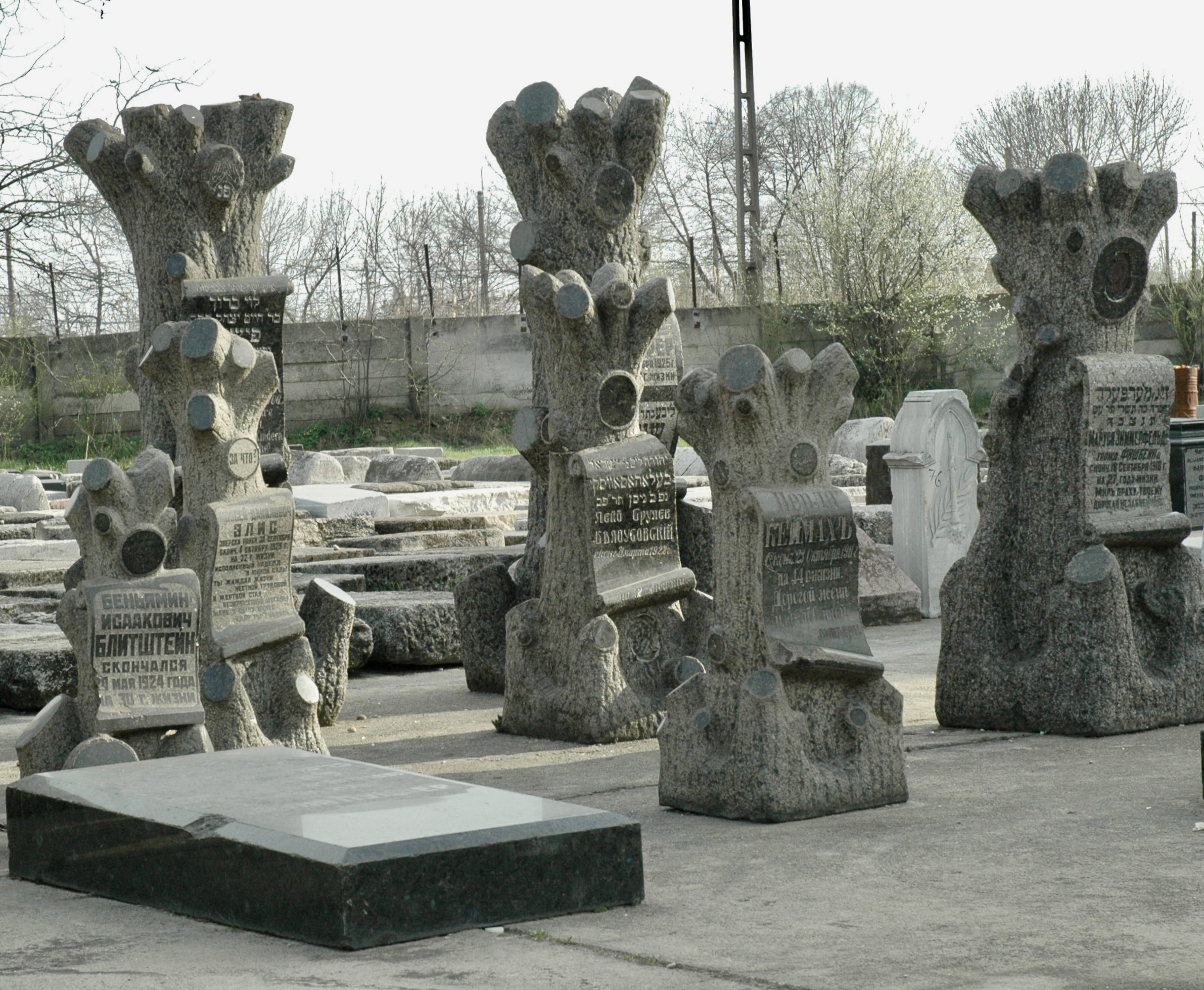
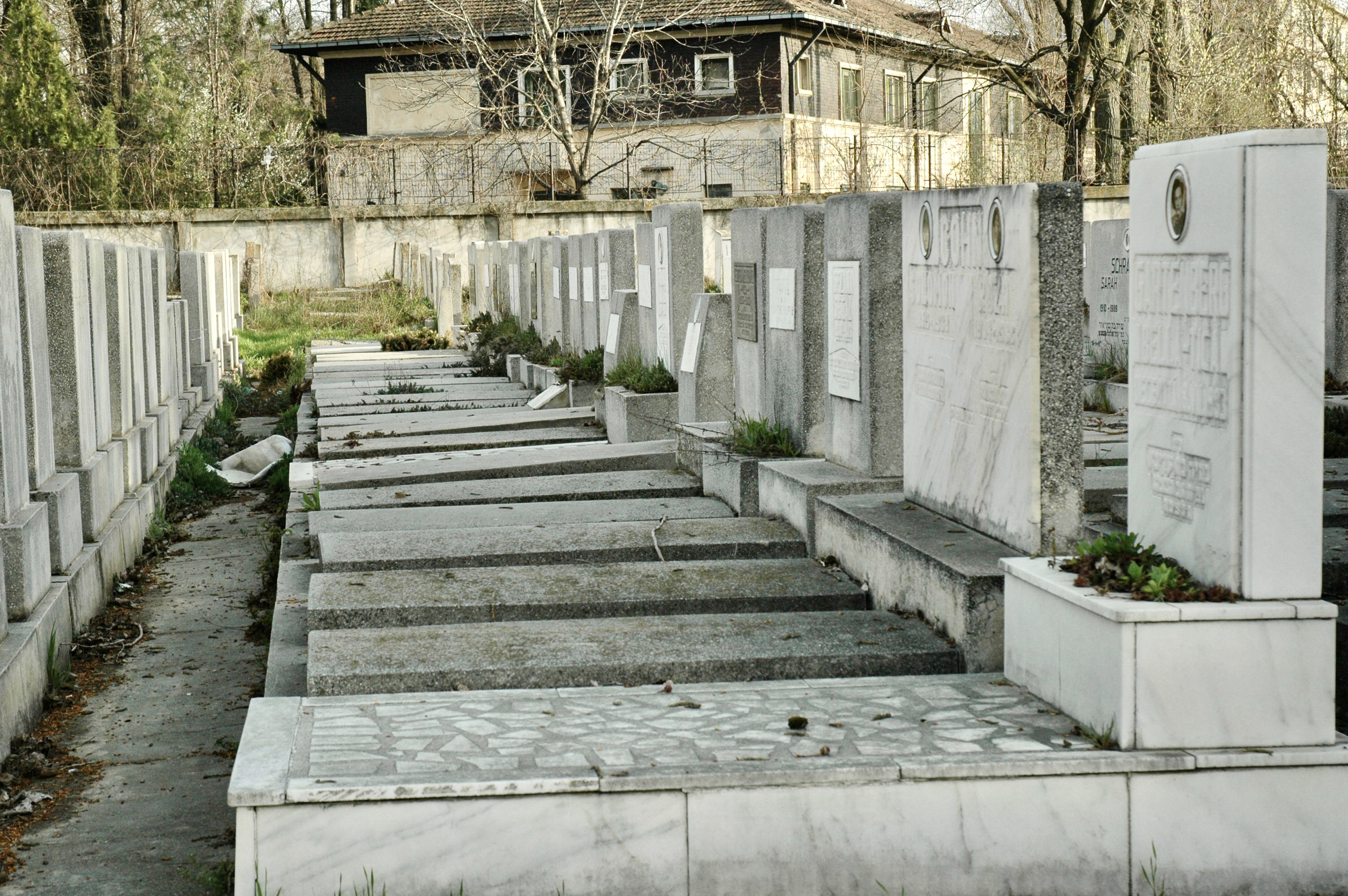
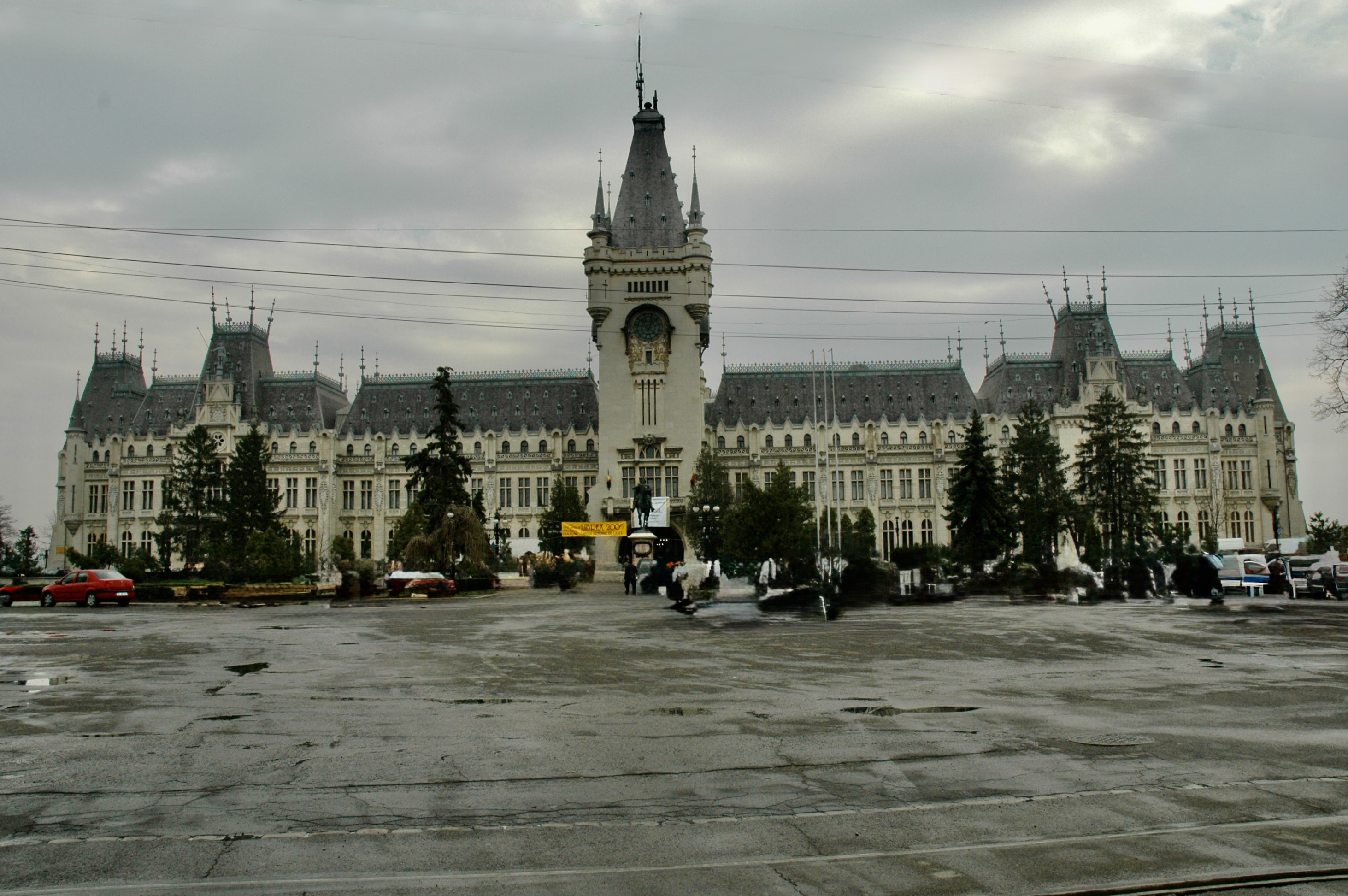
While I’m sure there were some fine museums, we chose to spend our time walking the streets. I guess Ceaușescu feels like ancient history, today, and its entry into the EU probably makes it feel more European than when I was there.
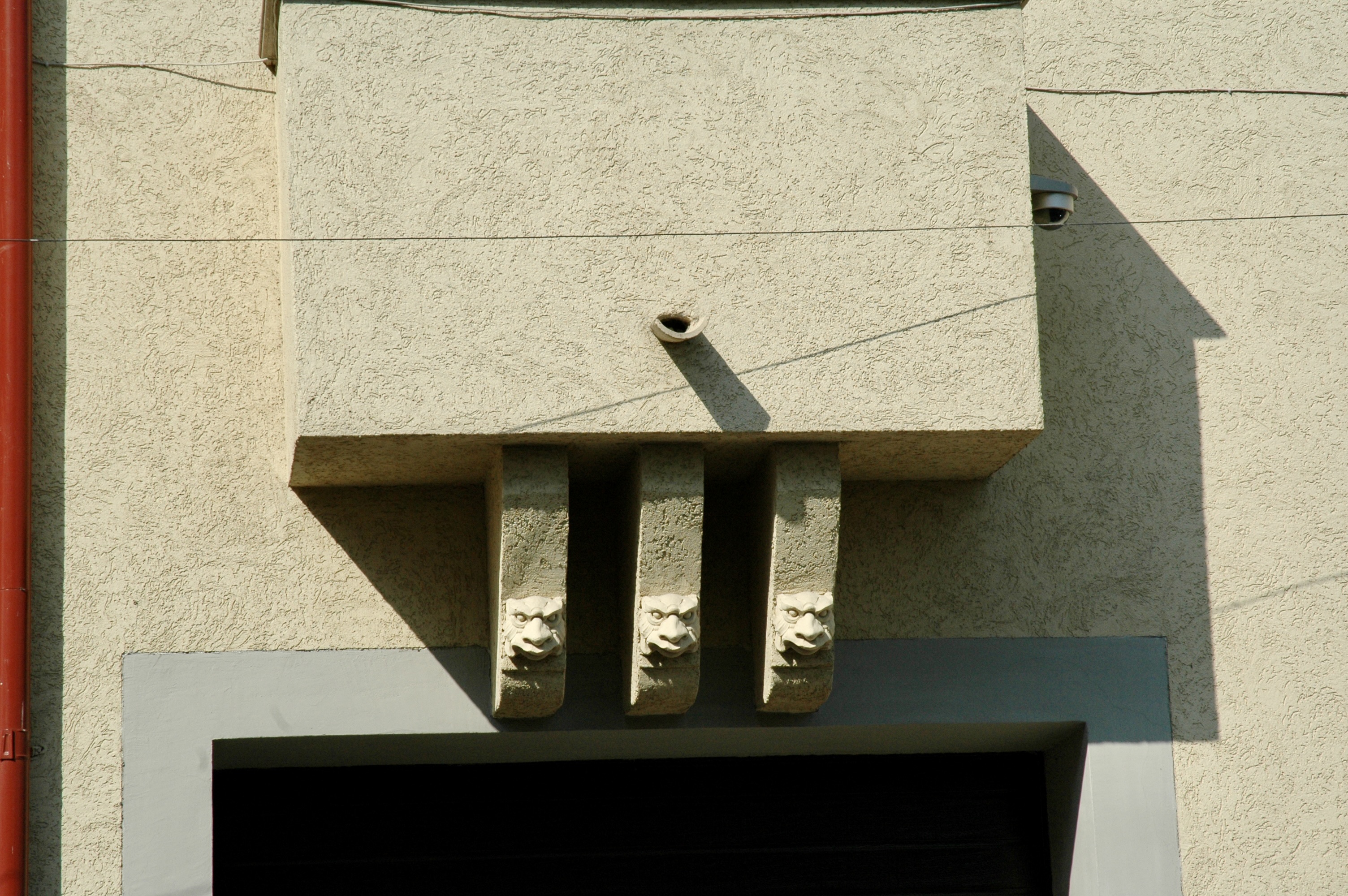
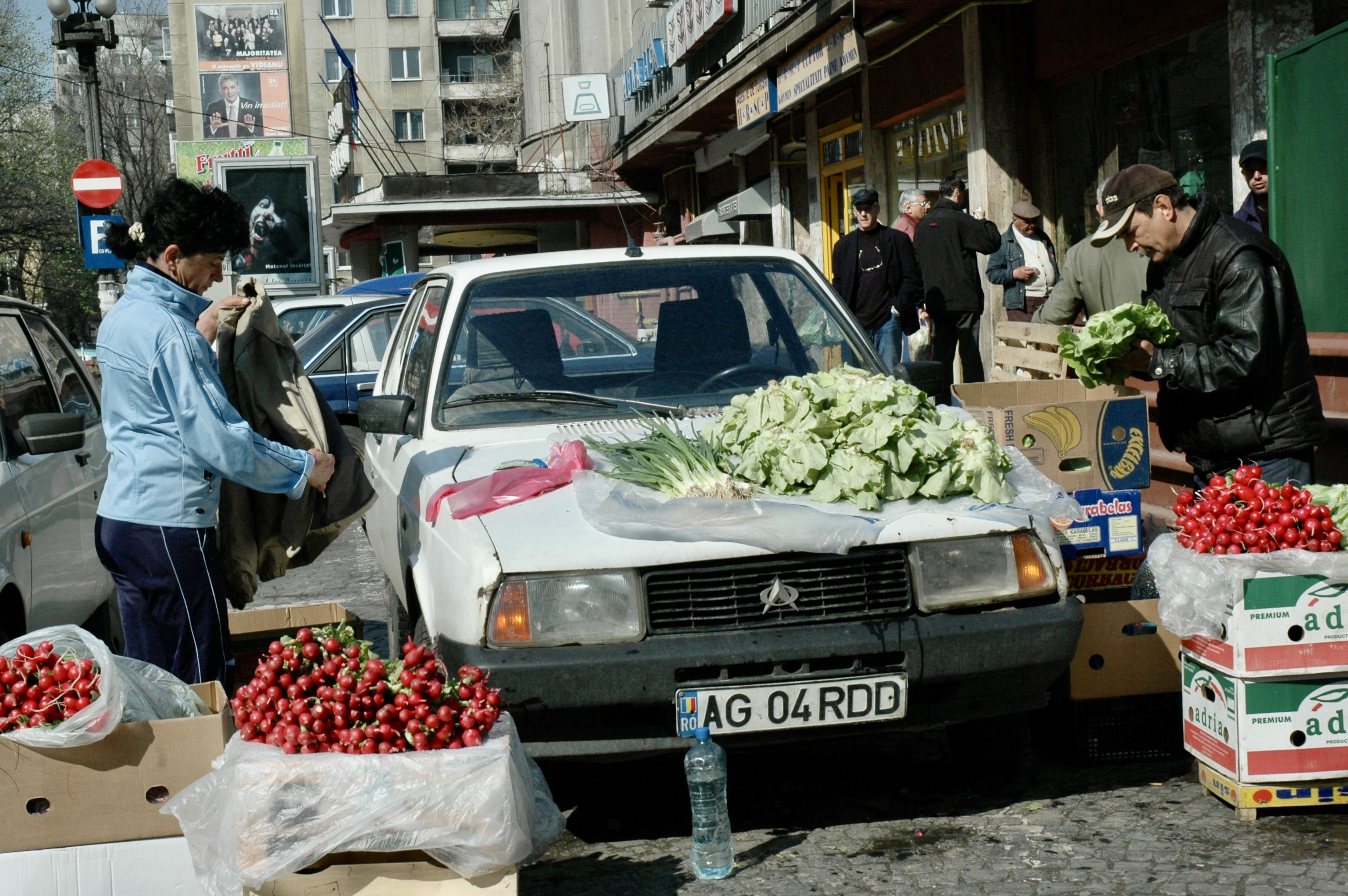
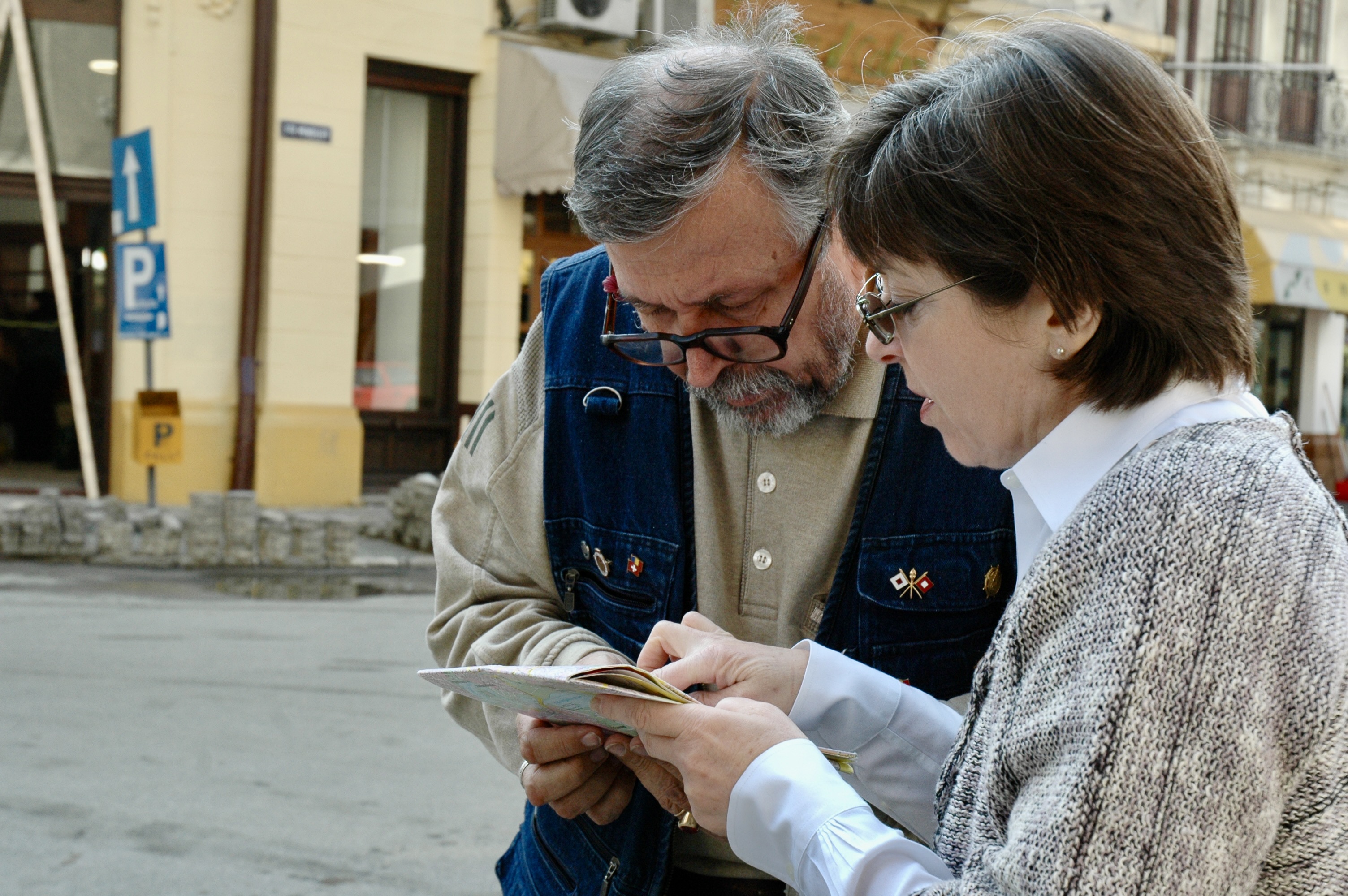
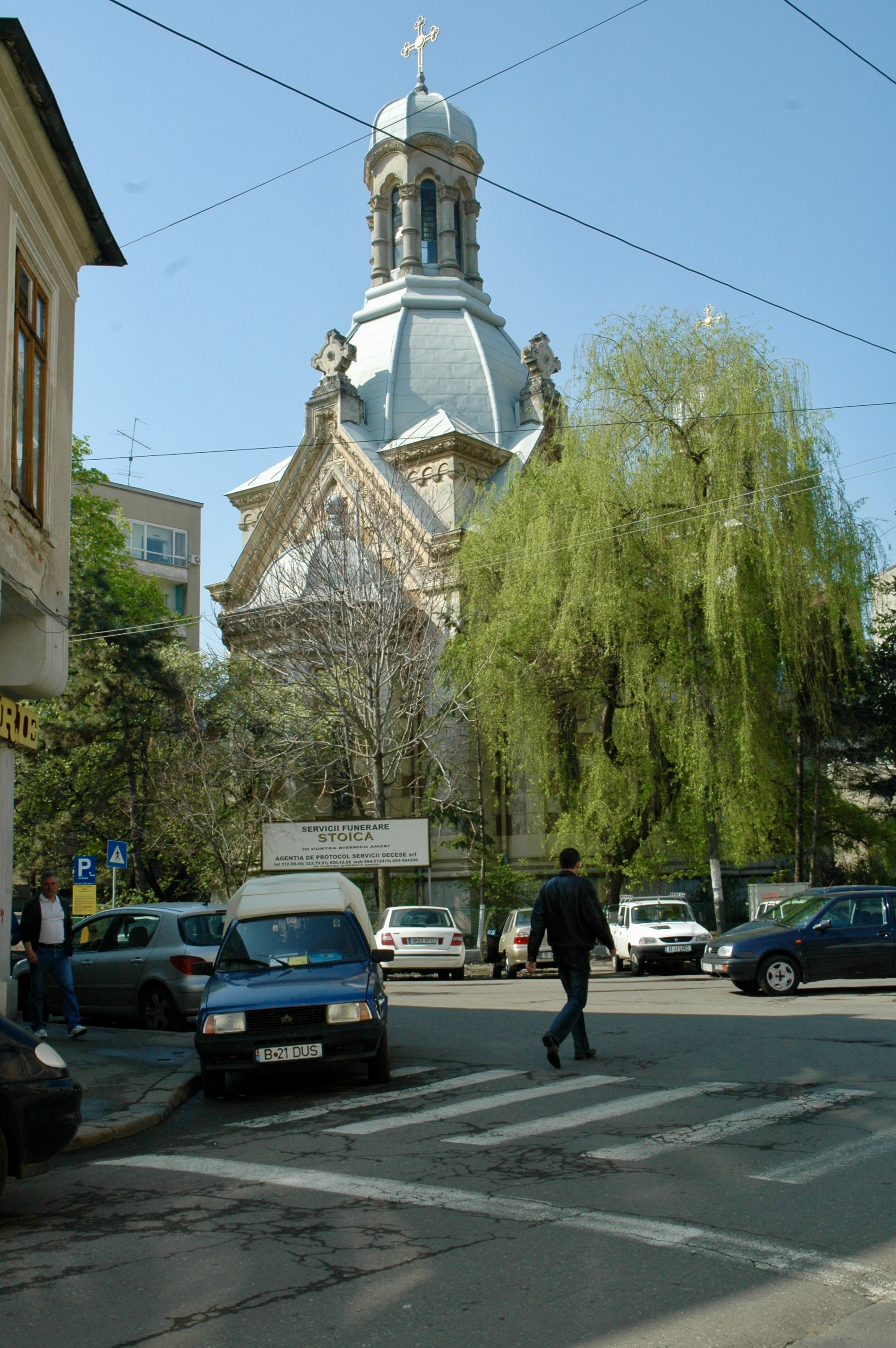
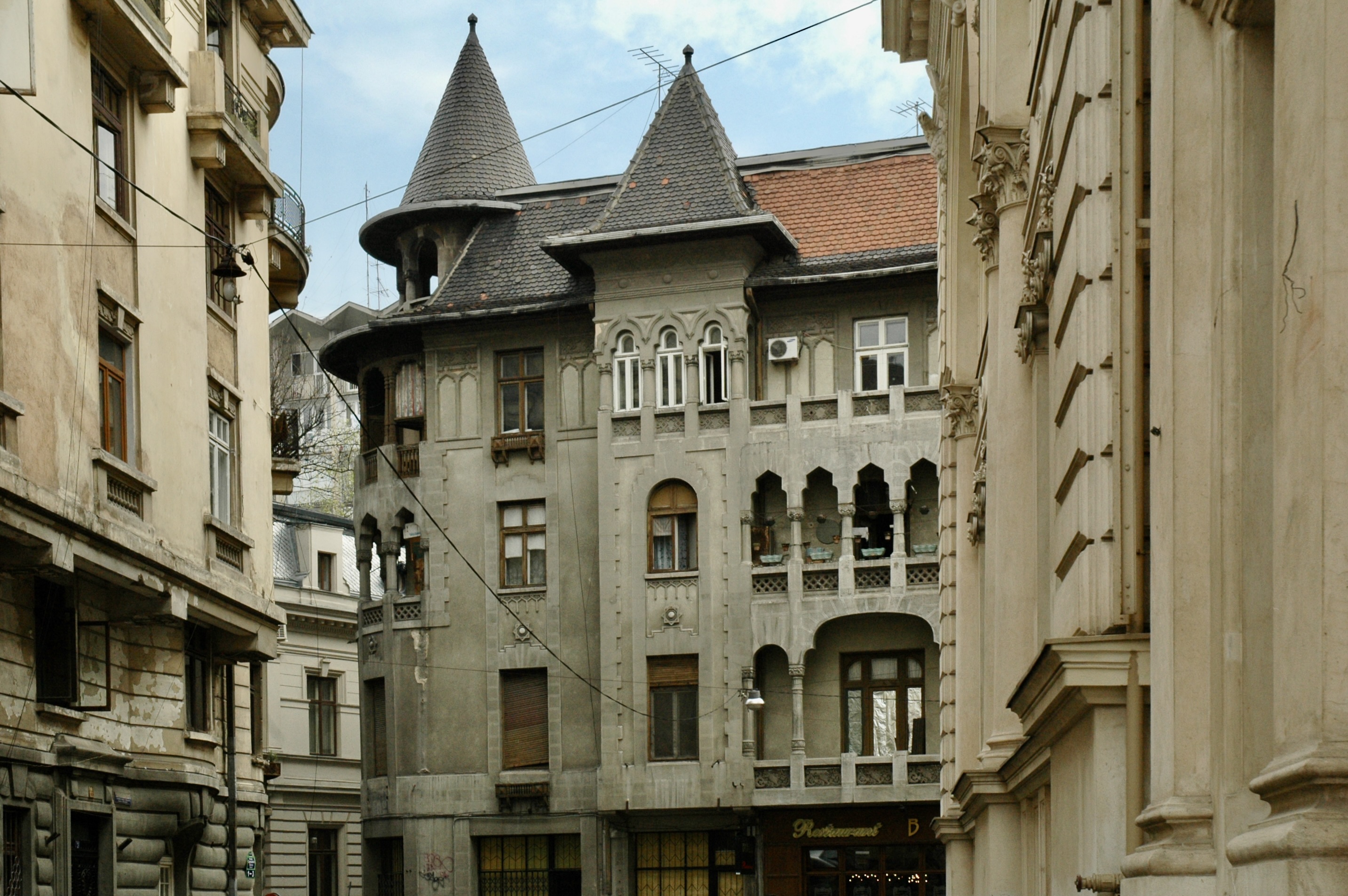
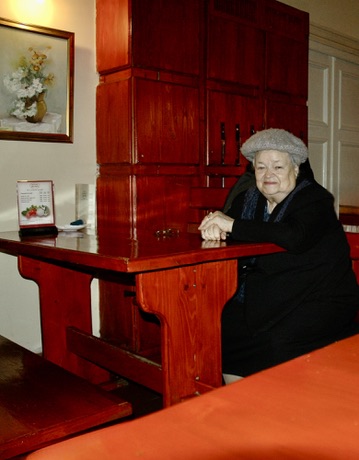
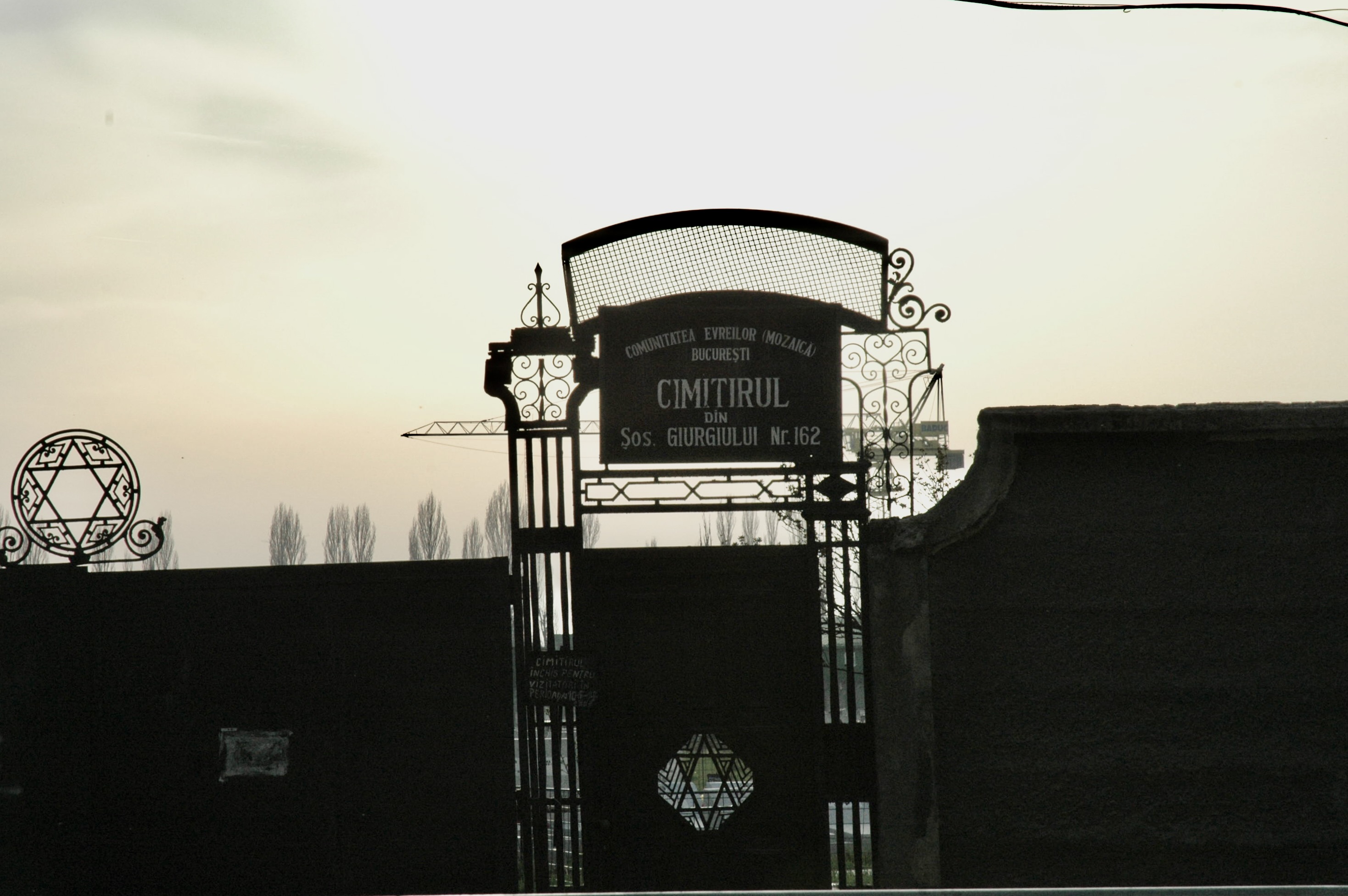
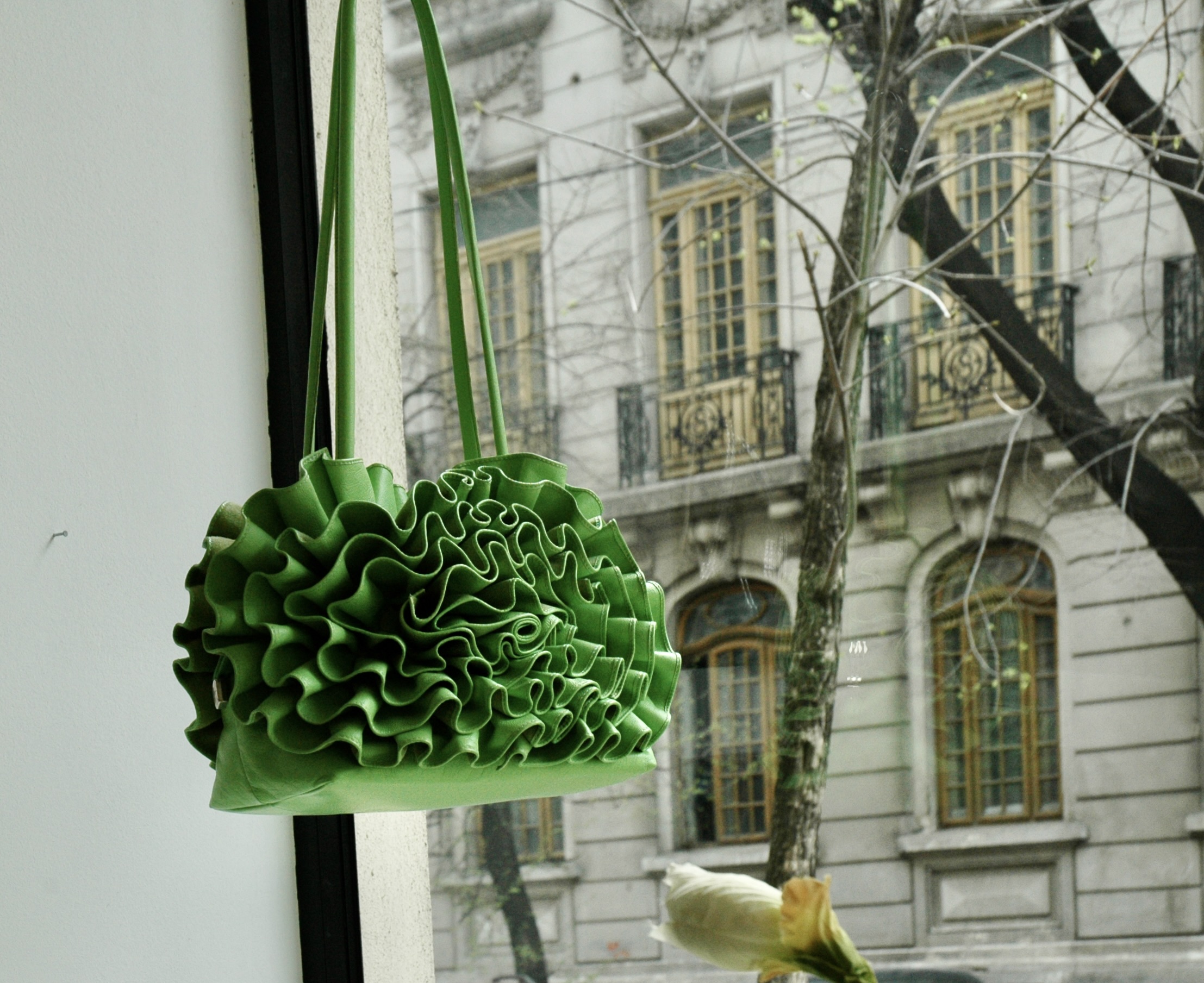
That’s it for Romania. I’m sure I left out a lot… and wish I could find my notes. If I ever do, I will replace the test for these days with the original. But maybe memories are the best way to describe a place anyway. And the response to people who ask if I’d return, the answer is Yes… and I think it is probably a very different place than it was in 2005.
Iasi to Bucharest April 16, 2005
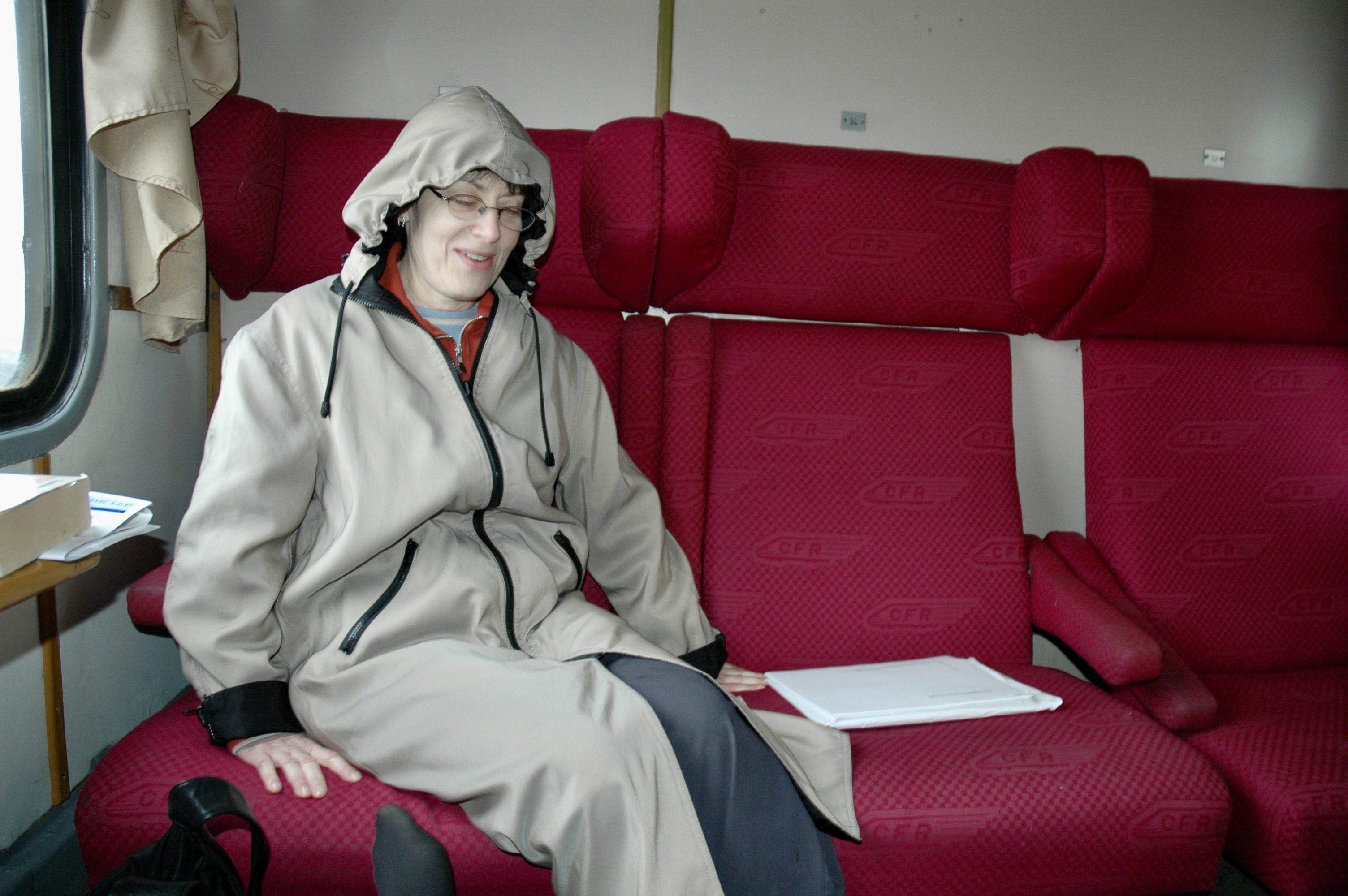
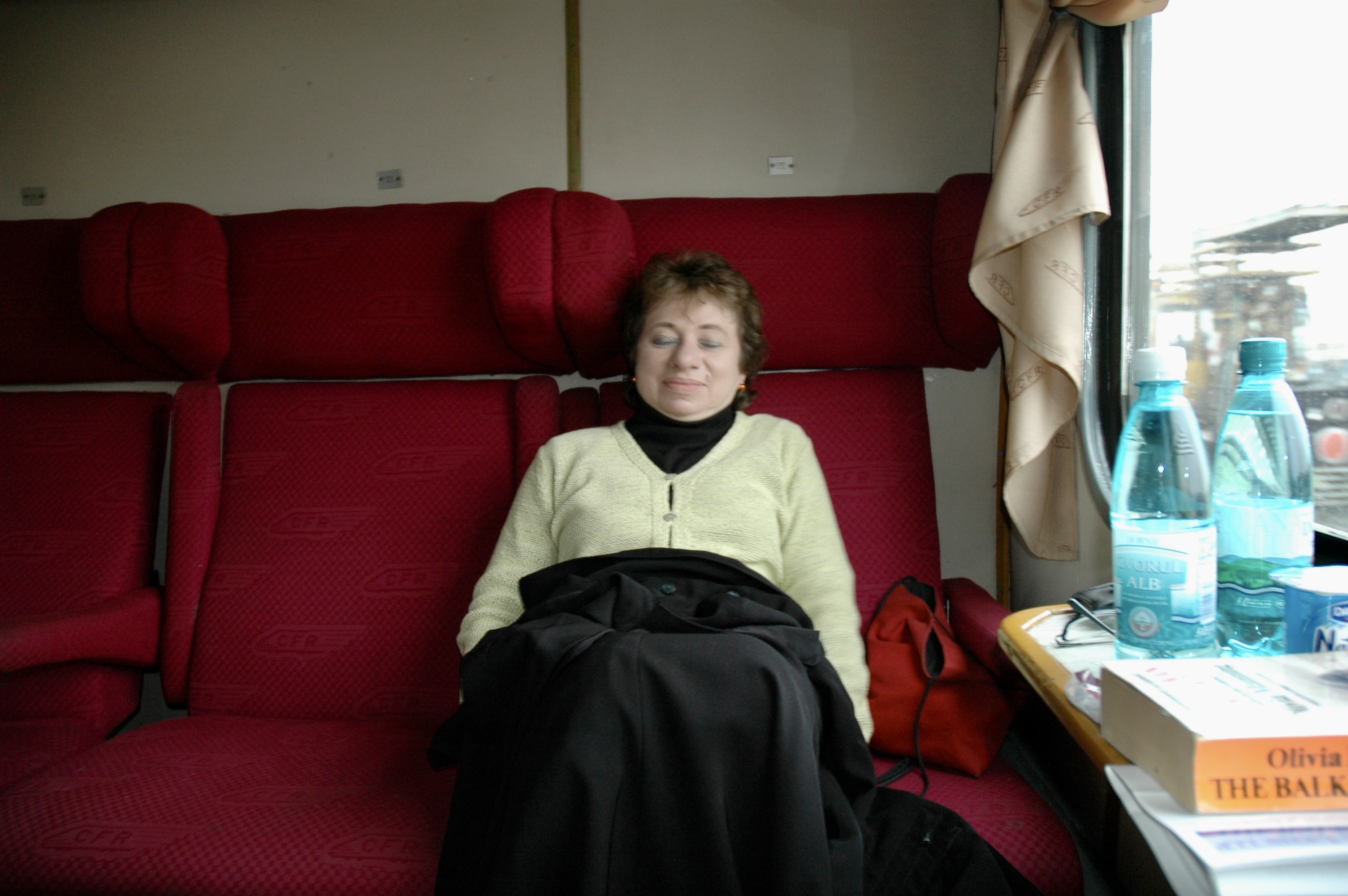
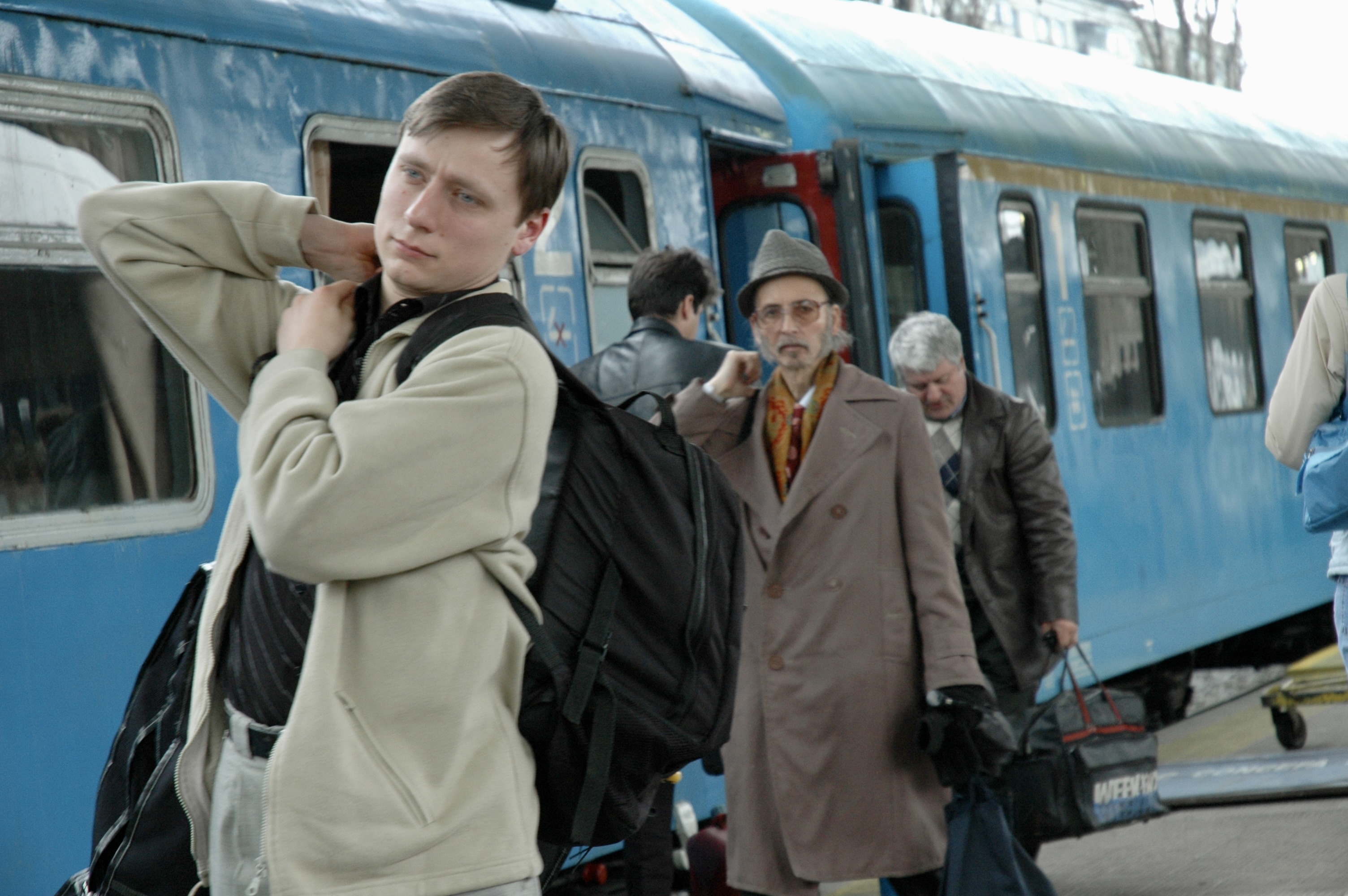
This post is written from memory; the original notes were lost. And I didn’t have the blog set up in those days.
Well, the train from Iasi to Bucharest turned out to be a bit of a comic episode. We decided to go to the train station the night before to get our tickets since it seemed that the train schedule would have us leaving Iasi at 6 am. We figured it would be complicated to get the tickets so getting them the night before made sense. So… before we headed to dinner we went to the train station and the fun began.
We waited on a long line to buy the tickets. Eventually it was our turn, but the person at the counter only spoke Romanian. Several people tried to help us out but their English was quite thin and it was never clear if they understood us or if we totally understood their responses. We knew there were two different trains. One left at 6 am and one left at 6:10 am. The 6 a.m train was the “fast train” and the 6:10 train was the “local”—or so we thought based on what we could see posted on the walls of the station.
So we kept saying “Fast train! Bucharest! 6:00” But it was unlikely that anyone understood. Finally a young woman came to the counter to help us out and she told the person at the booth the tickets we needed. She then showed us where on the ticket we could find the car# and our seat #s. We would be in a little cabin with 4 people, including the two of us. All seemed good, but we were a little skeptical. We then went out for dinner (tickets safely tucked into our wallets).
The next morning we got to the station extra early, in spite of having the tickets, and navigated to the track number written on the tickets. We found the track and the car and I said to Adrienne “I think this is the wrong train.” It was very old and rickety; the cabins were old with less than modern conveniences. “This cannot be the ‘fast’ train!” To which, Adrienne said very clearly: “Here’s the ticket. It says this track. It says this train number and this cabin.” I thought we should go back to the ticket window to find out but Adrienne was convinced that we’d miss the train. From the window of “our” train, I could see a shiny new train on another track. I said we should investigate because that was likely our train. but I didn’t want to argue, so we sat in the cabin. It was about 5:45 a.m. The other two passengers came into our cabin. They didn’t speak English but Adrienne cheerfully said “I guess the train will leave soon, since it’s 5:45 and it leaves at 6 am.” There was no response.
At precisely 6 a.m. that bright, shiny new train sped out of the station and we were just sitting in our aged train. We were definitely on the local train (which would take about two additional hours to get to Bucharest.) And at about 6:10, we left the station on the slow boat to China! or rather the slow train to Bucharest. It was a pretty boring train ride but we did see a lot of countryside… which at this time of year was pretty dry and grey.
We got to Bucharest at about 4 pm or 5 pm and took a taxi to the hotel. We met up with Adrienne’s friend and a young Romanian woman she had befriended and headed to dinner. I don’t remember much about the meal or the restaurant.
More tomorrow,
Día Nueve: el último día– January 1, 2026
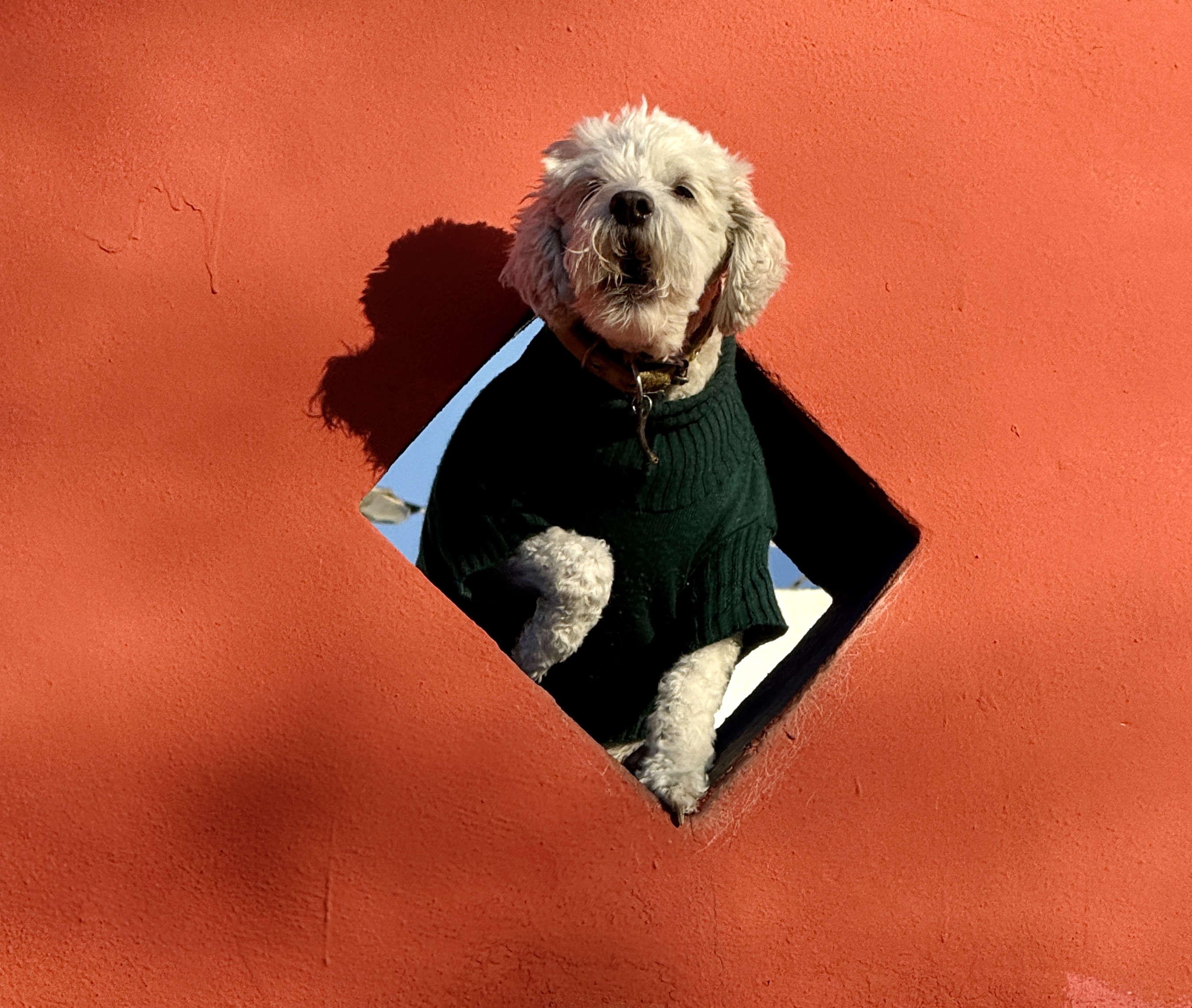
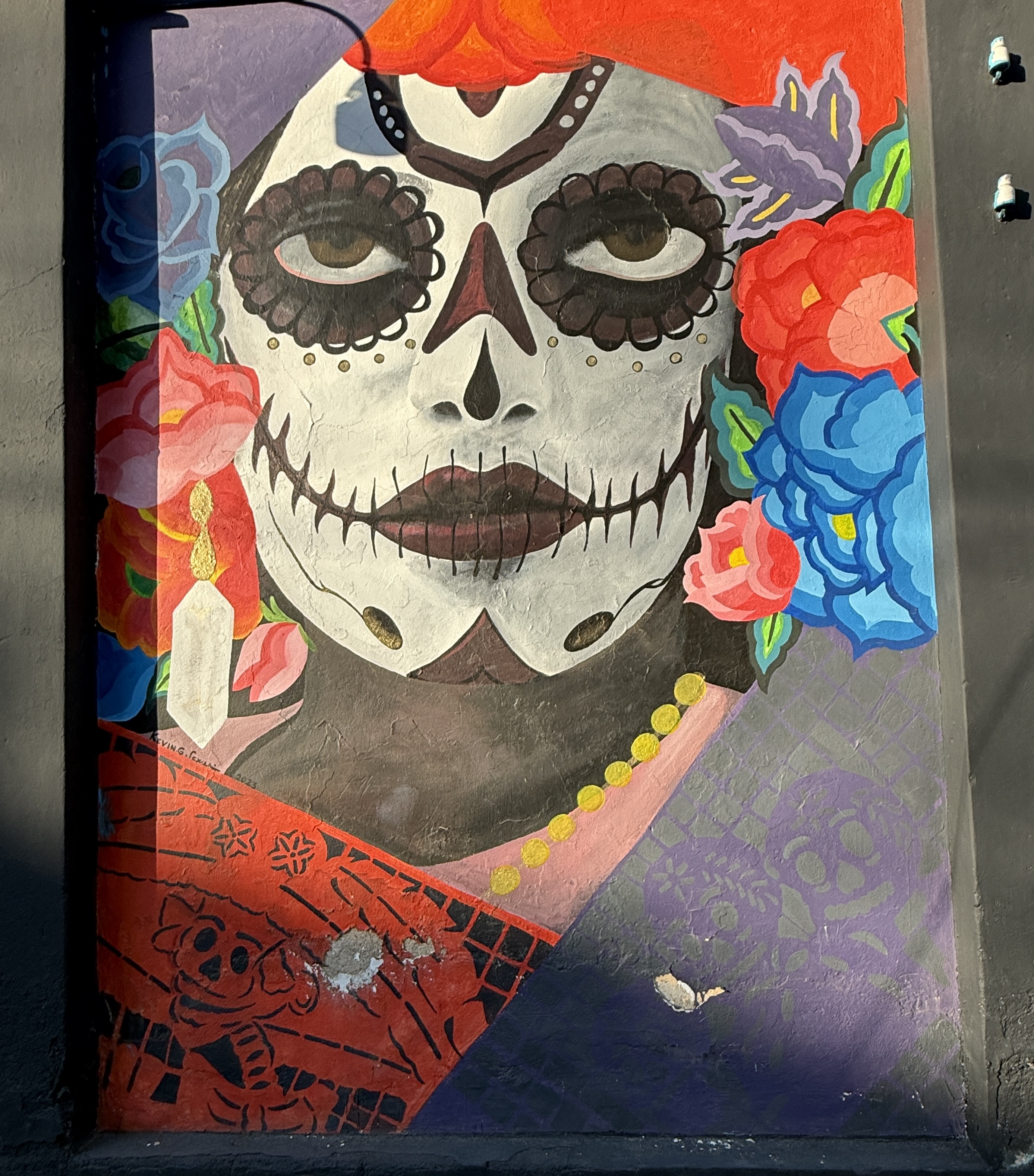
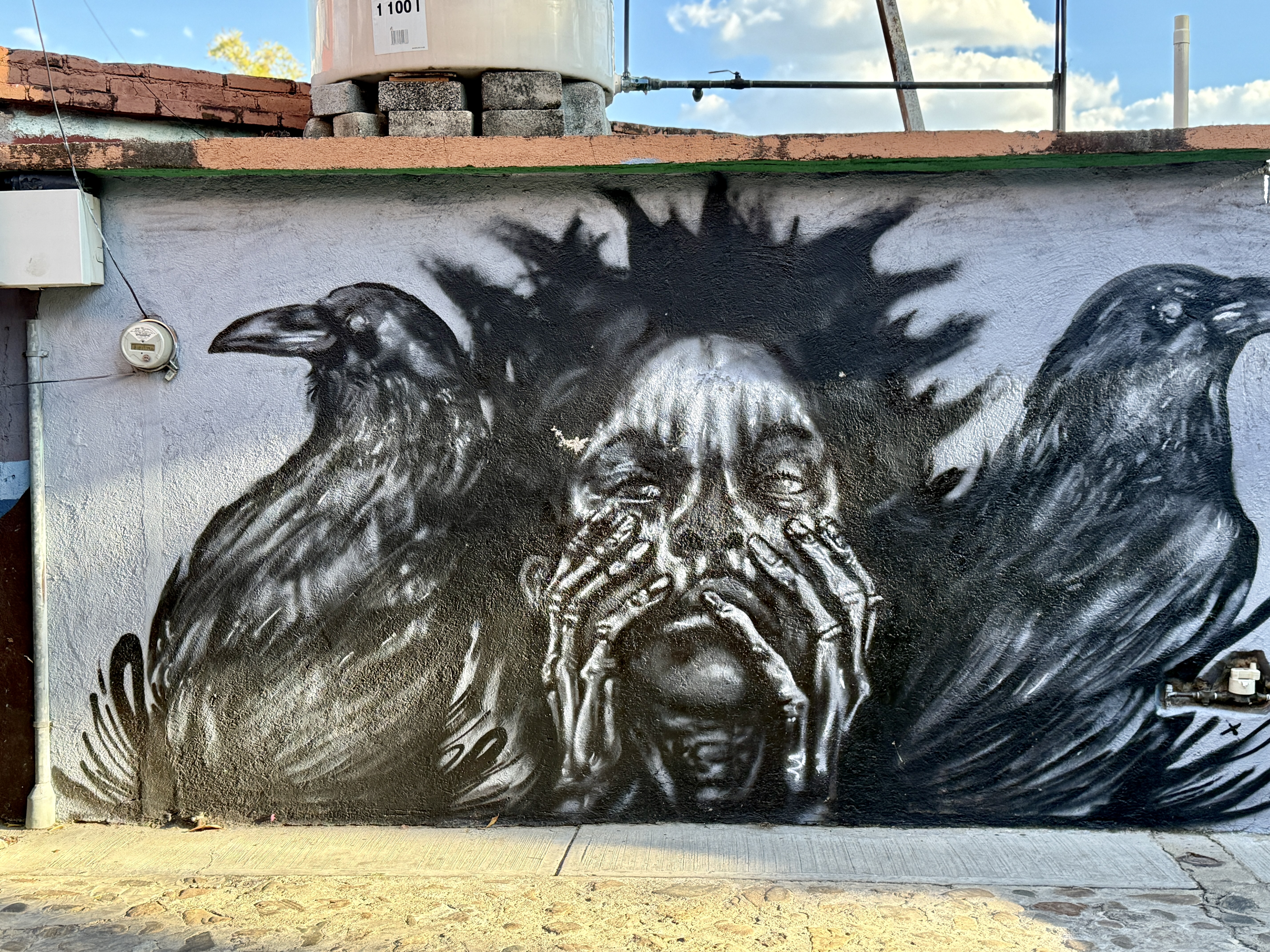
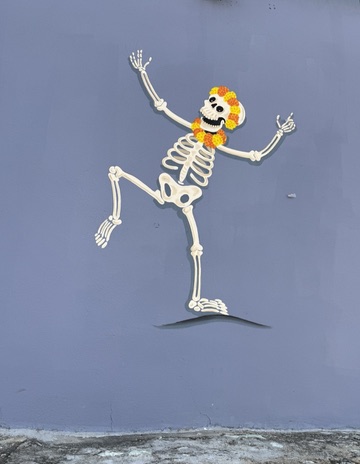
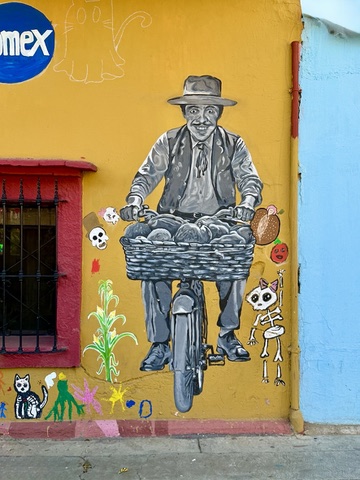
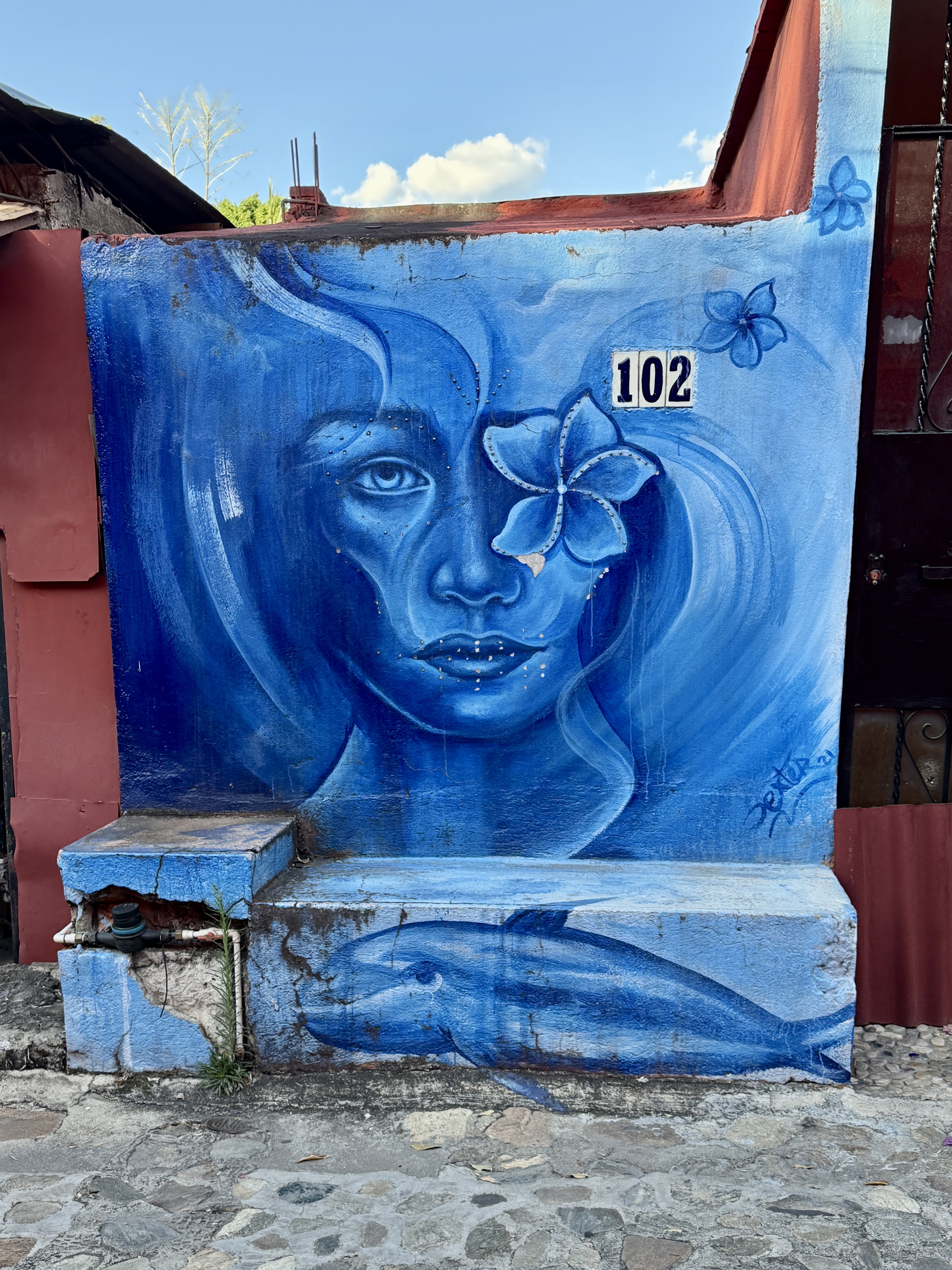
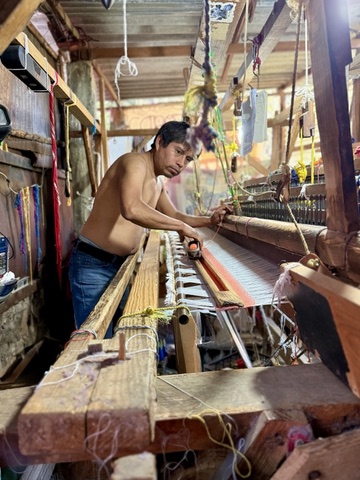
Ok.. so, based on the fact that yesterday sort of never happened–in that we were in bed in the hotel room and missed New Years celebrations and my birthday, I think I can officially say that I did not add a year and am the same age as in 2025. We were able to have a very very light breakfast (pancakes) at the hotel and then figured we were strong enough to venture out for a while. We went to a neighborhood further from the center (taxied there and then walked back)–Xochimilko. Again a wonderful neighborhood with lots of murals and little cafes (but we didn’t dare eat anything. We managed to walk back although at the moment I’m not sure how we did that. We also ventured upon a weaver in his rather cramped studio in Xochimilko.
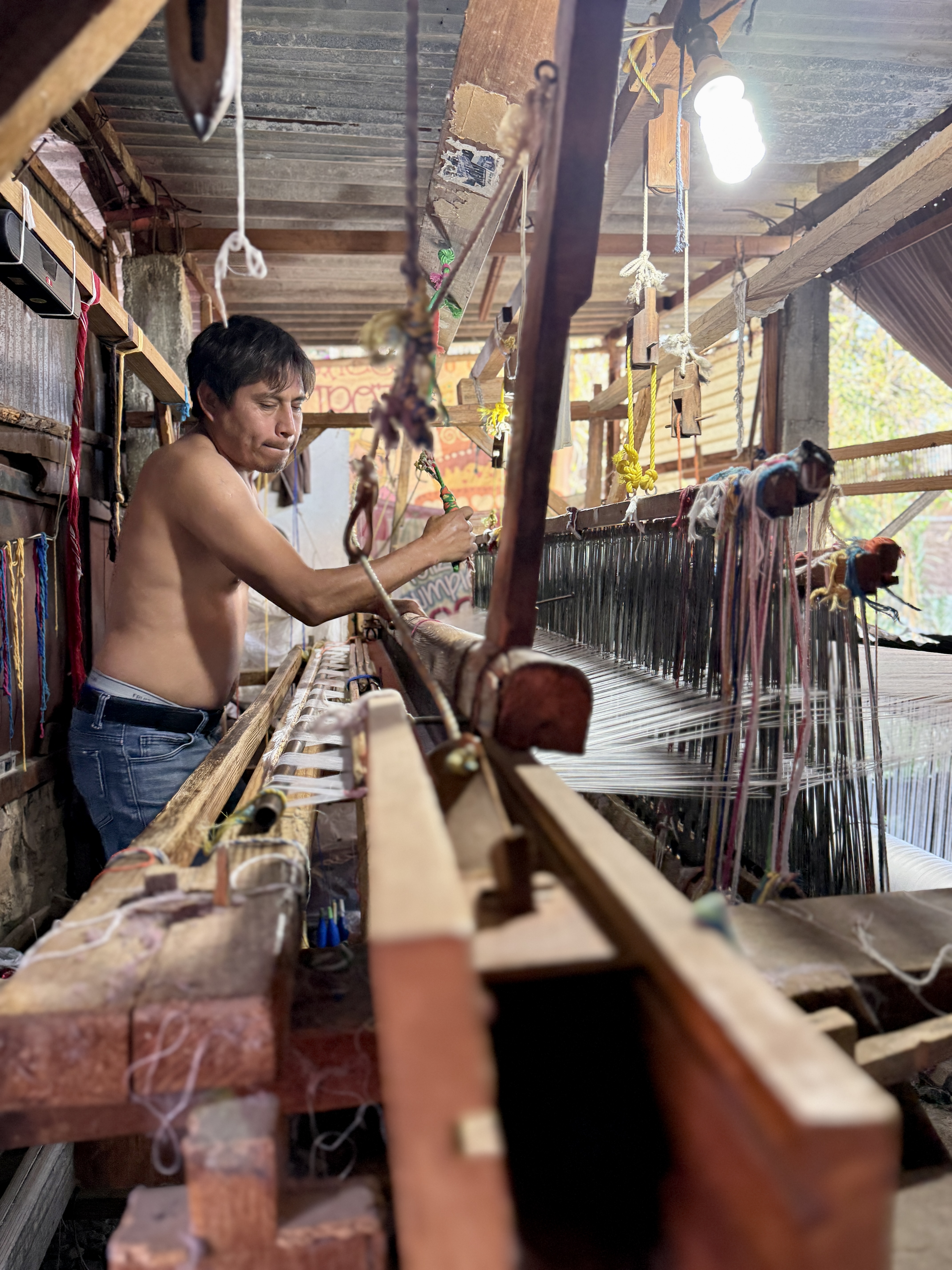
We did manage to watch nearly all of the Mamdani inauguration… and are inspired, excited, and hopeful that he can accomplish even part of his agenda. And let’s hope what is starting in NY can spread nationwide to counter the current D.C. agenda.

We stopped at a pharmacy to see if we could get any medication and were given some anti-nausea medicine, remembering that once in Switzerland Mike had stomach issues and the medication they gave him worked well. But this is Mexico, not Switzerland. Still, we took the pills but not sure they are doing anything. By the time we walked back, we were feeling pretty miserable again and after resting a while, we realized we should cancel our dinner plans and see if the hotel could make us some simple chicken soup. They brought it to the room, but it was quite salty so we really didn’t eat it. Hopefully we can eat breakfast in the morning before we head to the airport.. And keeping our fingers crossed that the flights don’t make things worse.
By the way, thanks for all the birthday wishes… and the compliments on the photography in these travel notes. Oaxaca is a visual feast. It’s a photographer’s delight.
i’m turning in now—due to dysentery circumstances,,,,,,,,
Hopefully we arrive home tomorrow evening and can normalize.
The party that was not to be; our day in our hotel room.
If I have the time correct, as I write this travel note, Zohran Mamdani is being sworn in as mayor of New york City! What an exciting moment for my home town. This official swearing in is at the old City Hall Subway Staton ans is a small event. The choice of this location is interesting. It is the city’s first subway station, dating back to 1904, It’s architecturally stunning. Though the station is still active as a turnaround, it was officially decommissioned in 1945. Only New York Transit Museum members (like me) can sign up for tours which occur about twice a month. (The problem is that they don’t announce the datee until about 4 weeks prior and I can never get it to work…. some day). As I understand it, Letitia James will do the honors. That’s exciting. I’m a big fan of hers (ever since she was brave enough to buck all other elected officials and fight against the Atlantic Yards project.) The public swearing in at City Hall will happen tomorrow and it will be Bernie Sanders and AOC who will do those public honors. They are each expected to speak, along with Mamdani. Wish I could be there.

Instead, Mike and I are both holed up in the hotel room with some kind of stomach bug….probably something from last night’s dinner (which was great, but…..) Stayed in bed until about noon and then showered and got dressed, but was too weak and too sick to even go downstairs. We’ve had the hotel delivery herbal tea every few hours and dry toast. I can oly eat about 1/4 of one slice. Mike was able to eat a whole slice. We had reservations at a really nice restaurant –Criollo–to celebrate a new year and also my birthday, but instead I’m focused on water and toast.
In between sleeping and “eating” we have been watching a strange comedic tv program called “Mr. Bean” which takes place in London. There is very little dialogue as it is mostly mime.
In the background we can hear the loud music from the New Year’s Eve party on the hotel’s roof.
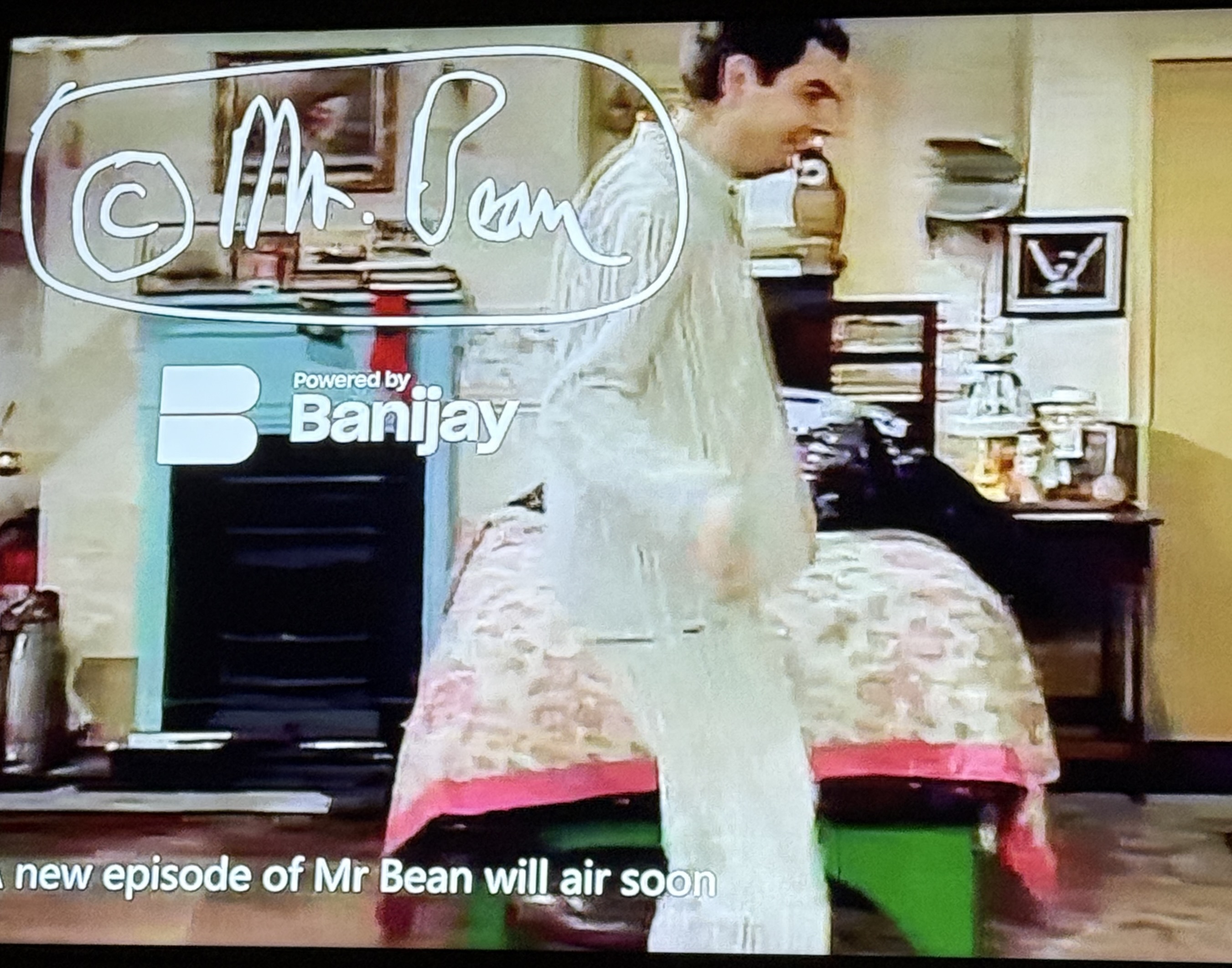
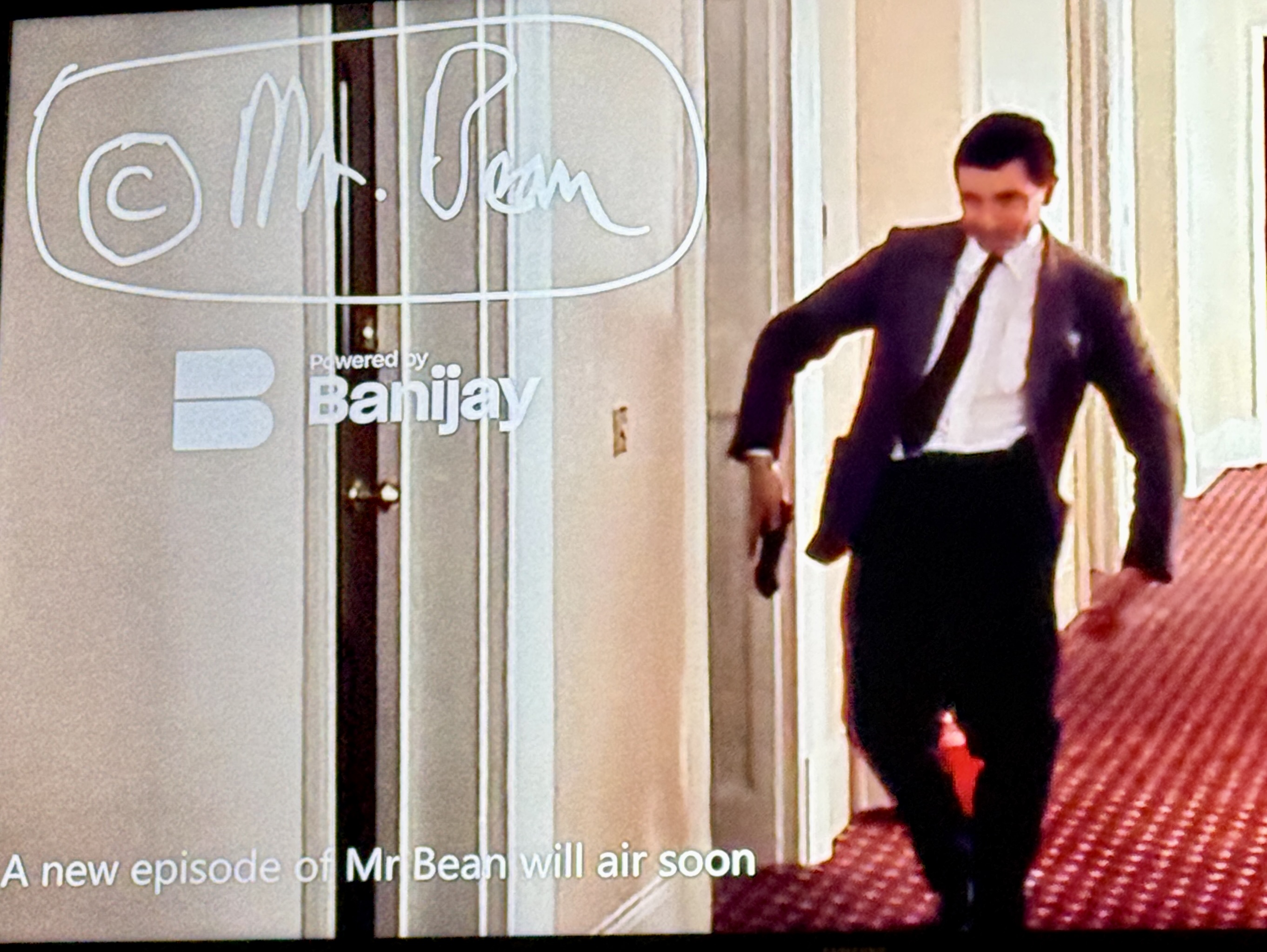
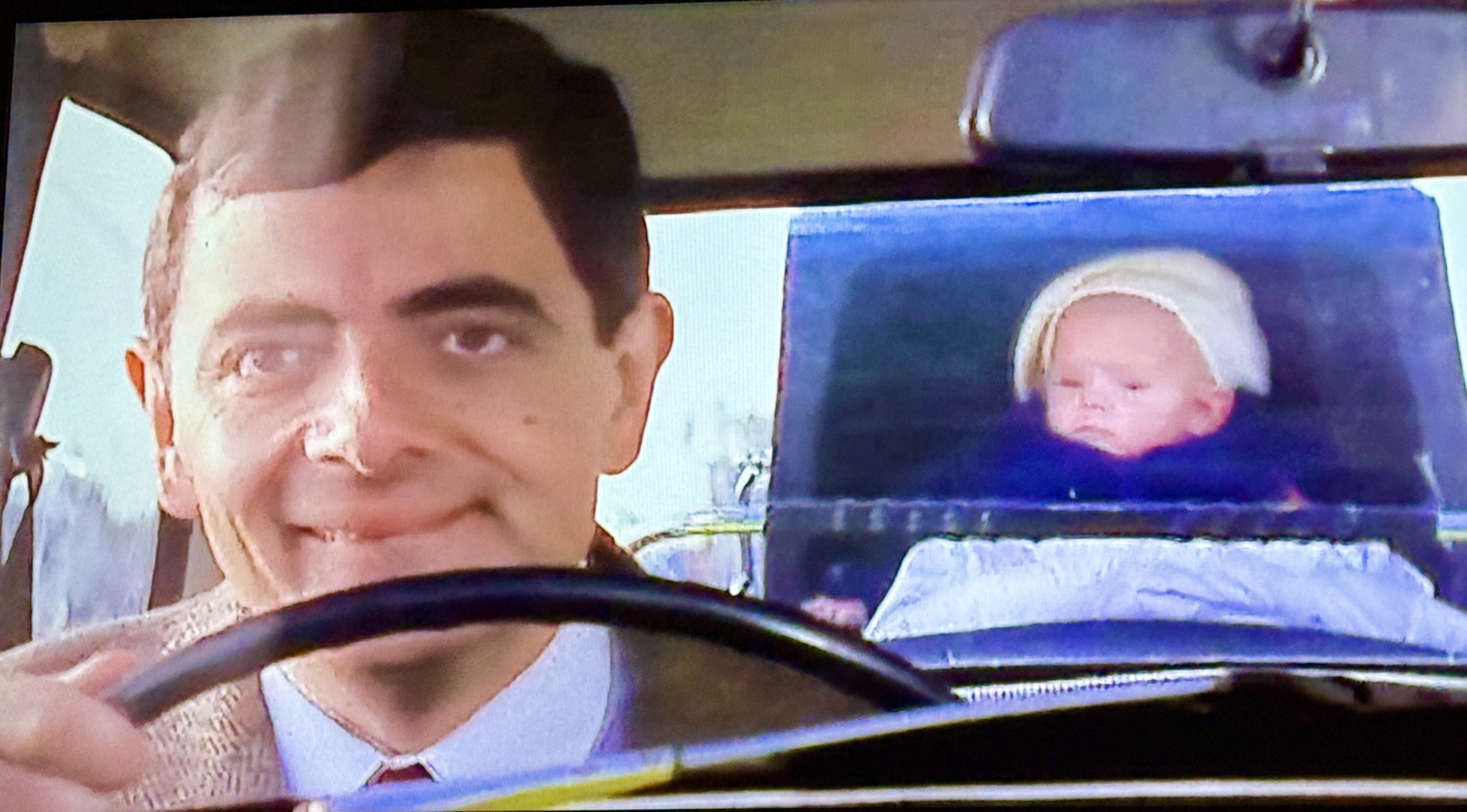
Mr. Bean wa debuted in 1990 and ran for 5 years. It’s based on a character developed by Richard Atkinson while he was at Oxford. All the episodes focus on Mr. Bean who is like a child in a man’s body. In each episode, he attempts to solve a probem and causes lots of disruption in the process. Since I can’t find any BBC or other English news, Mr. Bean has to fill the void. I actually think it’s fairly hilarious. But now I’m headed back to sleep and hoping tomorrow will be a better day.
Wishing you all a very Happy New Year and hope that the 2026 elections bring better news and better outcomes.
Fern
PS At midnight we could hear thunderous fireworks coming from a variety of locations, I think — including the hotel courtyard and probably near Santo Domingo Church.
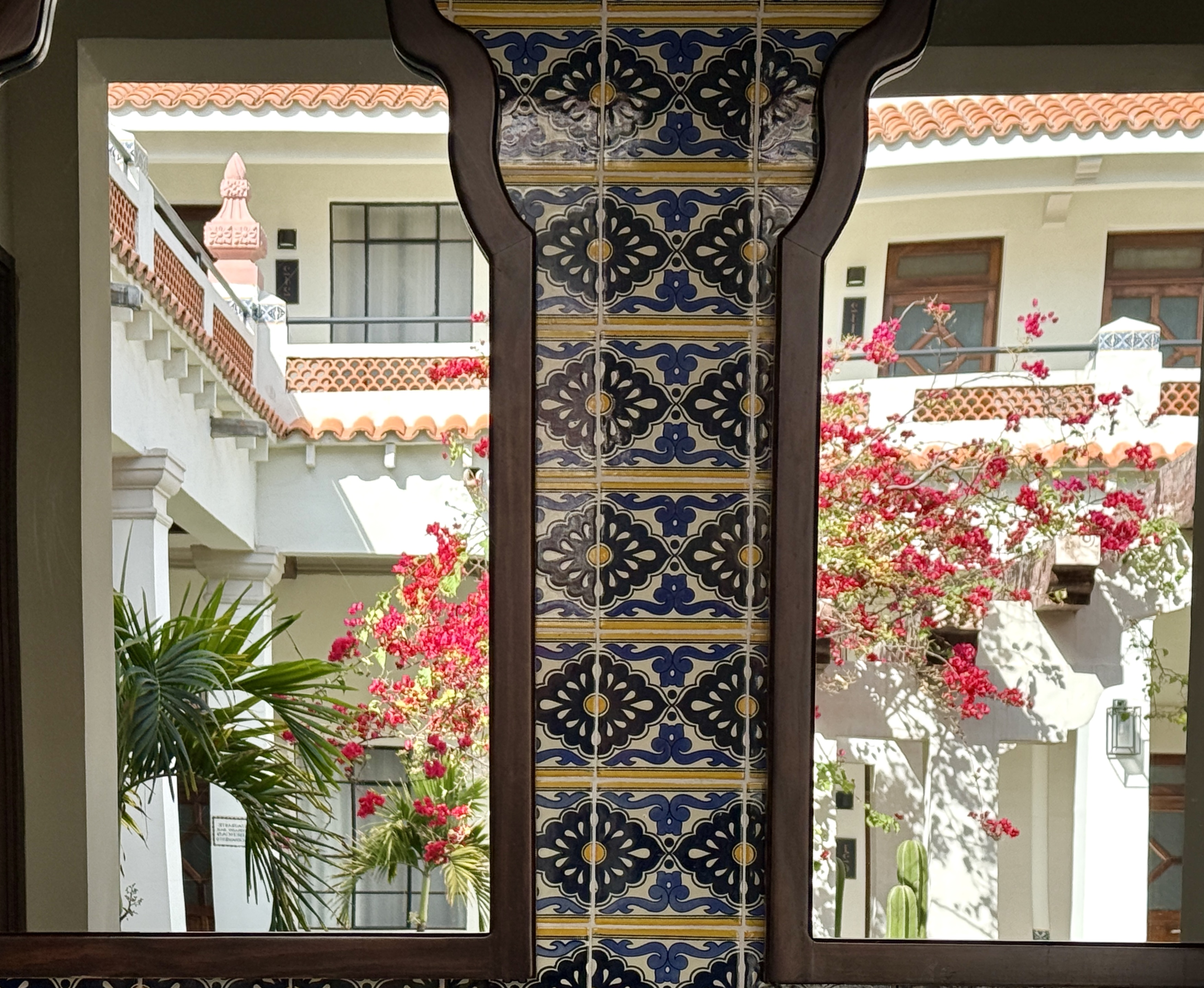
A QUICK NOTE — I MADE SOME SIGNIFICANT CHANGES TO YESTERDAY’S POST AFTER REALIZING THERE WERE SOME INACCURACIES… And now for today:
After breakfast at Gran Hotel, we headed on our journey from Tehuacan to Oaxaca–which we planned to take about four hours (GPS said three but we figured that was optimistic.). After navigating ourselves out of the downtown, we were on the highway with the one lane in each direction, going over the mountains and dealing with Mexican drivers speeding and passing by going into the oncoming traffic lane. It was dicey at times, but Mike was really good (and did his share of passing trucks…but only when there was a dotted line.
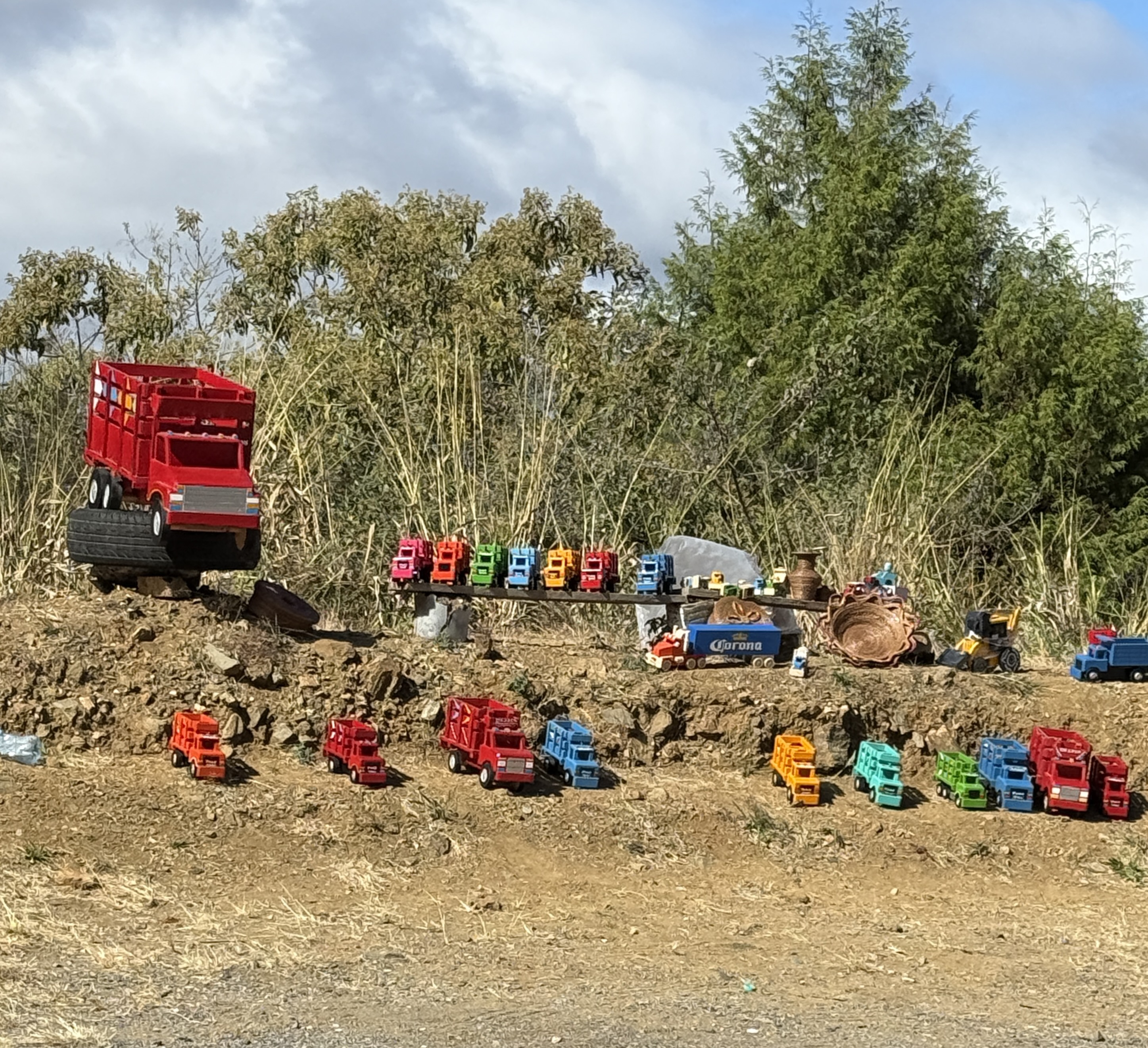
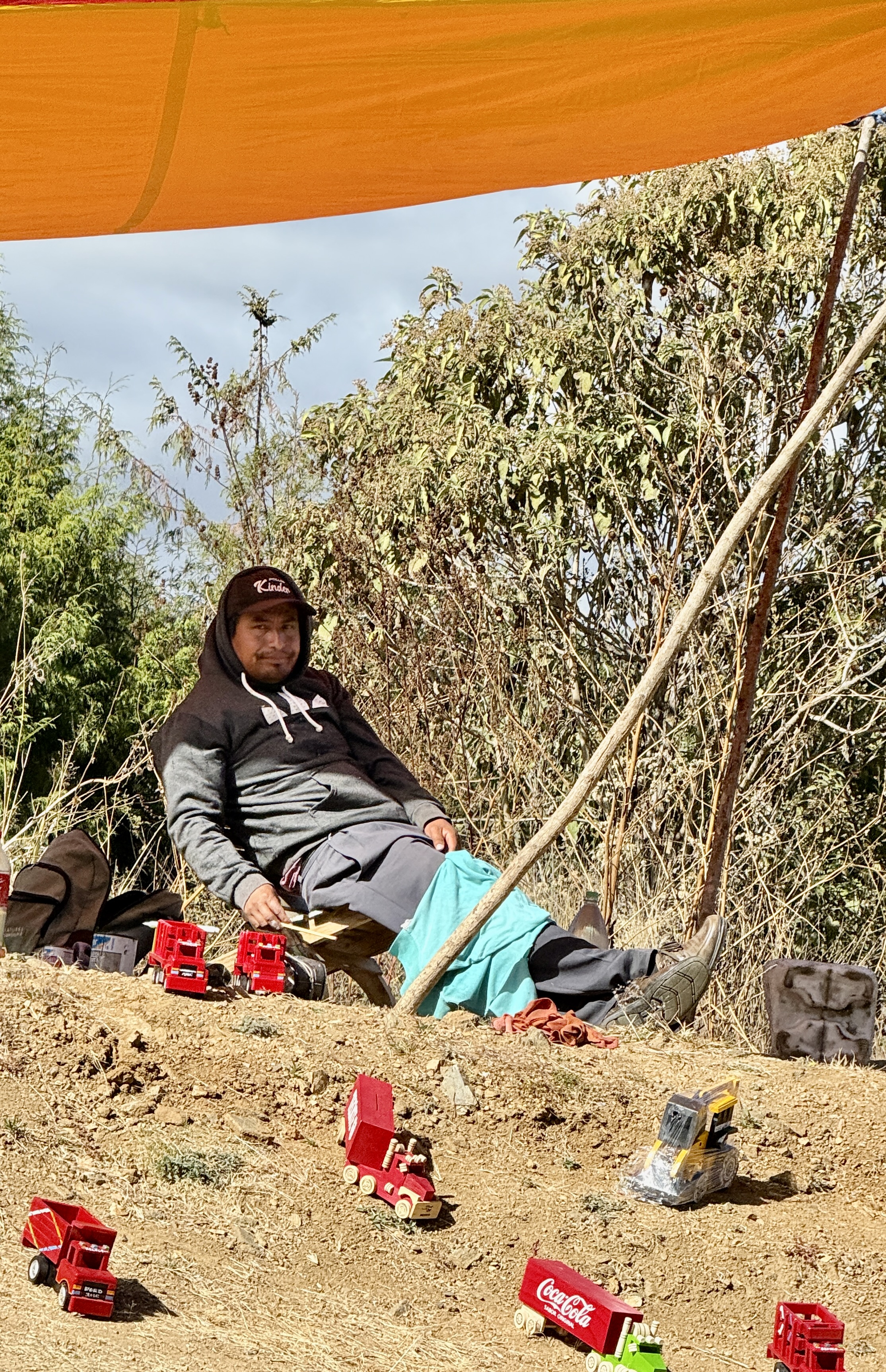
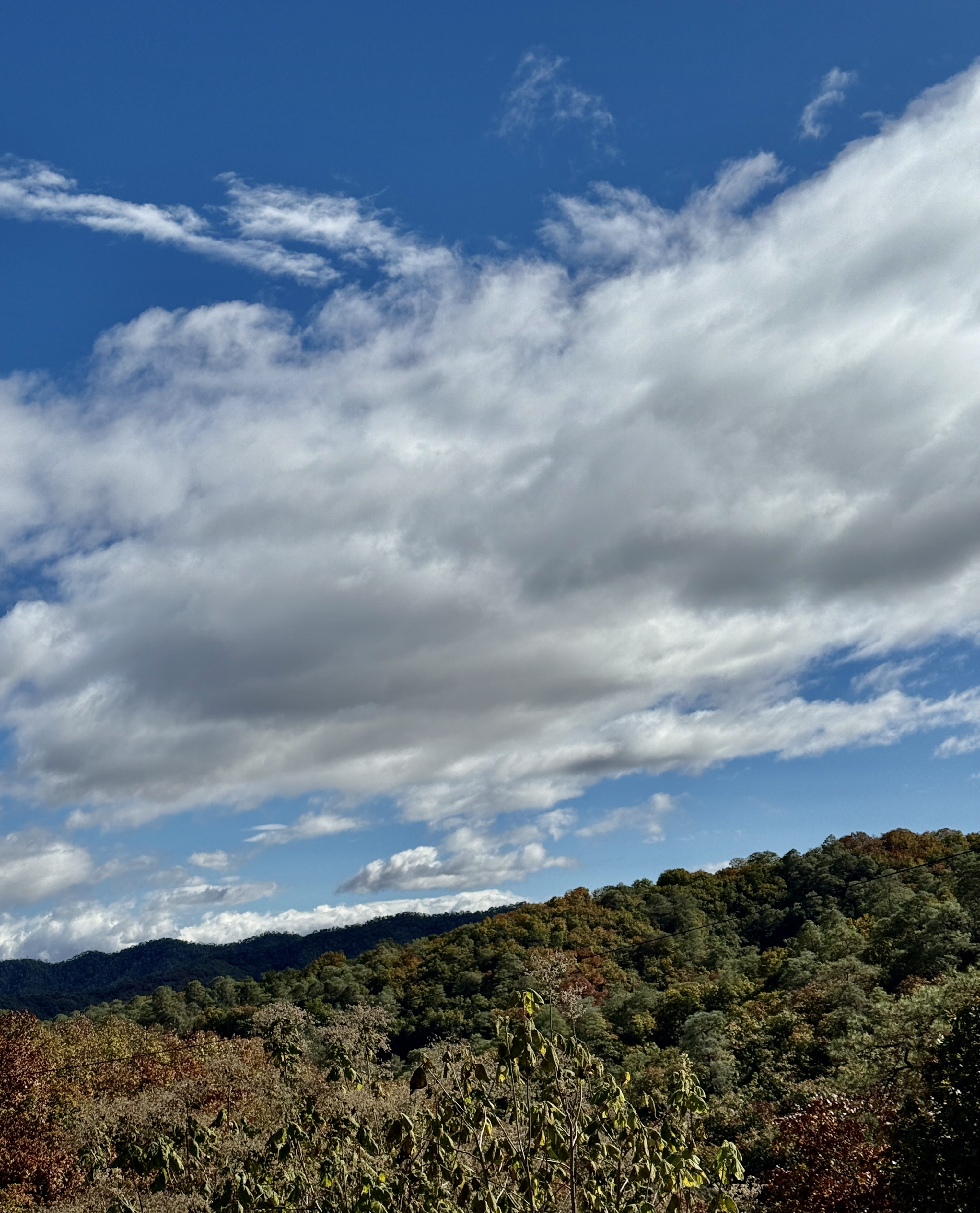
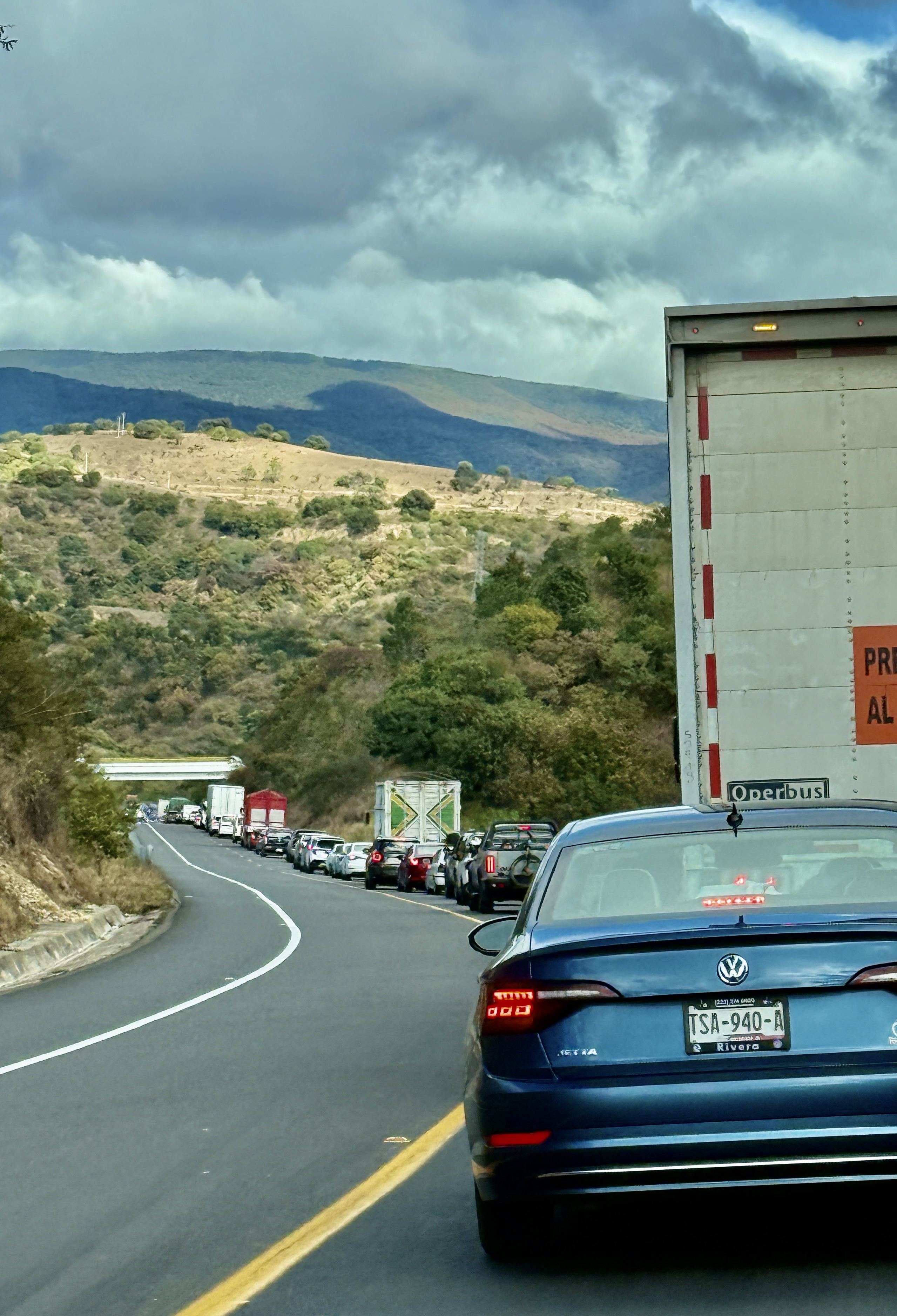
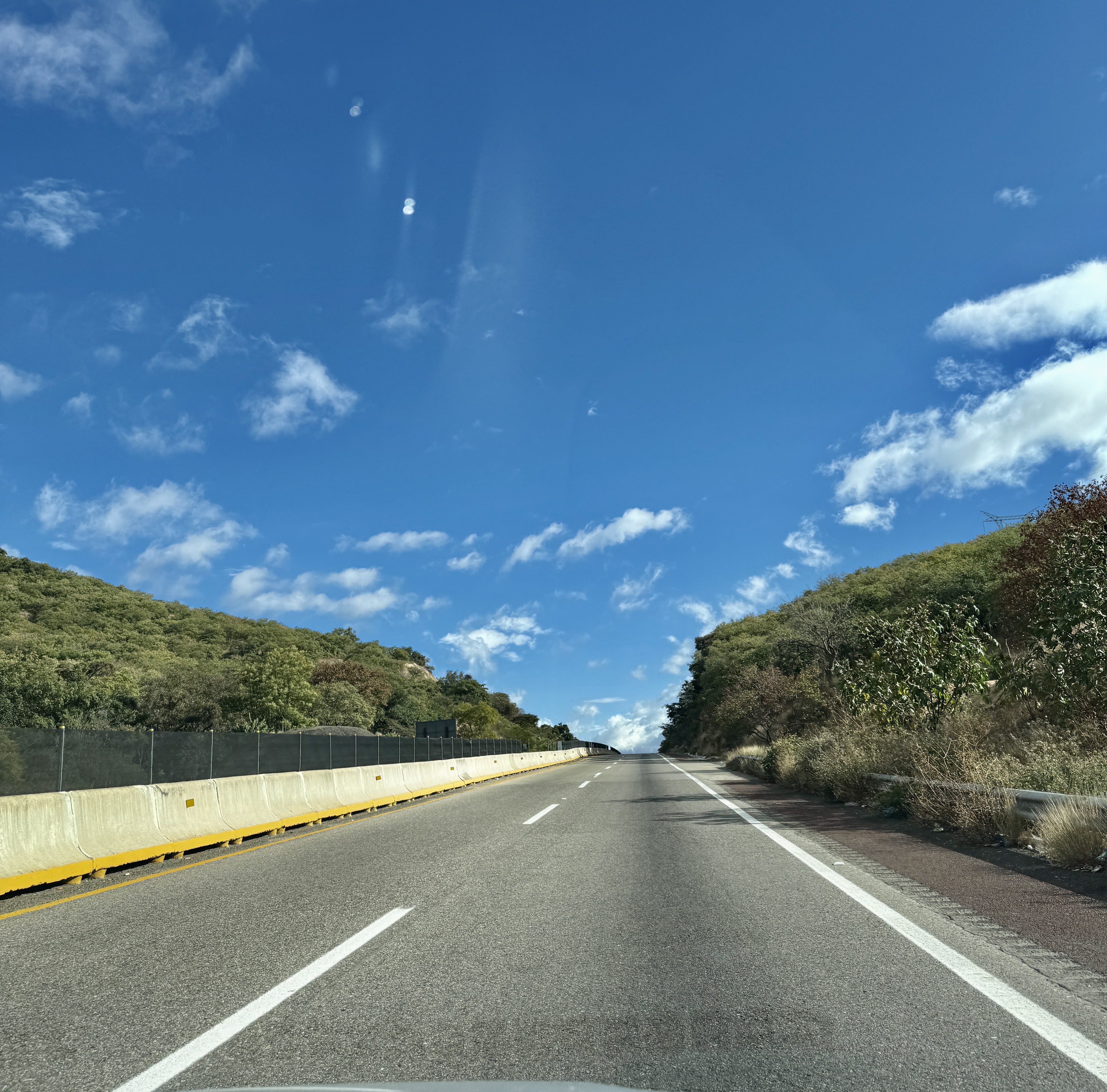
Most of today’s images depict what I saw from the car window! After about two hours, the GPS added about 90 minutes to our arrival time so we knew something was wrong. Traffic backed up and we were stuck on the road (with everyone else) for more than an hour. We figured there was an accident or construction. But when we eventually started to move we found out that the backup (the hour-long backup) was due to the toll plaza. The northbound toll lane (we were southbound) was broken so they converted one of the southbound lanes as a toll for the northbound lanes. So there was only one lane to pay the toll for the Oaxaca road. And the lanes slow down anyway at the toll plazas since it’s all cash which takes time. We got to the hotel around 4:15—checked in, and decided we deserved margaritas, which we had at the hotel bar.
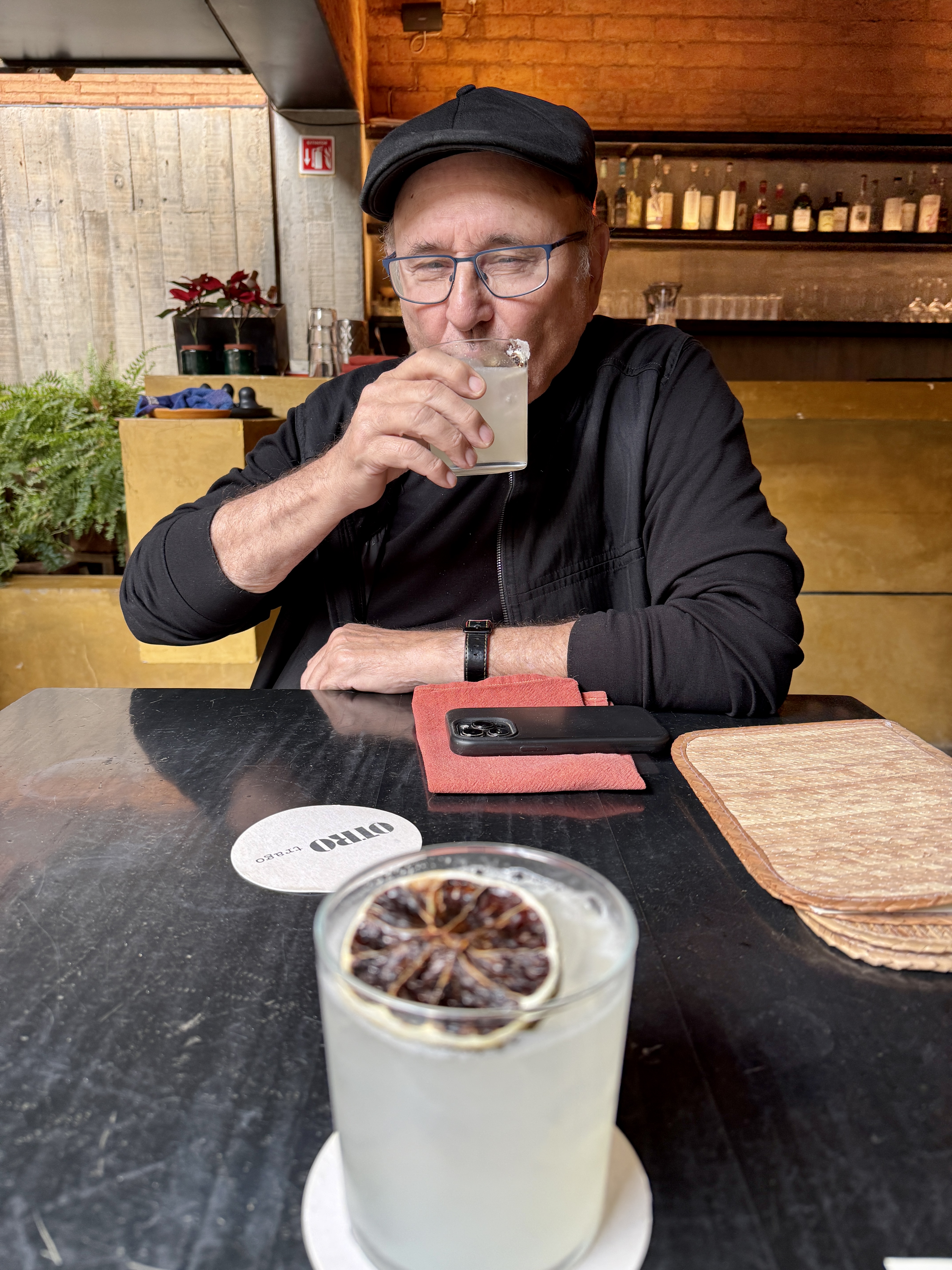
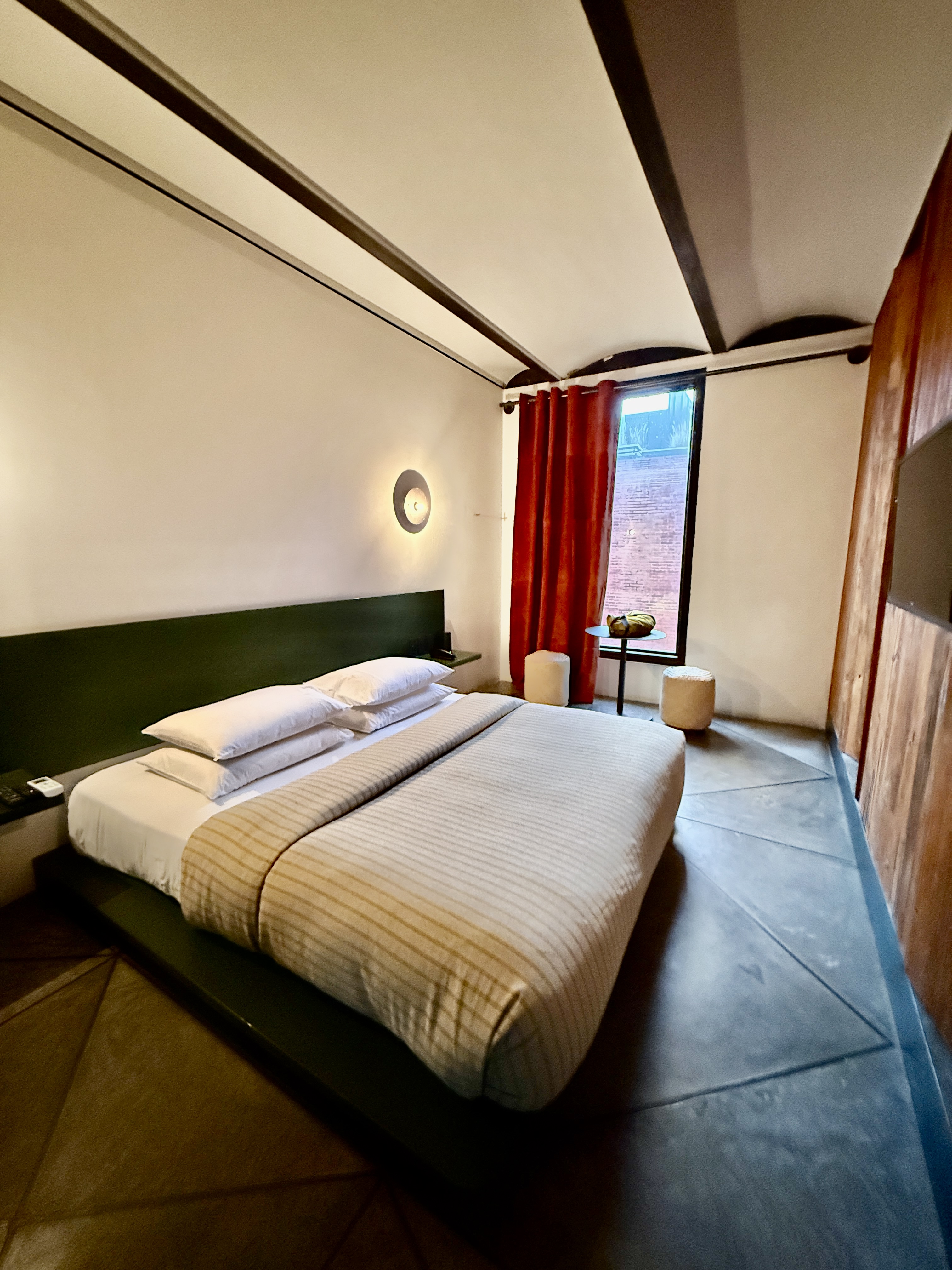
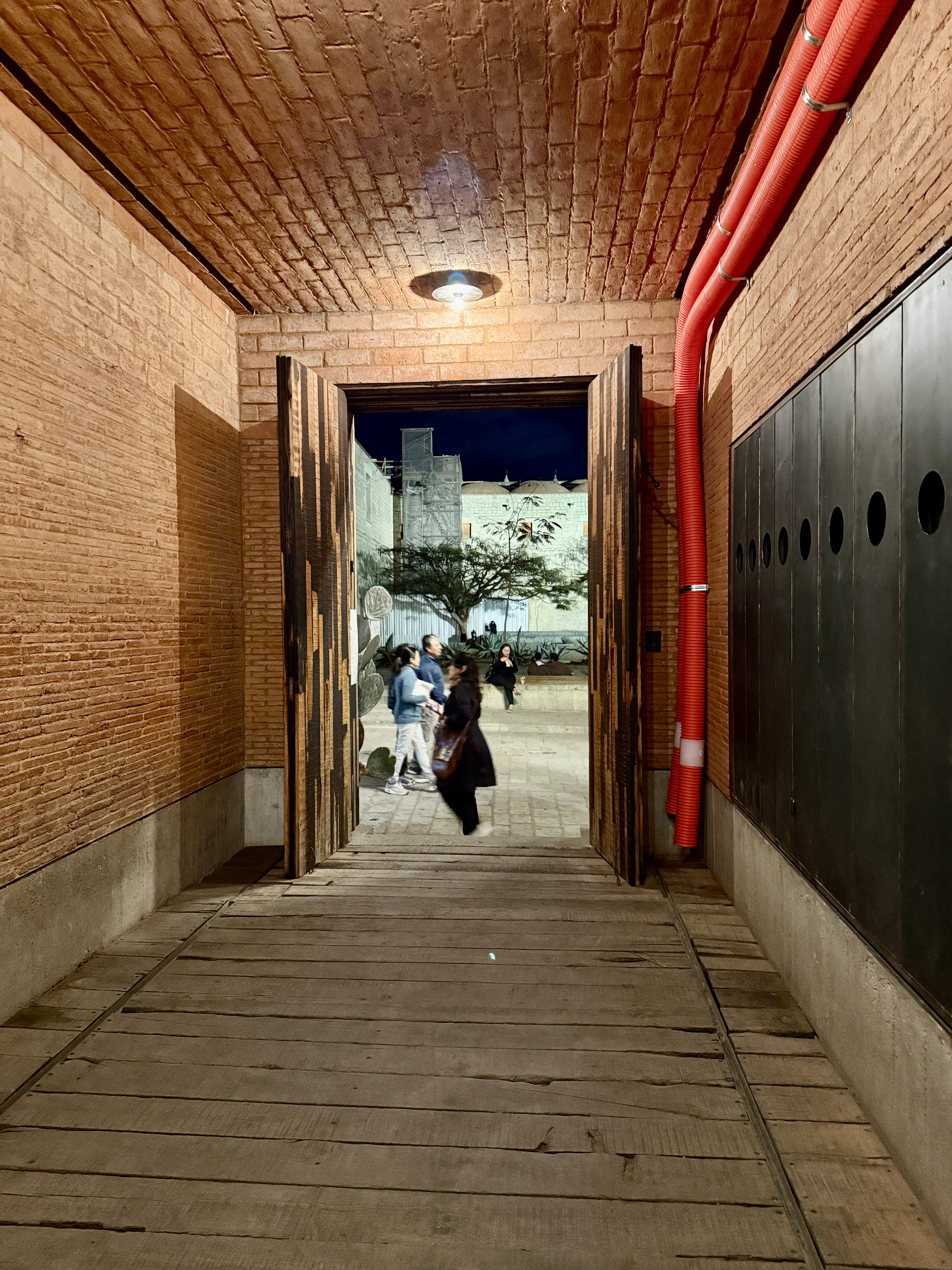
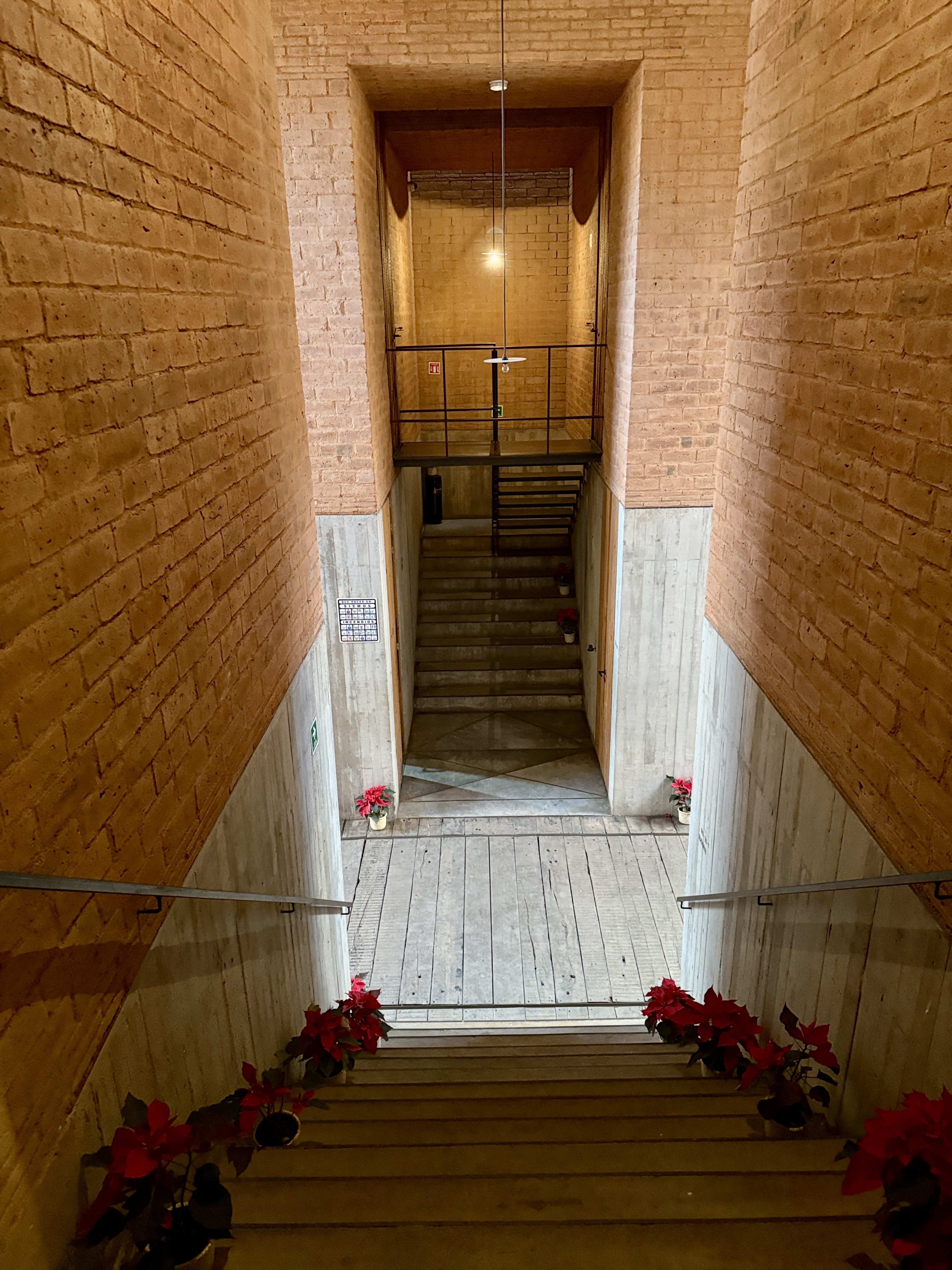
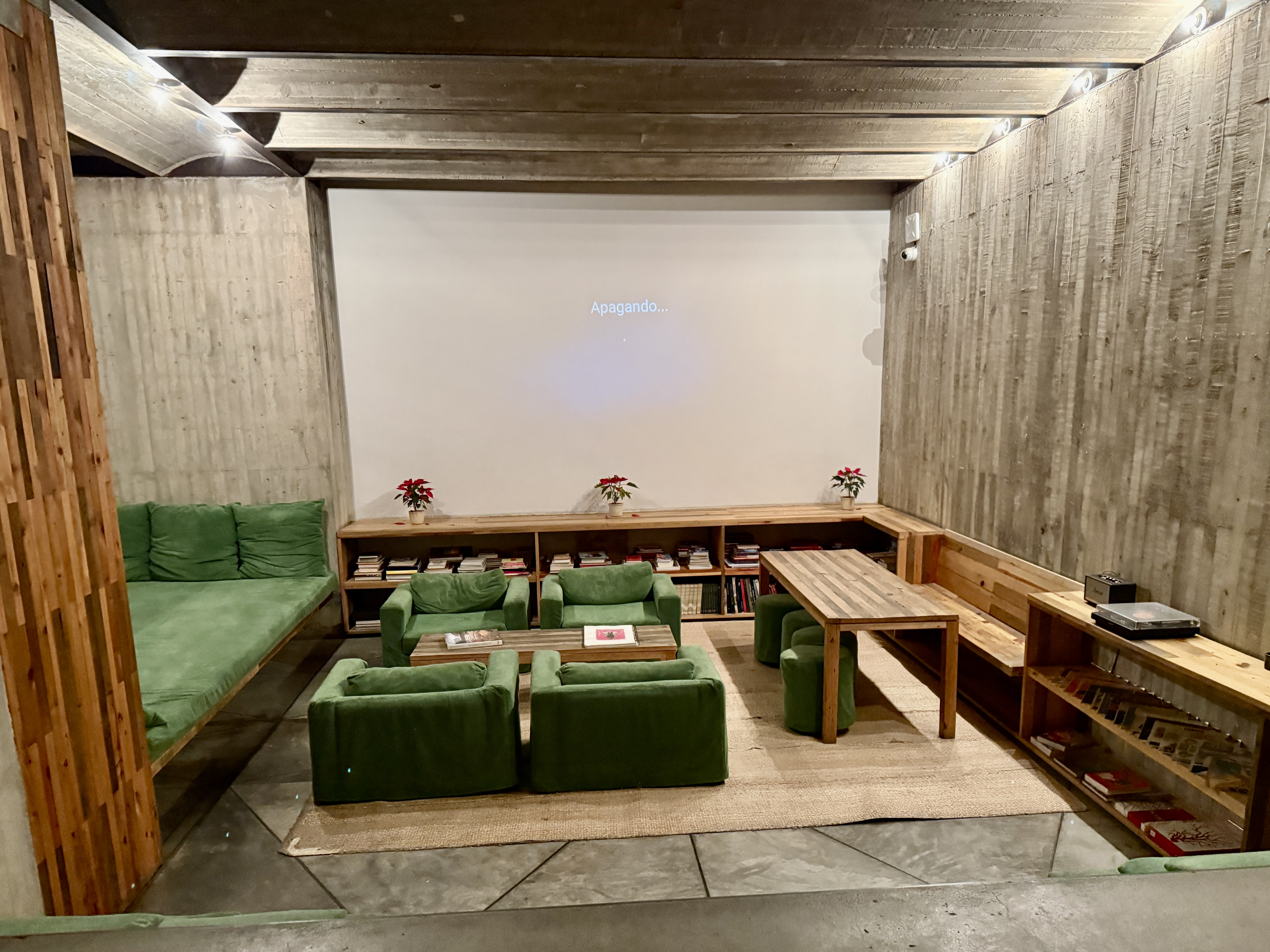
Otro Hotel is located directly across from Santo Domingo Church and is one of these “design hotels” where I think they care mostly about the public spaces and the architects are more interested in being in design magazines than in the real needs of guests. It’s a very small place (with a big reputation)—just 20 rooms. The room we were assigned looked out to a roof of the bar below. We moved to the only available room which is a bit better. But overall, I’d say Otro is extremely attractive as a building and simple in decor. Bathrooms are small but efficient. Because of the holidays the rates are quite high so the expectations are always heightened.
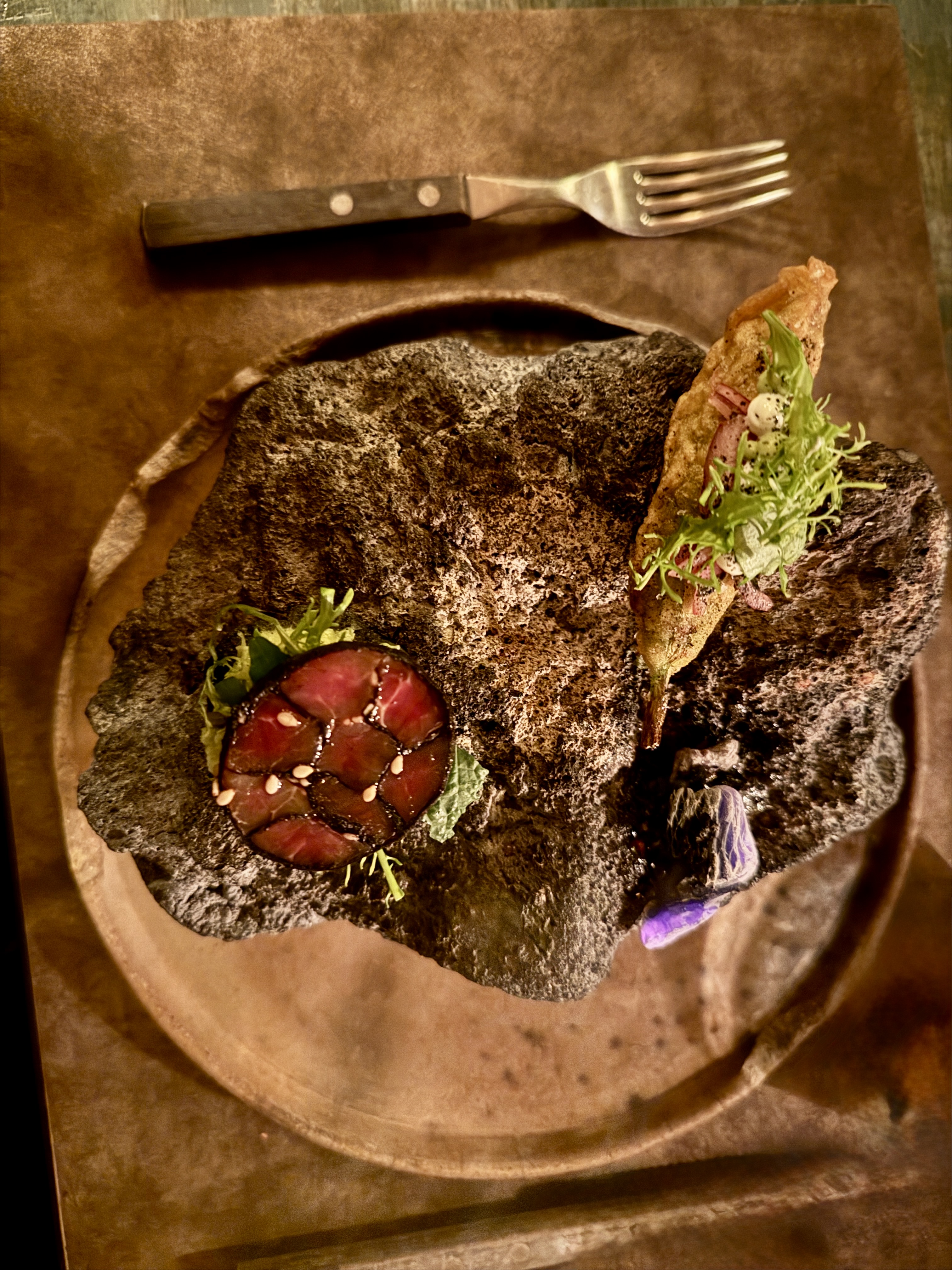
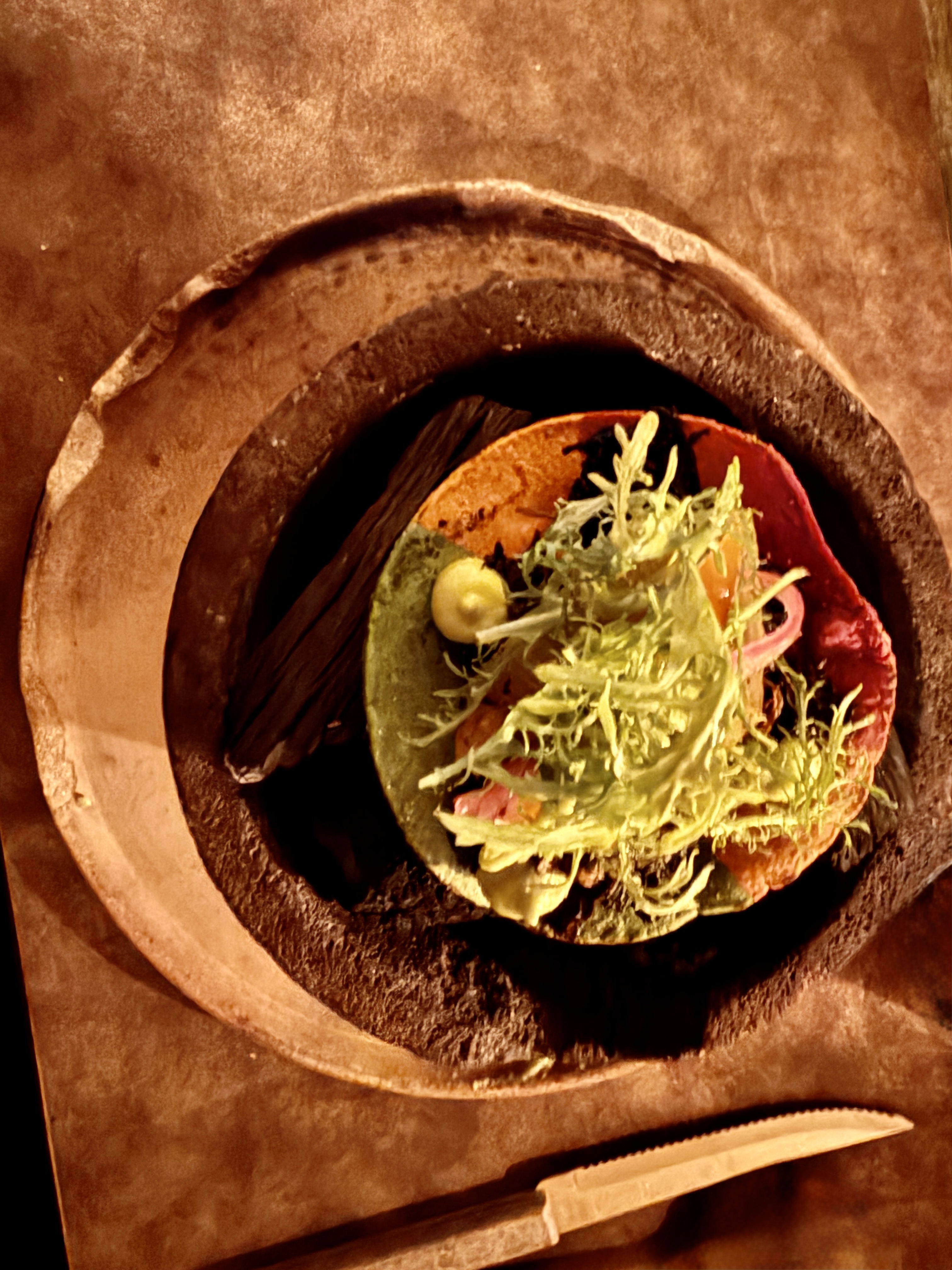
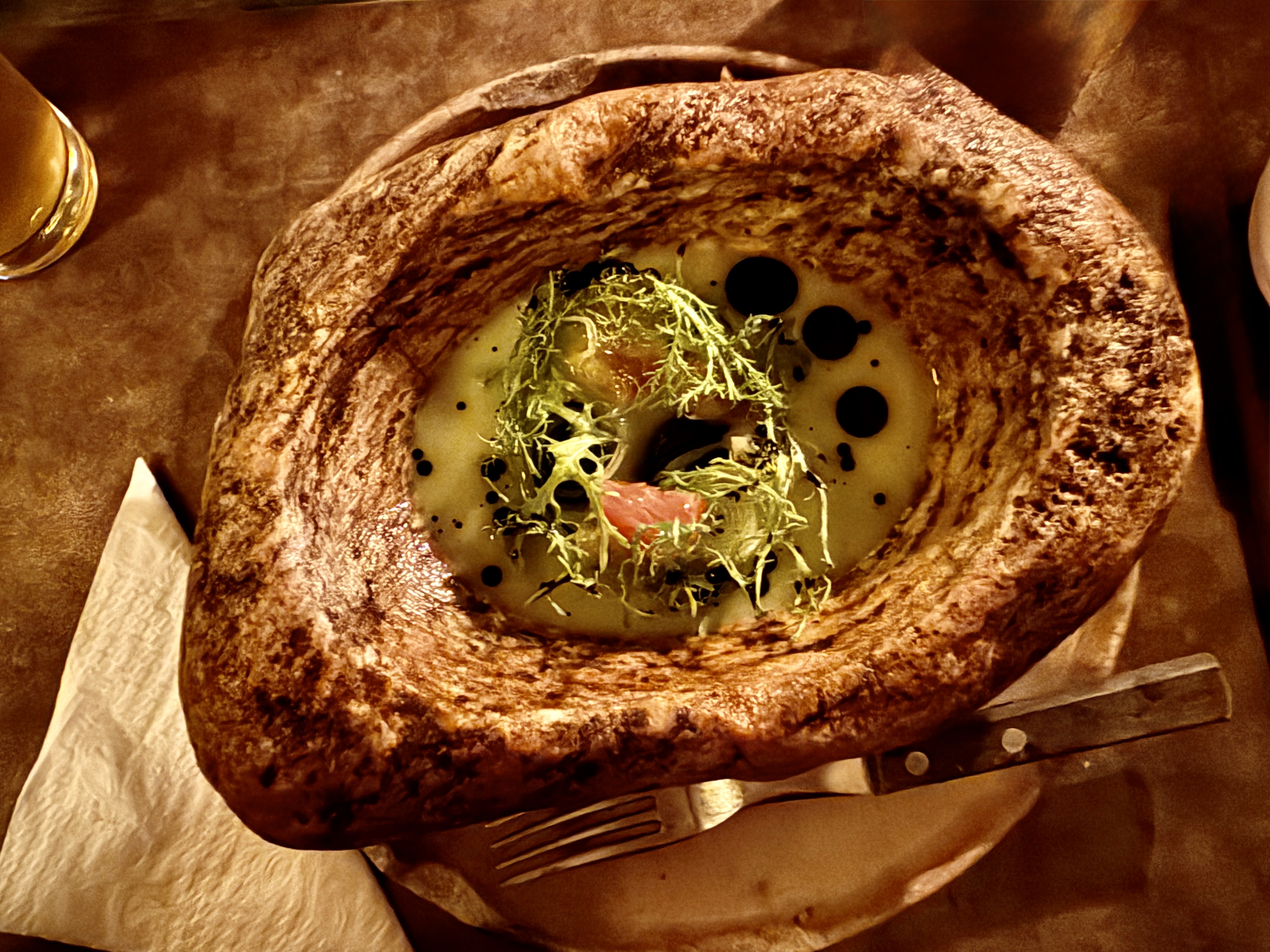
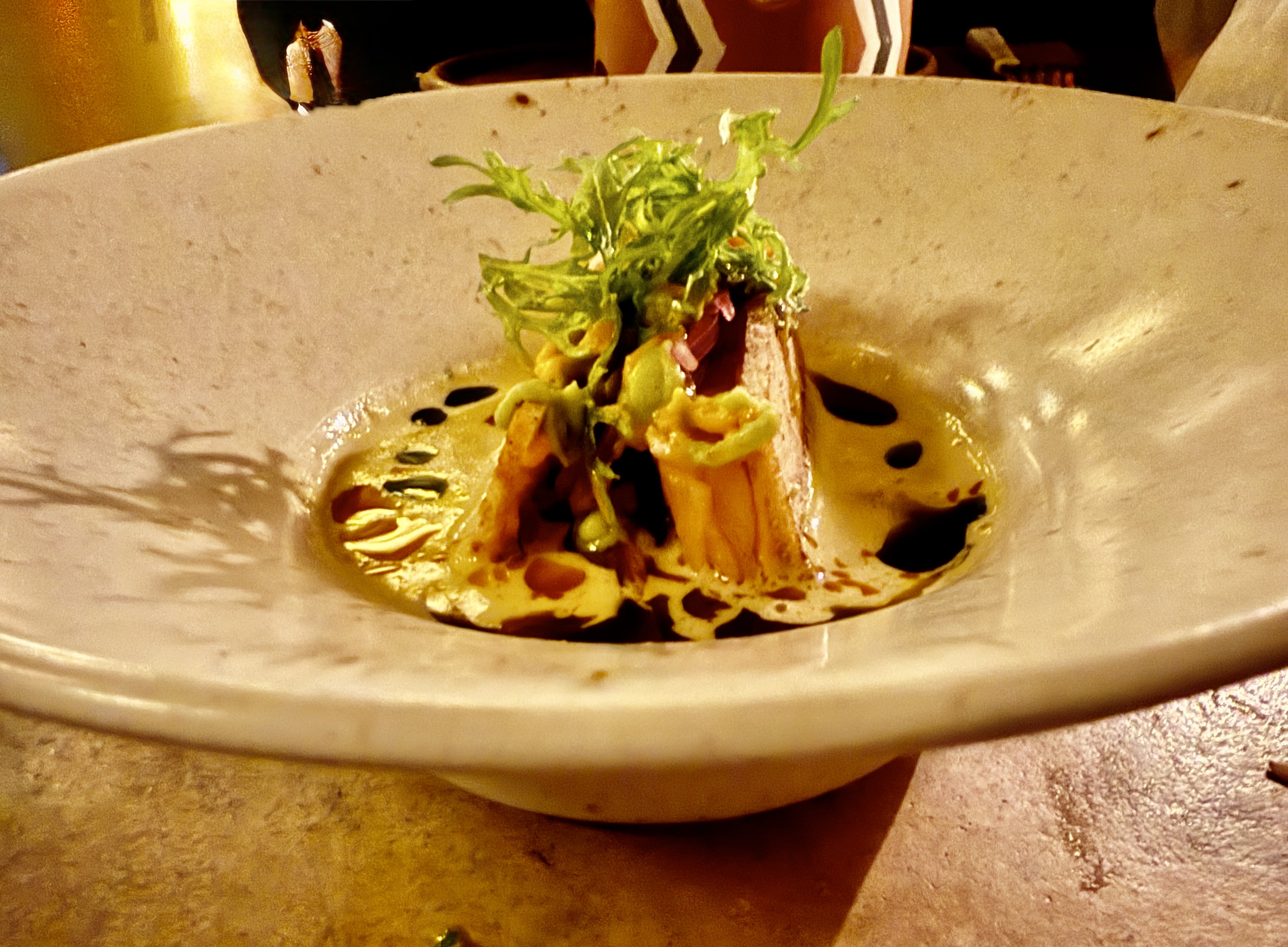
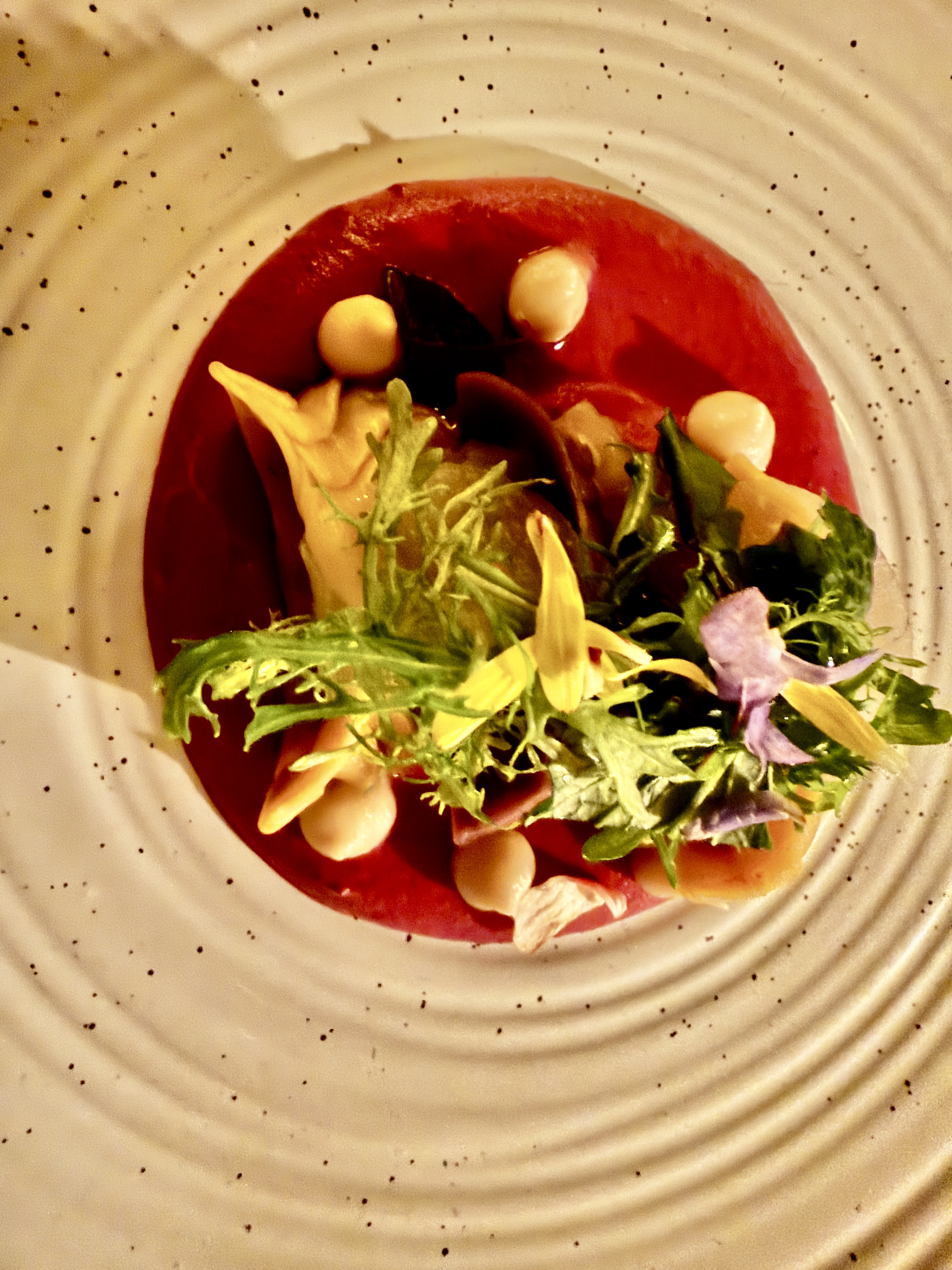
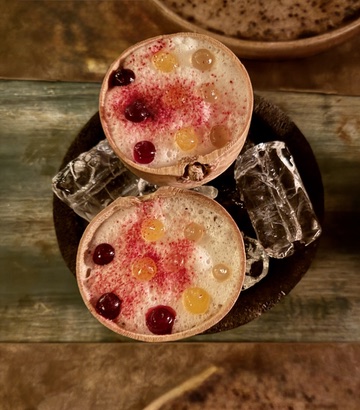
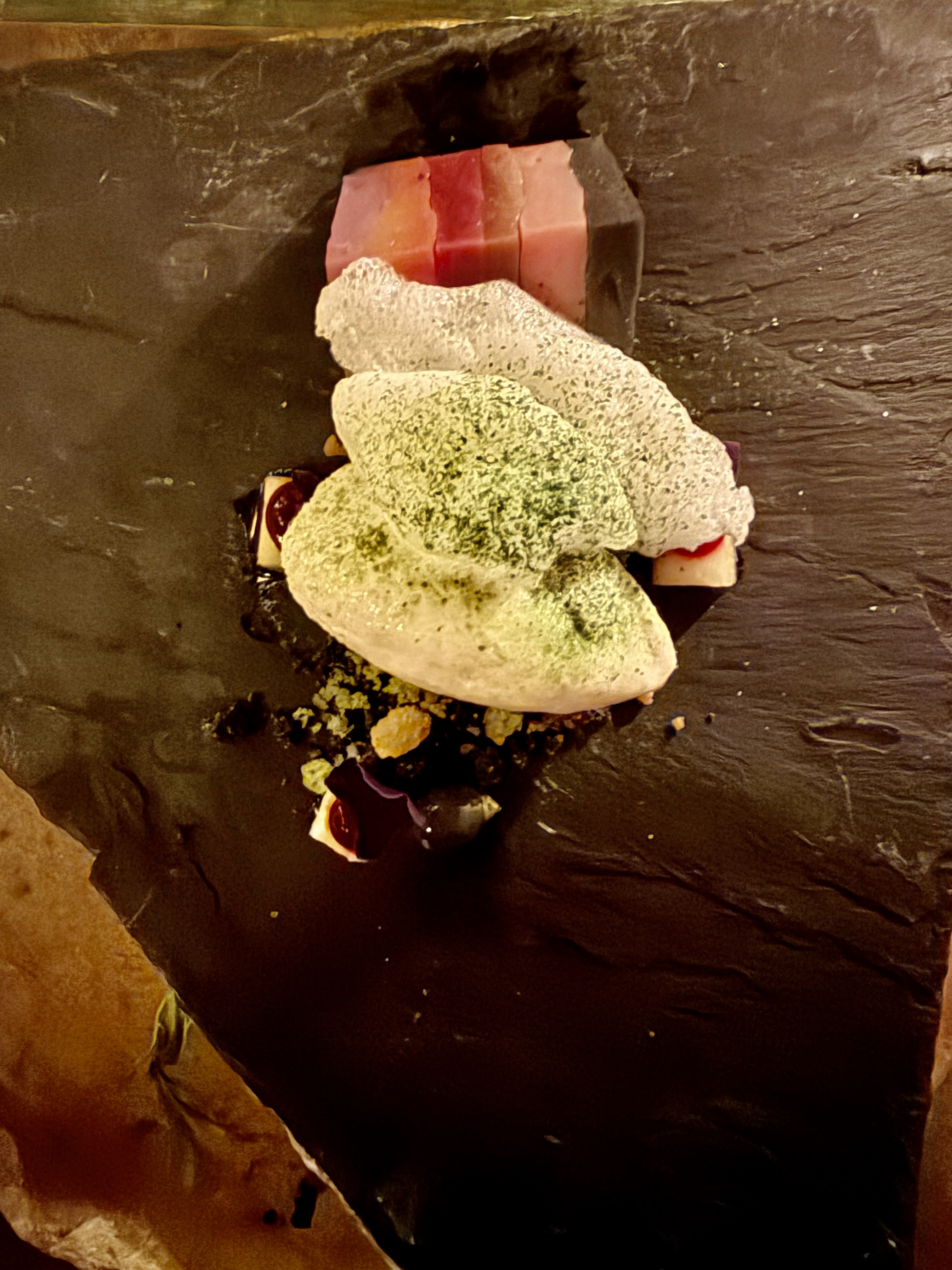
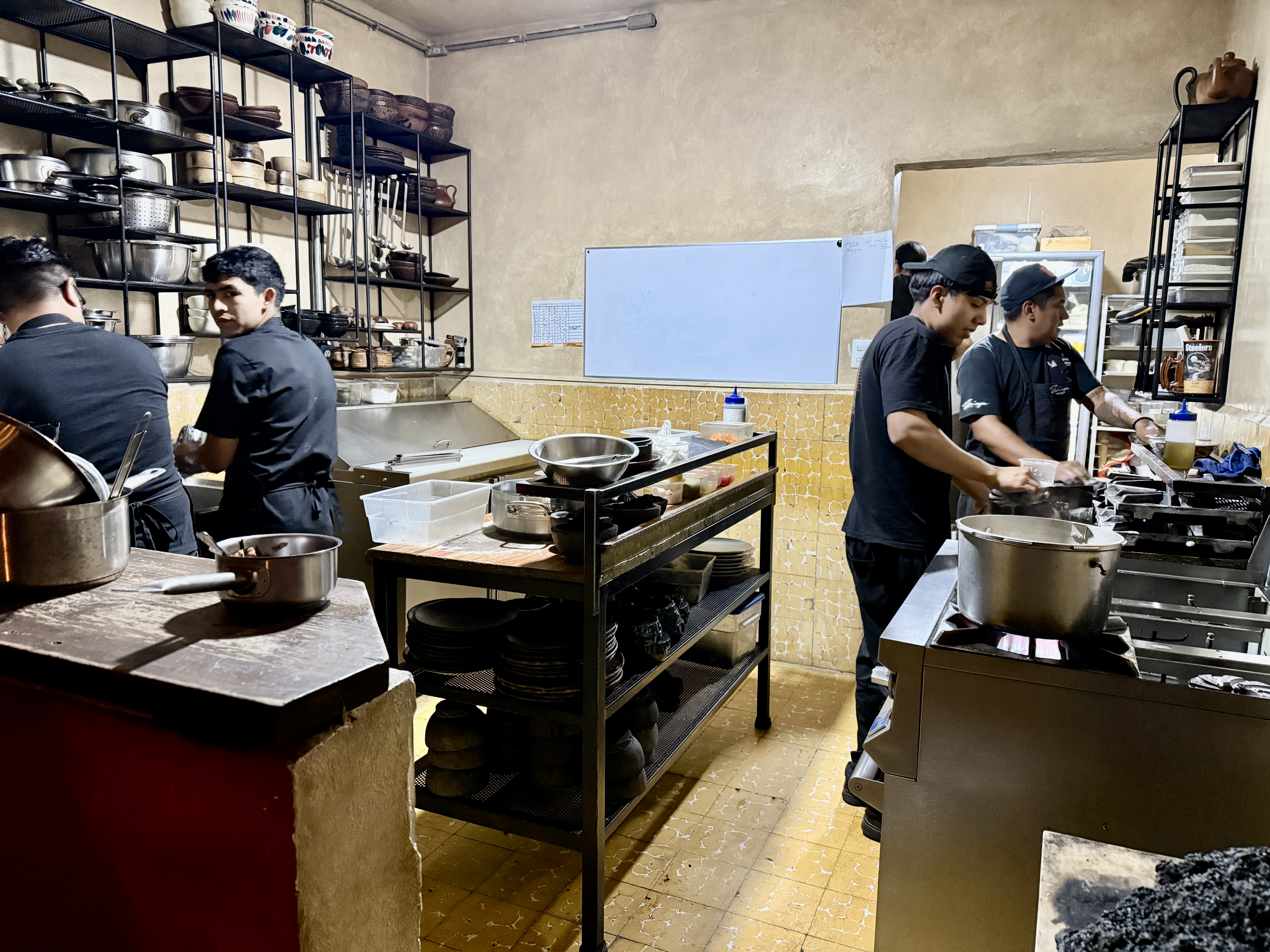
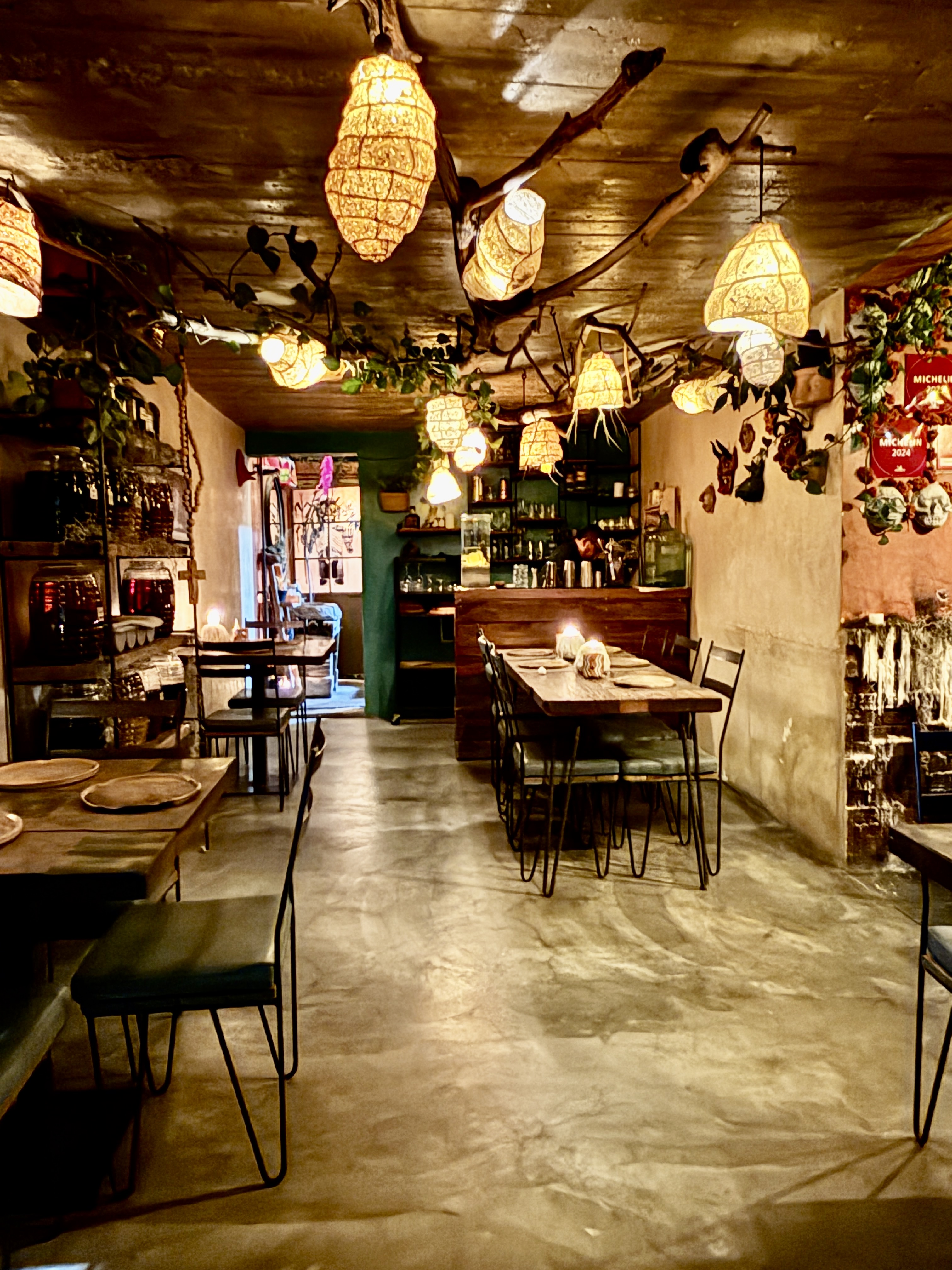
Tonight we had dinner at a tiny (18-seat) restaurant in a part of town we hadn’t yet ventured into. It’s called Tika’aya. Like nearly all restaurants in Oaxaca it’s basically outside and has no heat. It’s totally charming and the food is very difficult to describe. There are 7 courses: 5 they call “salads” but are really dishes that include vegetables as well as meat or fish (in some). Each dish is very small and is comprised of so many ingredients it’s hard to remember and repeat,,,and there is no written menu. Many of the dishes are based on indigenous recipes but they have been upscaled to say the least. The presentation of each dish was a work of art, often coming on smoking volcanic rock or other natural materials. After the 5 courses which actually included small portions of pork, shrimp, white fish, and other ingredients, there were two “sweet courses.” Everything was great except that it was really cold and we ate with jackets and scarves. It was about 55 degrees. And, we learned when the bill arrived apparently this information was in some confirmation of the reservation that we didn’t notic: It’s all cash; no credit cards. We managed to piece together about 95% of the bill and then asked if we could supplement the remainder and the tip with American dollars. They accommodated. We taxied back to the hotel. And now I’m headed to bed for a good night’s sleep (I hope)

December 29, 2025: De Puebla a Tehuacán

Hola from Tehuacan! (First one thing I forgot to mention in my last post from Puebla: There are supposedly 365 churches in Puebla (so you can visit one each day of the year),
Taxied from the hotel to the Hertz Rental Car in Puebla. We, along with the taxi driver were perplexed when the address from Hertz took us to an abandoned garage. But we all soon figured out that Hertz was one block further. In typical Mexican fashion, it took a while to get the car. Lots of paperwork; loss of signal for the credit card device, and doing it all in Spanish (very fast Spanish). I will say that in the end we all understood each other and the Hertz guy complimented me on my Spanish! But in reality, we didn’t really understand how to sync my phone and Apple Play to the car so it worked intermittently on the 88-mile drive to Tehuacan. Then again, I often have trouble with Apple Play in rental cars in the states, so who knows. The car guys took dozens of photos of the car to have a record of any scratches that pree-existed our time with the car, so that we won’t be charged unless it looks like we caused a scratch. Frankly, I couldn’t even see some of the scratches that they noted.
Anyway, about 45 minutes later we were on the road, with our little silver Dodge compact (with automatic transmission). Mike is doing the driving and I am the navigator.
The drive went smoothly on a mostly one-lane in each direction “highway” with periodic tolls (no transponders, just pay as you reach the toll booth). But the two lanes often became four lanes with cars passing in both directions. Before we got to the highway, we were on some large streets with about three lanes in each direction. Cars and trucks were driving pretty fast and at every red light there were young children trying to get money—each outdoing the other: juggling, riding a unicycle, dancing so as to attract attention and to “work” for the money. The kids were about six years old and they straddled the traffic lanes–quite scary. We had about three tolls in the 88 miles, totaling about $10 USD. It’s been a while since we’ve driven in Mexico, but we knew what it would be like…so no surprises. Drivers pass even if there are double lines and they often pass even when there are signs posted saying no passing. Big trucks also try to pass (even oil tanker trucks, some of which are tandem oil trucks). Mike did a great job—only passed when it was legal and even then was extra cautious. We were slowed down for about 20 minutes because of an accident, but otherwise it was smooth sailing (sometimes “nail-biting,” but not too often). Weather was good, and we drove mostly through cactus “forests” and hills. The road was very curvy (sort of like driving to Mendocino or Sea Ranch. Tomorrow is the even tougher driving day as we go over the Sierras (taller mountains) to get to Oaxaca.
As we neared Tehuacan (a stop we are making only to break up the 5-hour drive between Puebla and Oaxaca), I typed the name of the hotel into the GPS and we followed the local streets as directed. We supposedly arrived at our hotel (there had not been much choice as to where to stay), but the GPS took us to a decaying neighborhood and the building that the GPS said was the hotel had barbed wire fencing and looked like a house (or a prison), not a hotel. I said this was not correct. Mike initially said, “It’ll be fine.” But we couldn’t find any evidence that this was a hotel. So we typed in the hotel again in both of our phones and we got new directions about 17 minutes away.
We followed those directions and wound up on a street called “Calle Tehuacan” which was just a dusty and rocky narrow road with stray dogs roaming about. We agreed this was wrong again. We started to call the hotel, but realized we needed to be somewhere that we could describe to the hotel so they could help us navigate. We saw a Pemex (gas station) on the GPS map and headed there, figuring it would be on the corner of two major streets so we could give the hotel the location. We phoned the hotel and managed with my minimal Spanish and the hotel staff’s minimal English. This time they sent a link to a map through WhatsApp and we were on our way. They also told us that there was hotel parking requiring us to enter on a street perpendicular to the hotel address. We did this and parked, only to find that we were in the wrong lot. There was another lot specifically for the hotel about 50 feet down the street. After that it was totally easy. And we are here.
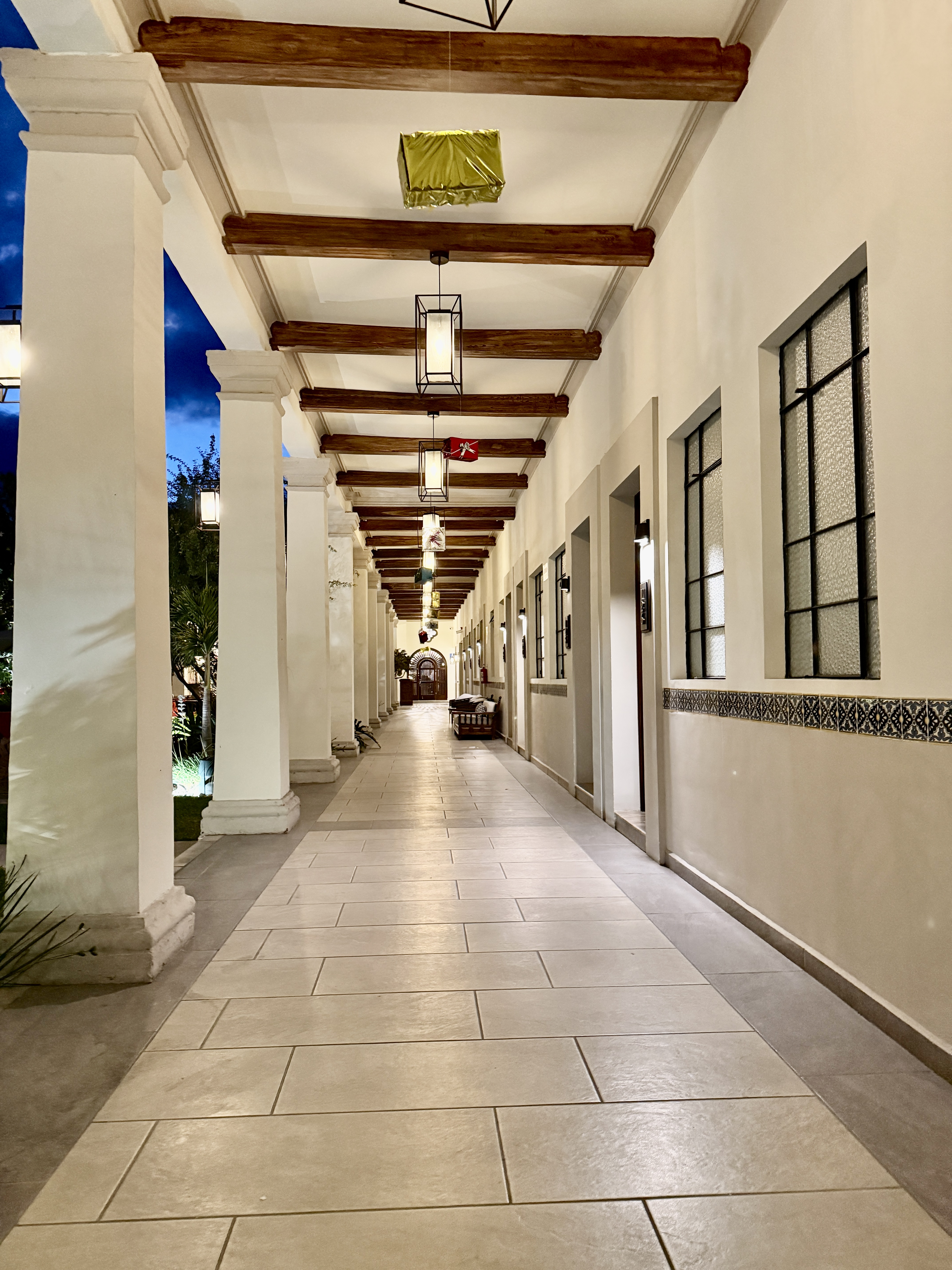
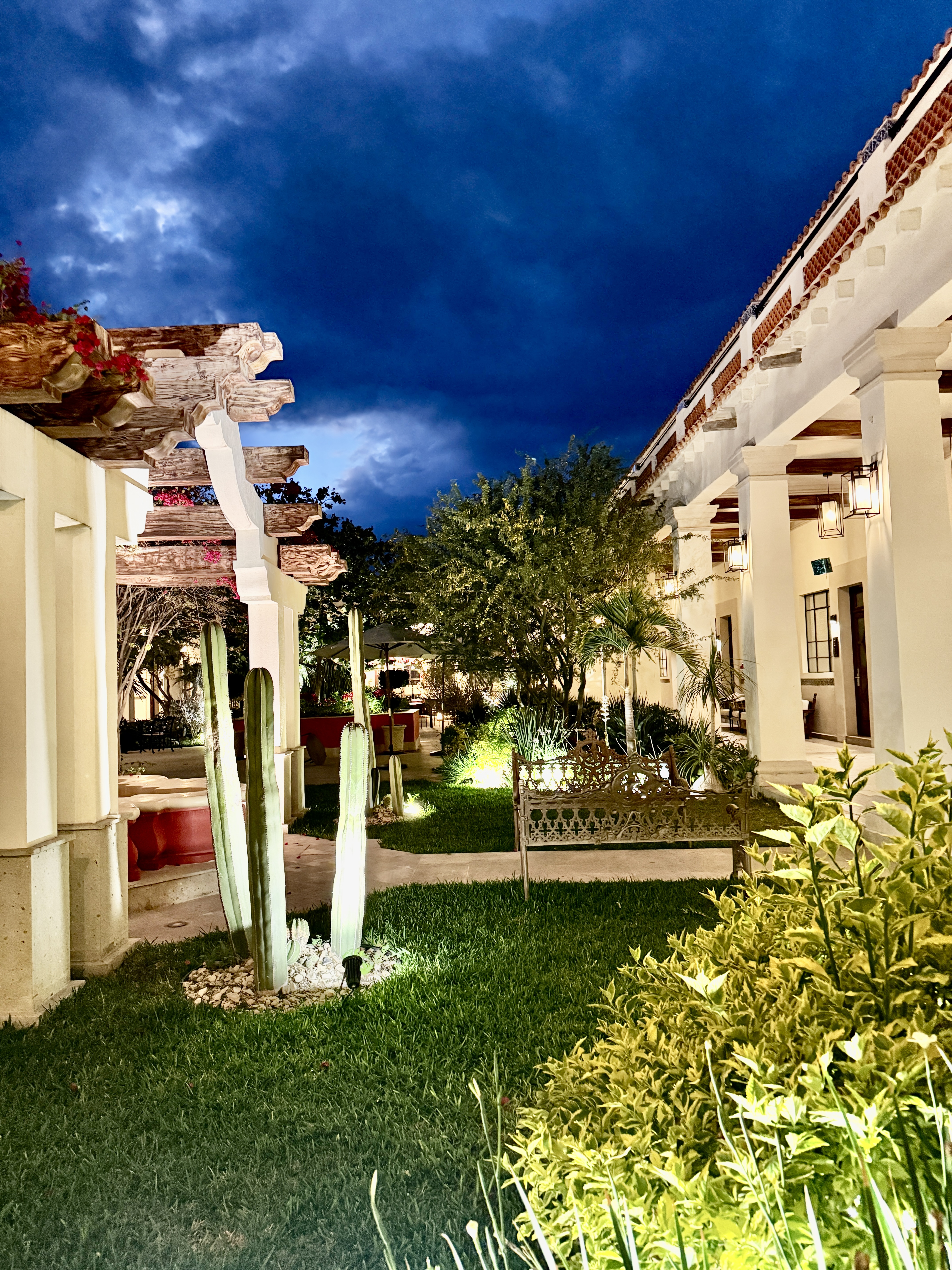
We are at the Gran Hotel Mexico by Solaris in Tehuacan. Don’t know why it was so difficult for GPS to find. It is literally in the middle of the city, on a commercial street. Gran Hotel is sort of like an upscale motel but instead of being linear it’s a square with a courtyard (and pool in the center and the rooms wrapping around. It’s a historic property and beautifully landscaped. Rooms are less than $80 USD/night, so it’s a far cry from the Puebla hotel. And, interestingly, it has all the updated electronic stuff you could want.
Tehuacan is definitely a blue-collar working class town, lined with inexpensive chain stores and non-descript shops and restaurants. It’s known for its mineral springs and much of the bottled water in Mexico is from here. It also has an important cluster of poultry producers, and is one of the most important egg-producing regions in Mexico. Its population of less than 400,000 earns salaries far less than the average Mexico City or Oaxaca salary.
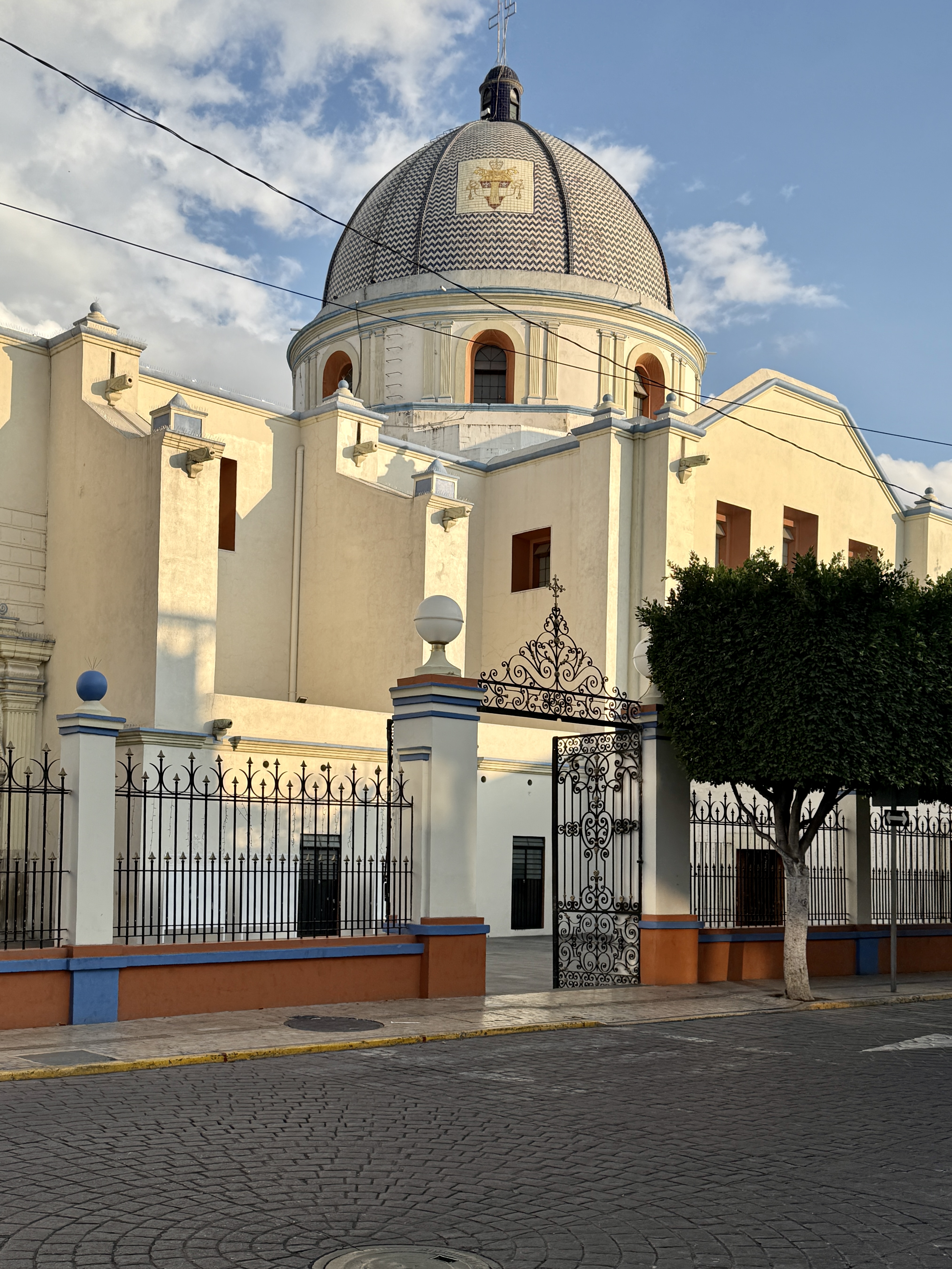
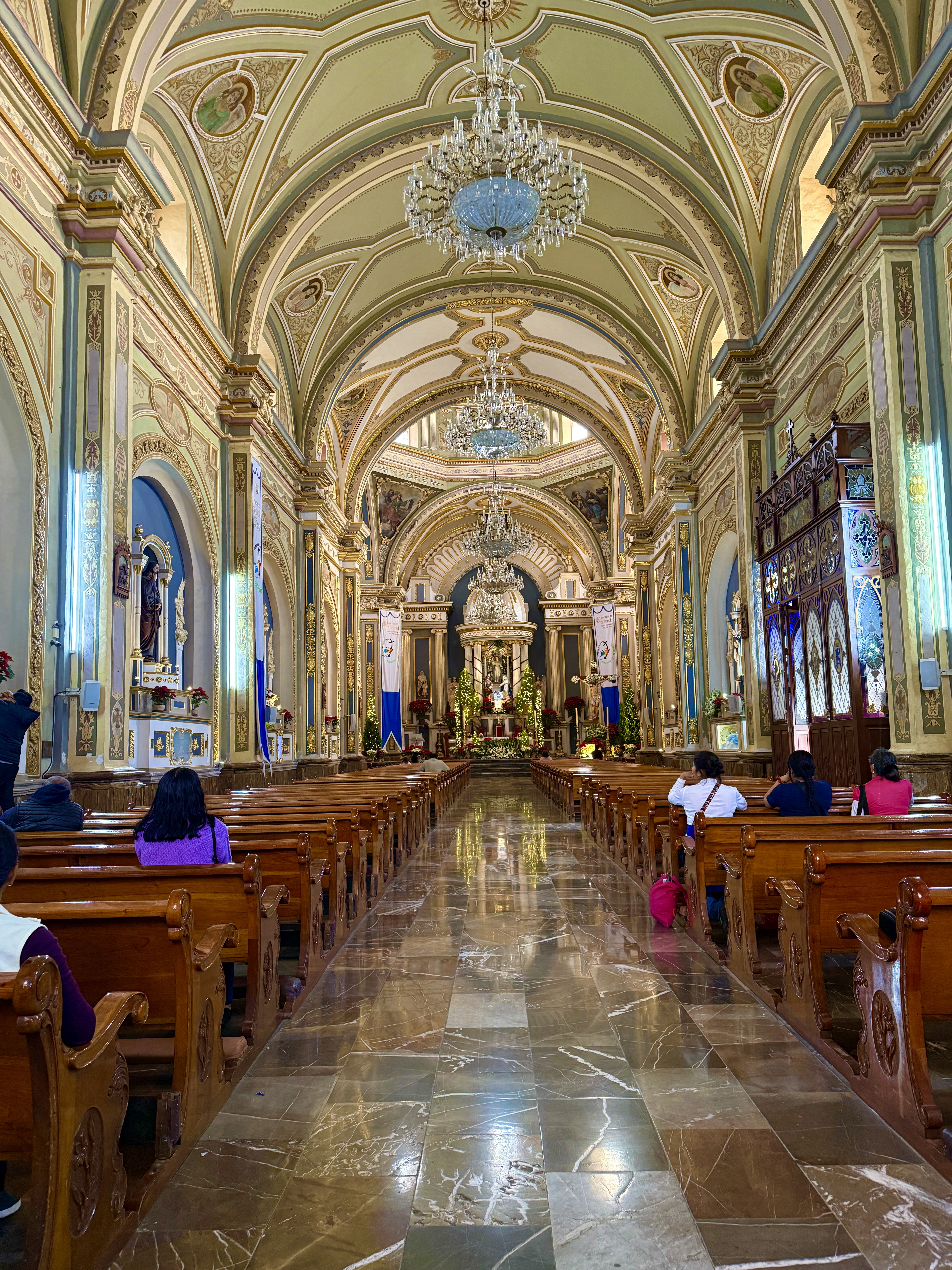
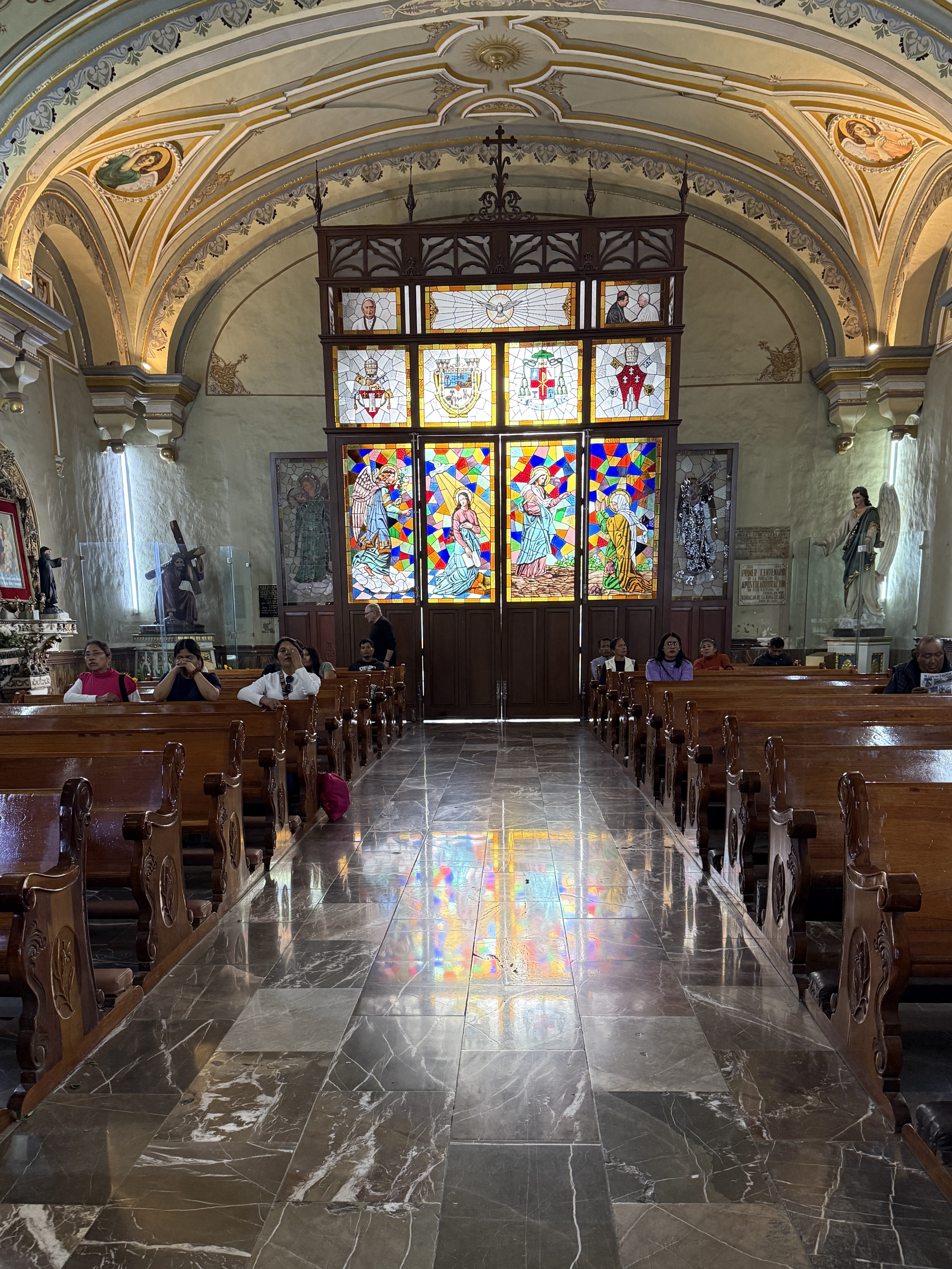
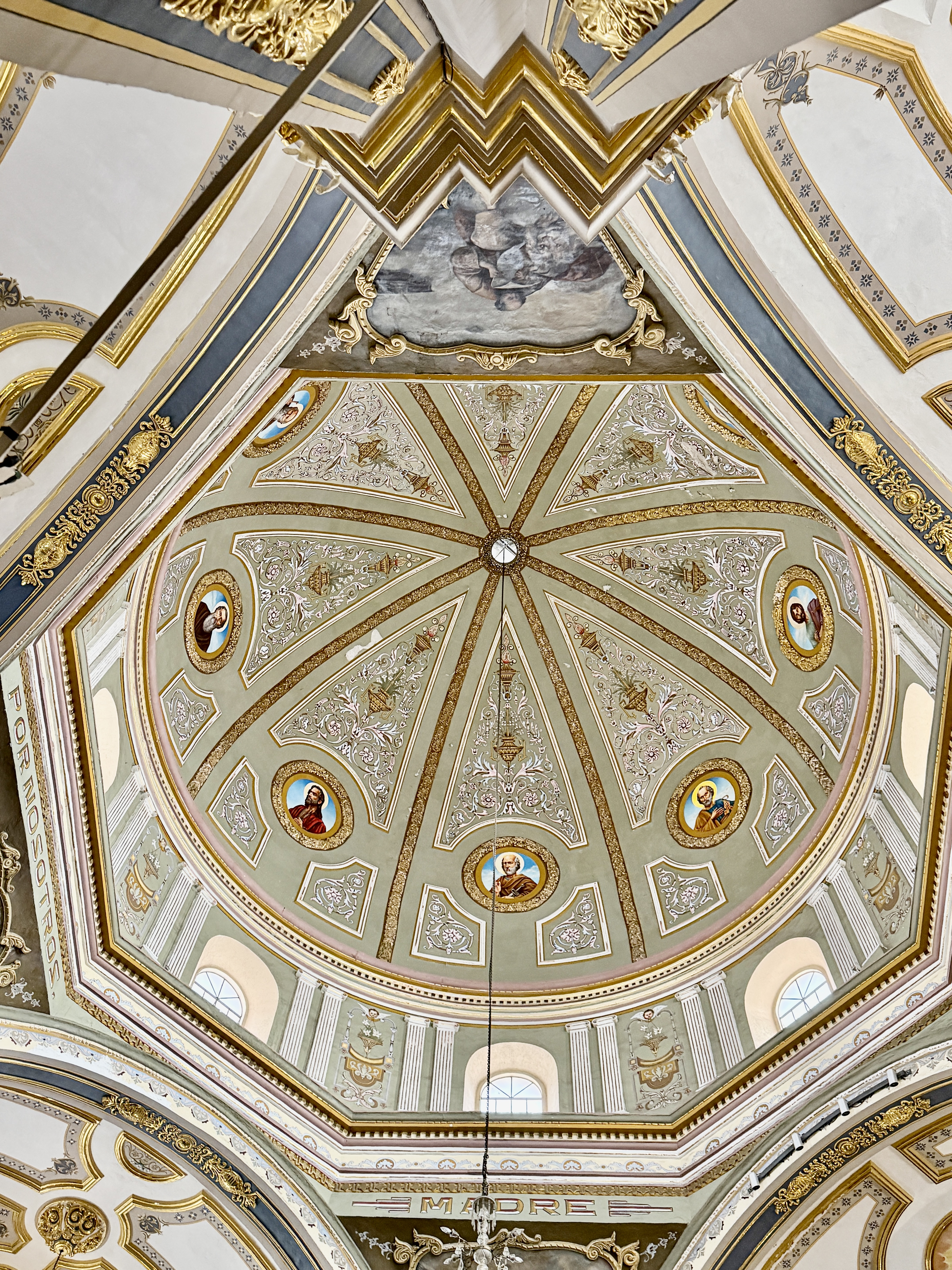
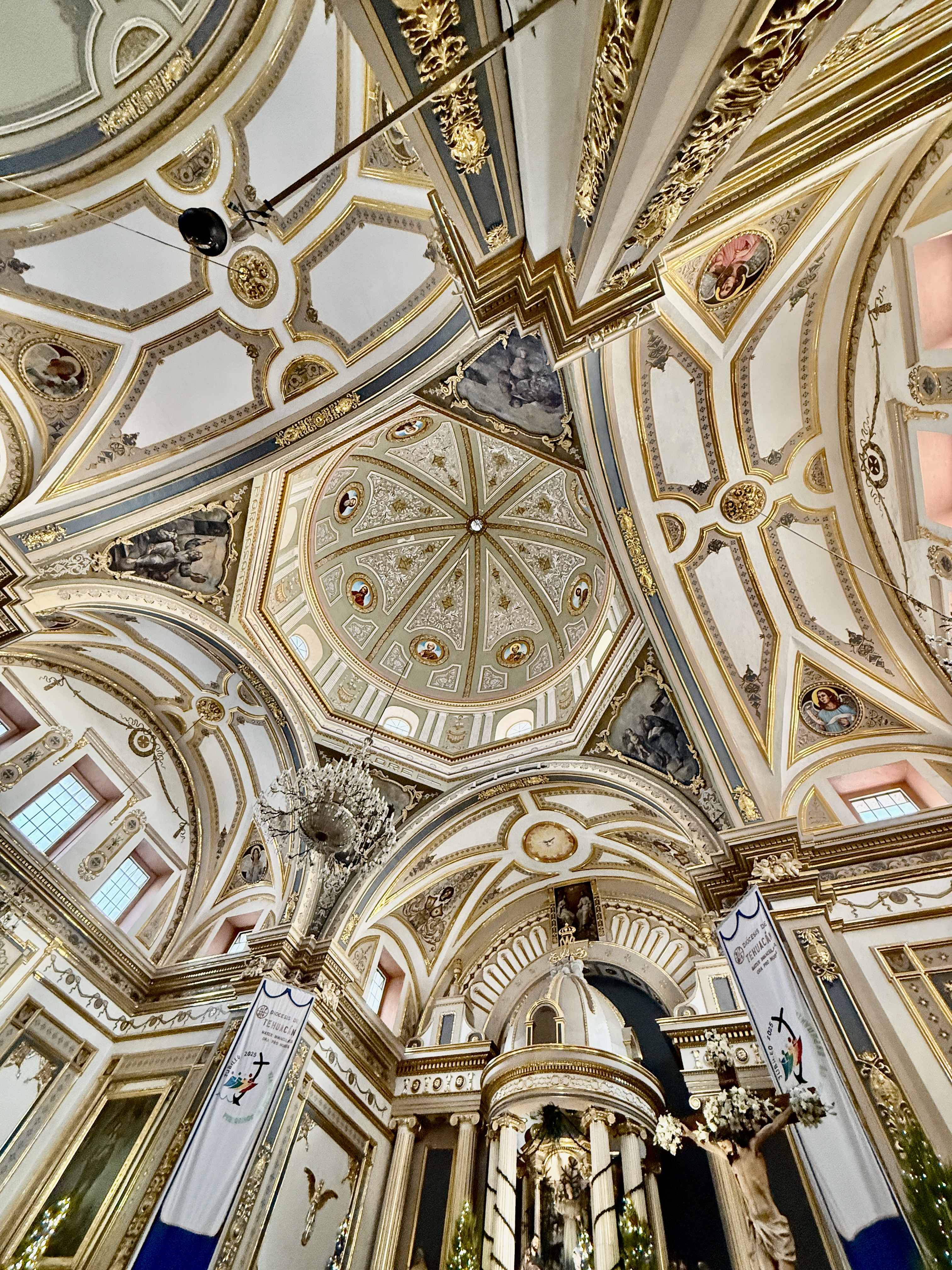
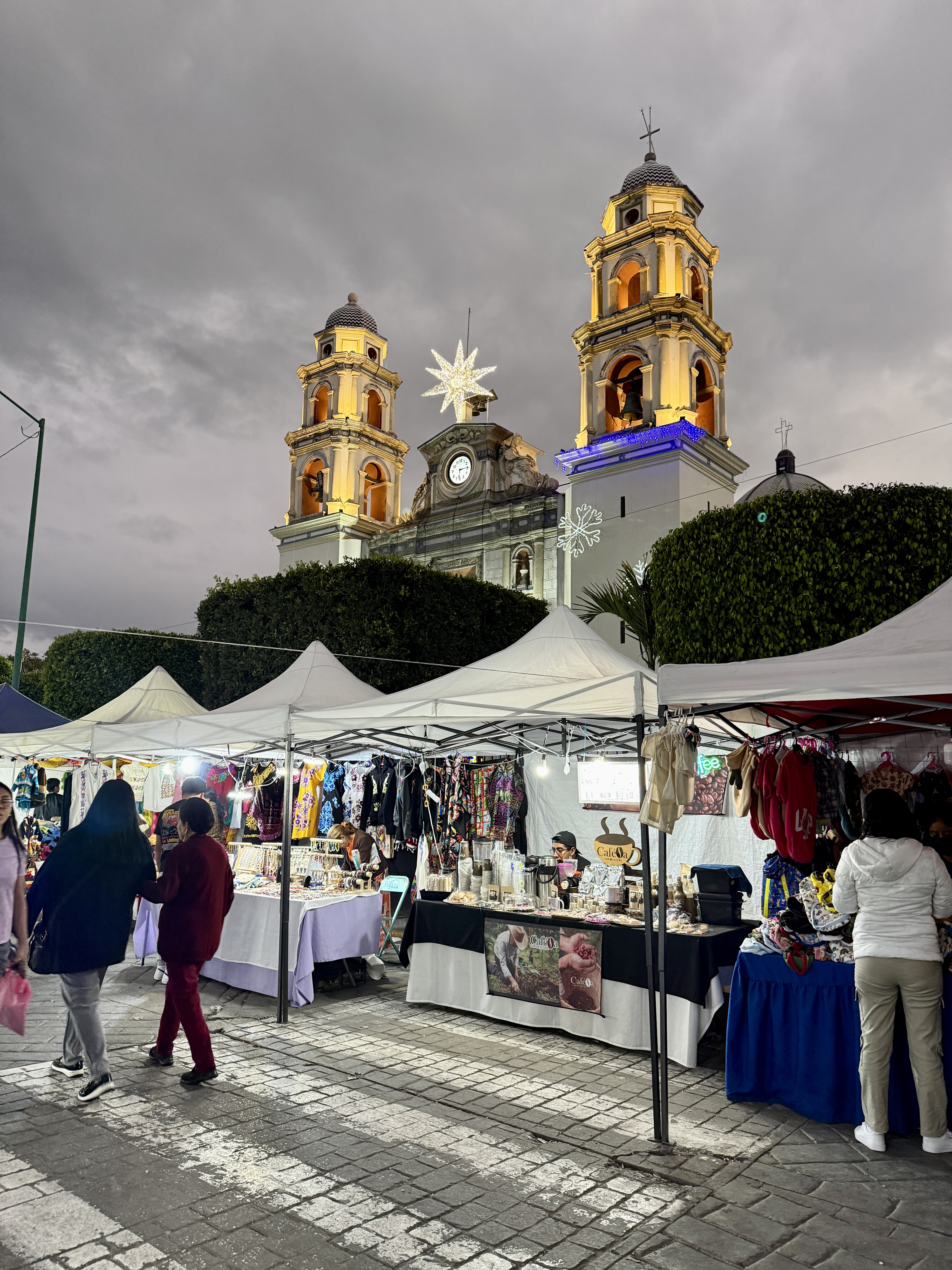
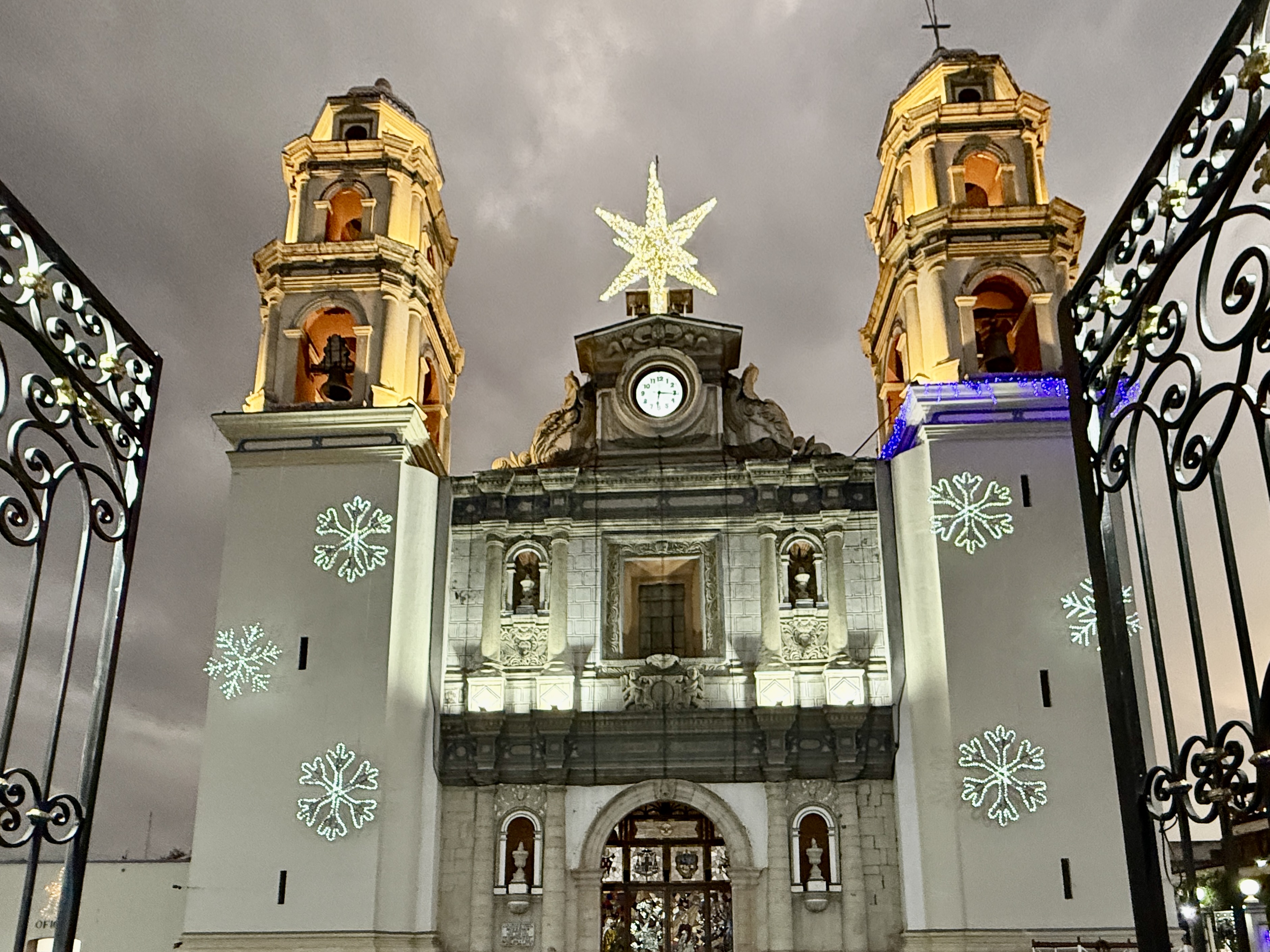
Once settled, I strolled to the Zocalo and visited the major cathedral, which was —naturally— Baroque, but less so than the Puebla and Oaxaca cathedrals.A service was underway and while many Mexicans are no longer practicing Catholics, the cathedral did have a set of followers who were engaged in the service.
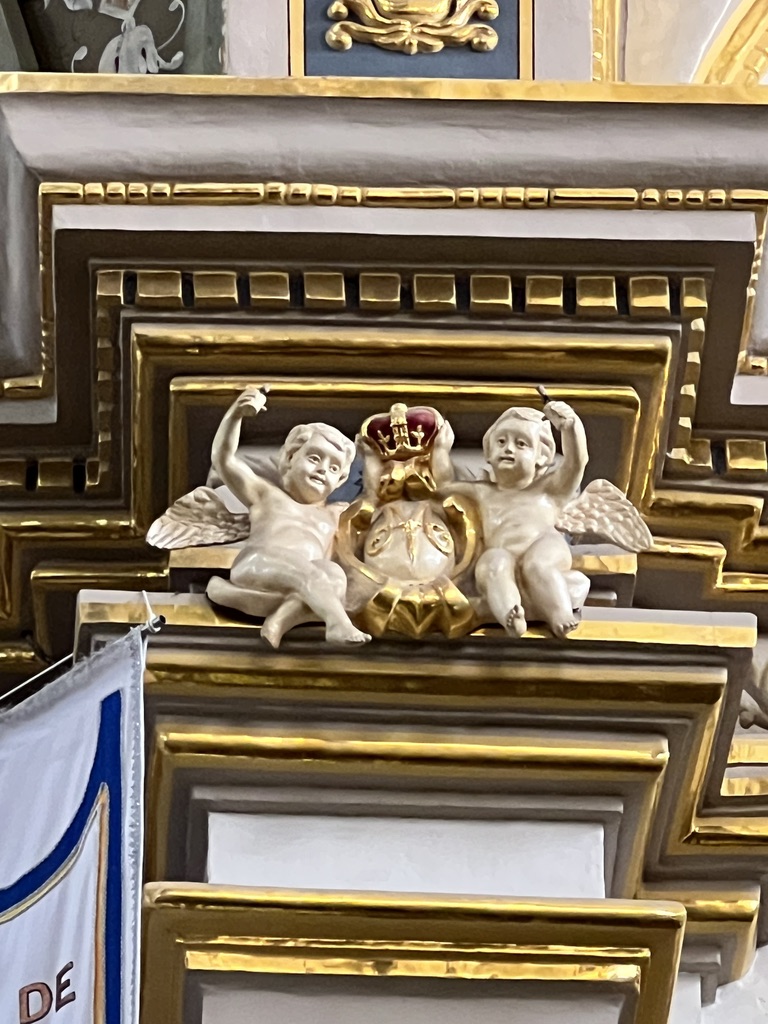
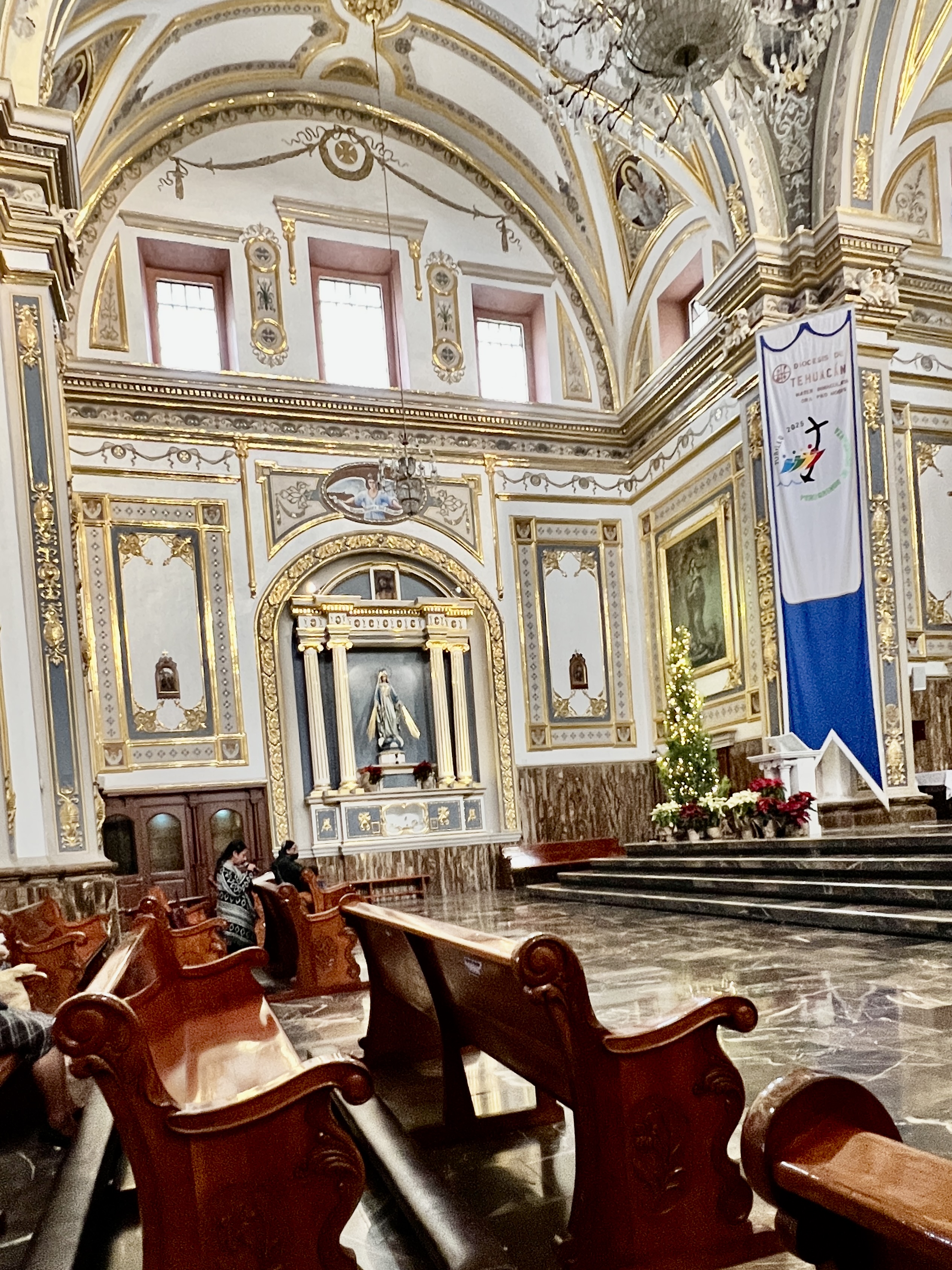
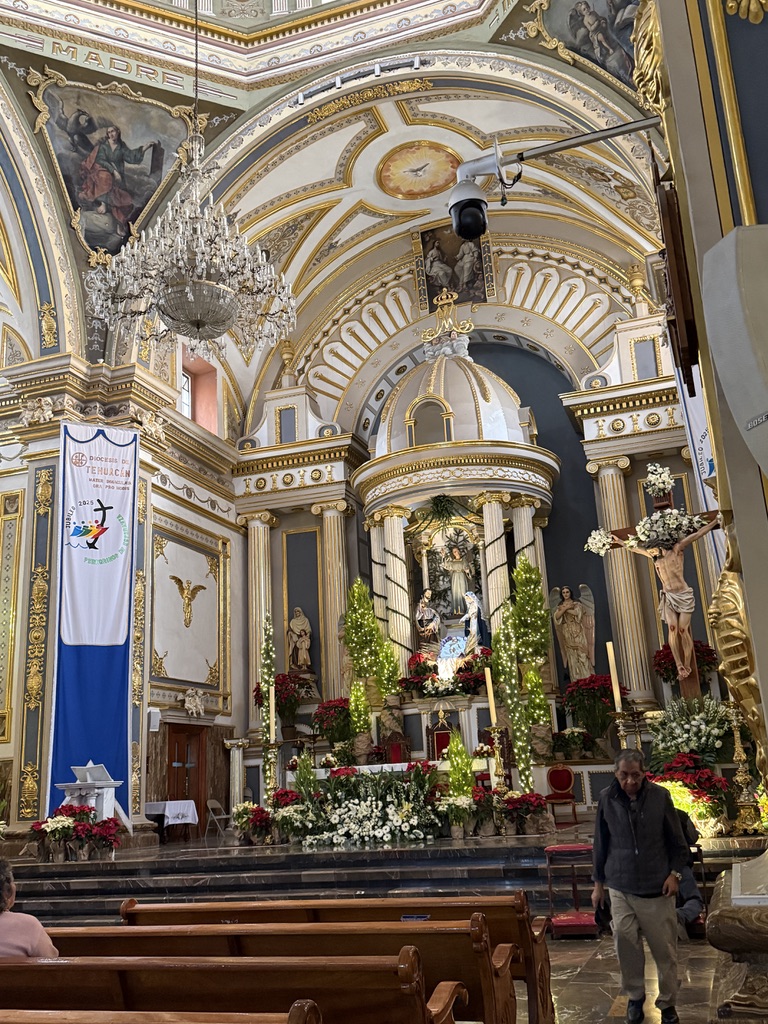

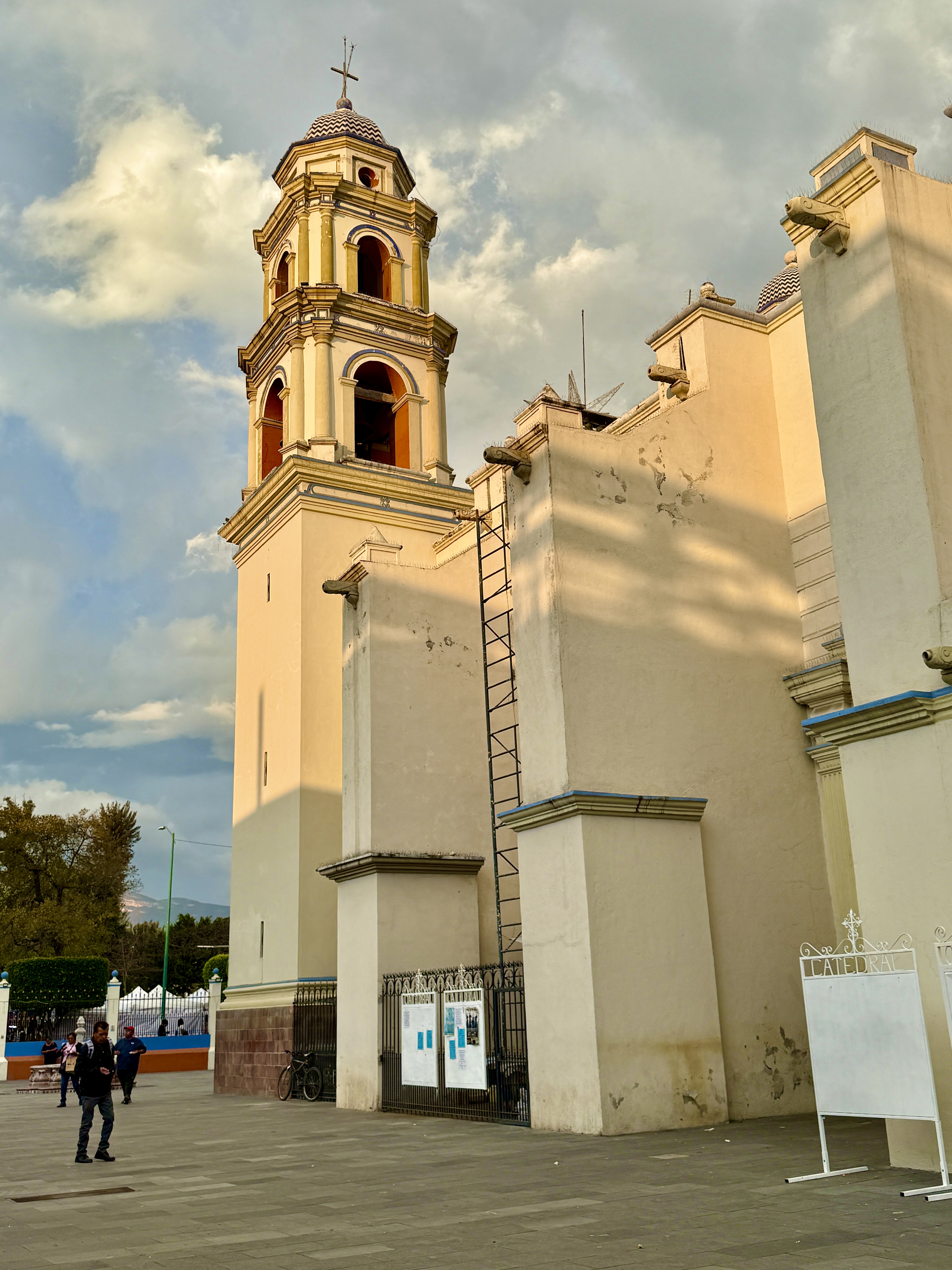
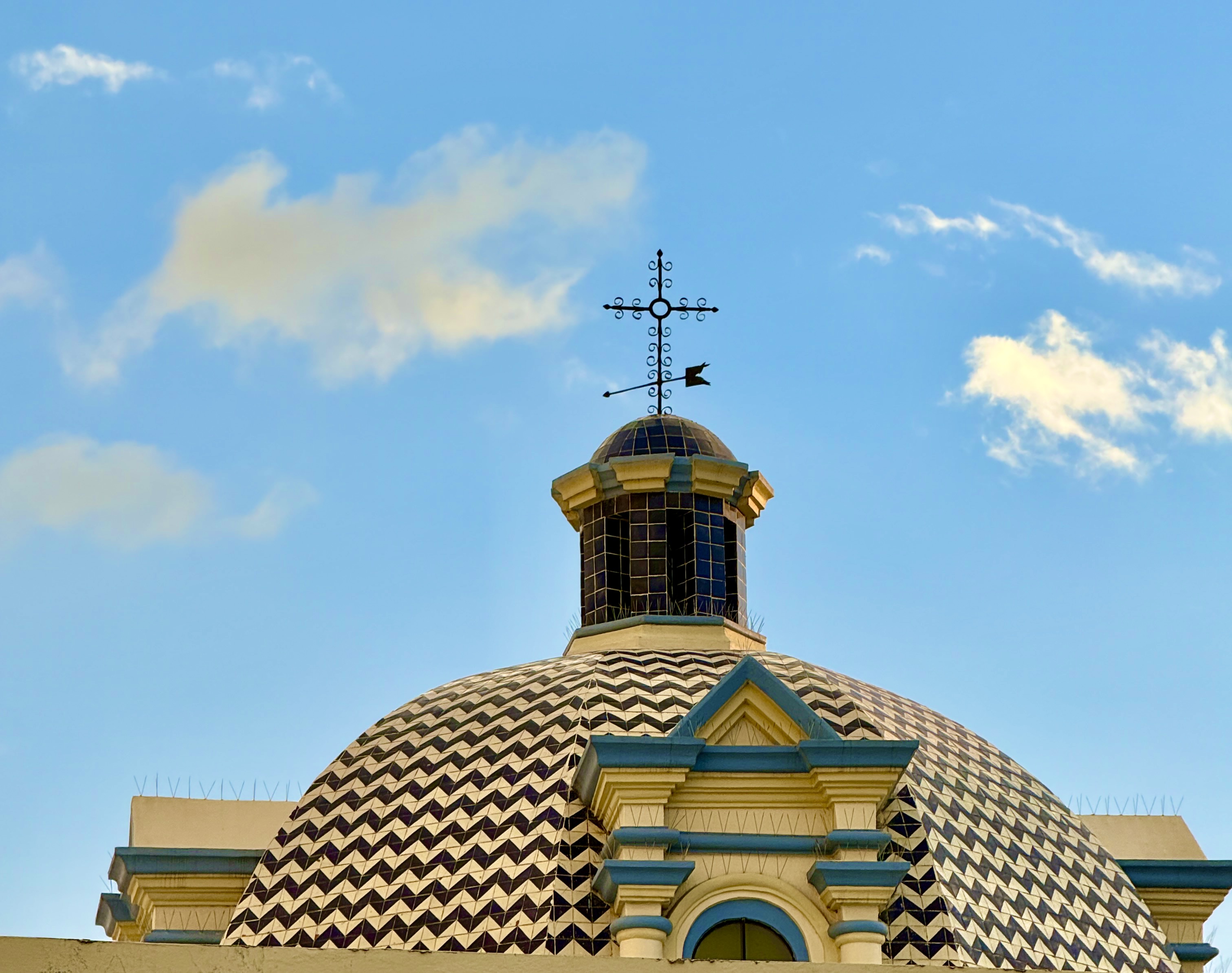
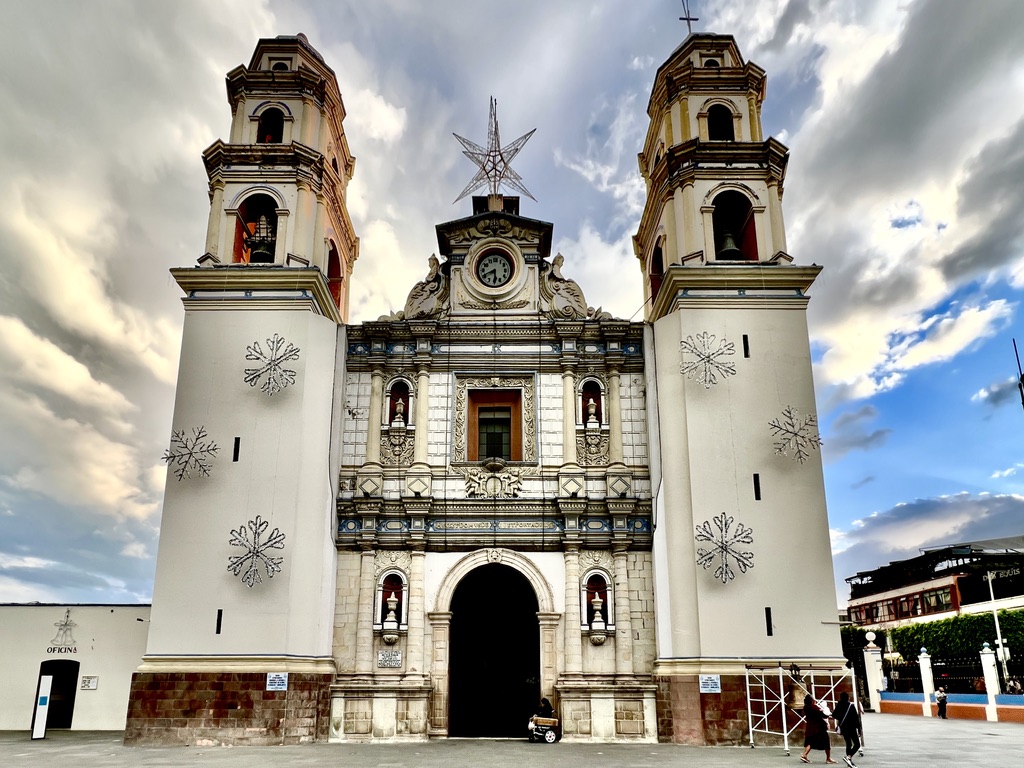
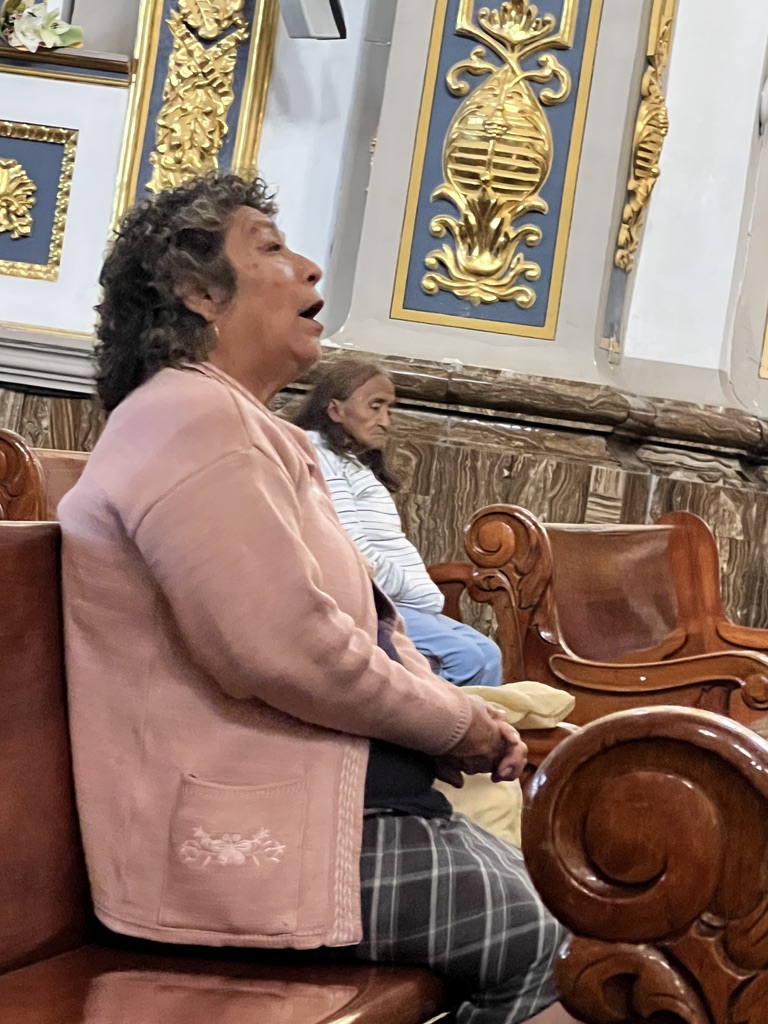
After checking out the cathedral , we walked through the Xmas market surrounding the church, and then walked through a lovely government building that had amazing murals throughout the structure, depicting the history of the town in the MExican surrealist and magic realism style of storytelling. These styles were influenced by Mexico’s style of mythology, folk traditions, and mystical landscapes.
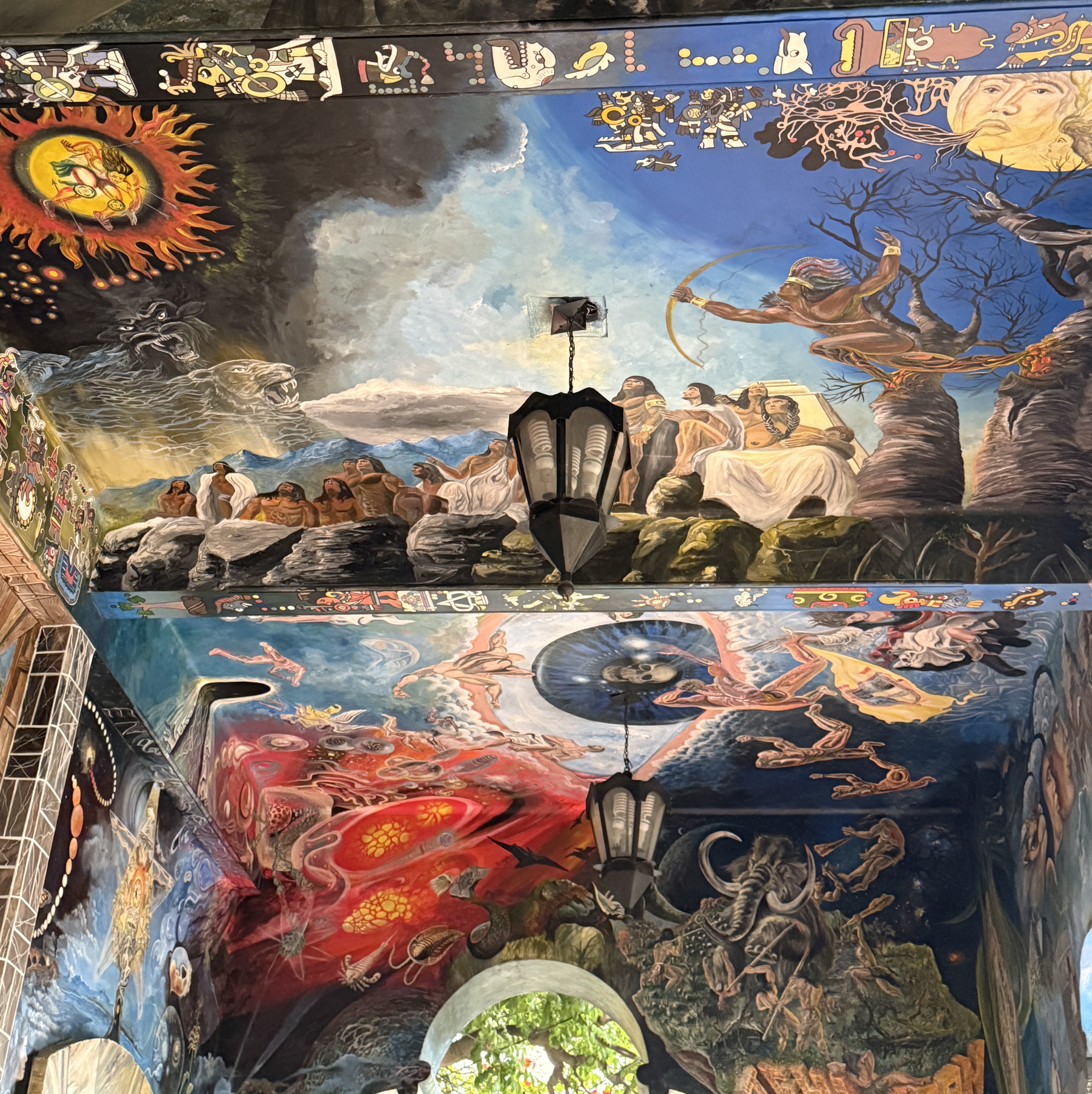
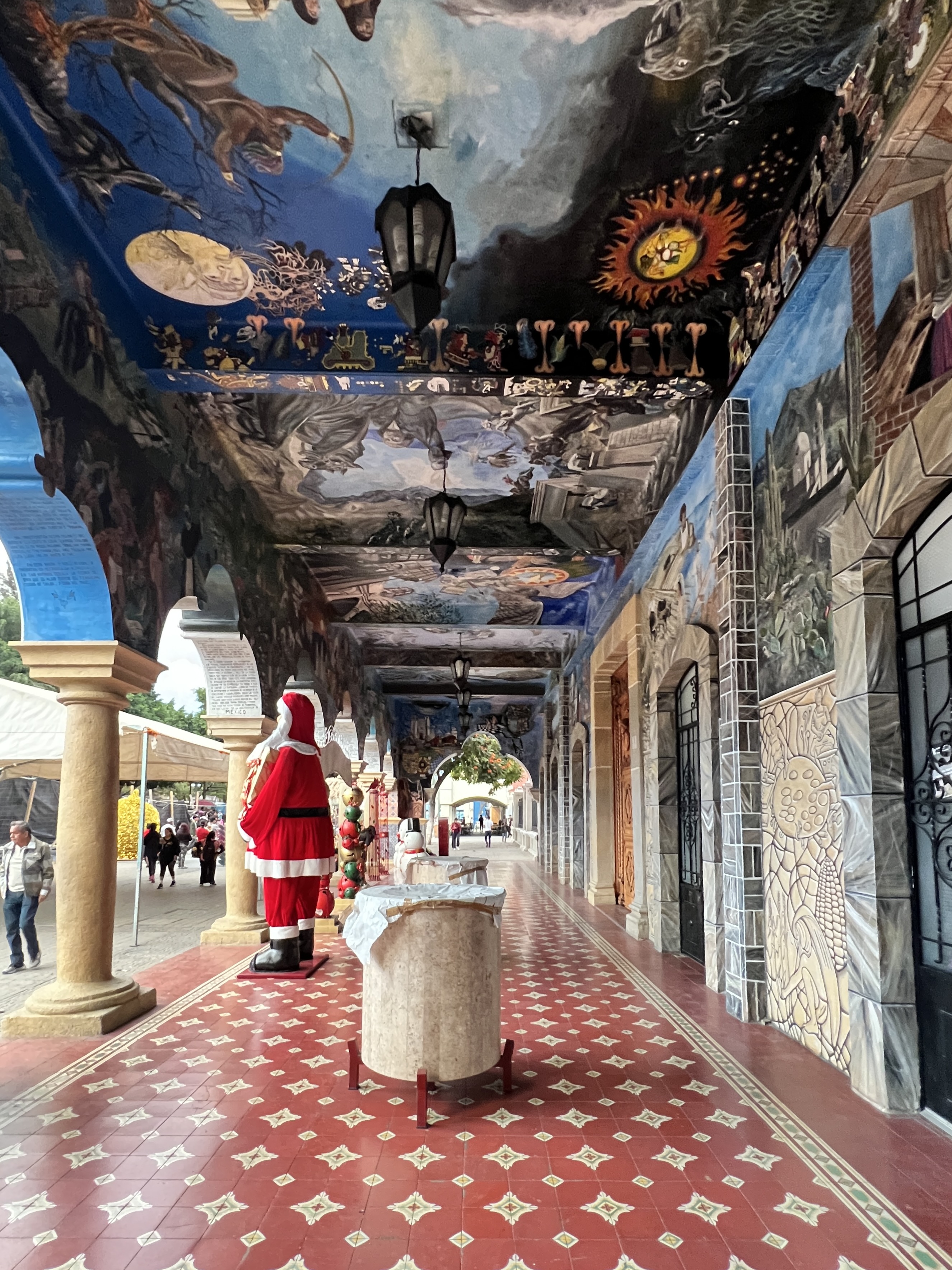
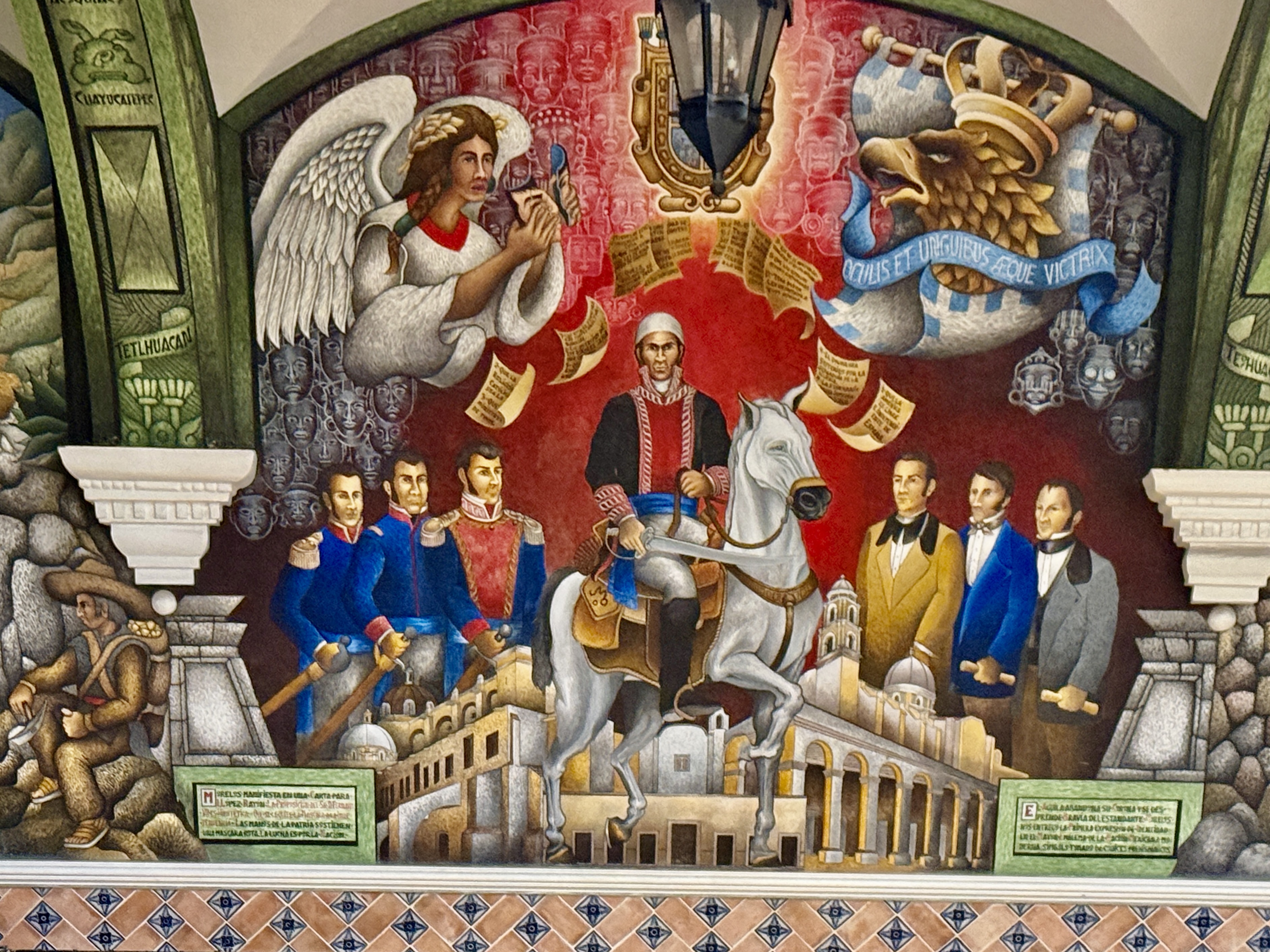
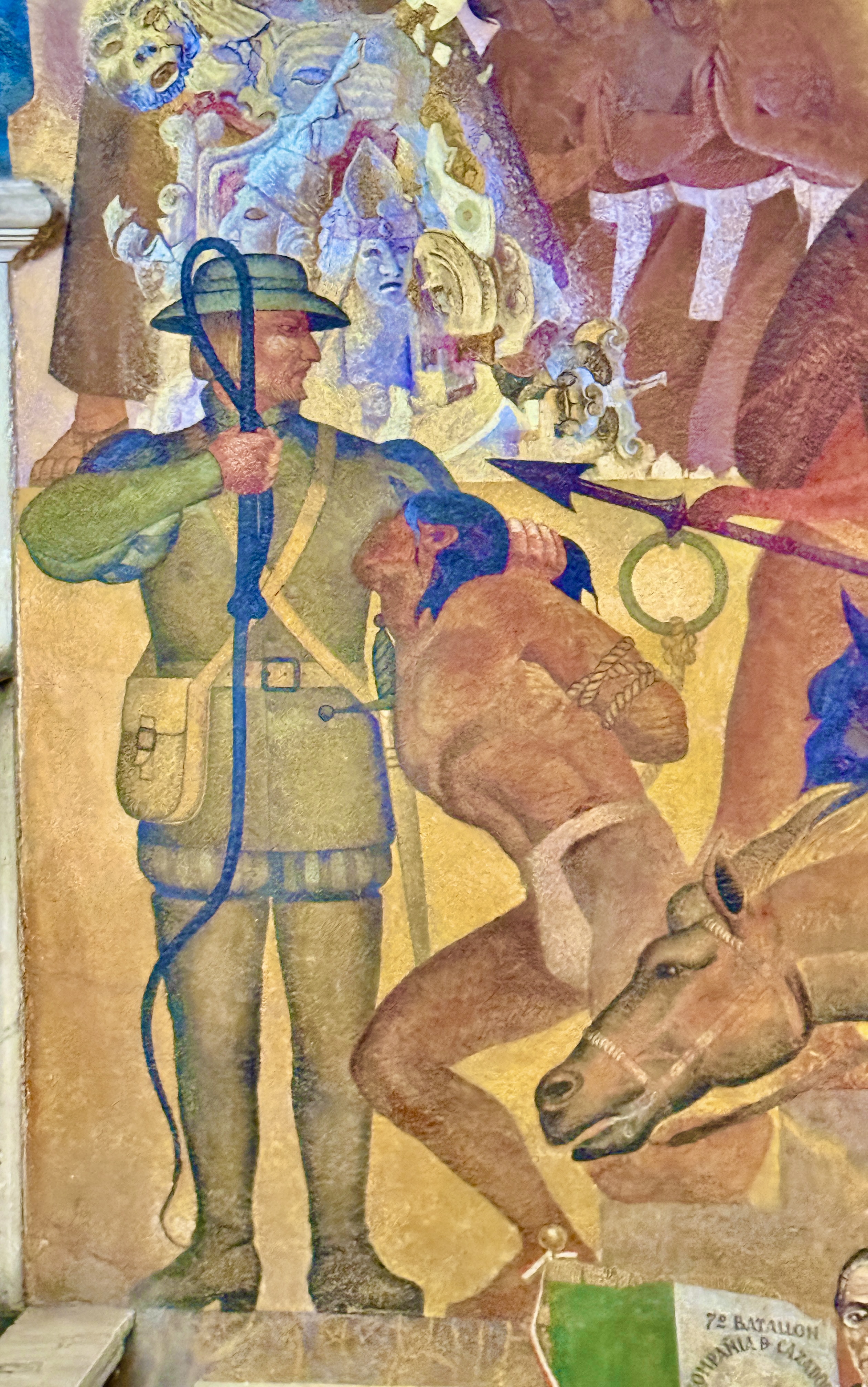

By 6:30 the temperature had dropped considerably and the town took on a really dramatic feel. We strolled past the church again and it was lit so as to look quite different than it had a few hours prior. And then after a brief stop at the hotel, we headed to dinner.
We ate at Casa Vieja, a mainstay in the city located within an 18th century eatate, so the building is hundreds of years old, although I don’t know when it became a restaurant. It’s known for its traditional menu and also its colonial charm. Food was fine and extremely cheap. We had two main courses (which were pretty large, 3 glasses of wine, bottle of sparkliing water, and dessert…. the bill was about $45 (USD) with tip!! And best of all, it was a five minute walk back to the hotel. The drive and the long day are beginning to take their toll…so I’ll sign off now.
Best –
Fern
PS Tomorrow we do the drive through the mountains.
Dia Cinco: December 28, 2025: Puebla
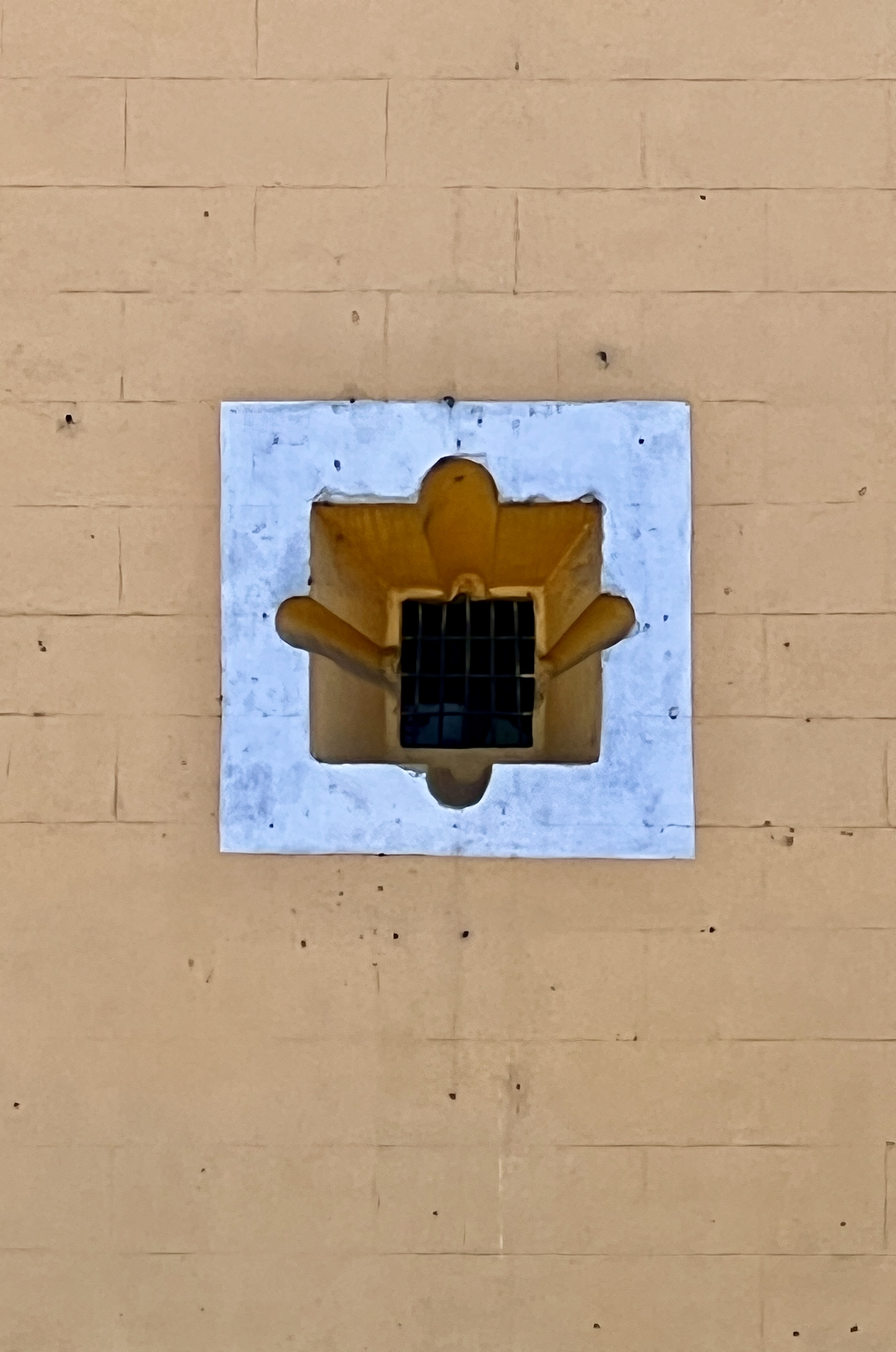
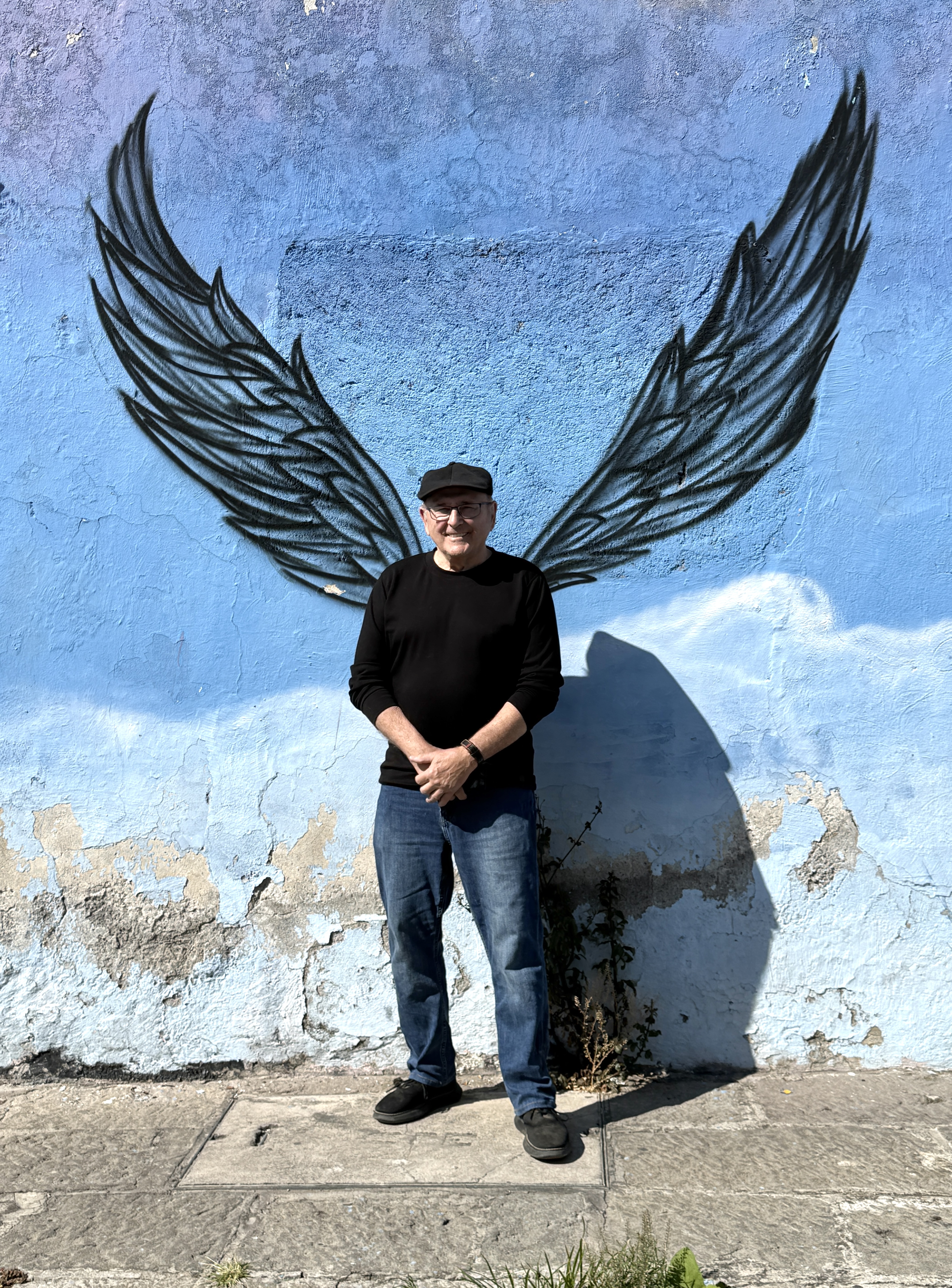
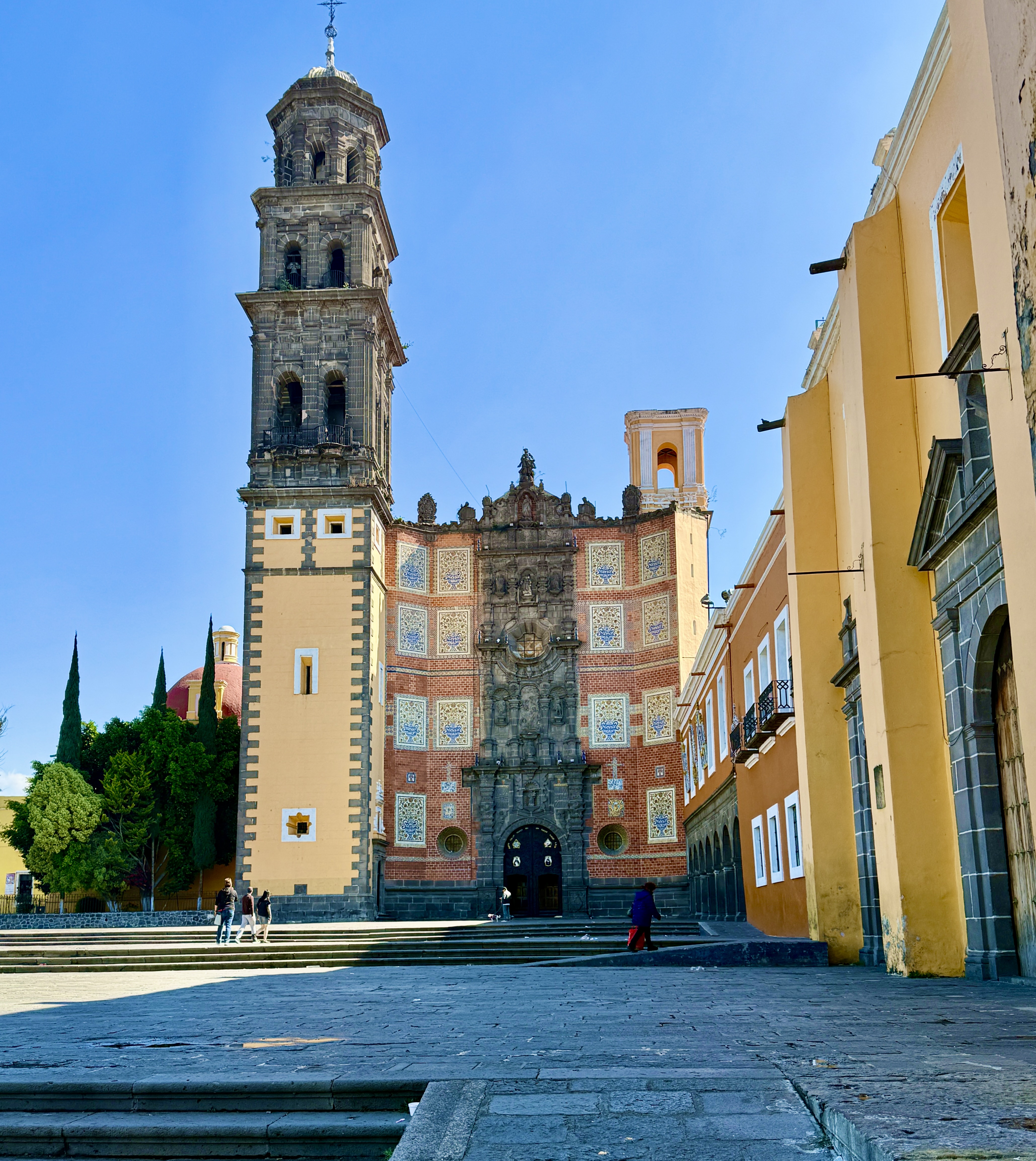
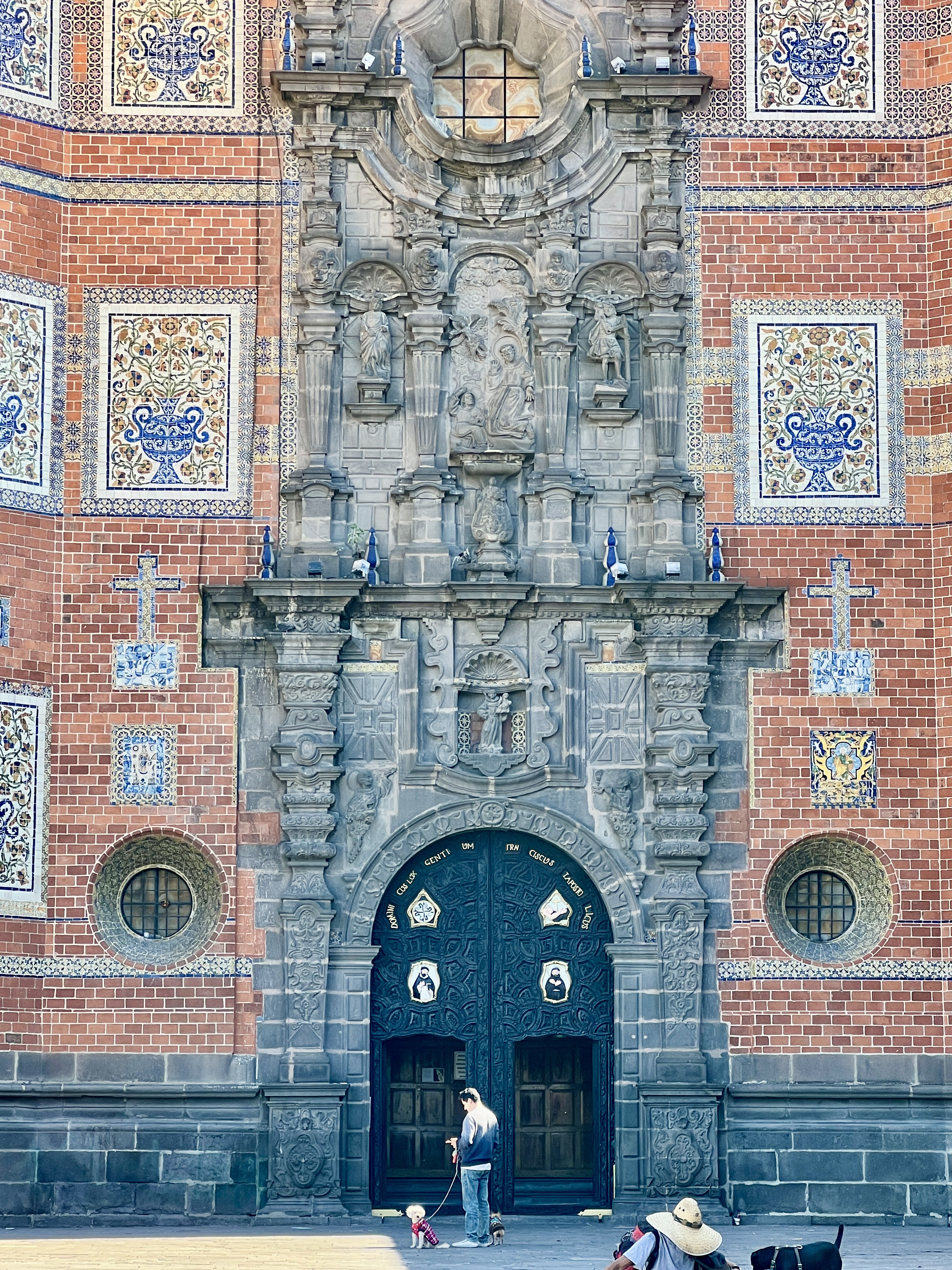
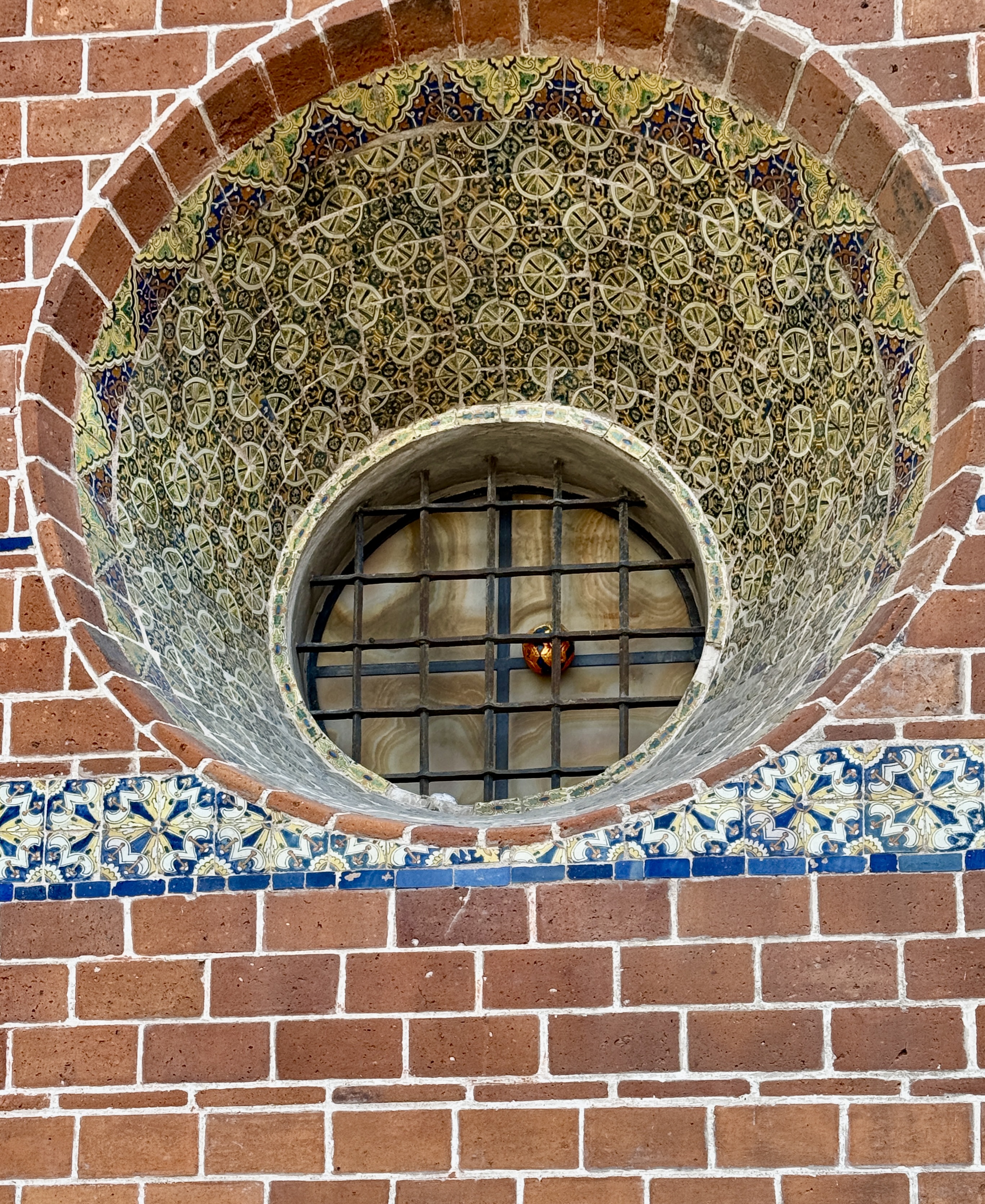
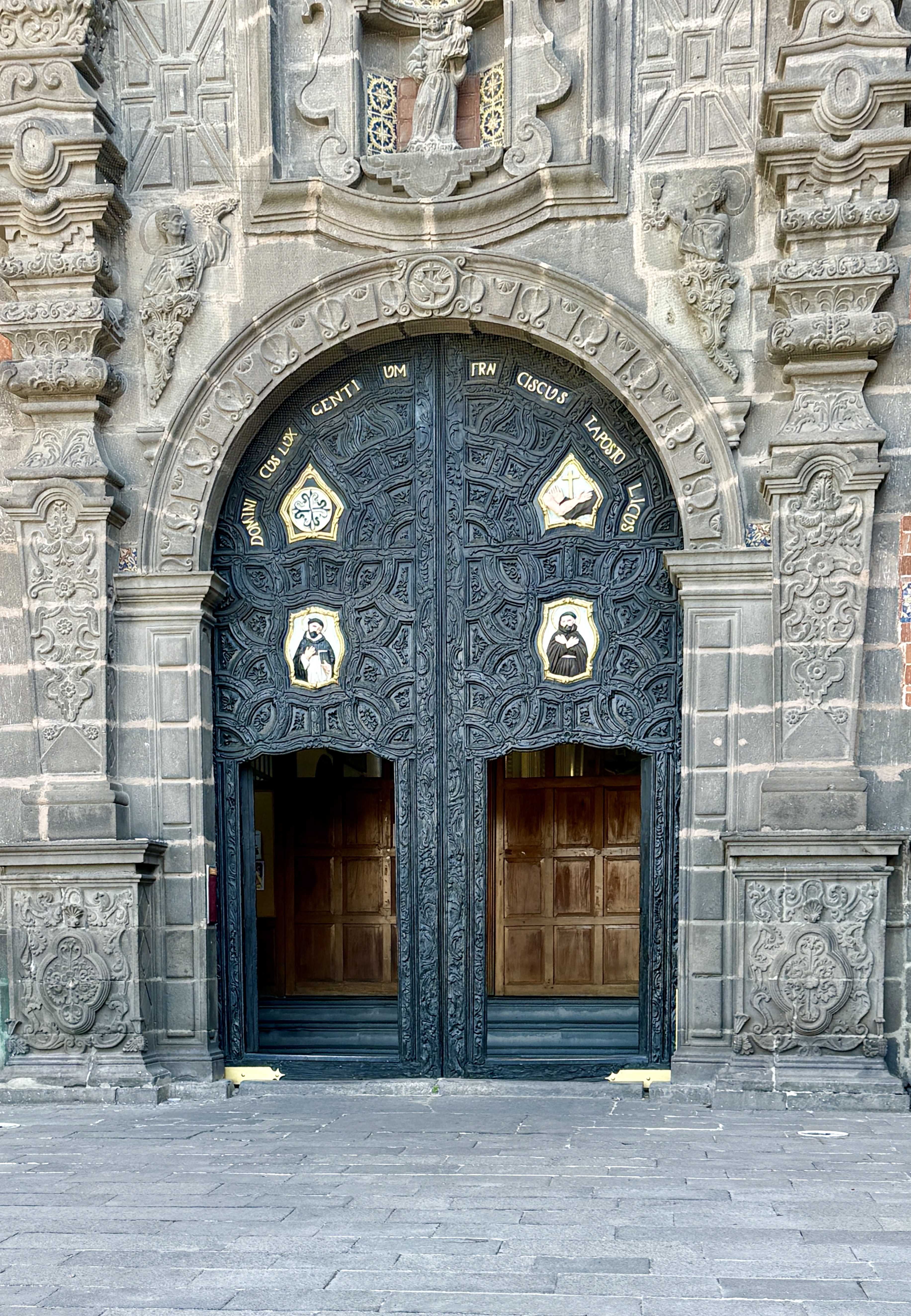
Given the issues with our room last night, and the fact that it was past 1;00 am when we were finally settled, we got a bit of a late start on breakfast, which we had at the hotel. Then we set out for the day, with a fairly long list of places we hoped to reach. First we went to the church we were able to see from our original room at the hotel: Convent Church of San Francisco, because we could tell it had lots of Talavera on the outside (and frankly I assumed it would have some inside as well), Anyway, we strolled over to see it. It’s tower is about 210 ft tall and while the building is (yet again) baroque, it has beautiful tile work on the facade. It’s eclectic and the tiles make it ereally special.
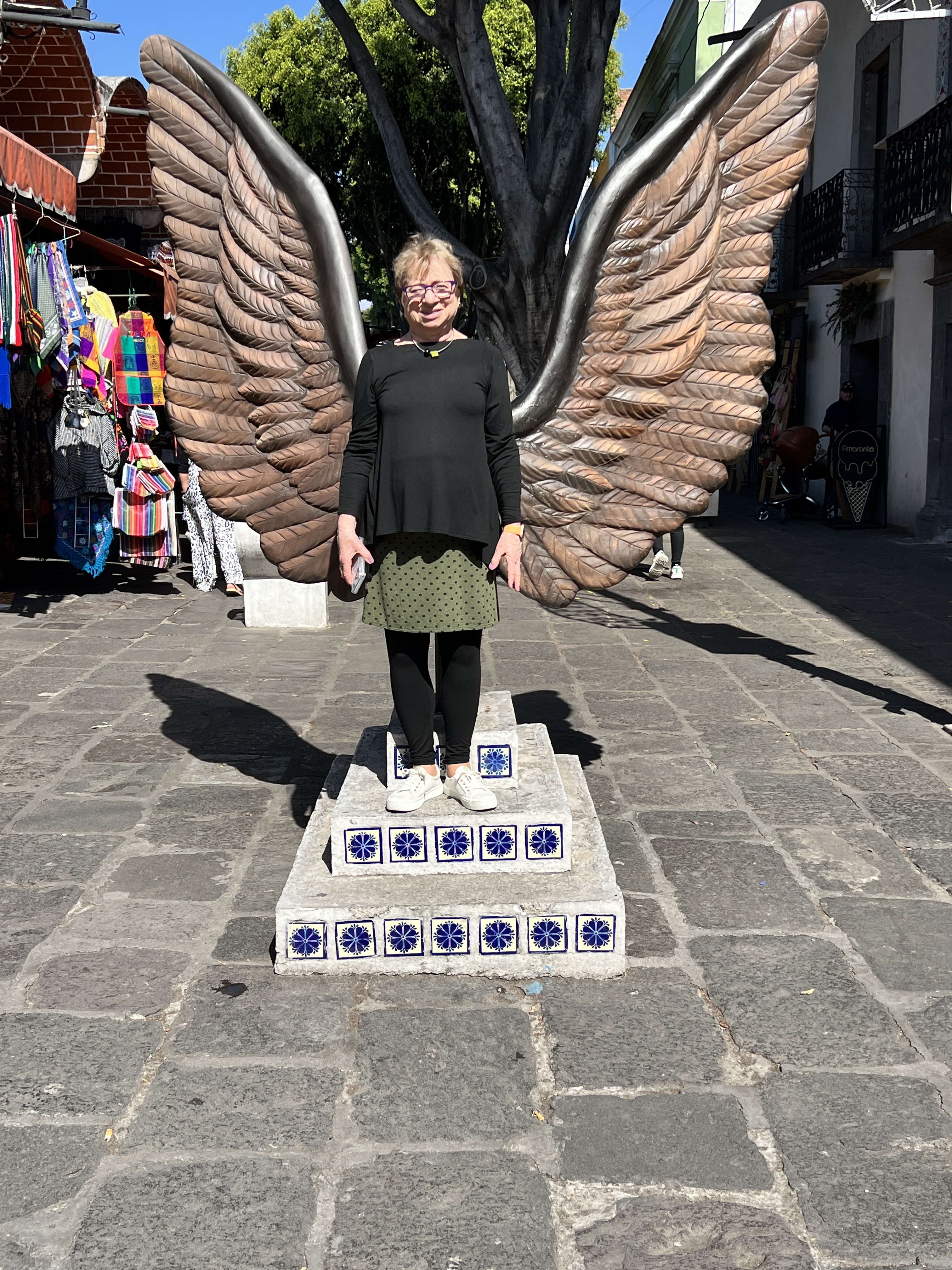
Then we walked to what is calledthe Artist Quarter, fairly close to Parian Market. It a few block long street with “artist” (again of very varying quality) painting on the street and in studios, and street performers and cafes.
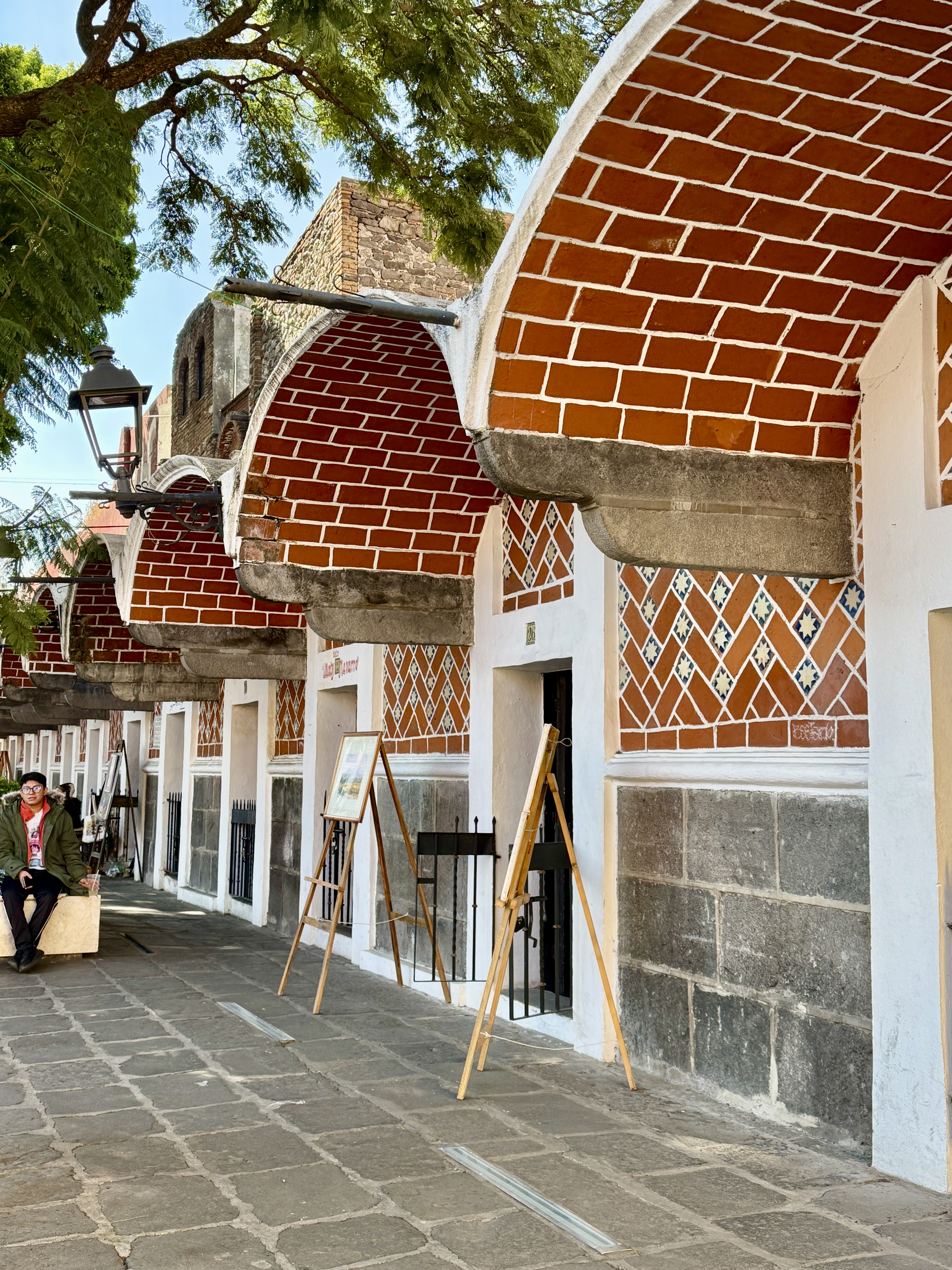
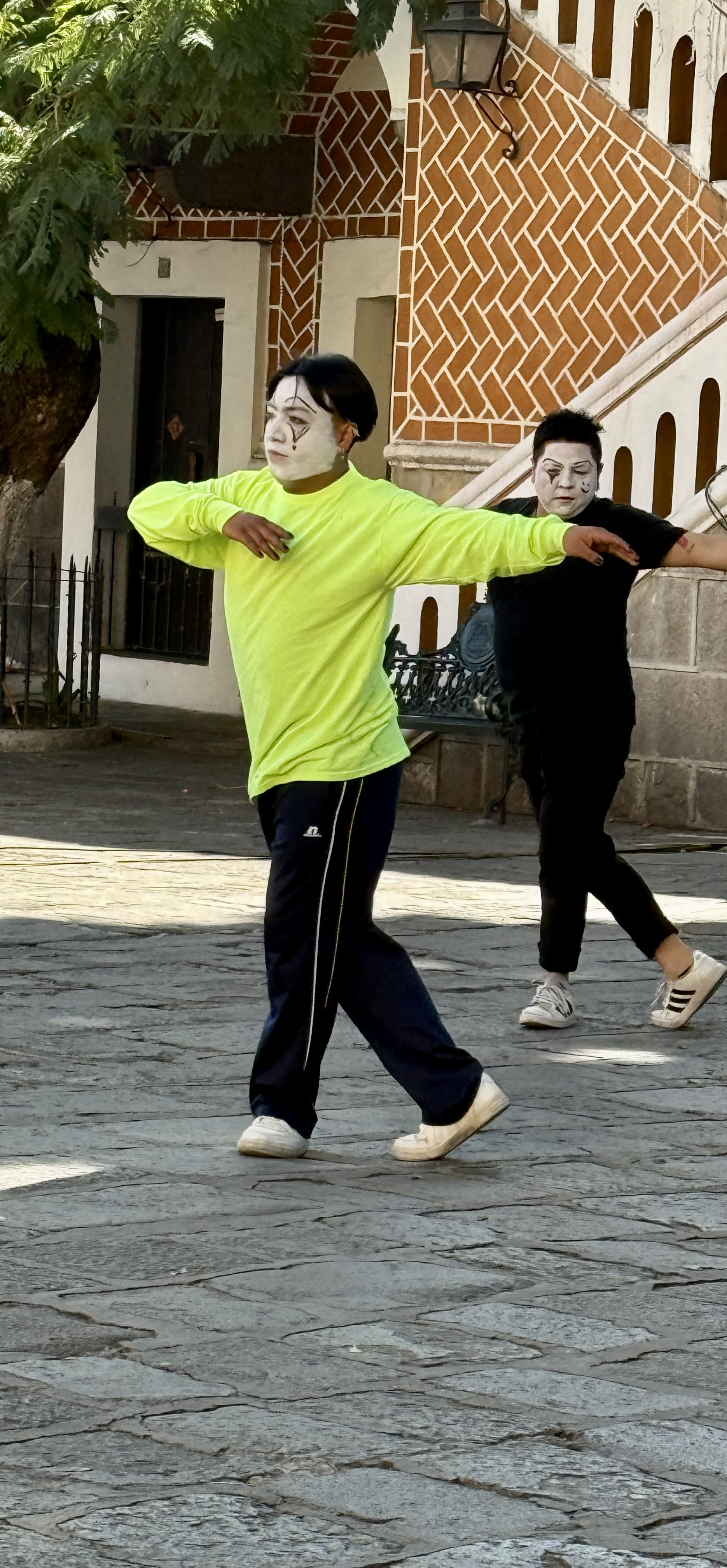
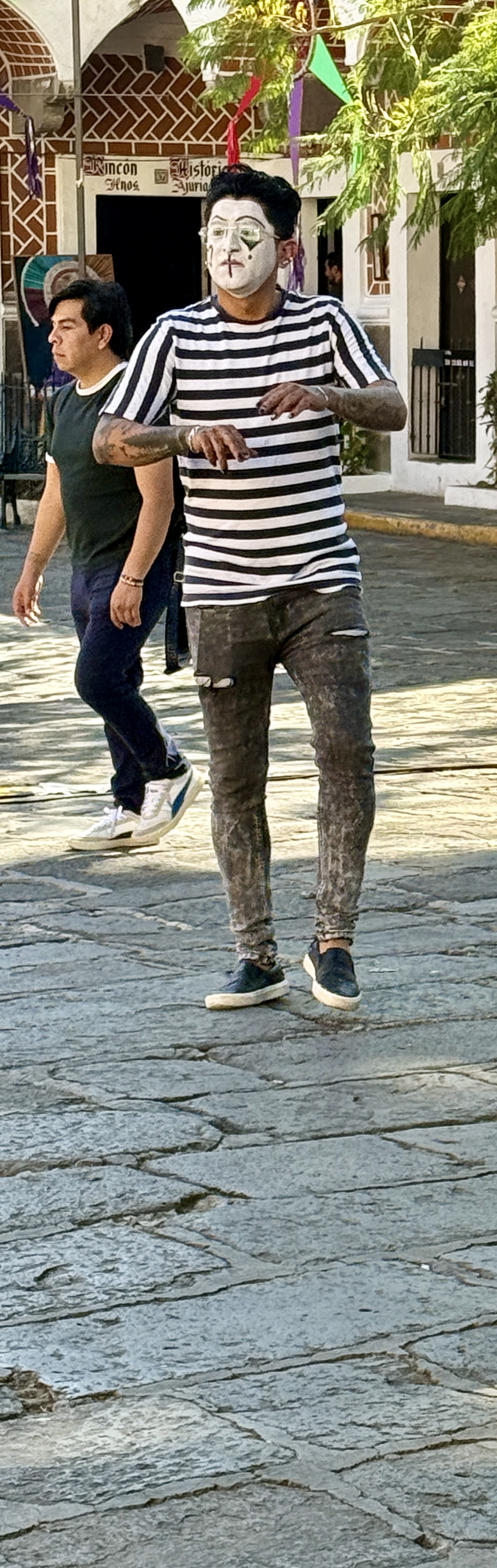
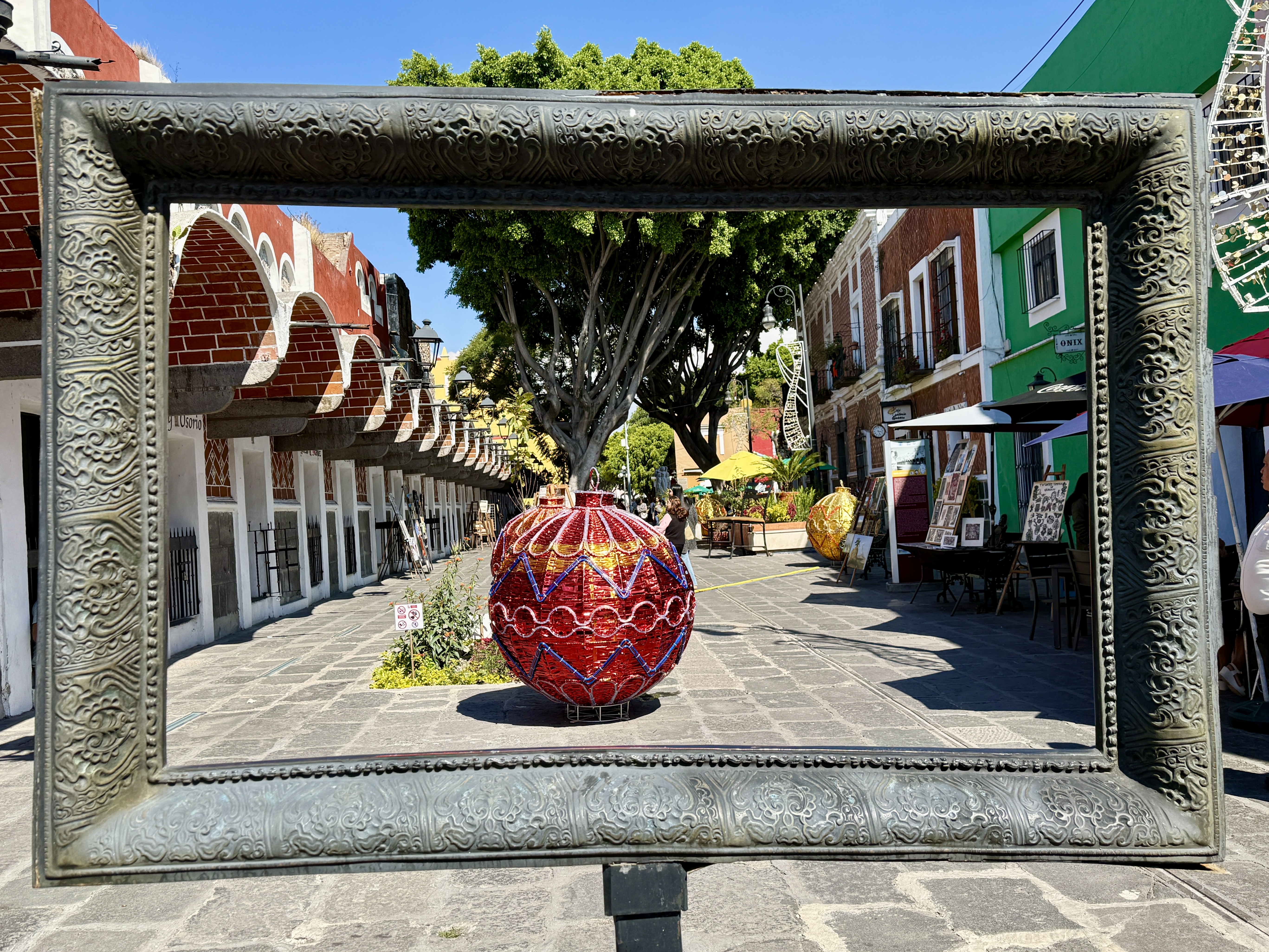
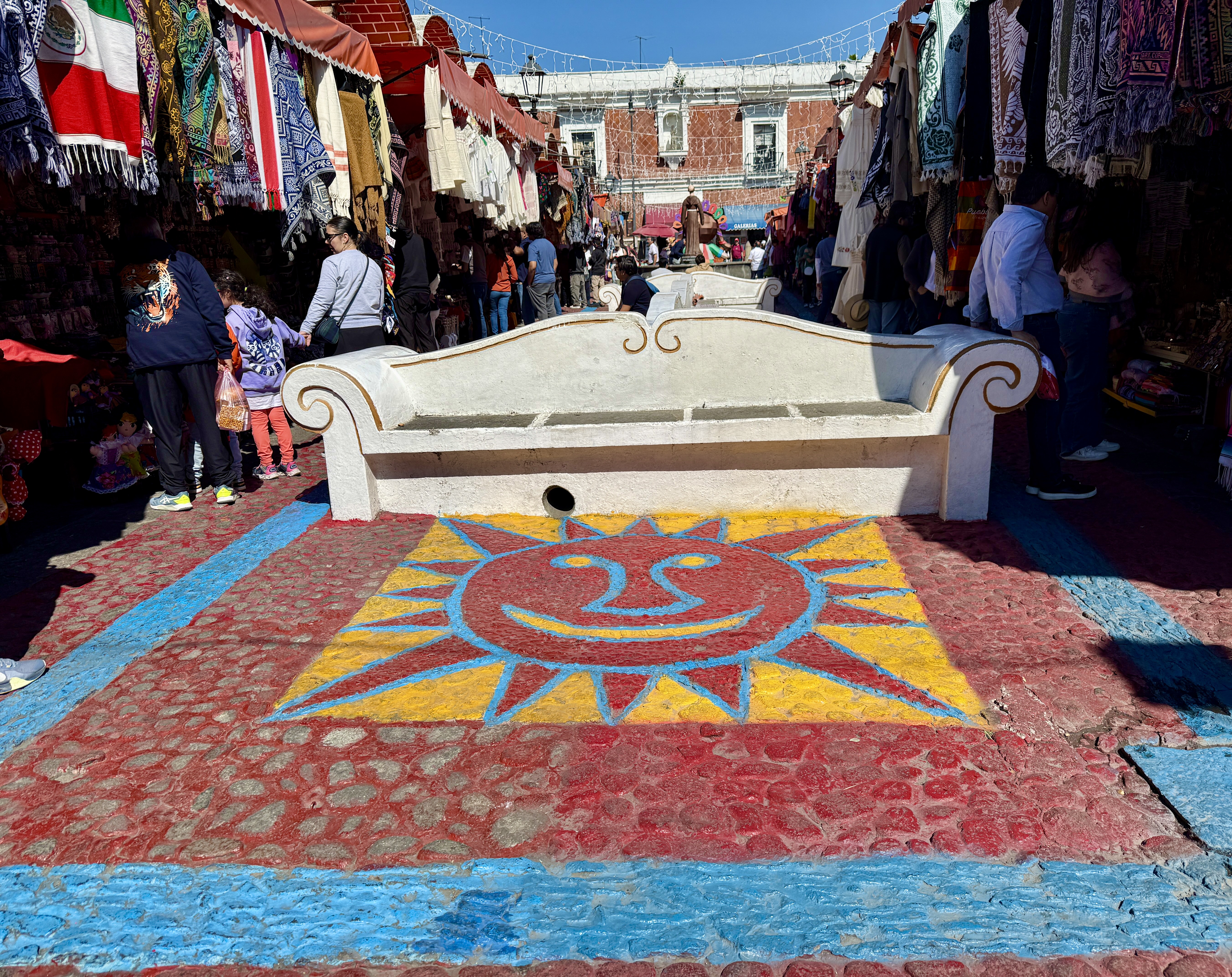
We were then headed to the market, but got sidetracked when we saw a street full of murals. And off we went– to a neighborhood whose name I cannot recall… and walked to see a host of murals. To be honest, I could visit these neighborhoods and see the different approaches to the murals — abstract design, politics, famous Mexicans, history, and more… This was a really modest neighborhood with a small makeshift market and streets lined with murals, many of which were now old and fading. We also passed a huge mural on the front of the department of social services.
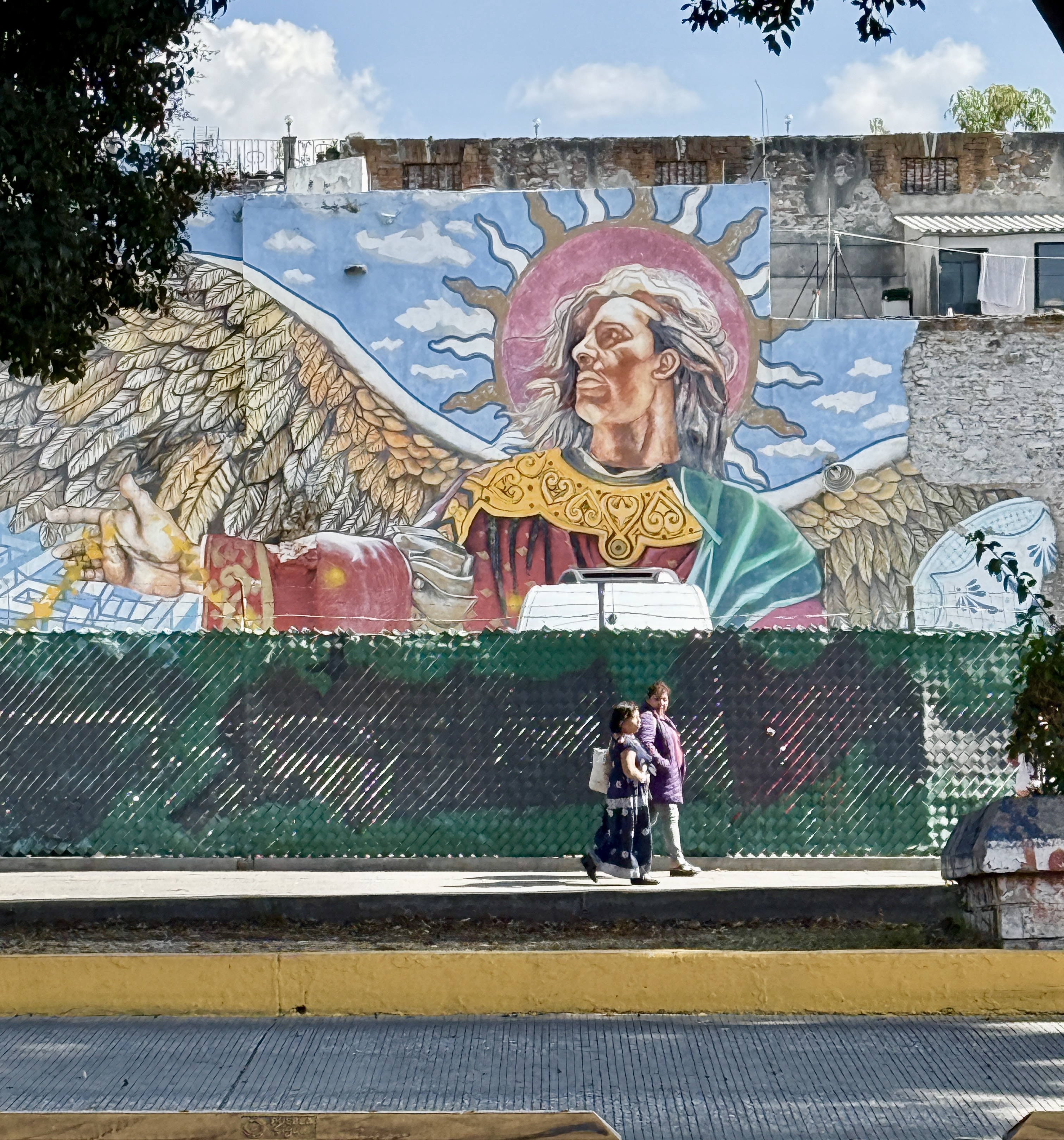

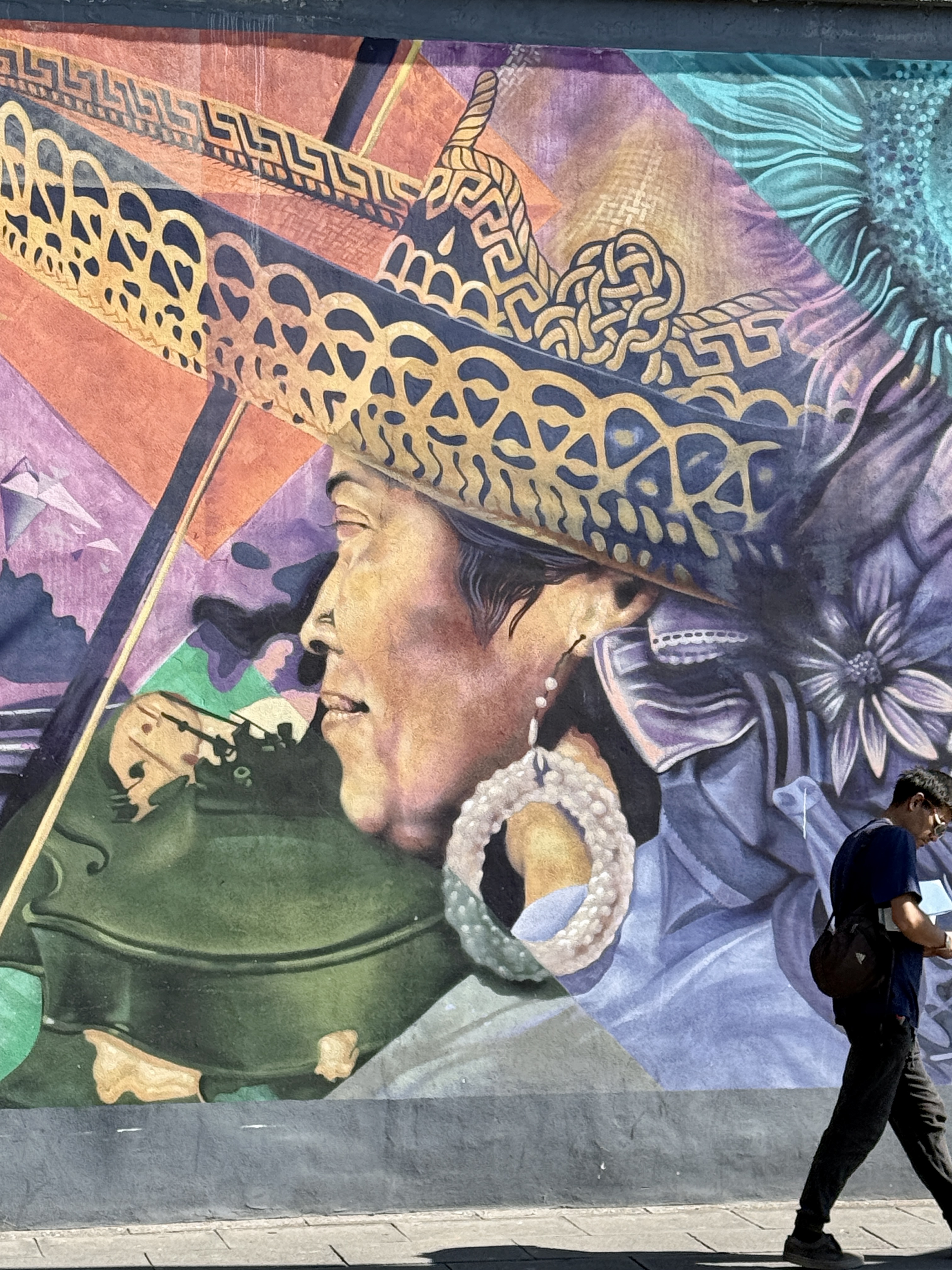
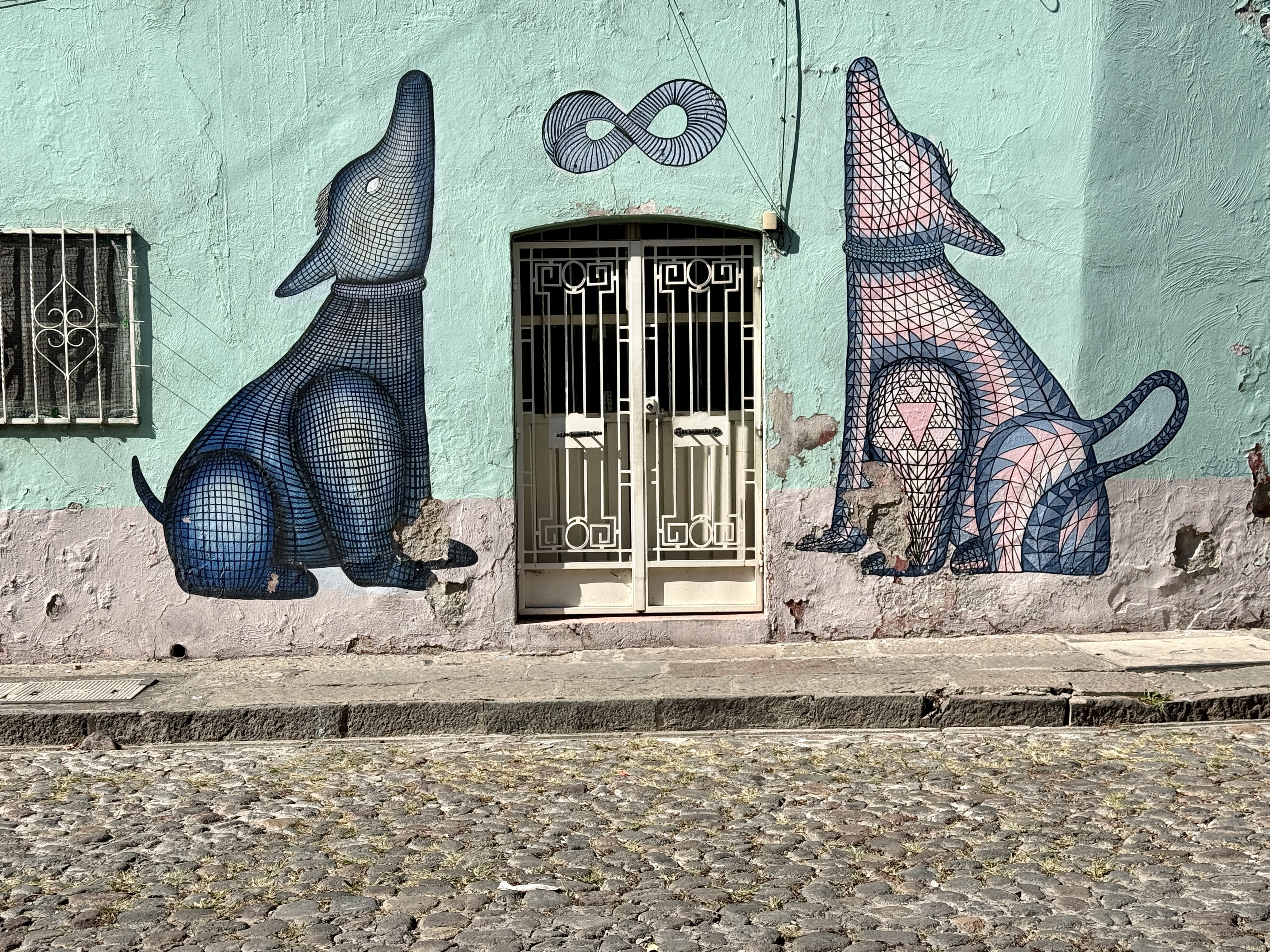

After strolling and even speaking simply with one or two residents of the neighborhood, we walked to a bigger street and hopped in a taxi to go to the Amparo Museum. We didn’t know much about it and were hesitant to use our last hours there, so we figured we’d take a look and probably just stay briefly and then head to another part of town. But we were quite surprised and impressed.
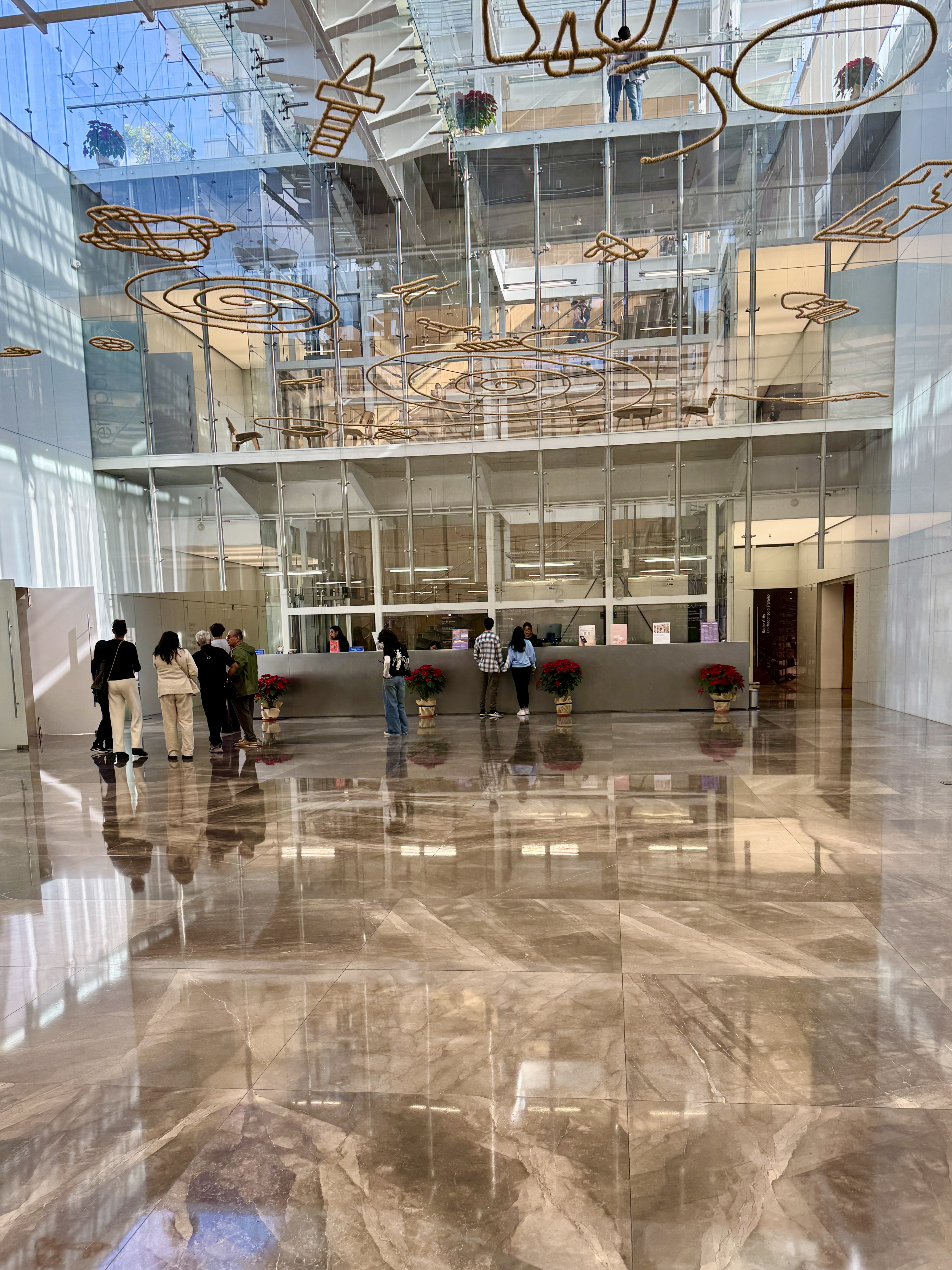
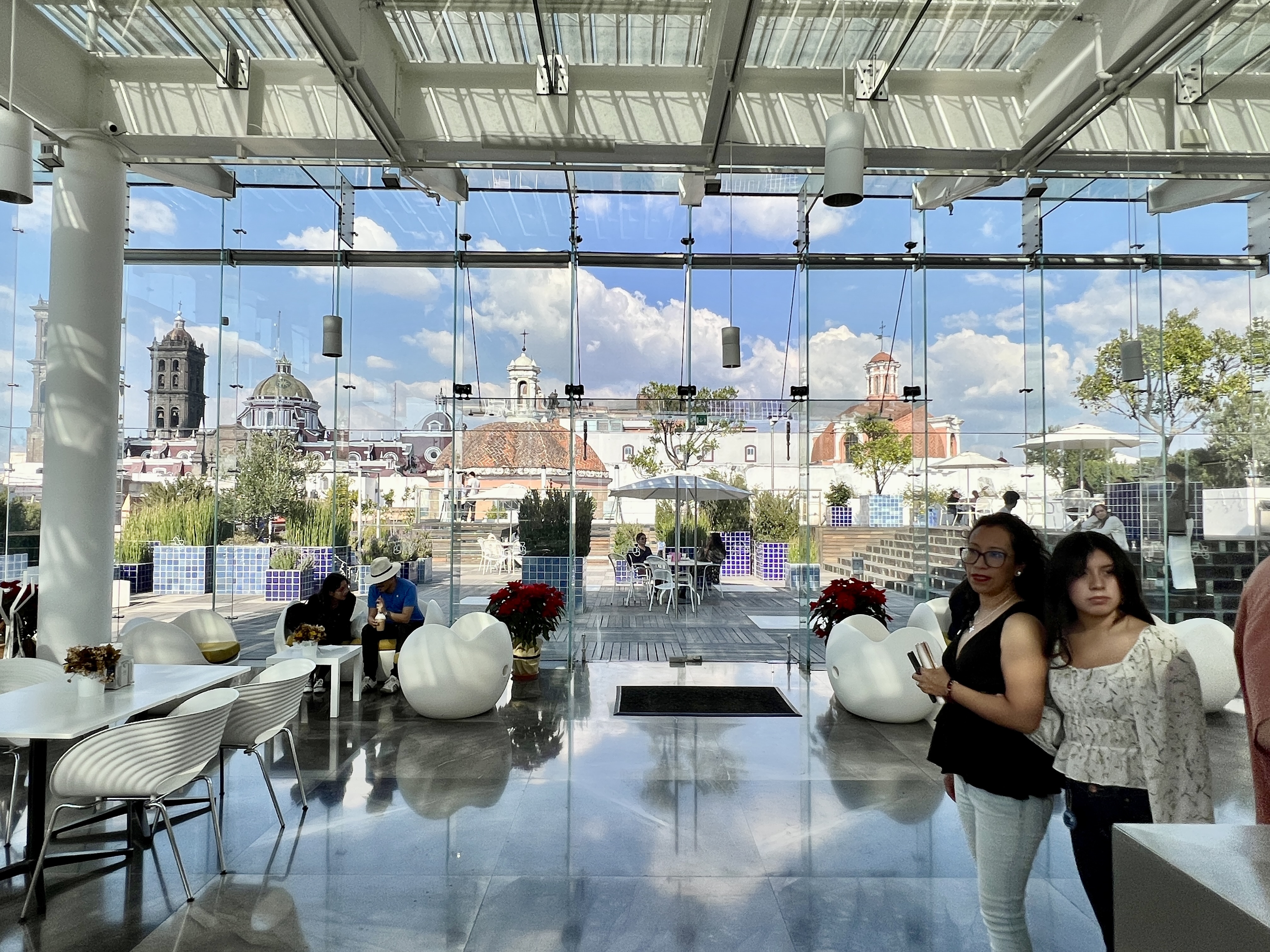
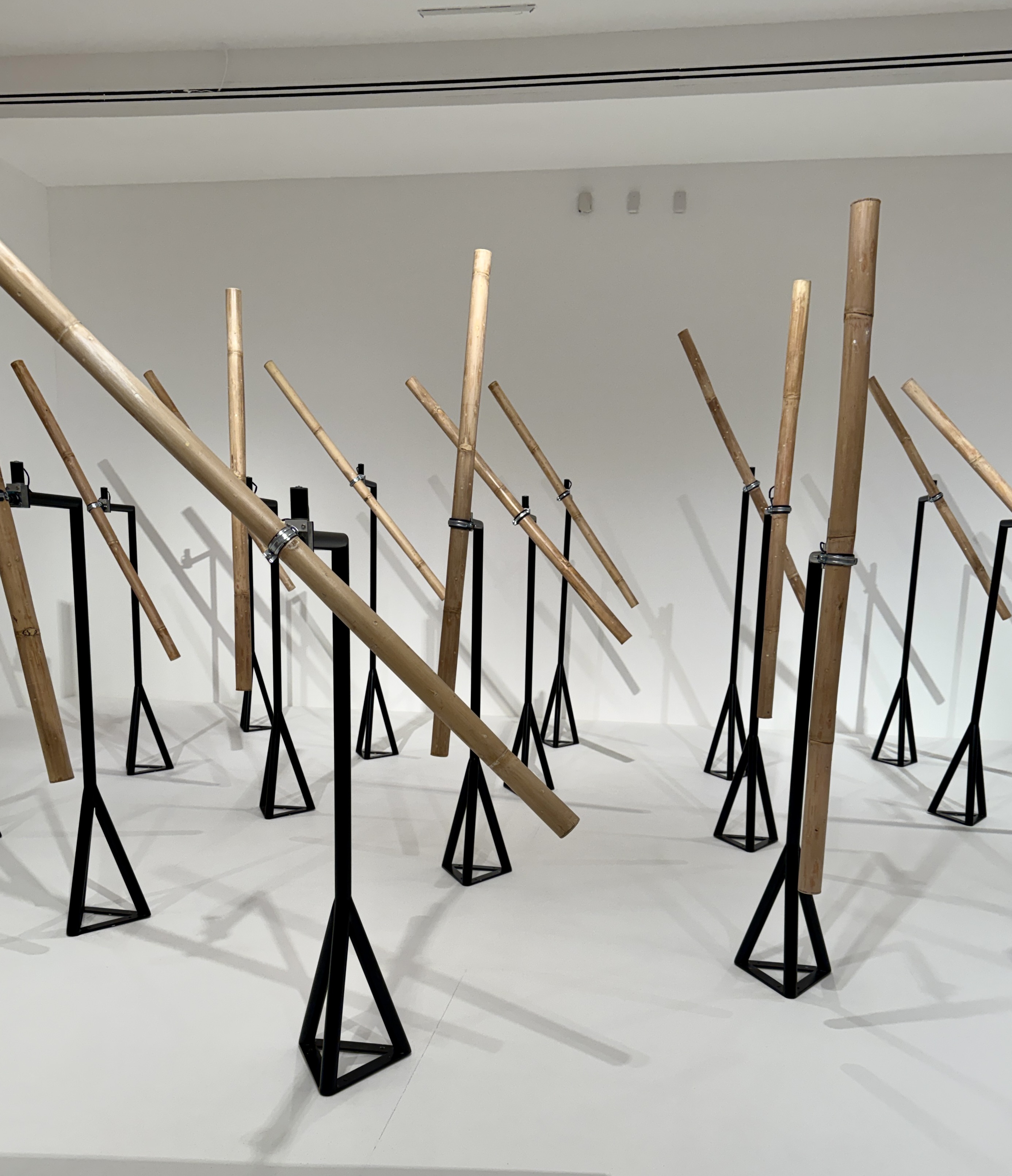
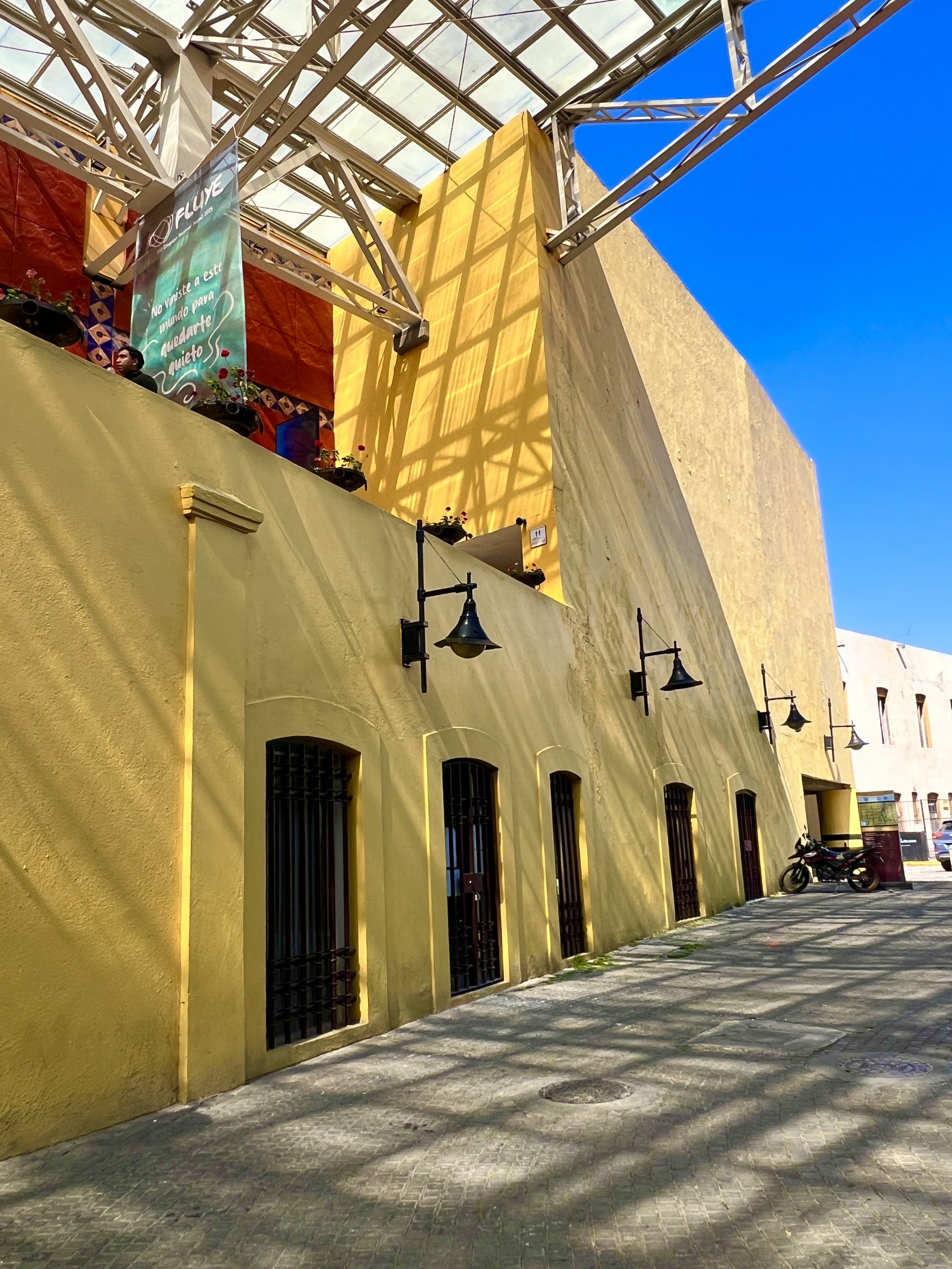
The museum is located within the historical center, close to the Zocalo. It was founded in 1991 to preserve and exhibit pre-Hispanic, as well as modern and contemporary art from Mexico (and beyond) and to host temporary exhibitions. Structurally it’s comprised of several historic buildings whose facades were retained and restored, but as you step inside you are in a totally modern, glass and steel structure that is totally transparent (in the public spaces, not in the exhibition areas) so you see layers as you walk through the spaces. The interior was intended to be “avant garde” and designed to accomodate new technologies as well as people with disabilities. Beyond this on the top floor there is a cafe and outdoor section where you can see a good deal of the historic center—contrasting this glass/steel deck with the centuries old buildings of the center. The building was well worth seeing and I spent my time in the galleries with the temporary exhibitions which were big, bold, and powerful.
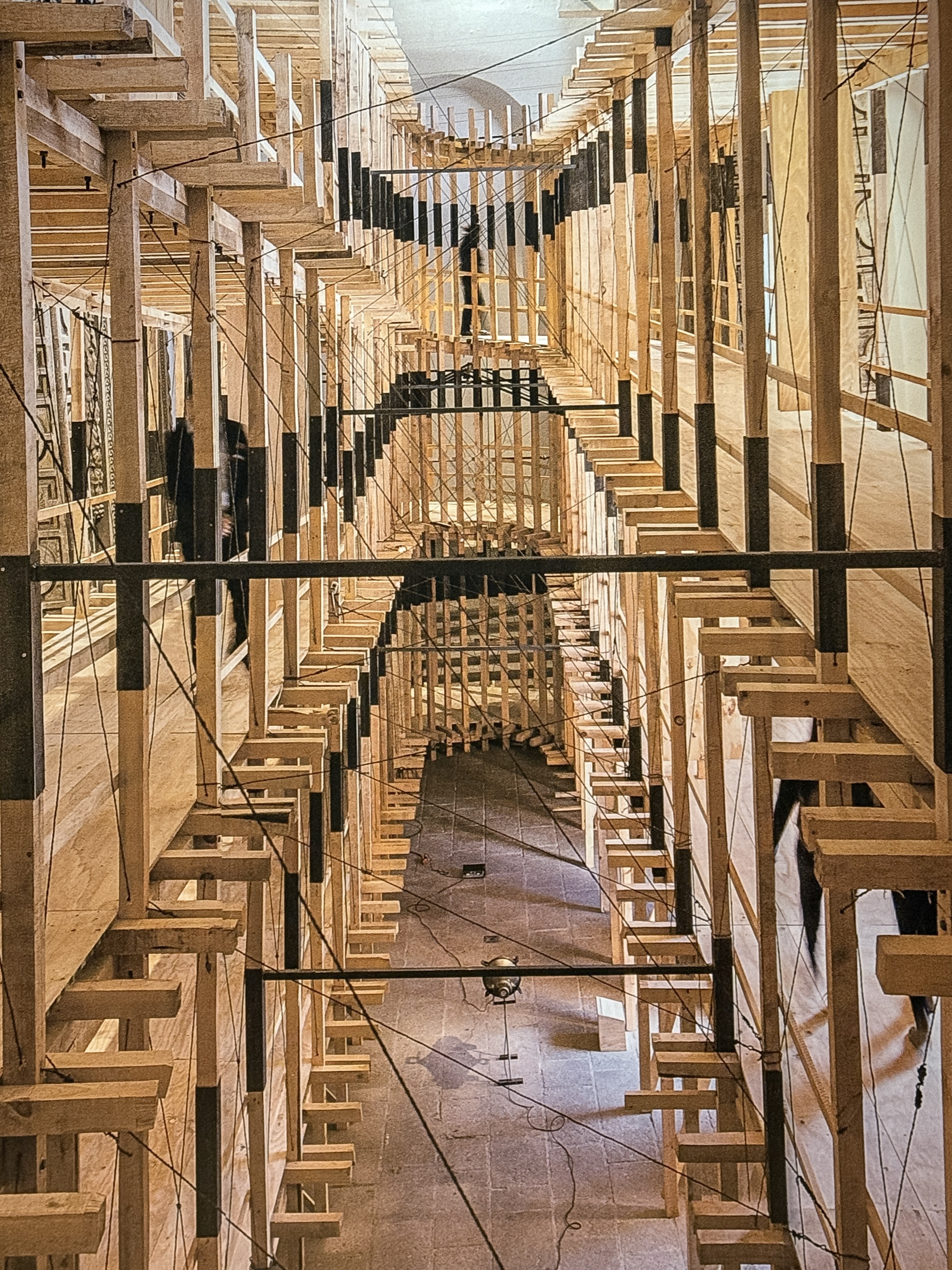
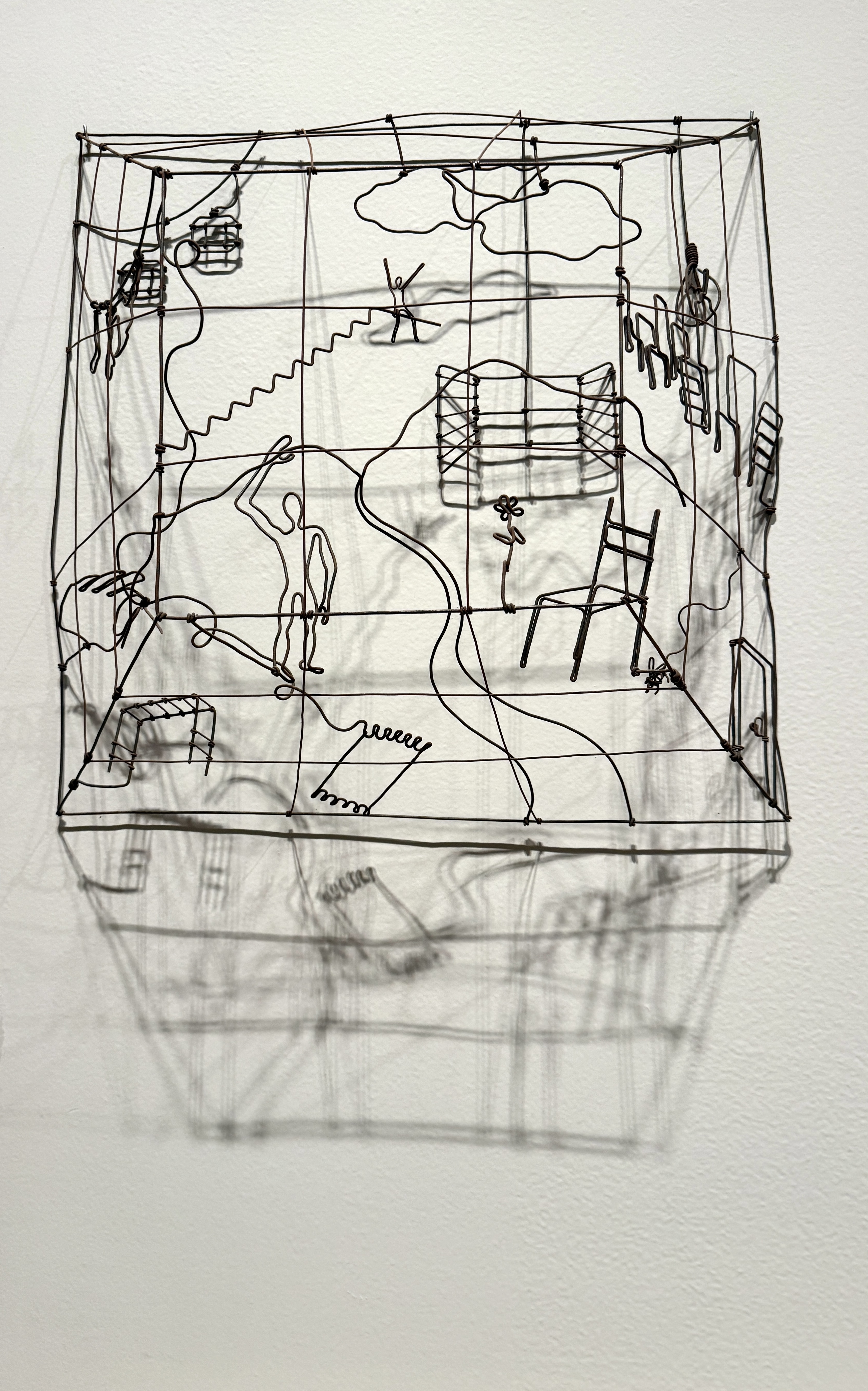
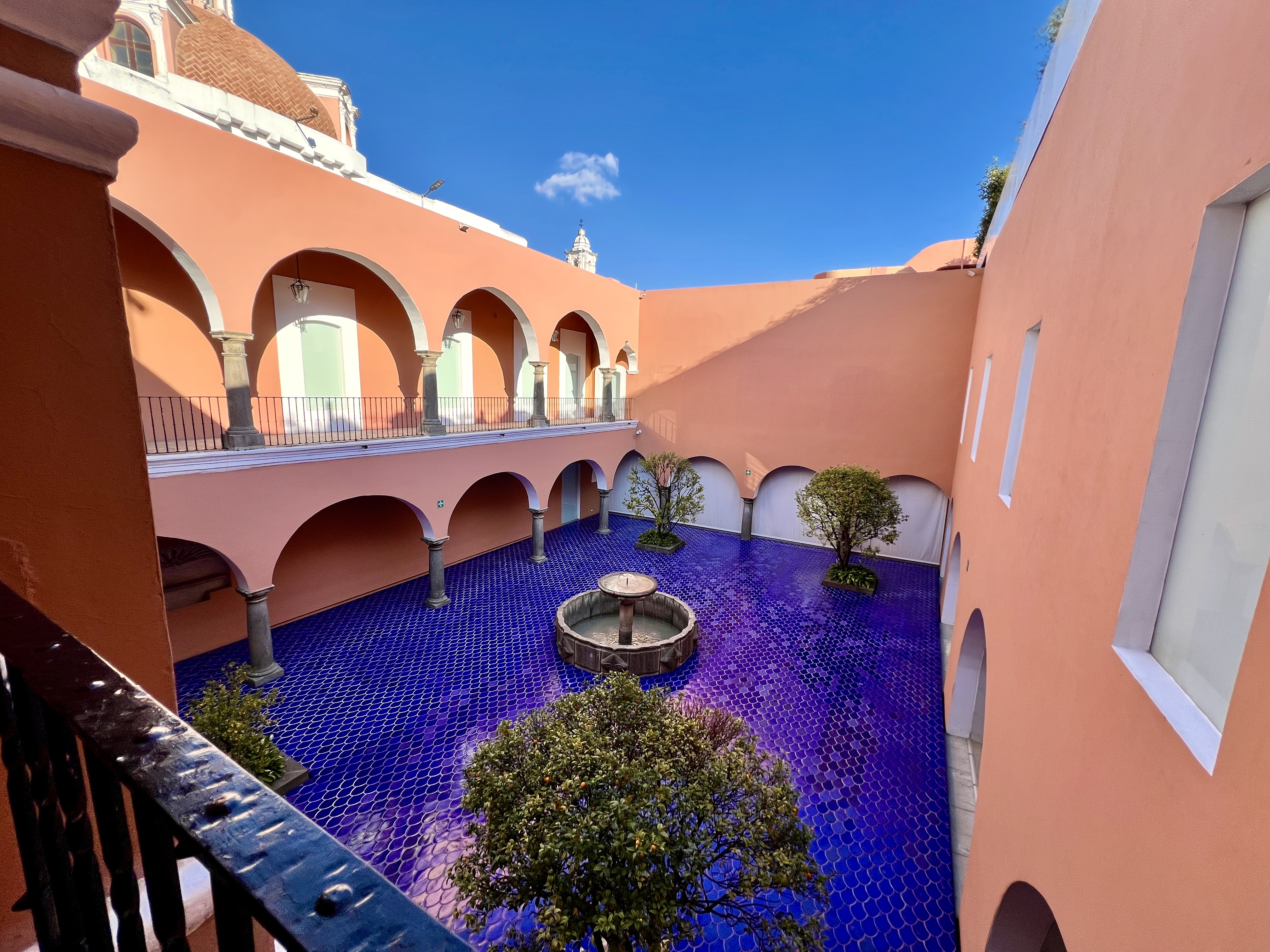

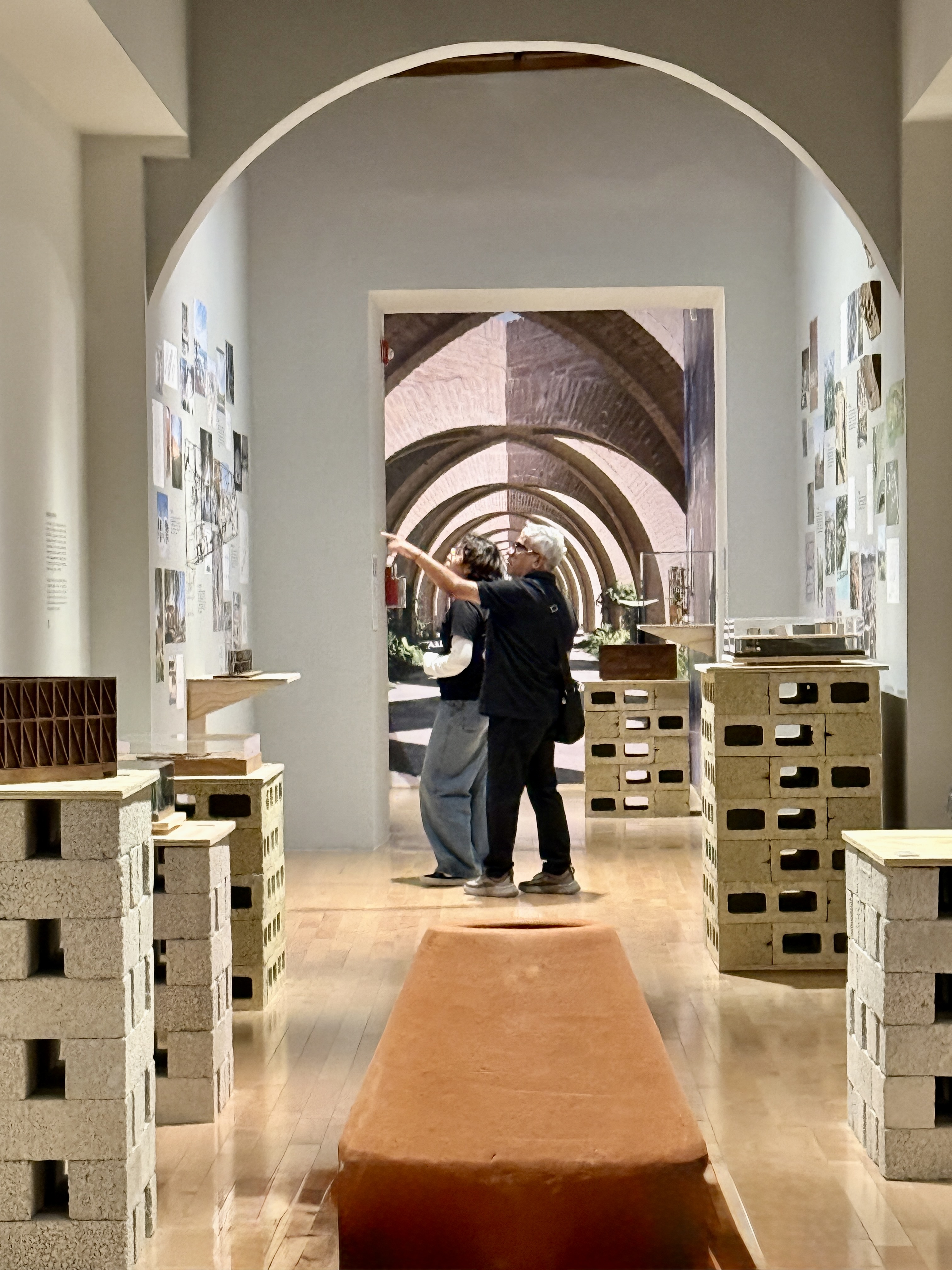
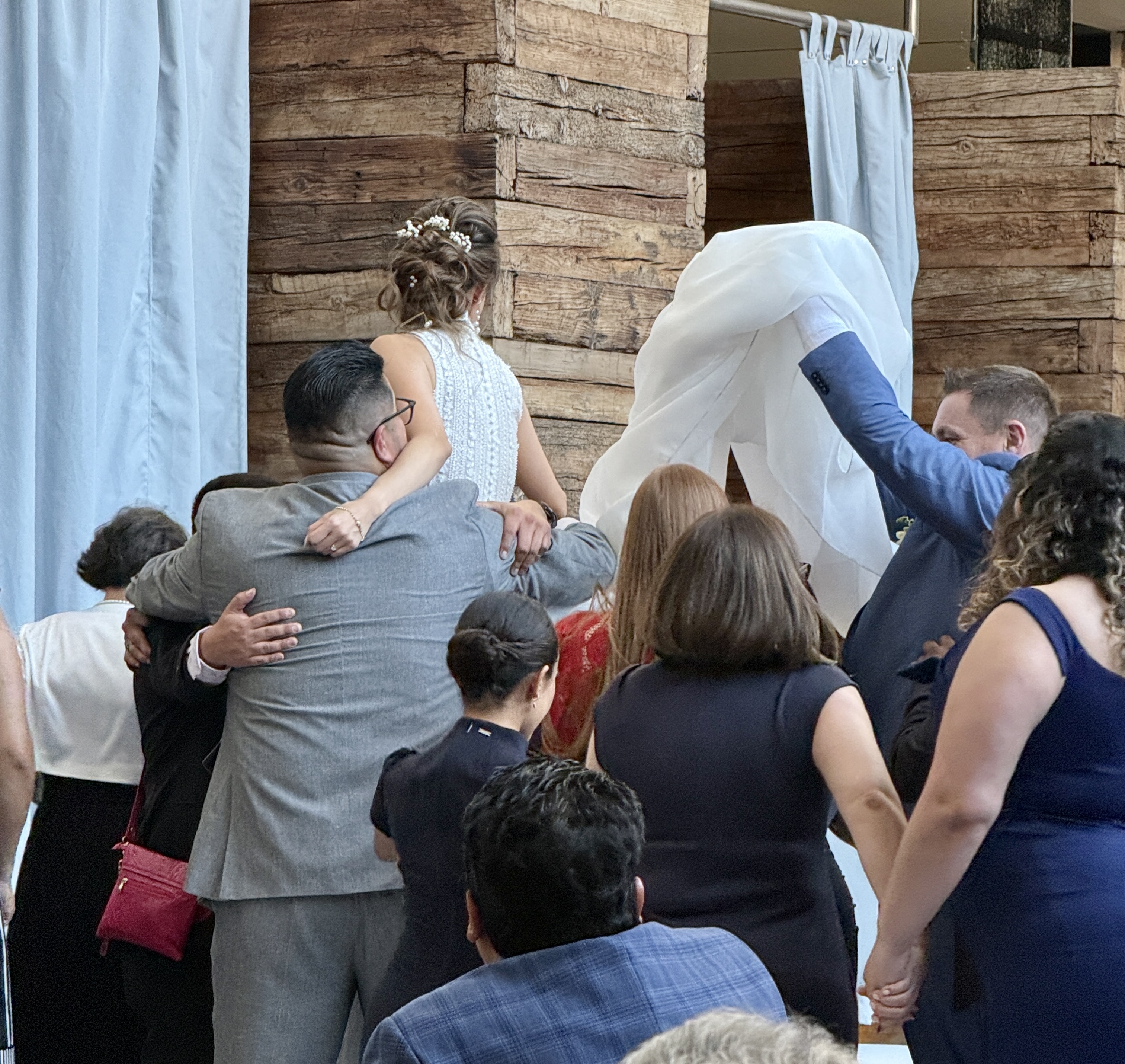
We walked back to the hotel to pack and get ready for dinner. When we arrived back at the hotel there was a wedding taking place that occupied much of the lobby. We watched the doings for a while. they had a few interesting customs. The bride stands up on a “pedestal” and the groom holds up her very very long veil/train and the guests walk under the veil… to loud music. Then they sort of snake around the room and around the bride and go back under the veil backwards. I’m sure there’s some sympolism there but I fail to pick it up.
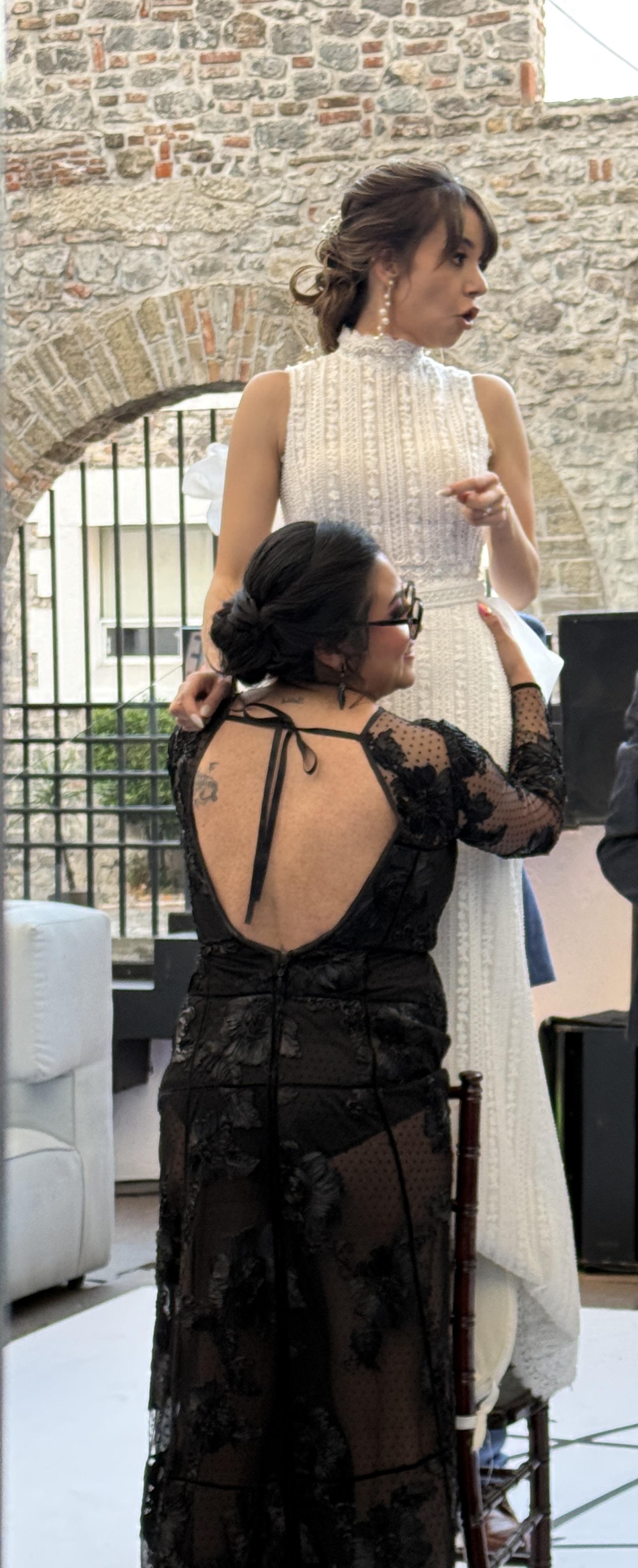
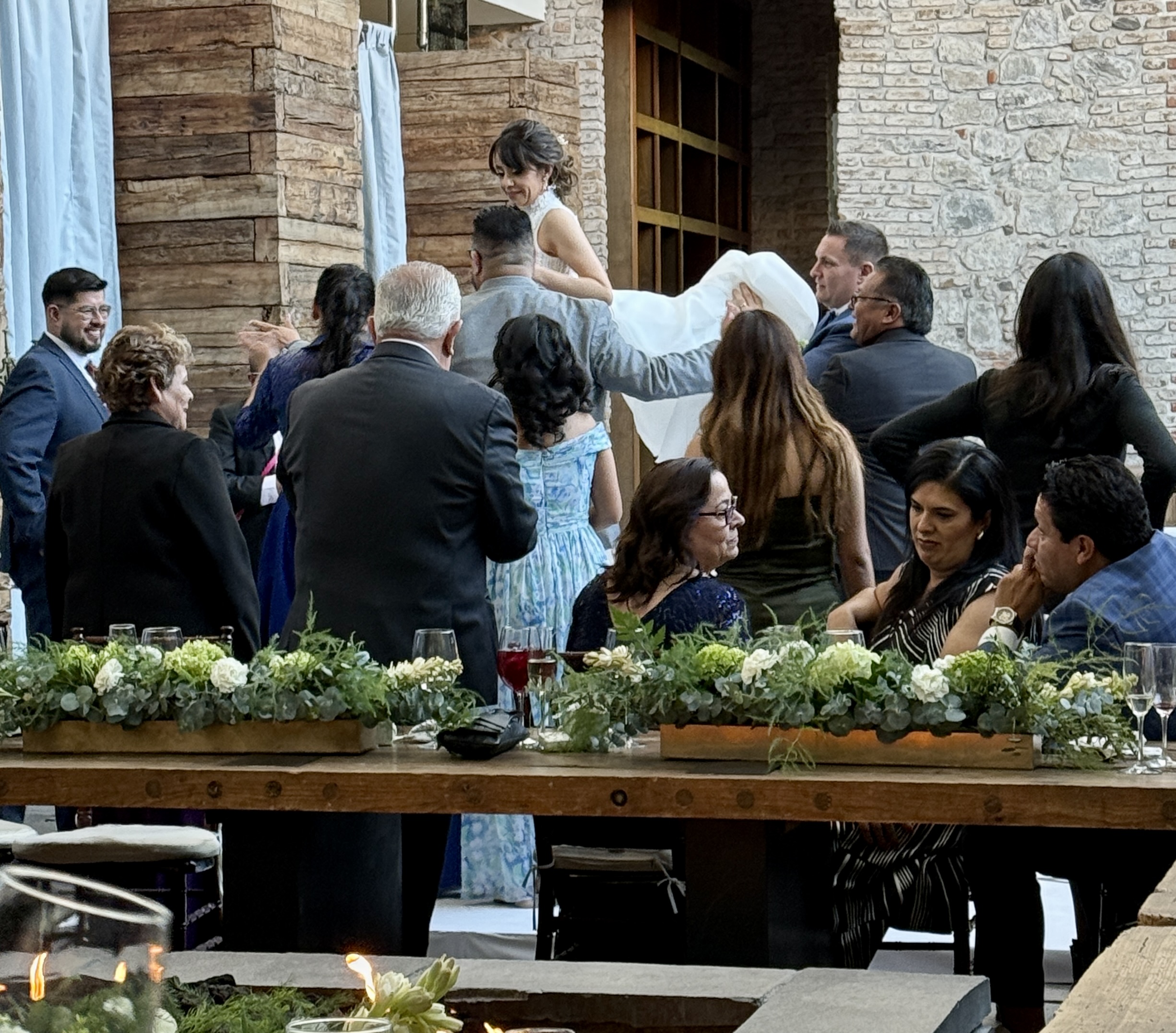
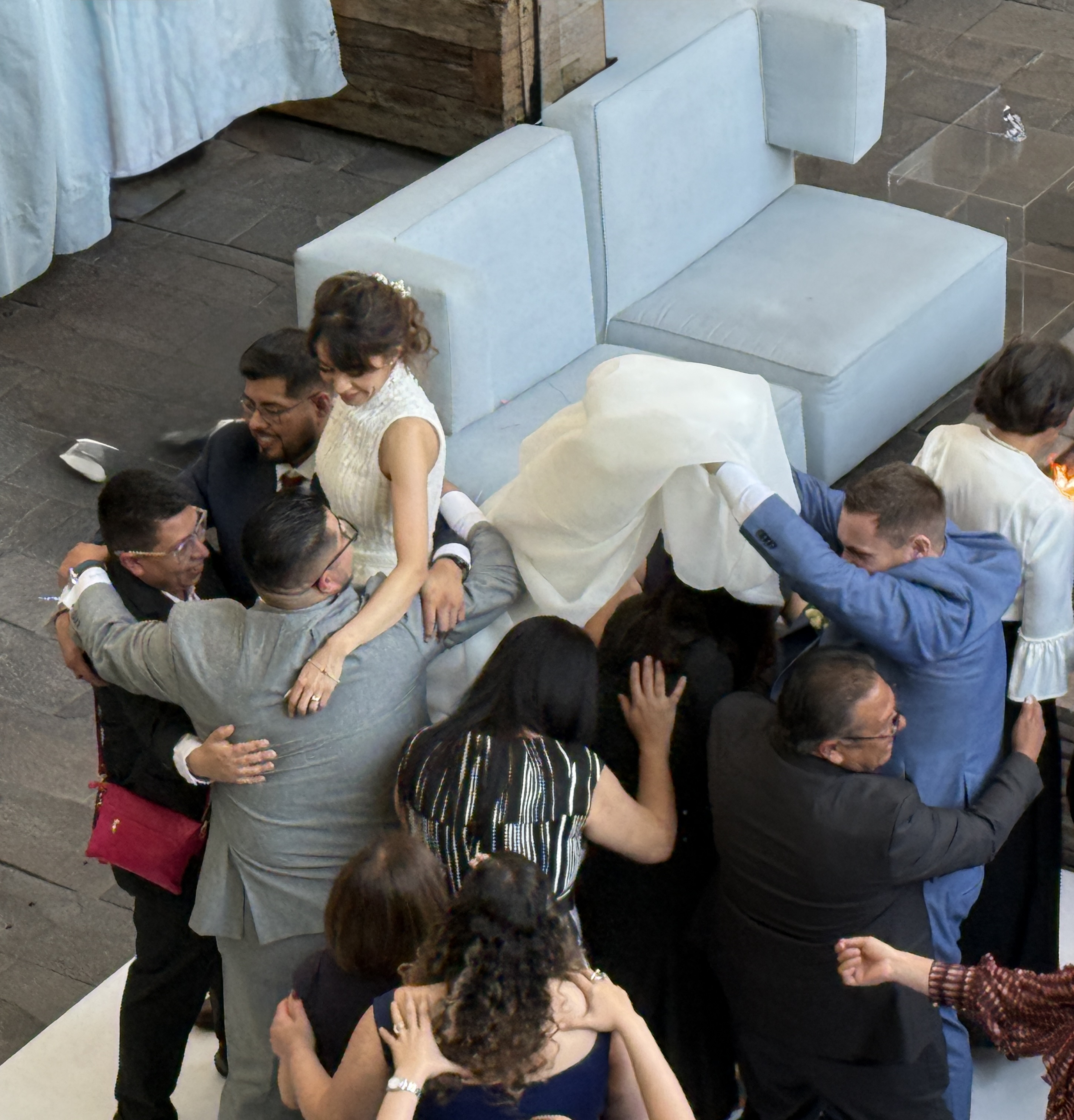
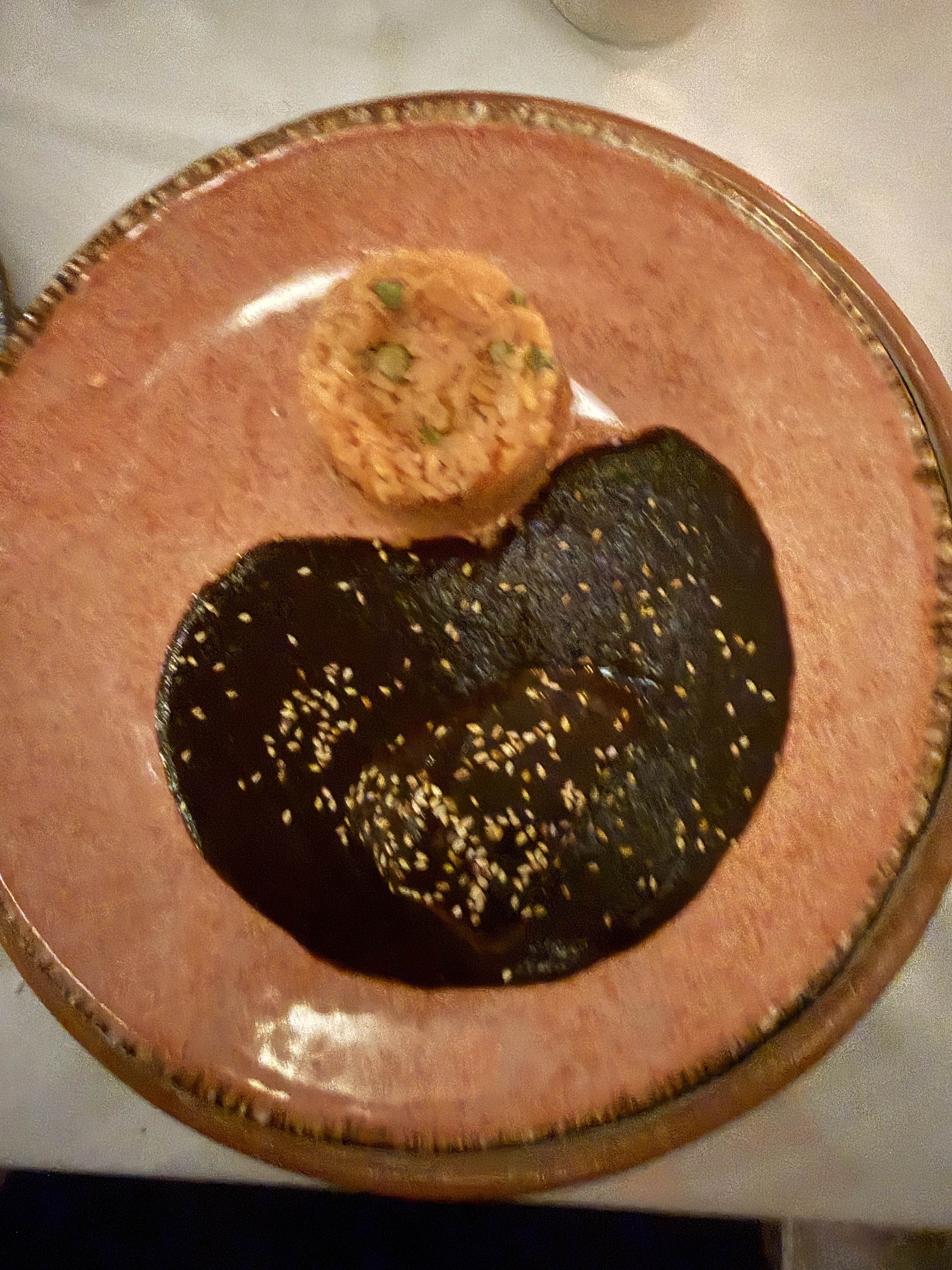
We had dinner at CasaReyna which is just a five-minute walk from the hotel. It’s an old family run restaurant that caters to locals and families. Some magazine from Sweden said it had the very best mole in Mexico. We shared two courses: a beef filet (they called it “soft”… maybe they meant tender) that came with guacamole and black beans. We followed this with a dish called “Grandma’s Mole” which was very tender chicken smothered in black mole (rich and delicious) with rice and peas. We drank Chilean wine and then they arrived with the dessert menu which is the size of a person. I guess that’s their gimmick. We had cheese cake.
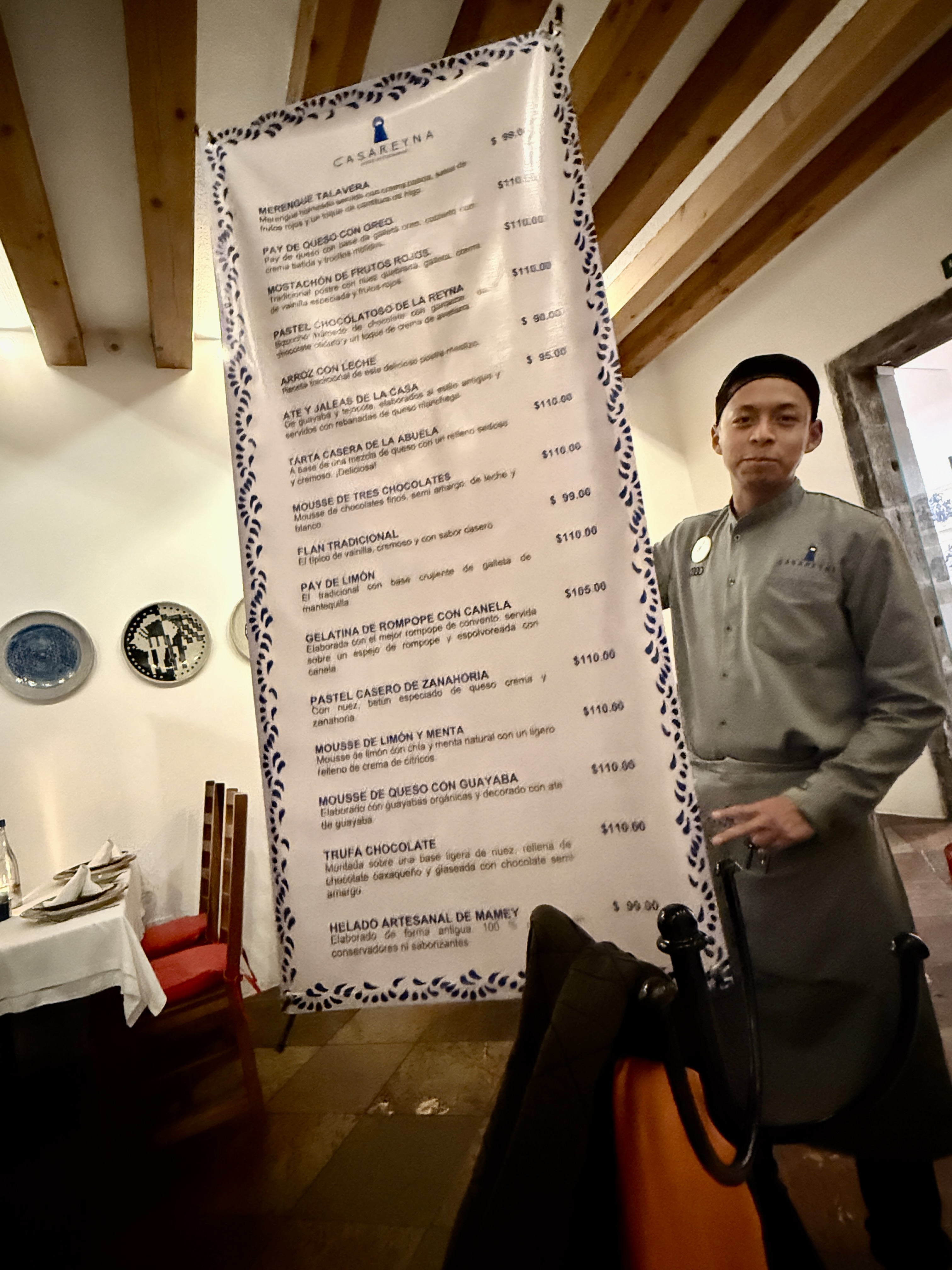
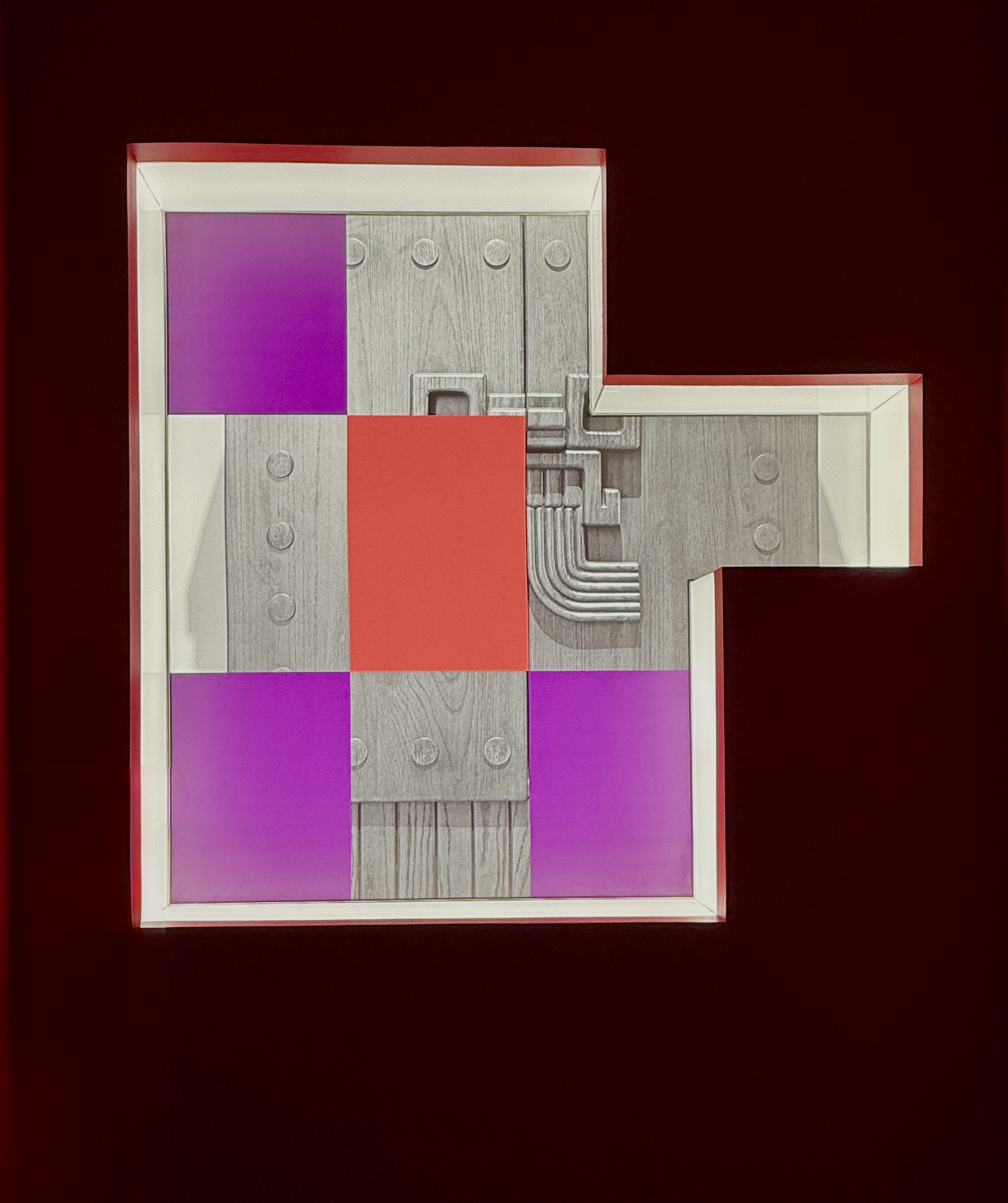
A final note… Mike went to the rest room and came back saying that capitalism has found a new place to advertise. On the top of the urinals there are videos playing, advertising some product (cannot imagine what!) .. Good thinking – a captive audience. He provided the following two photos.
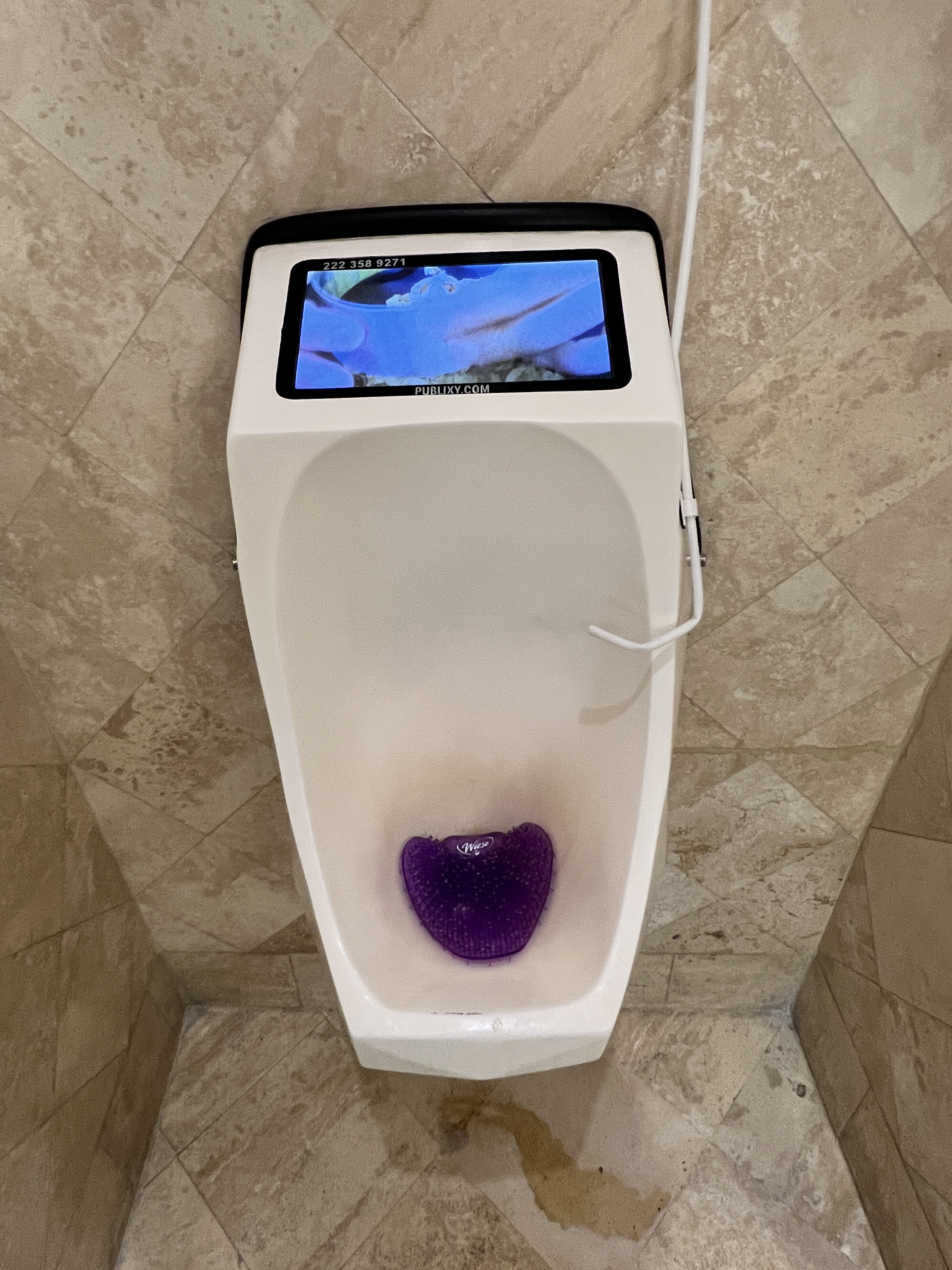
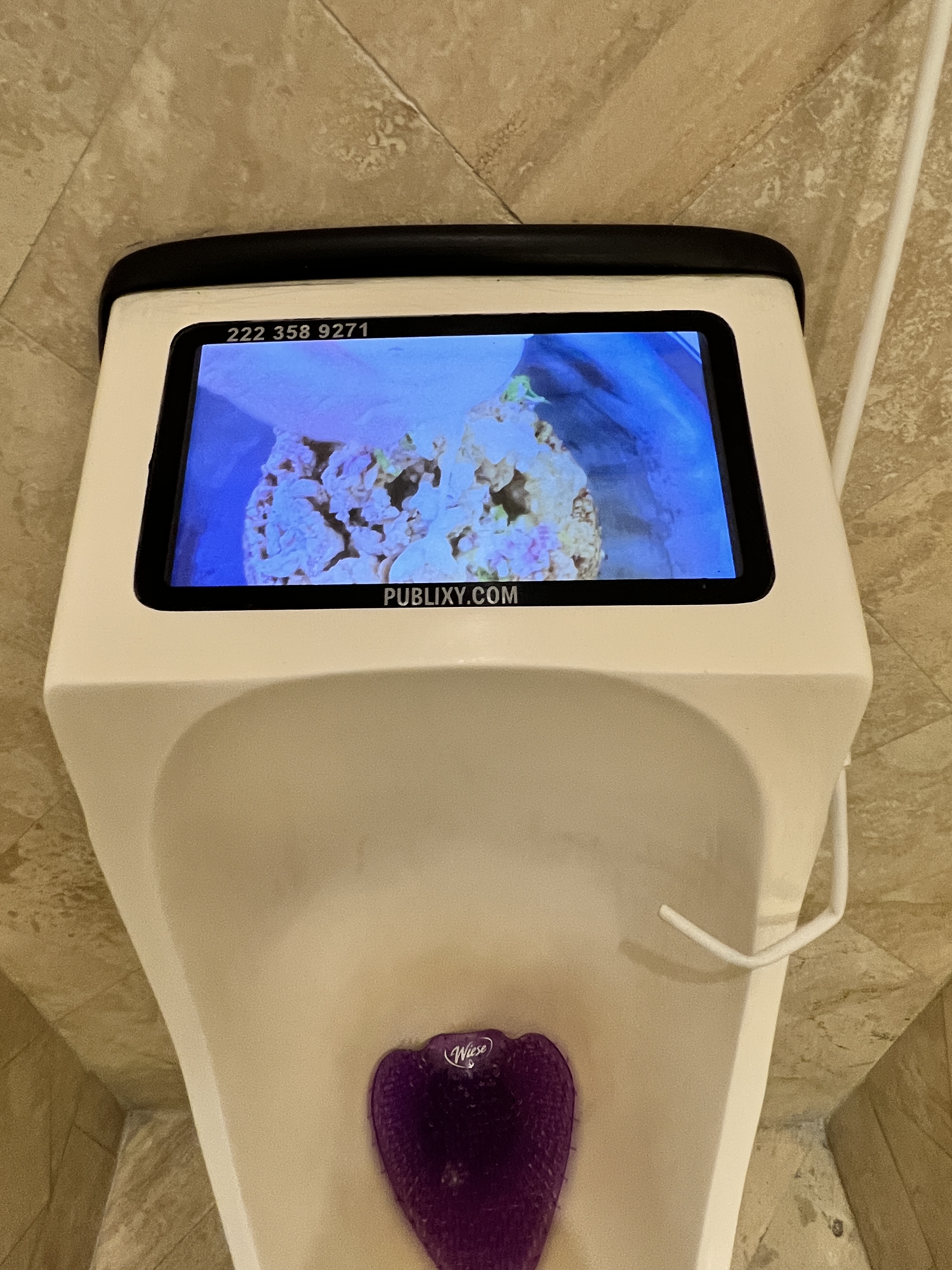
And with that, I say good night. Onward to Tehuacan in the morning.
Fern
¡Saludos desde Puebla, Tierra de la Talavera! (Land of Talavera)– December 27, 2025
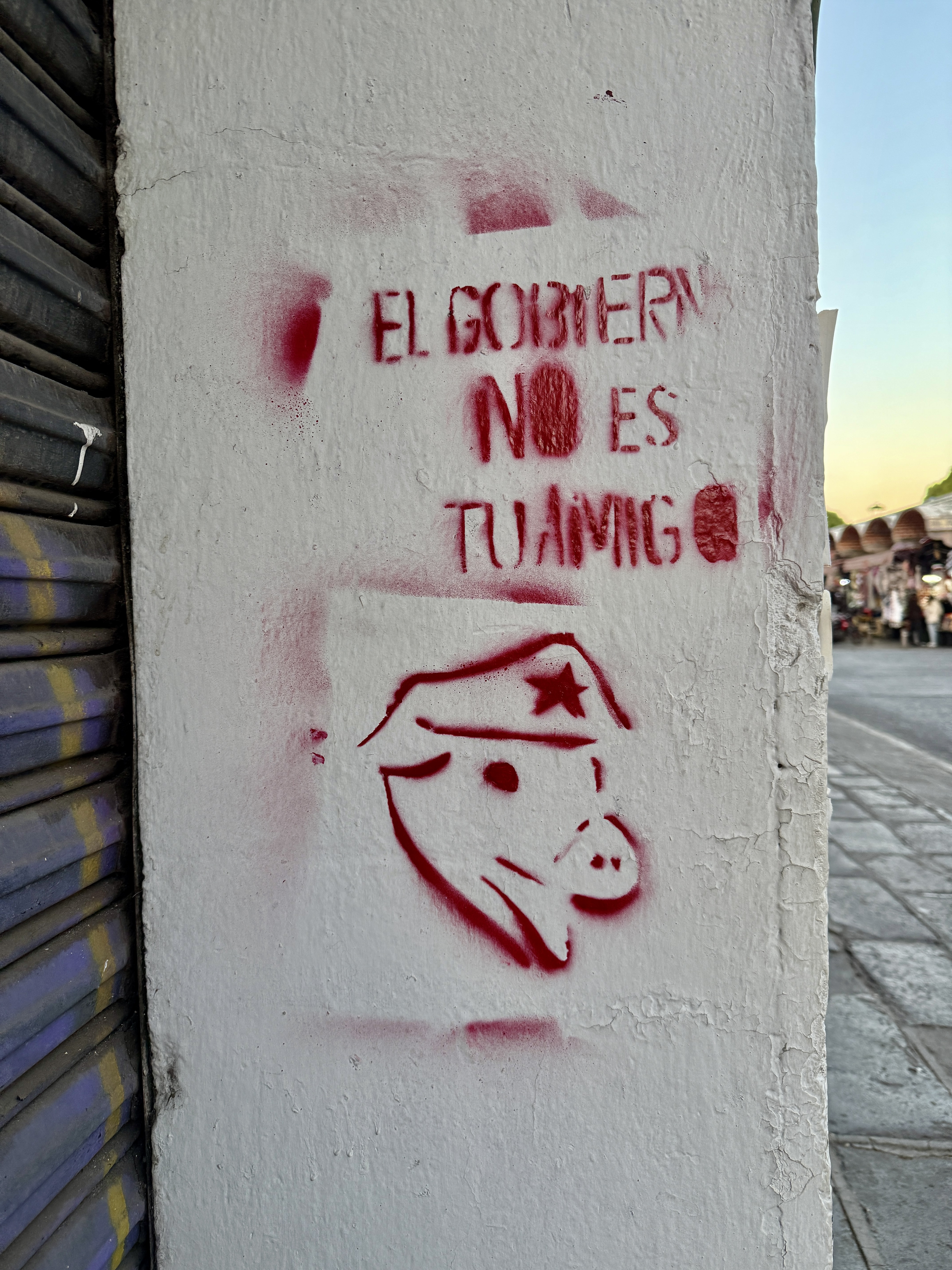
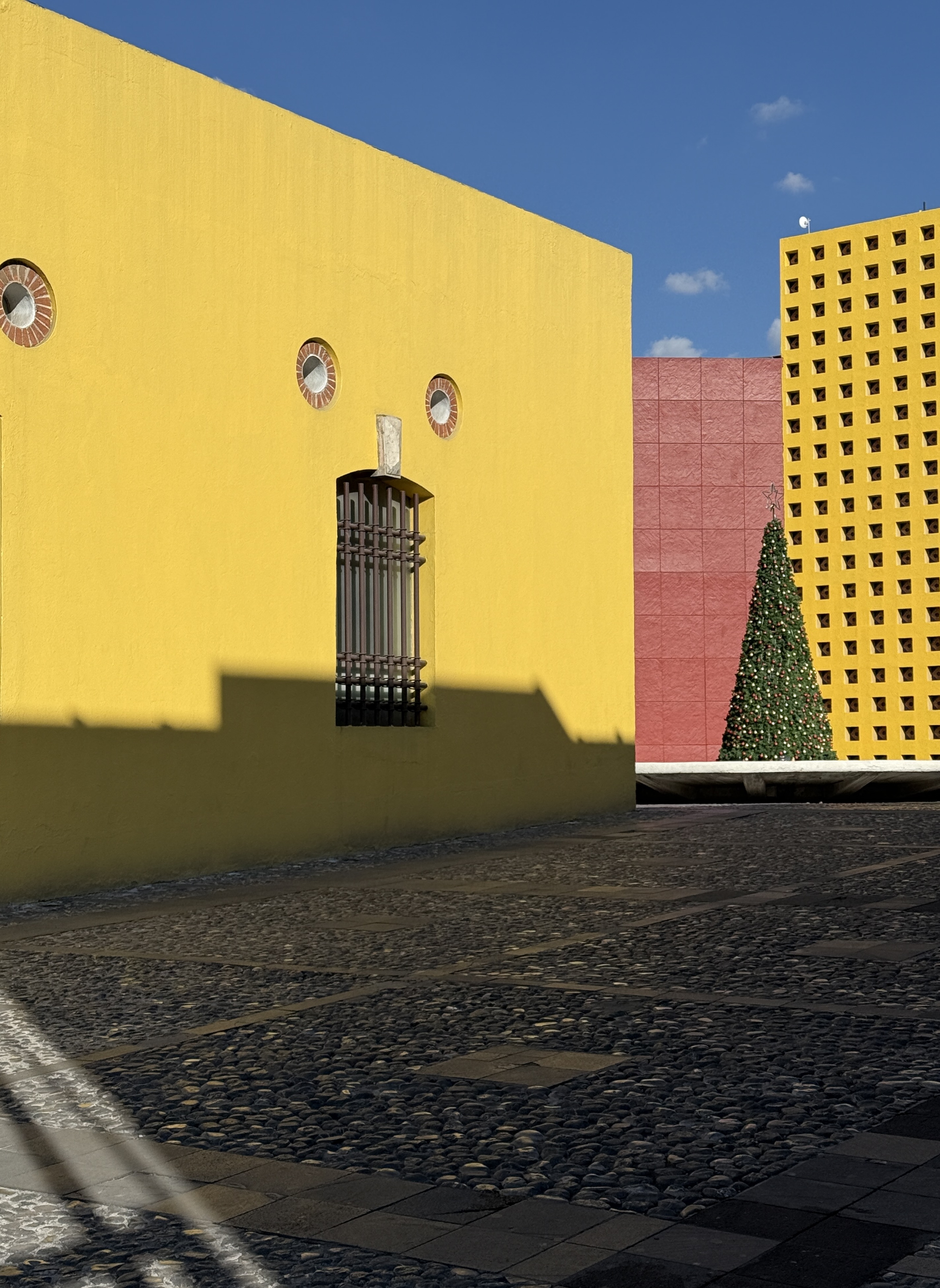
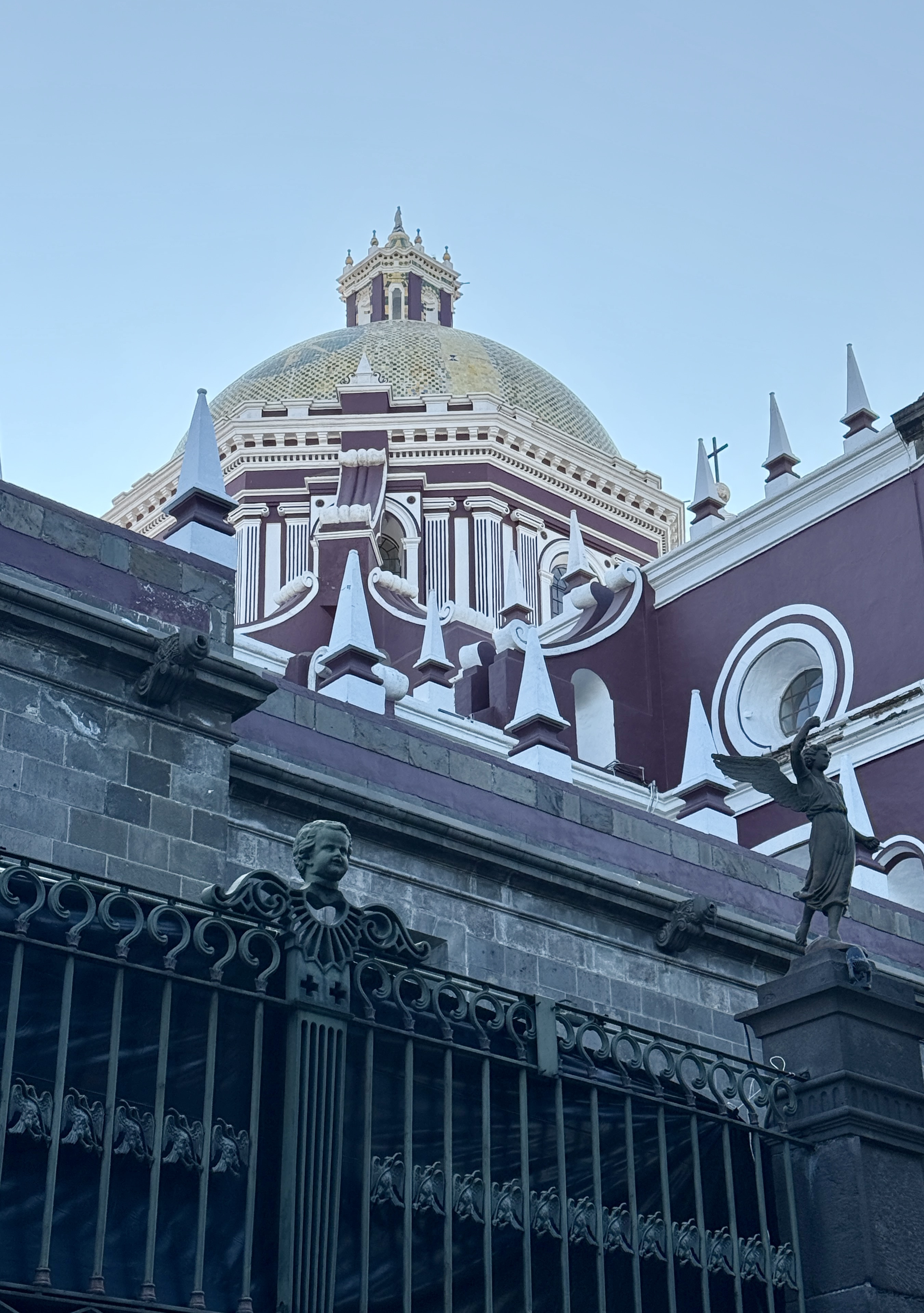
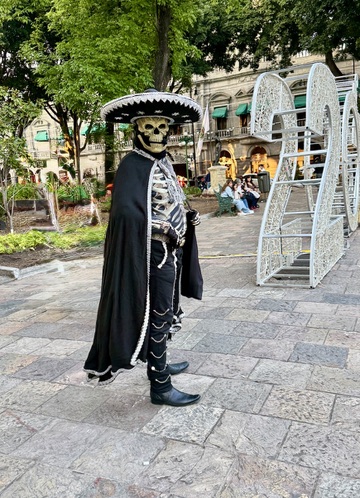
After an early breakfast we left Pug Seal and headed to Puebla. For probably the first time ever, we hired a driver to do the 5-hour trip. (We will rent a car as we leave Puebla and drive ourselves back to Oaxaca–breaking the trip up by staying a night in Tehuacan, which is about half way). The driver just drove, no tour or explanations, which is what we requested…. just driving, although we chatted a bit along the way. His English was OK, although not deep enough to manage political discussions or complex issues which was fine. We learned that he is from Puebla and often drives 10-12 hours a day. When he picked us up in Oaxaca he had just come back from Puebla — so 10 hours of driving for him. He’s not too enamored with Scheinbaum, as he thinks there are lots of promises and she’s not deliveringl And he feels the government gives people too much and they abuse the social services. On the side he teaches English to young kids–kindergarten age, who he says don’t pay attention. Prior to this, he worked in a call center…
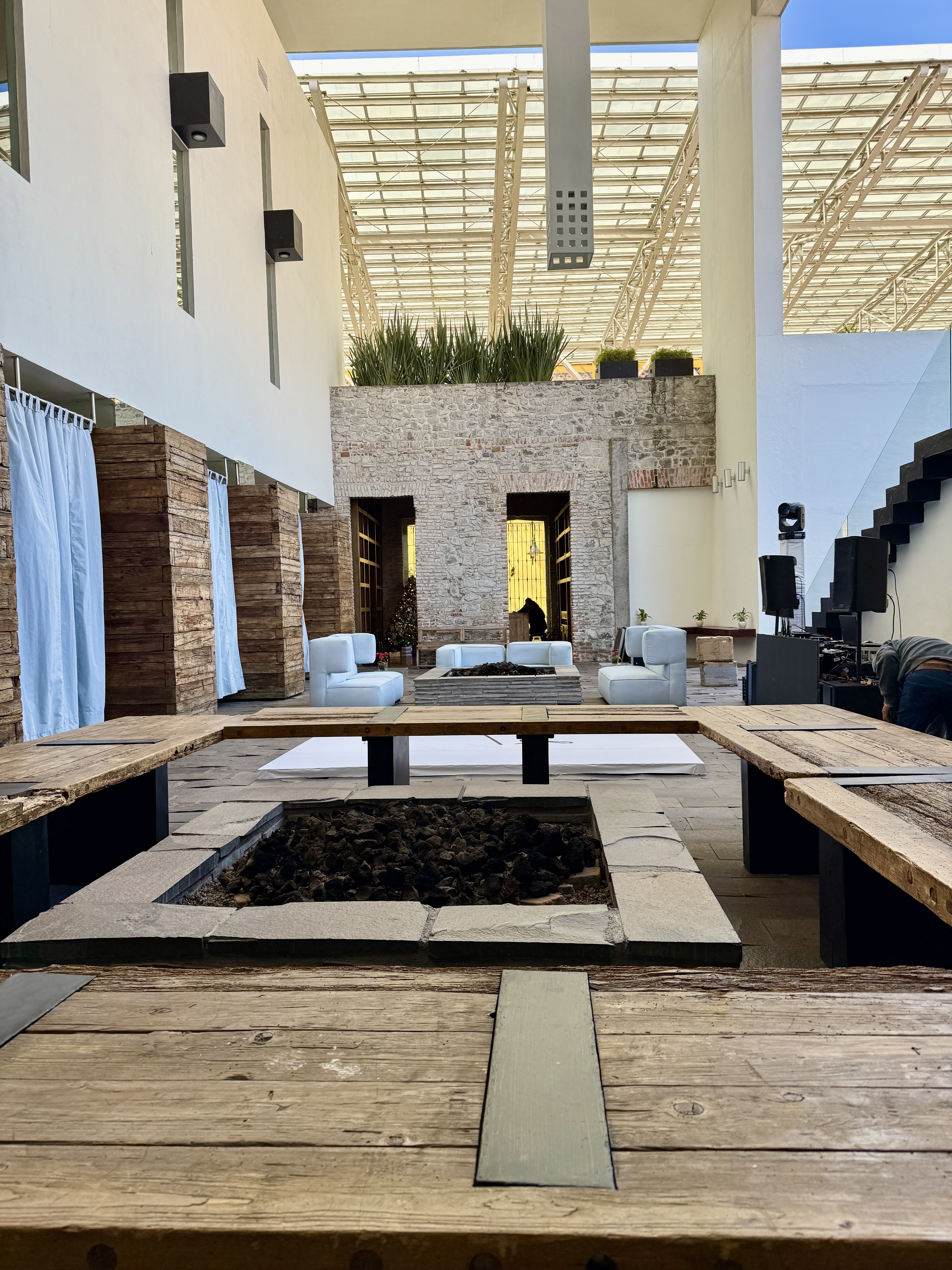
Anyway, the drive from Oaxaca to Puebla climbs about 2,000 feet to 7,100 ft in altitude so it goes through mountains with lots of curving roads and it’s mostly a desert landscape filled with cactus. We arrived in Puebla at 3:00 and checked into La Purificadora Hotel–a 17-year old hotel built into an 1800 water purification plant. The architect was Legoretta, although Mike says his son was the architect and not Ricardo Legoretta (who Mike met in the 1970s and who died in 2013). Anyway, it’s quite a switch from Pug Seal — with soaring ceilings, glass stairs, fire pits in the lobby, and huge rooms. We were upgraded to a 600-sq ft room with an outdoor jacuzzi on our private deck which stretches all around the room which is lined with windows.
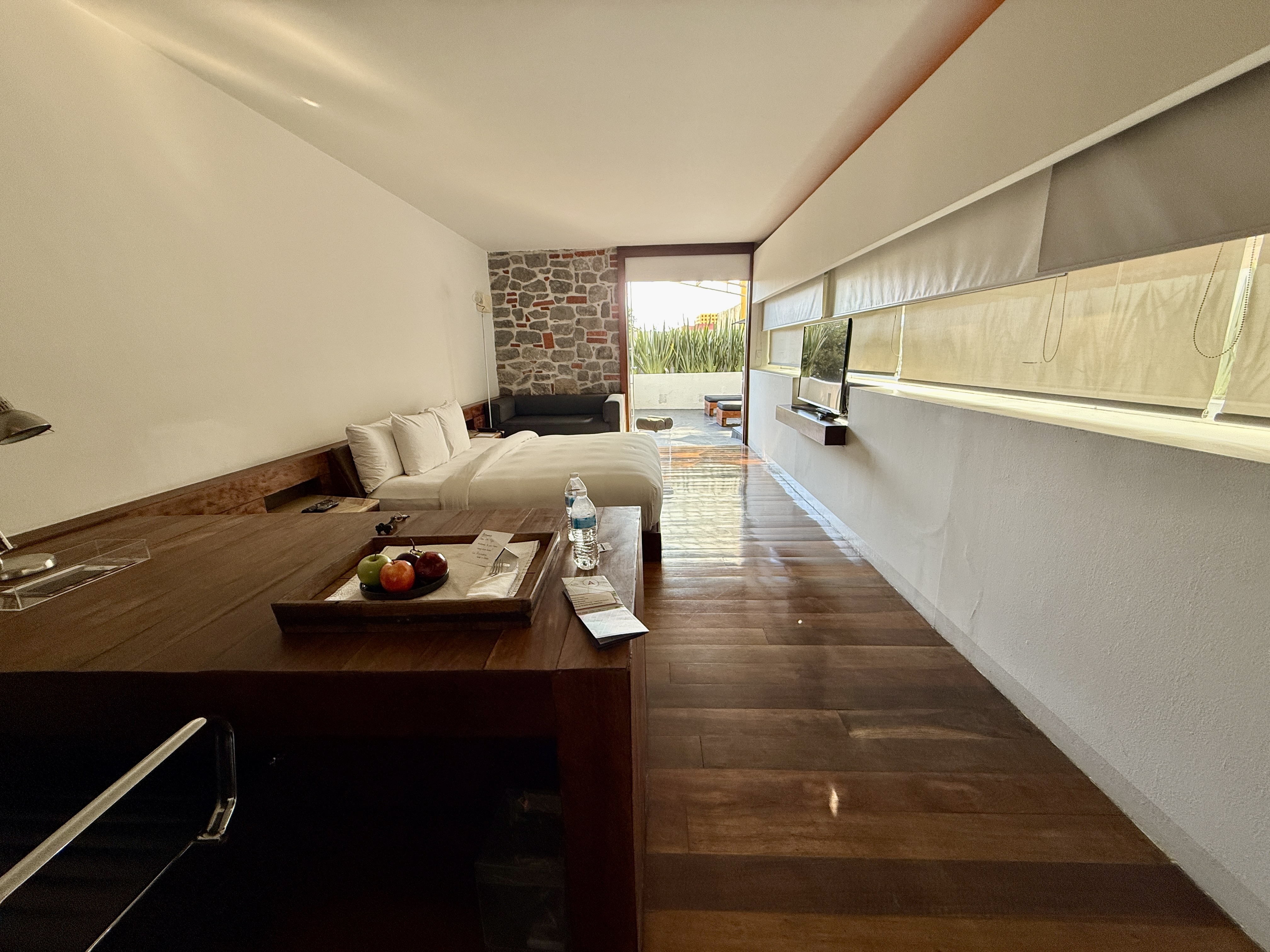
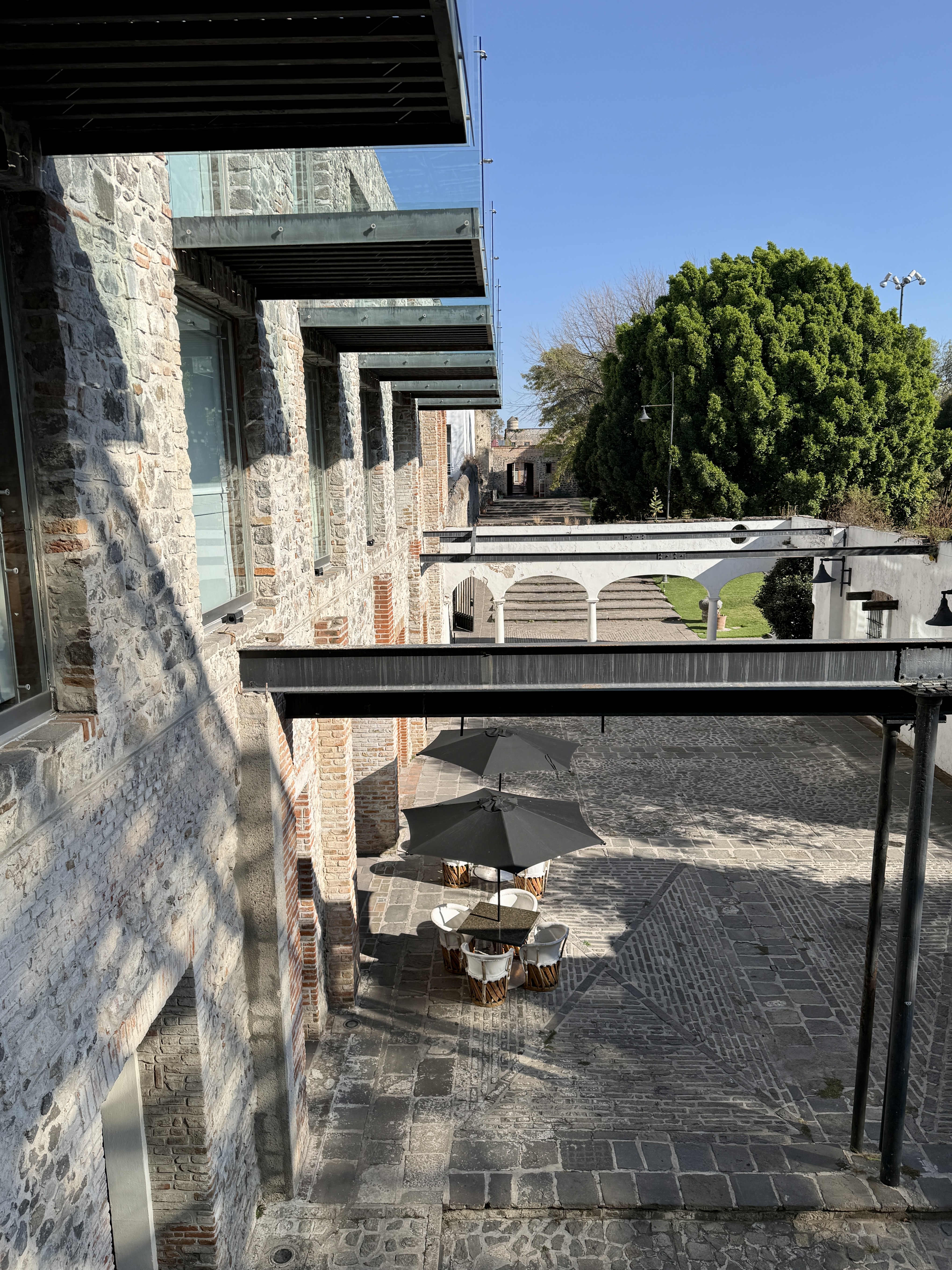
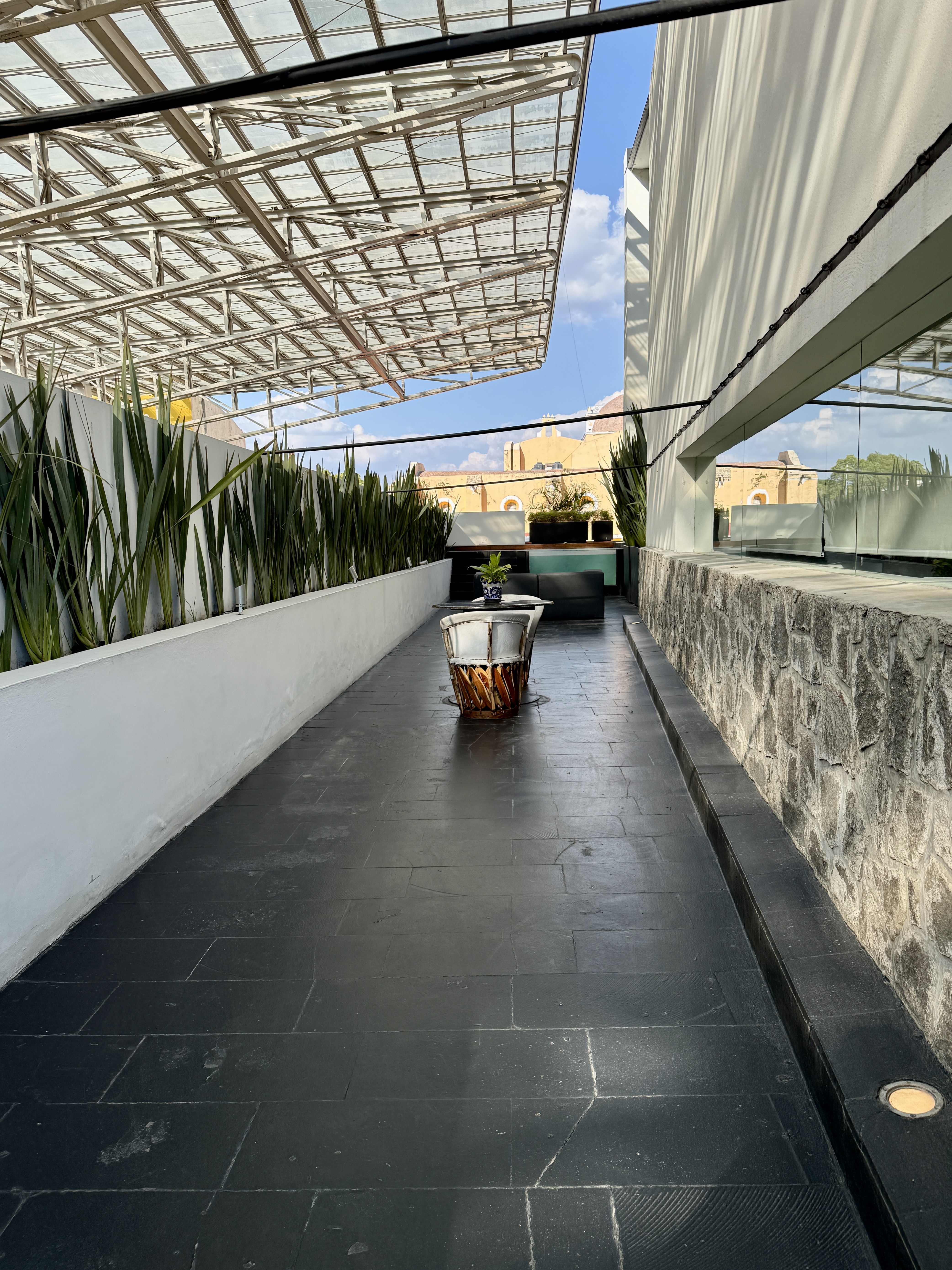
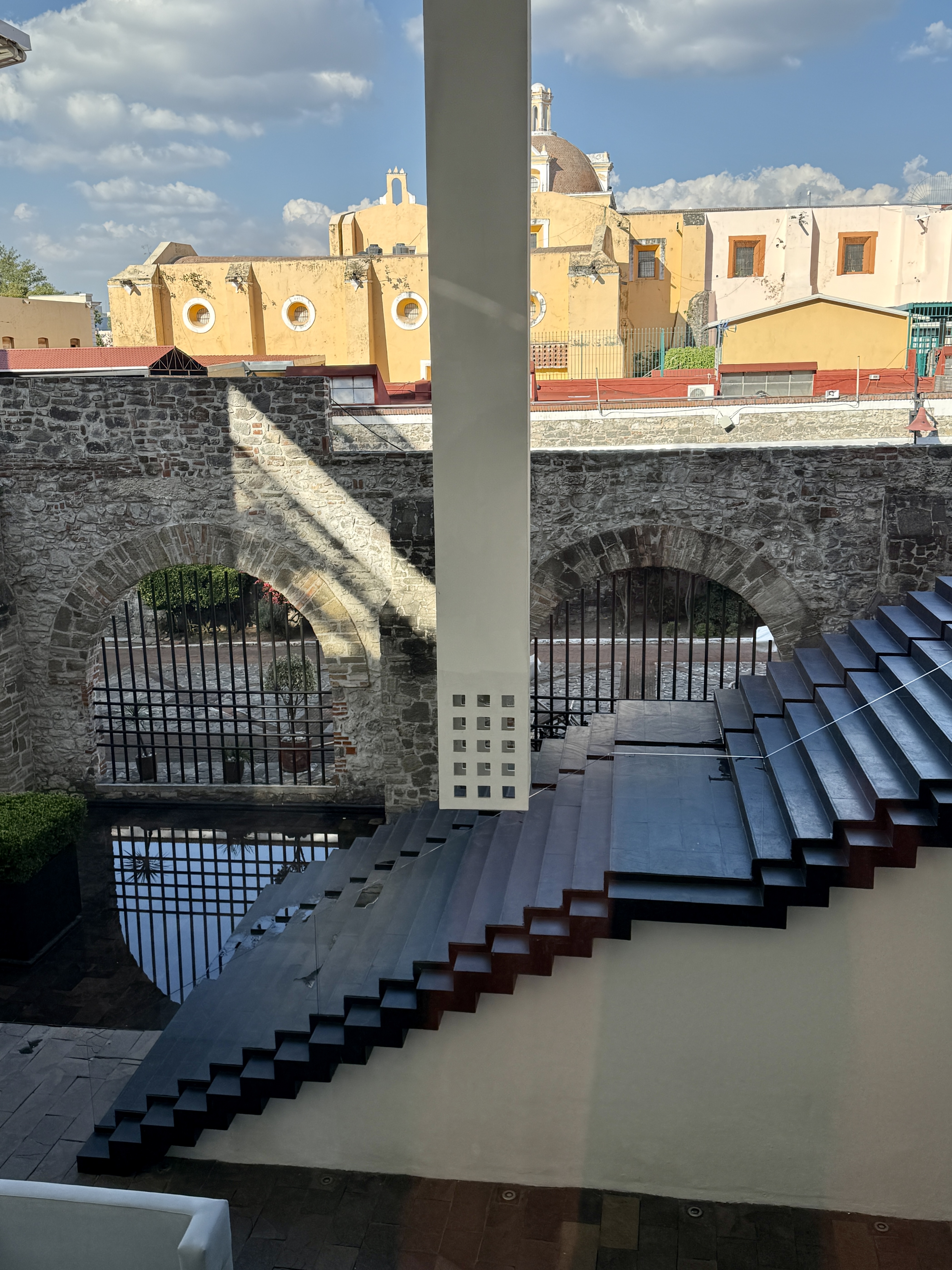
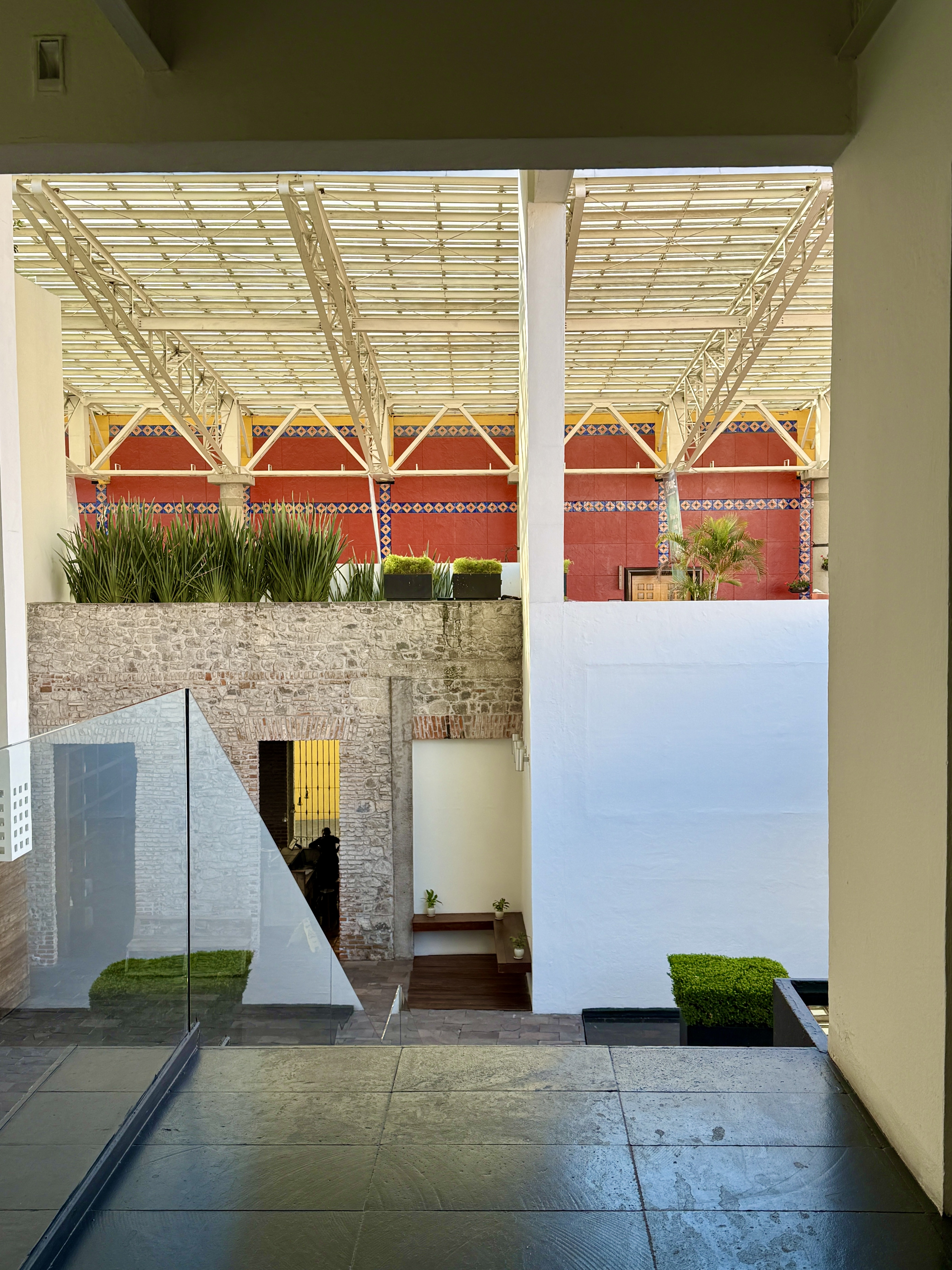

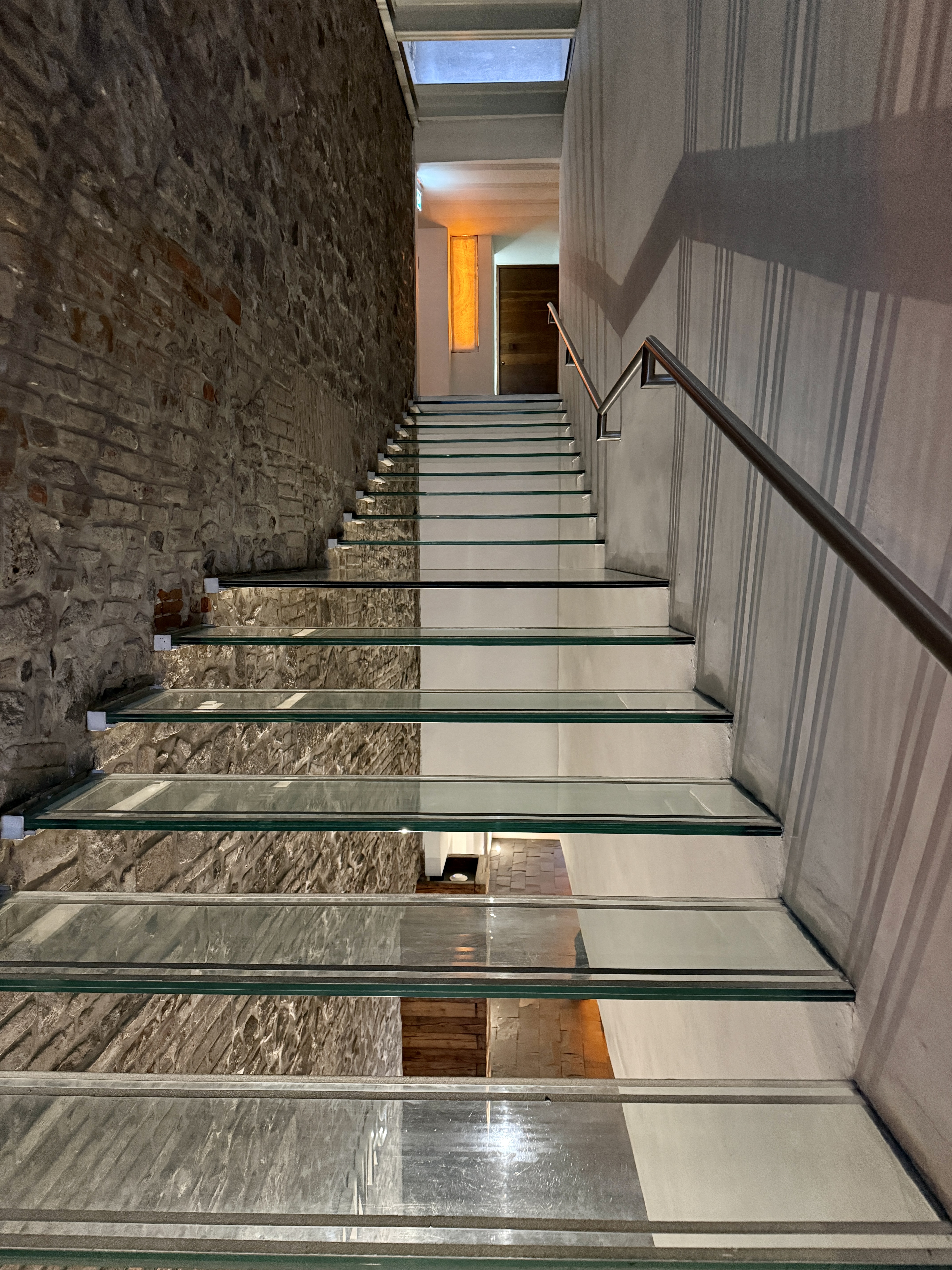
But we only stayed in the room for a few minutes and dashed out to get a sense of Puebla–a city of about 1.5 million in a state of about 3.5 million. The historic center of the city is a World Heritage Site. We quickly left the hotel to get a sense of the city. We walked from the hotel across one very broad boulevard and we were inside the historic center. (Our hotel borders the center.)
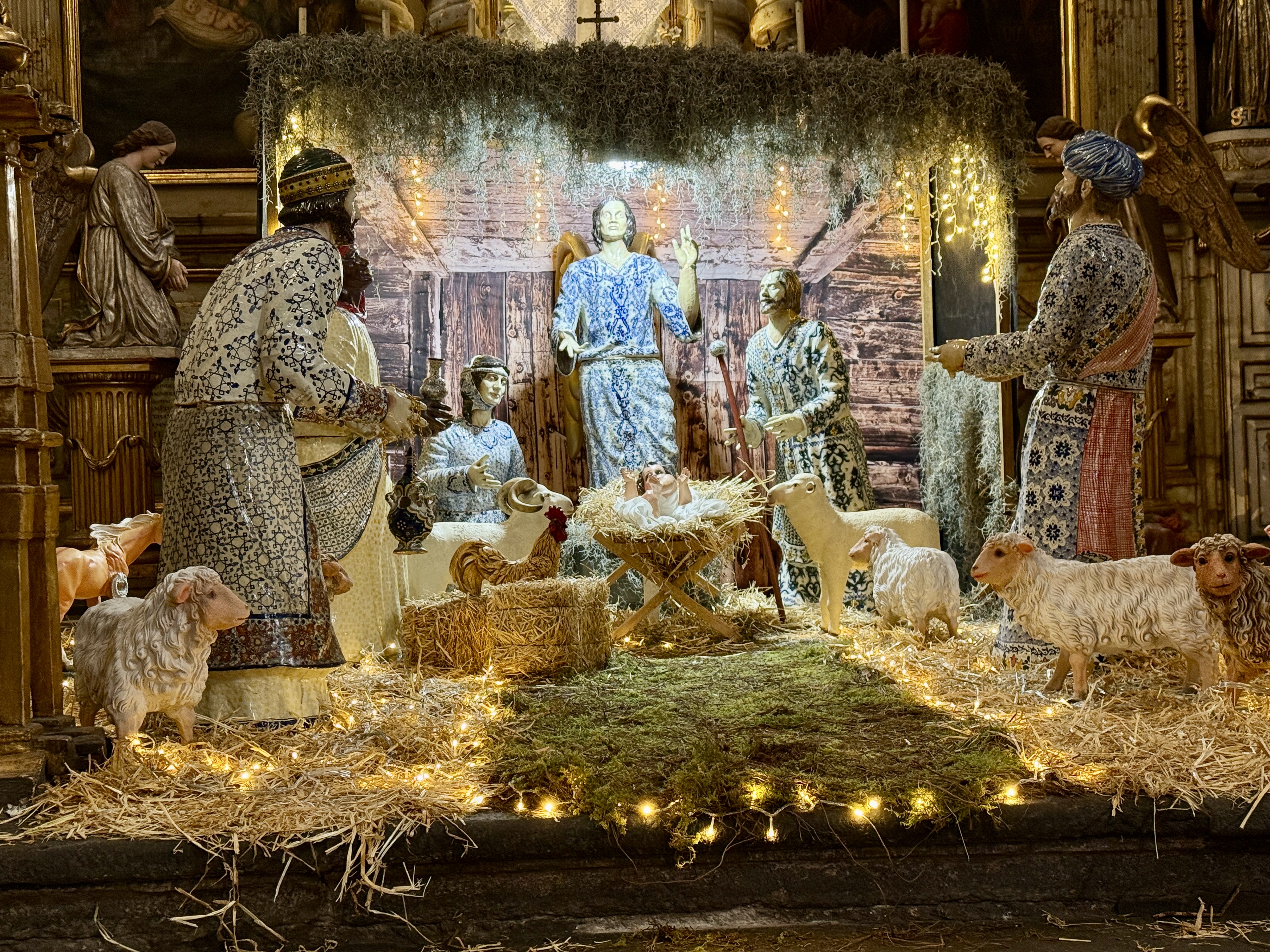
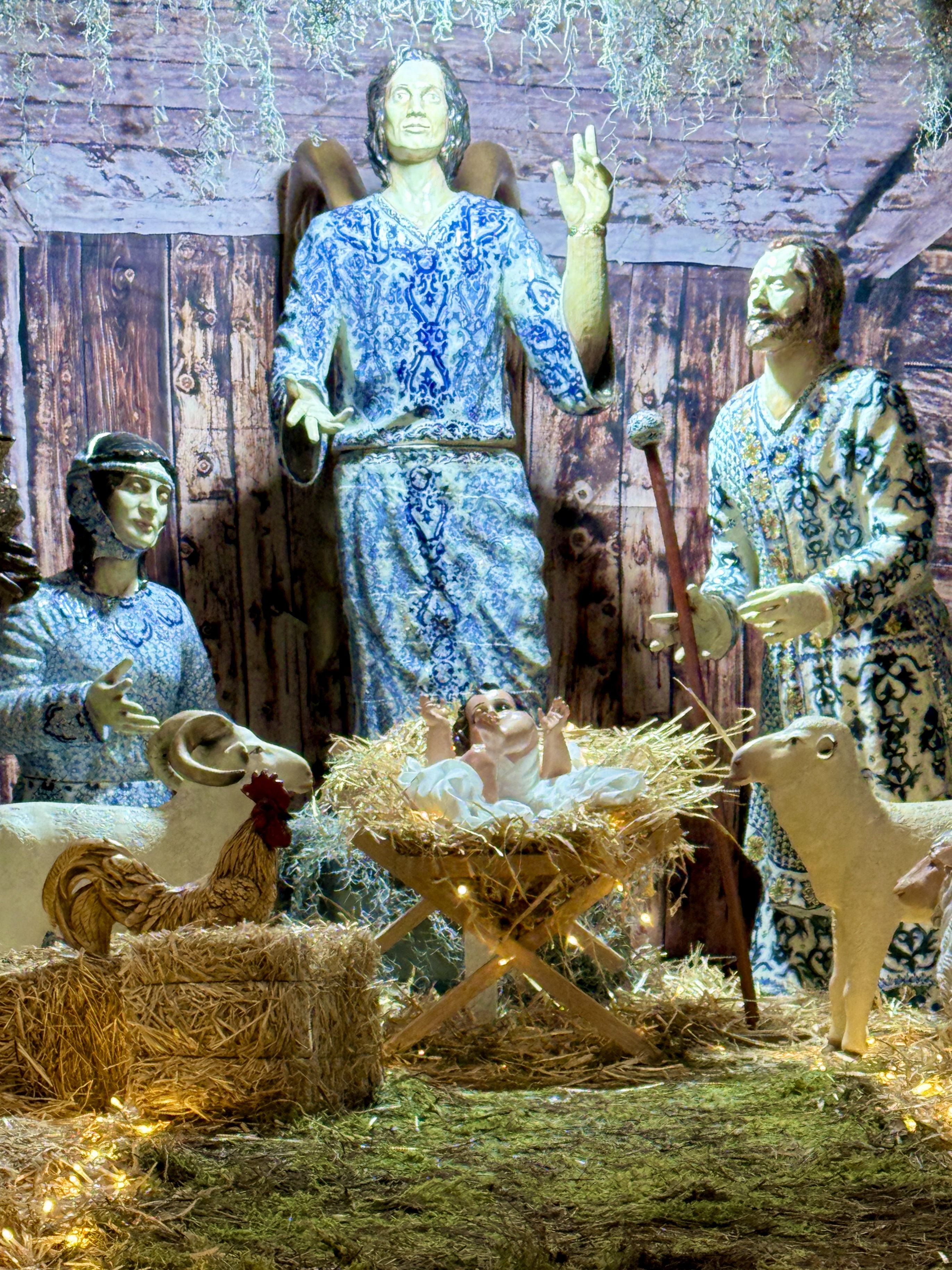
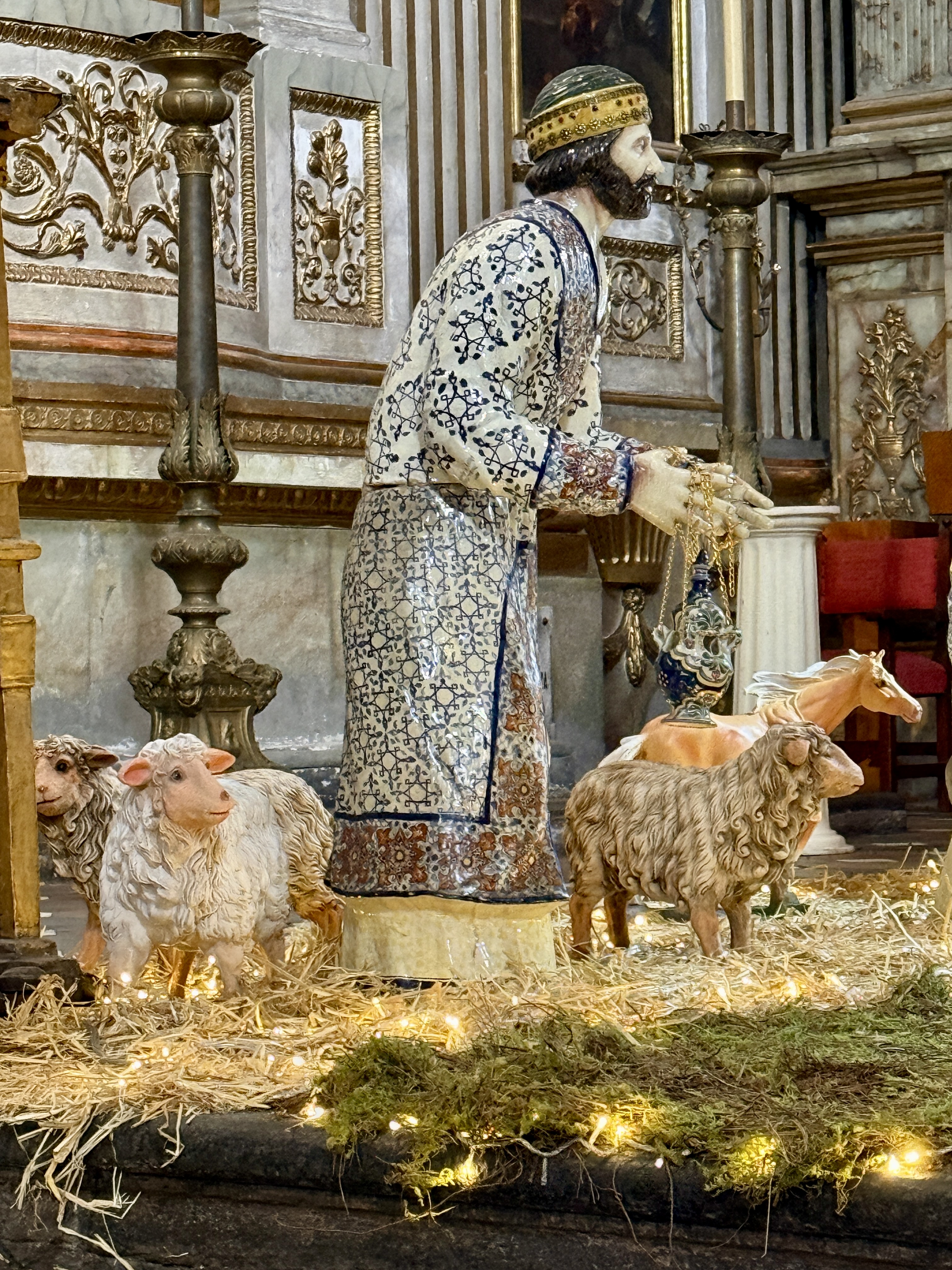
We headed for the Zocalo which was as bustling as Oaxaca’s main square, and even more so. Lots of people, families, and street performers. Like all Mexican cities the main cathedral sits on one edge of the Zocalo. Like the Oaxaca cathedral, this one is also from the 1500s (and 1600s) and is Baroque (I’d say Baroque on steroids).Puebla is also the home of much of Mexico’s famous talavera pottery and ceramic, so throughout the city you see ceramic tiles on buildings and streets. Thus it was no surprise (well actually I was pretty surprised) to see the large nativity scene in the cathedral made of talavera ceramic. But I guess they couldn’t resist, so they added all sorts of blinking lights.
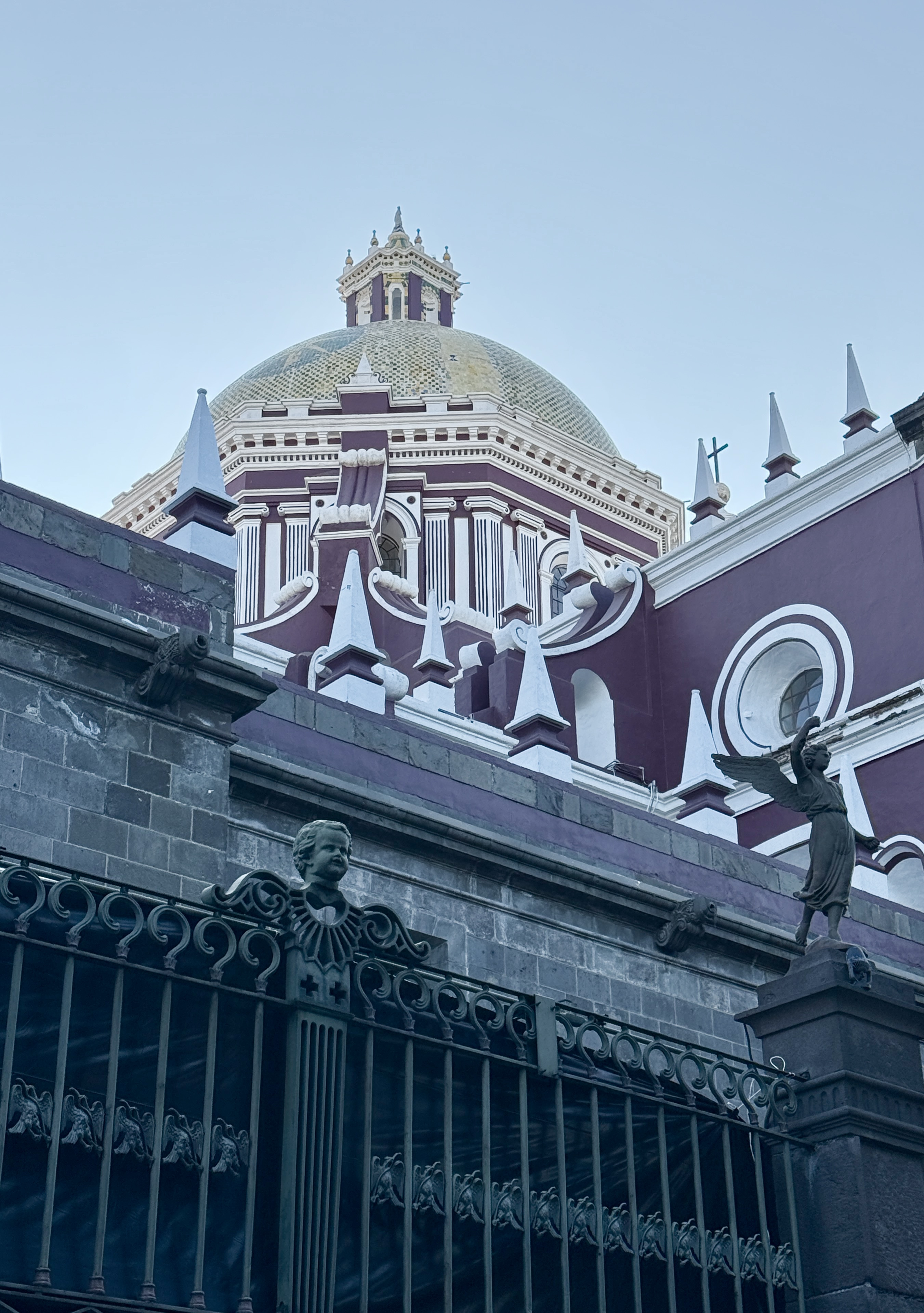
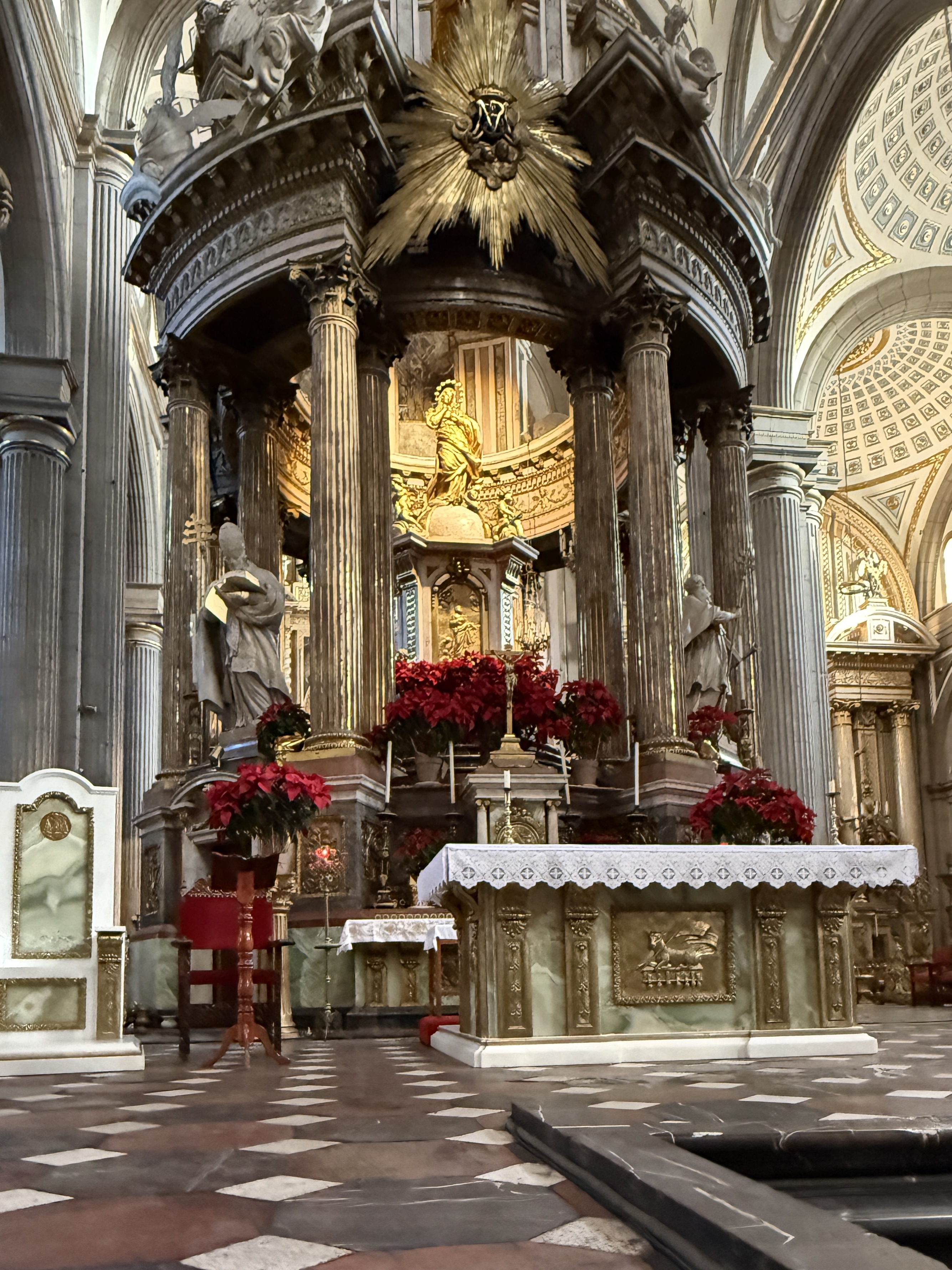
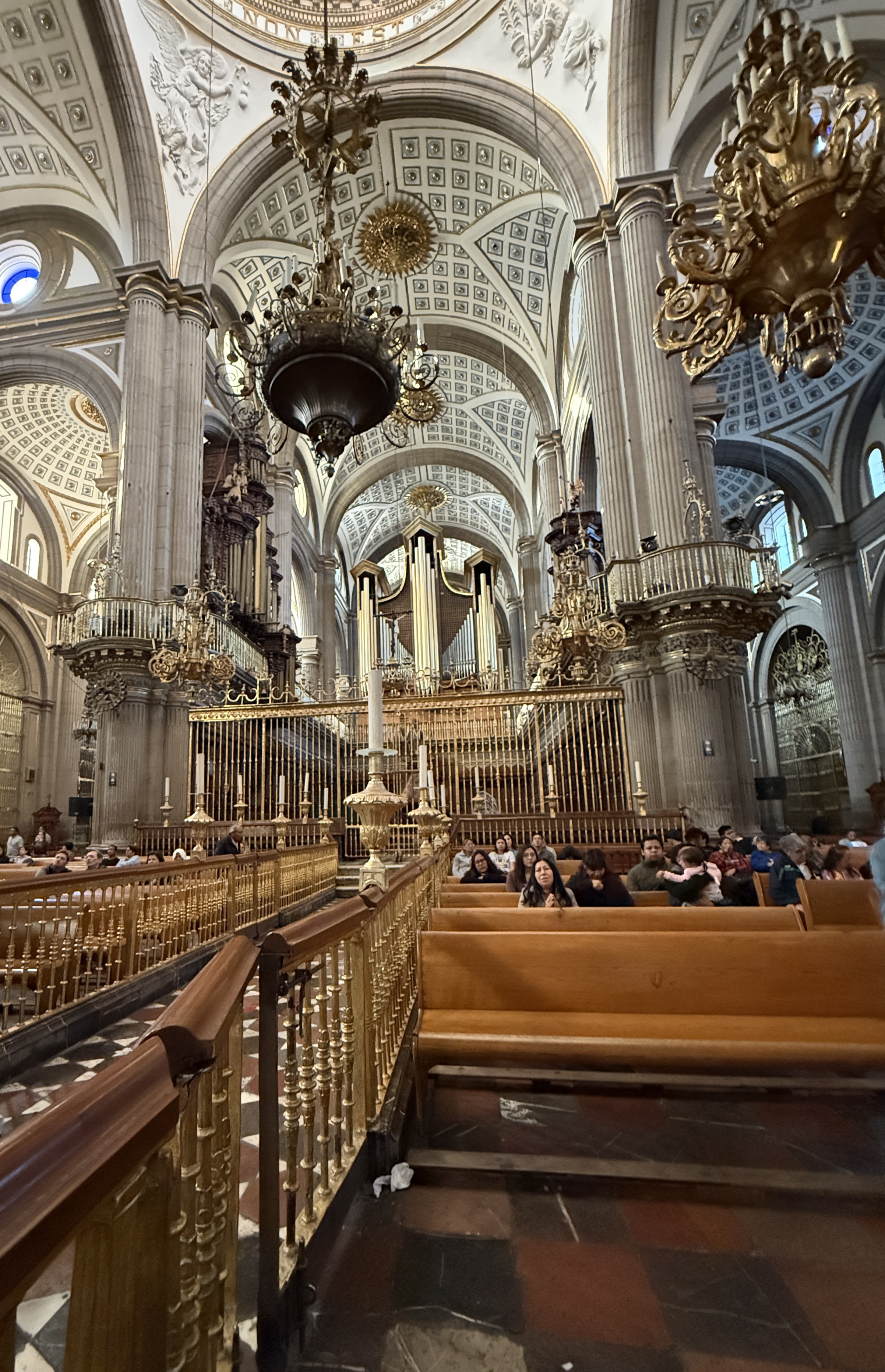
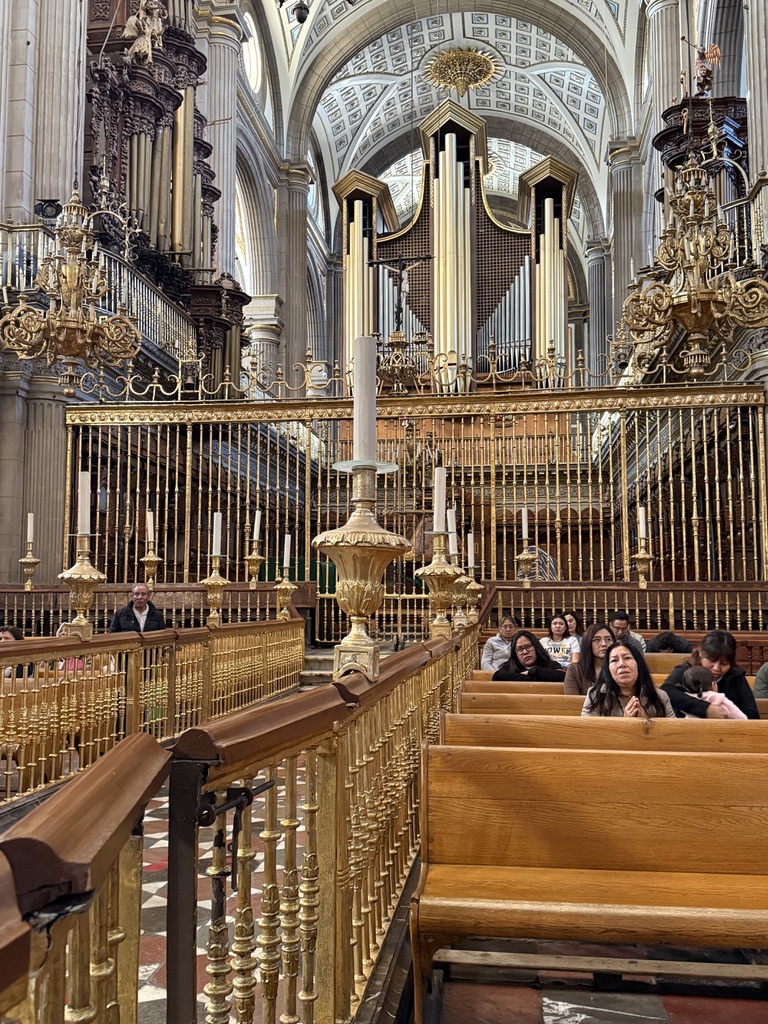
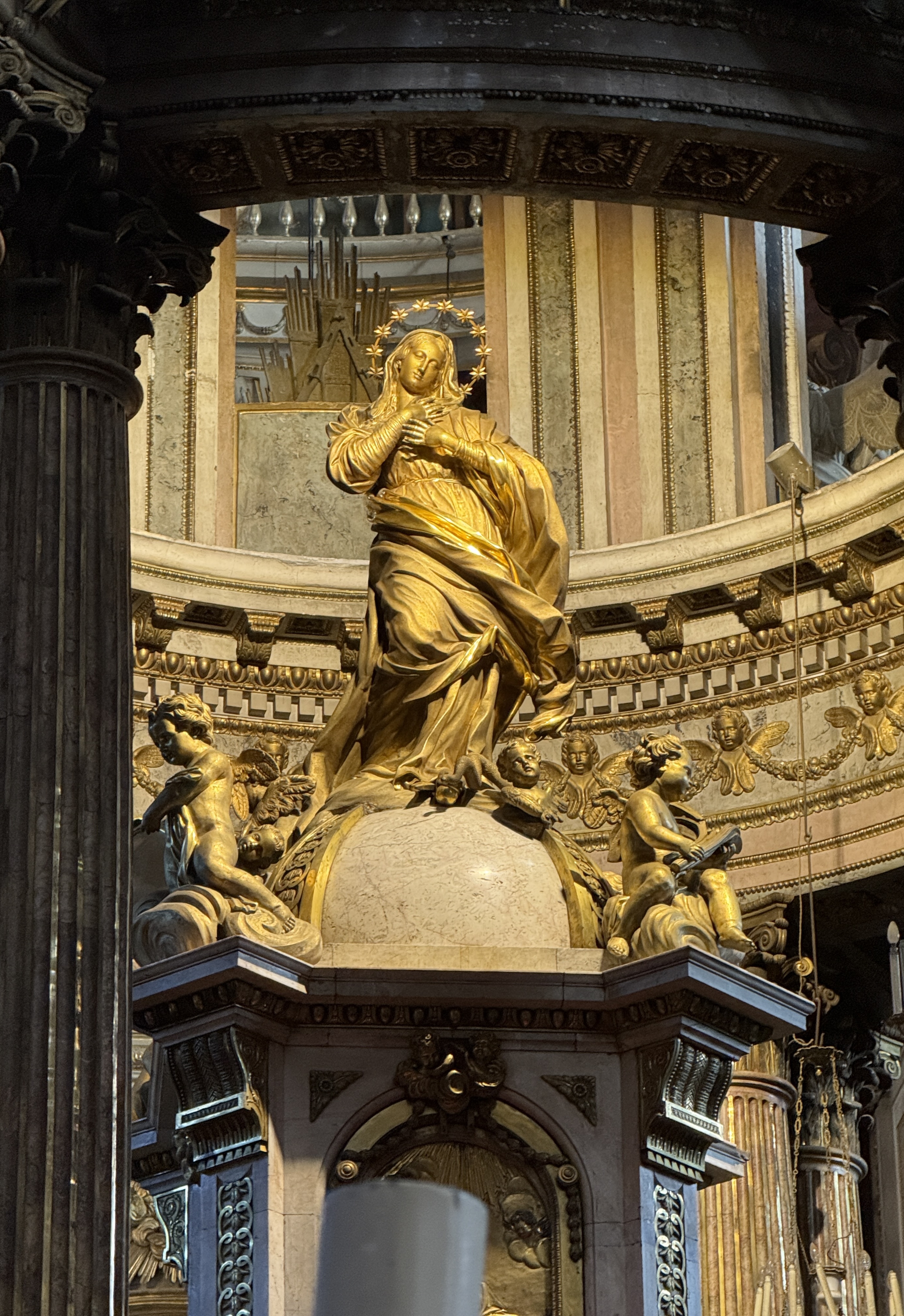
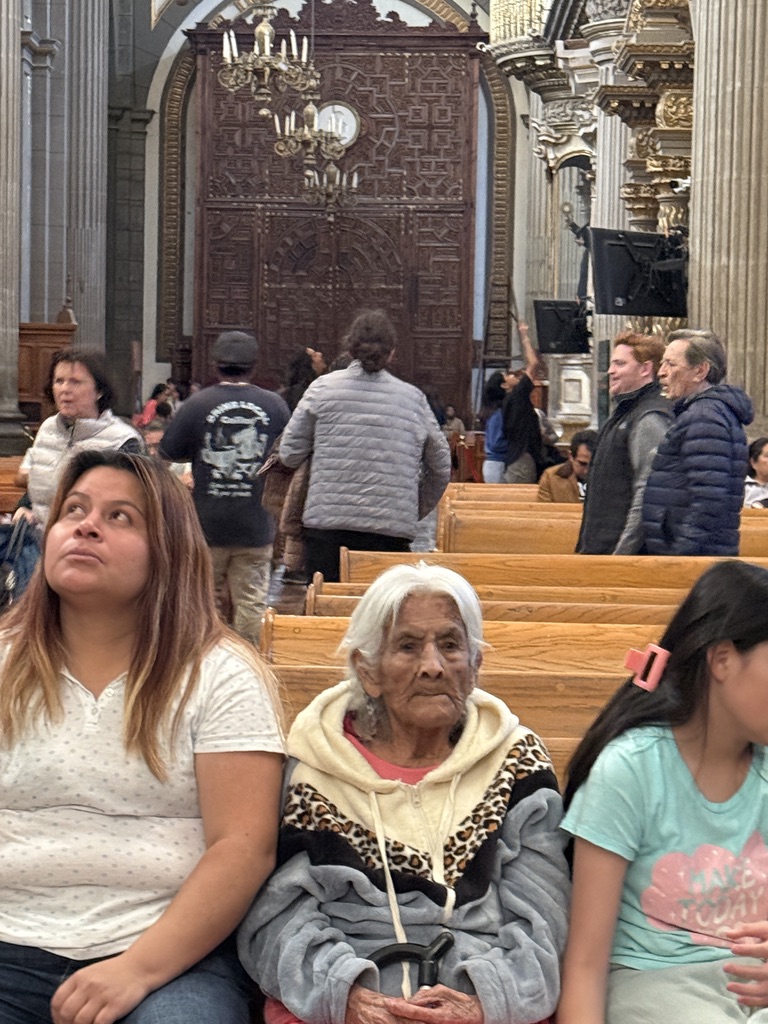
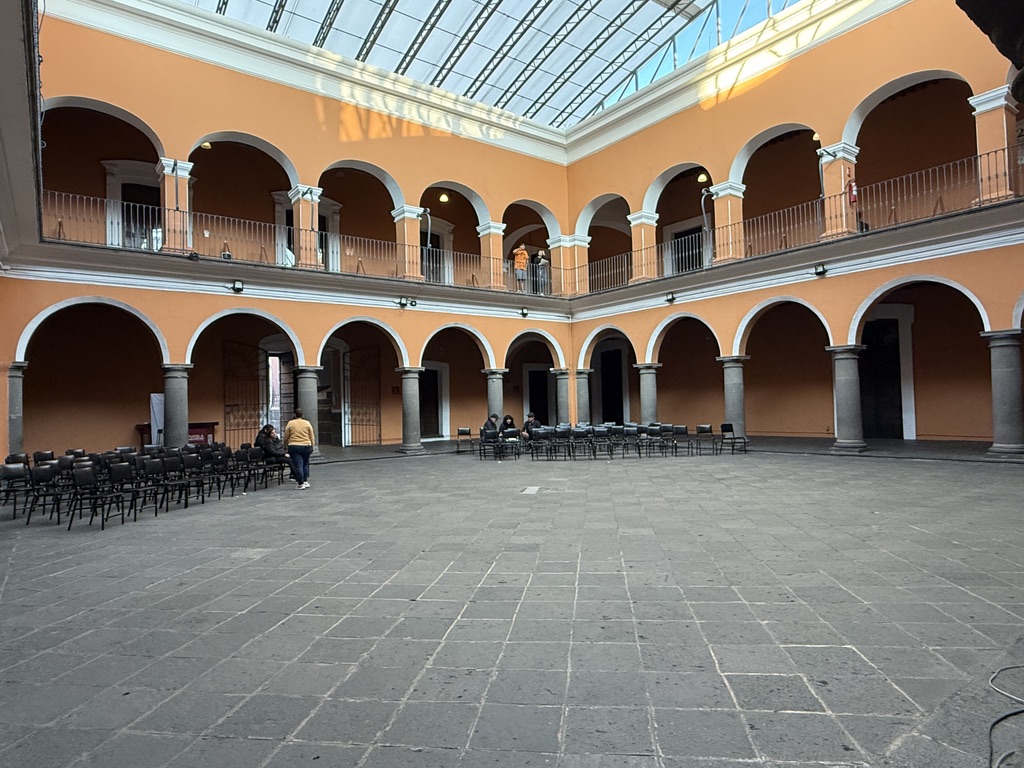
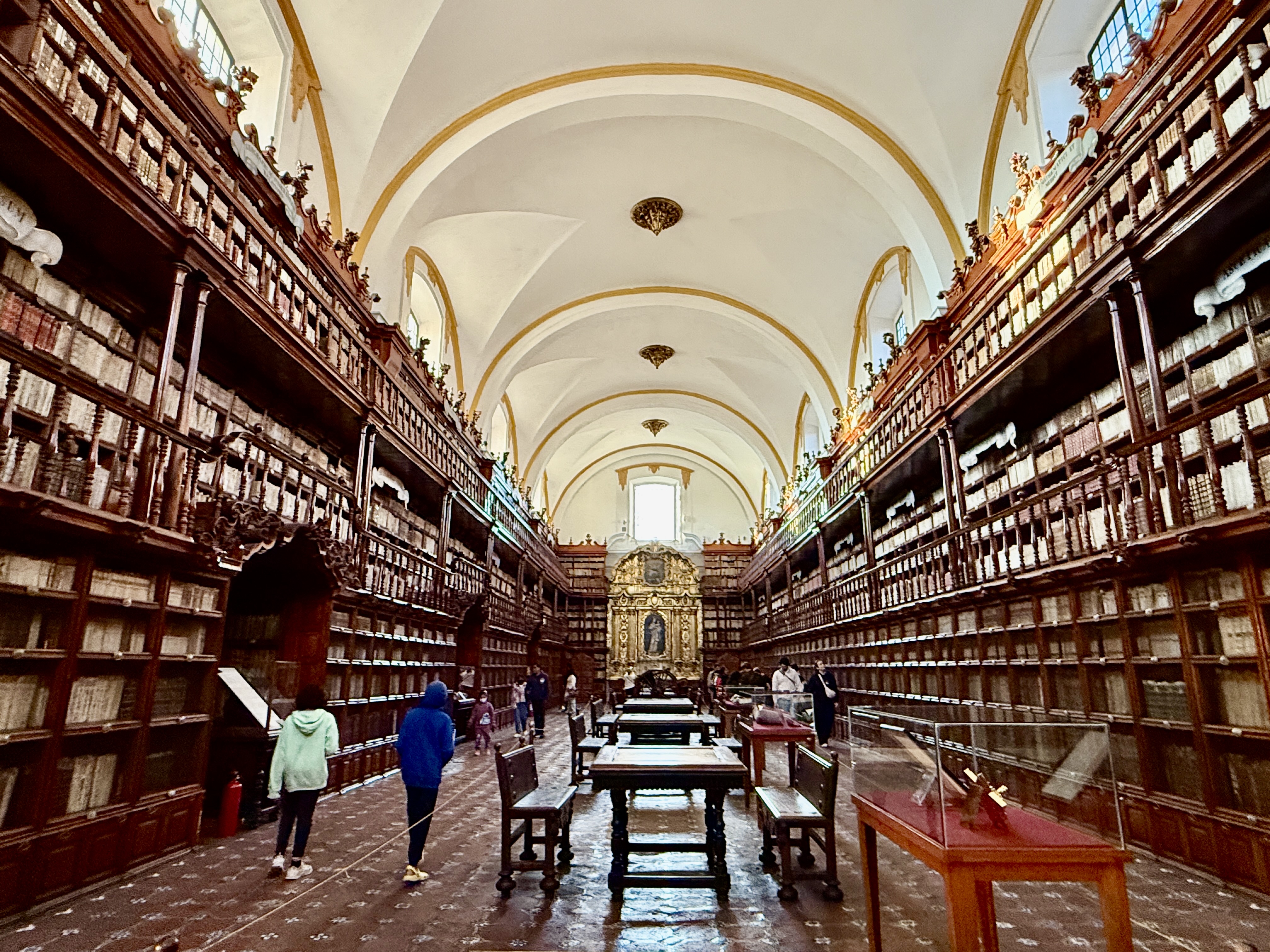
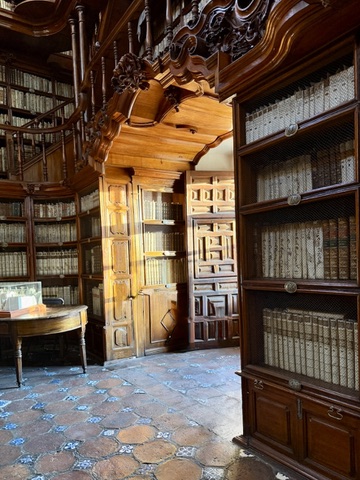
Having again had our fill of religion and Baroque architecture, we stopped into the cultural center which was an interesting space and home to an amazing library that must belong to the church. By then it was getting dark and we headed back to the hotel to unpack a bit and to get ready to head out for dinner.
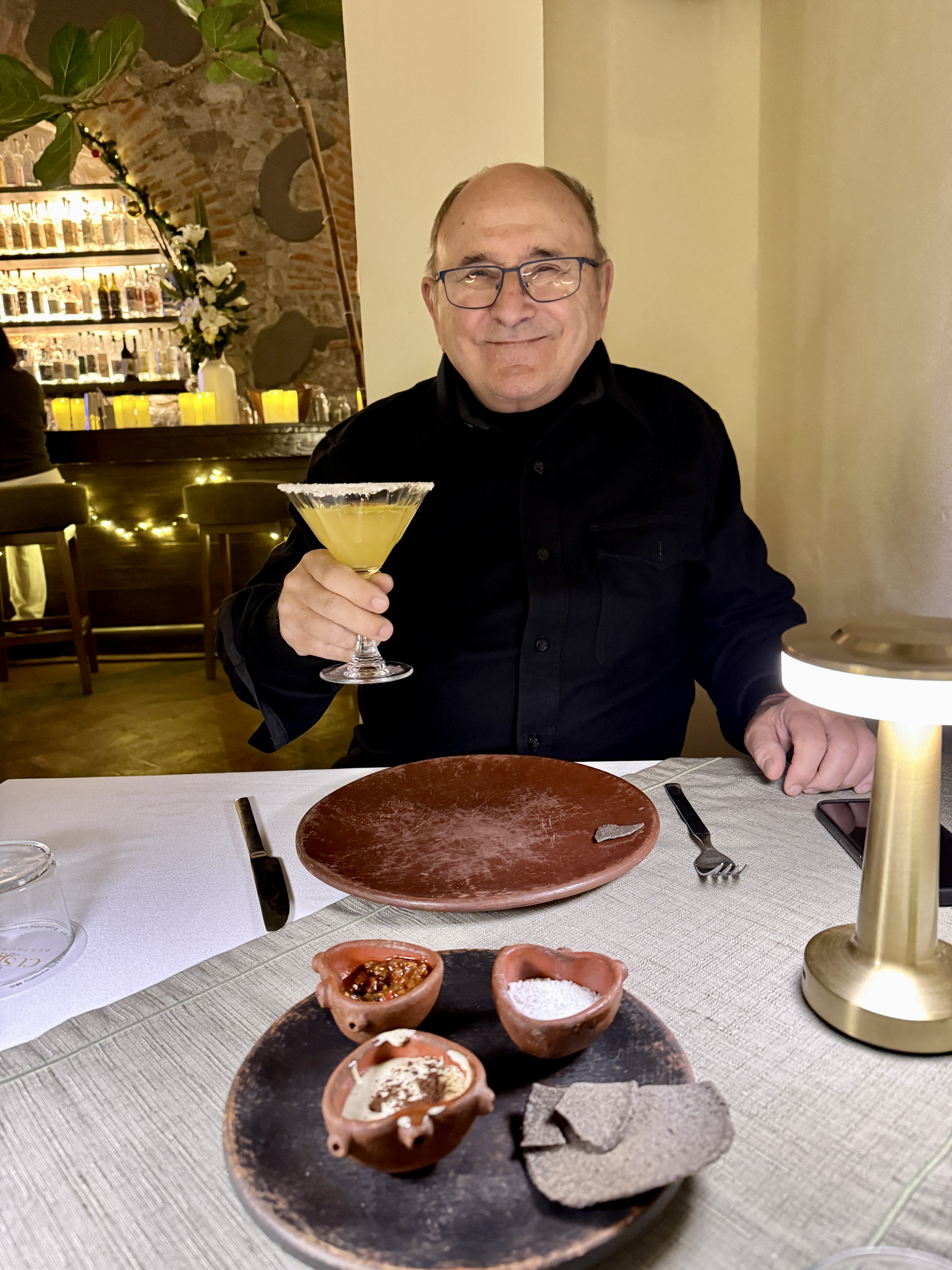
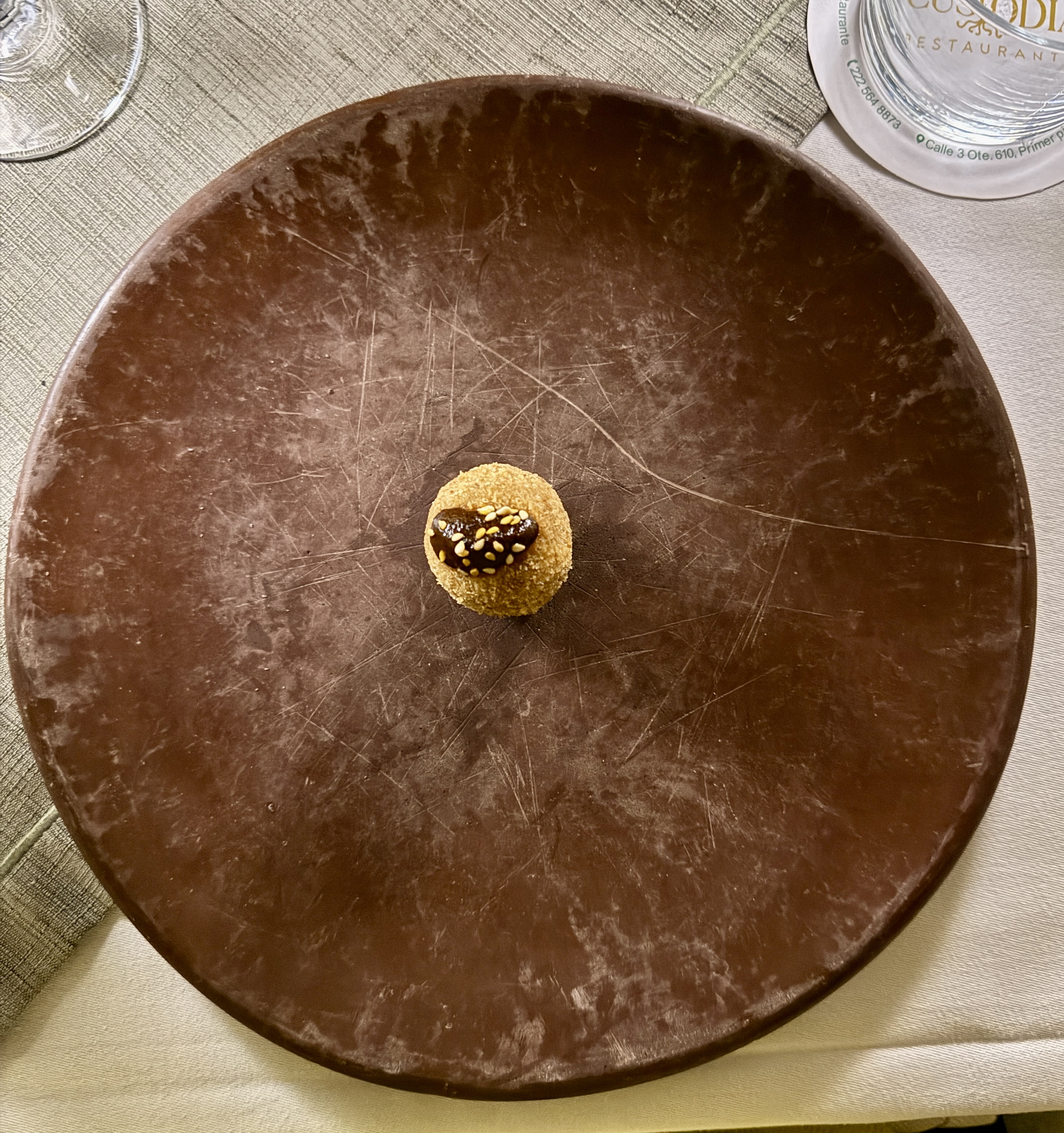
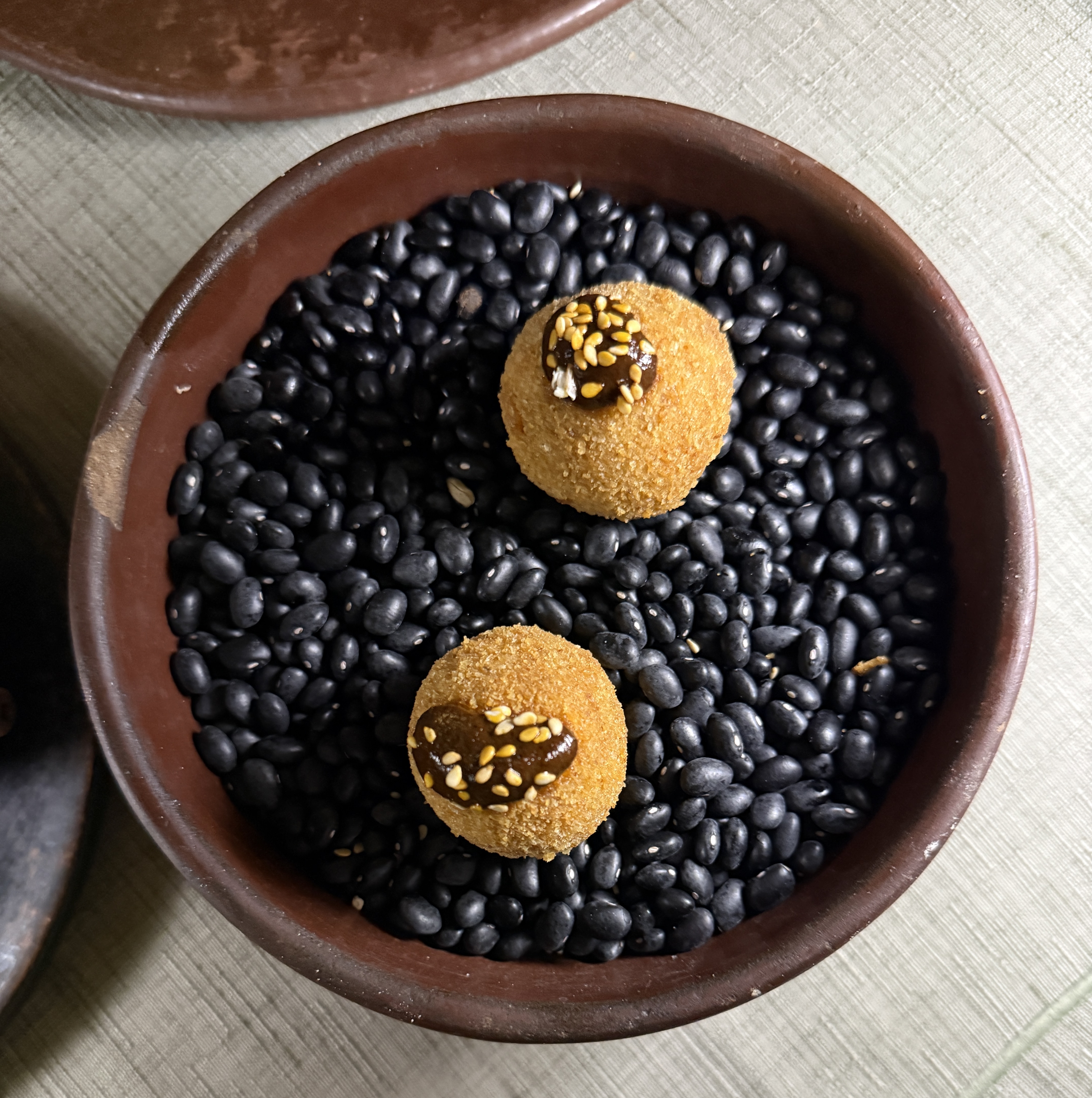
We ate at Custodia, a small, elegant restaurant situated inside a very small hotel in the historic district. After margaritas (each restaurant has their own recipe it seems) we had wonderful squash blossoms. The dish was called “Little Indian girls dressed in corn tempura” — the English translation. Basically squash blossoms with cheese sitting in a red sauce. Then we had the Manchamanteles with pork shank, caramelized pear, pineapple and banana; apparently, if I understood correctly, the confit pork shank was marinated for 8 hours. It had a sweet mole of fruits. And then we had the octopus dish which was cooked in pineapples. Custodia did not disappoint, except for the terrible hokey Christmas music playing in the background, after the pianist left. Oh I forgot they brought out a complimentary starter that was some kind of Mexican cheese mixed with banana and fried. Very yummy.
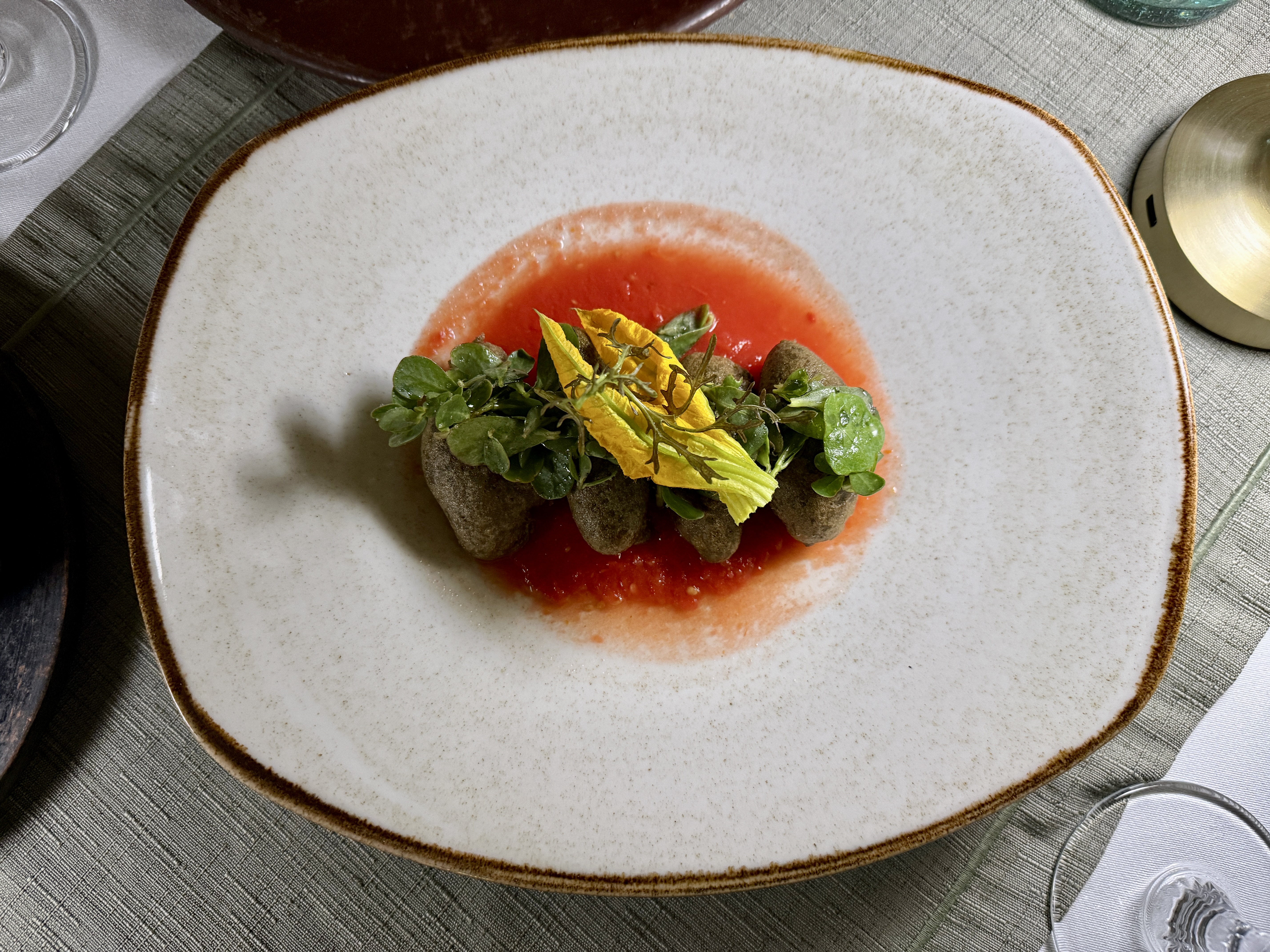
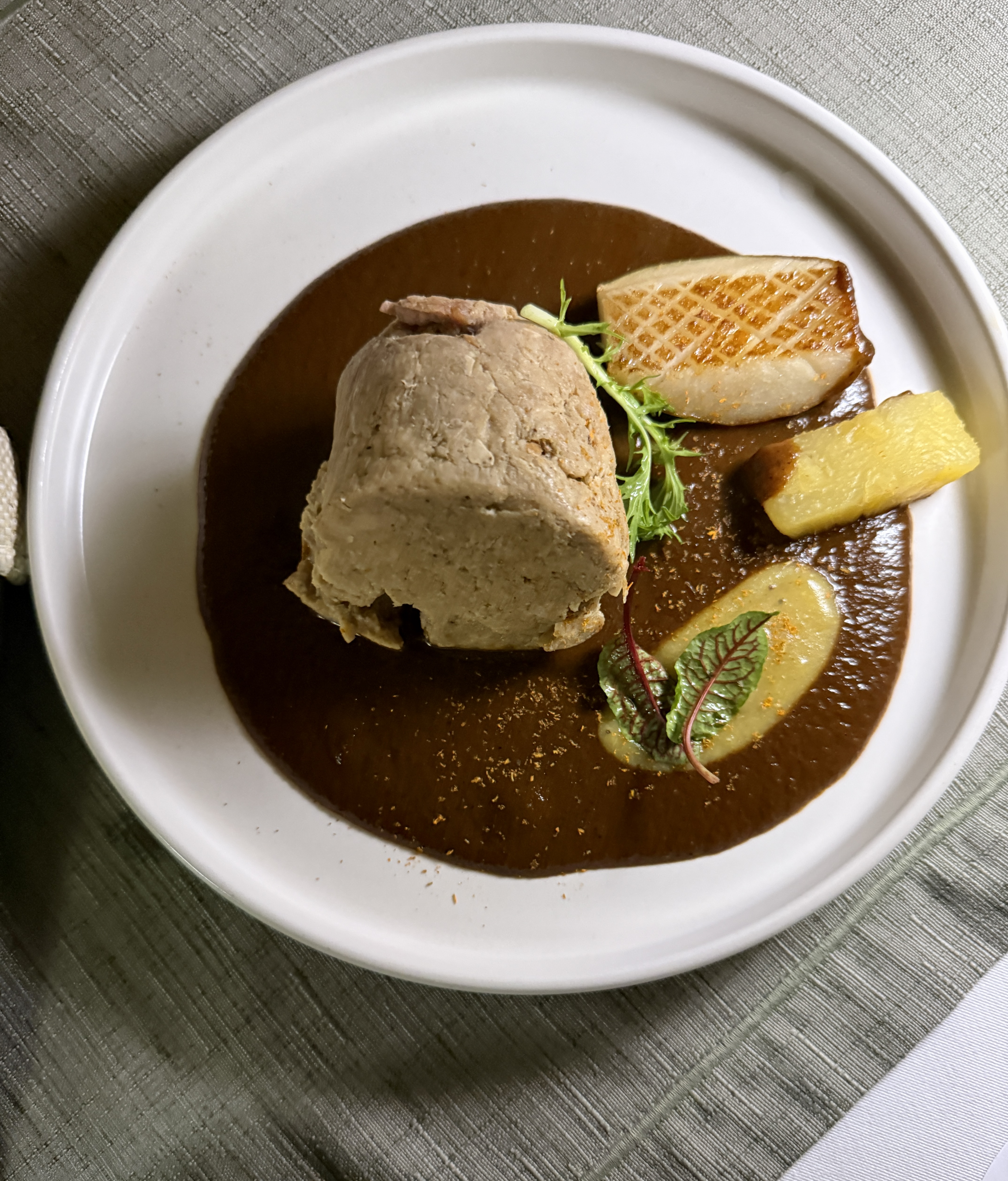
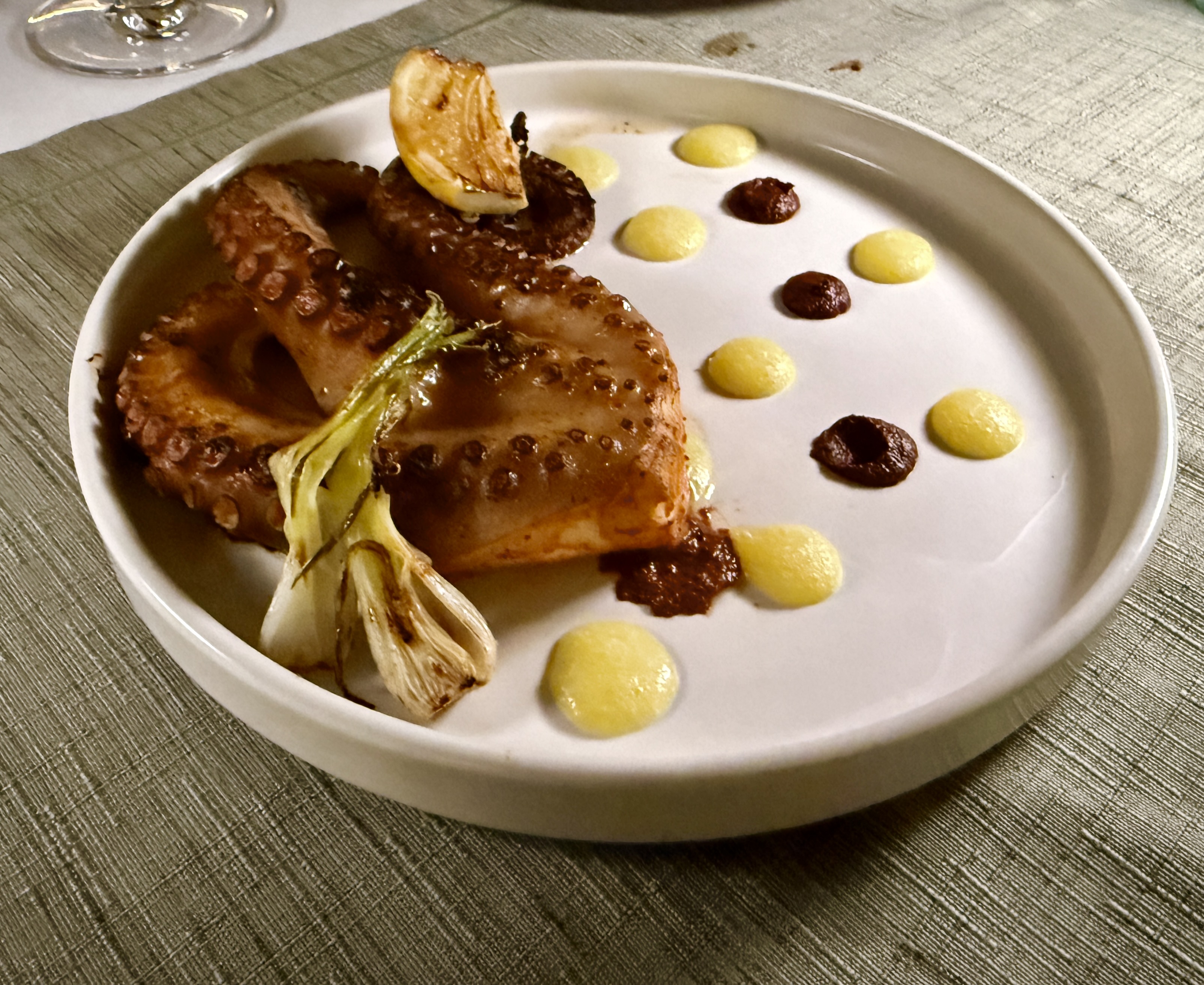
We taxied back to the hotel (only a 7 minute ride) because the temperature had really dropped. Then our new adventure began. Our room–the large terraced space– was freezing cold. We tried to up the heat without success. Then we called downstairs but since it is only a 26-room hotel, the “engineer” was gone for the night. The staff came up to set the thermostat and assured us in about 15 minutes the room would be warm. But after waiting about 30 minutes we realized the problem was more serious. It was about 58 degrees in the room and it wasn’t getting any warmer. They then called the engineer to come out but Mike said it seemed to him that the system for that room was broken and this would not be a quick fix. And Mike also realized that we had no hot water in the room. So at about midnight we packed up and changed to the only room available—which is certainly not a desireable room. It’s fine, but not what we booked. We’re too tired to change again tomorrow so we will stay put. But management will certainly hear from me. I guess we could have slept in the jacuzzi which had been all fired up. So much for
That’s it for me… It’s after 1 am here and I haven’t unpacked anything. We had planned a pretty long day tomorrow– so much to see in Puebla.. but I think we will probably sleep later than normal.
All the best-
Fern
December 26, 2025: Dia Tres en Oaxaca
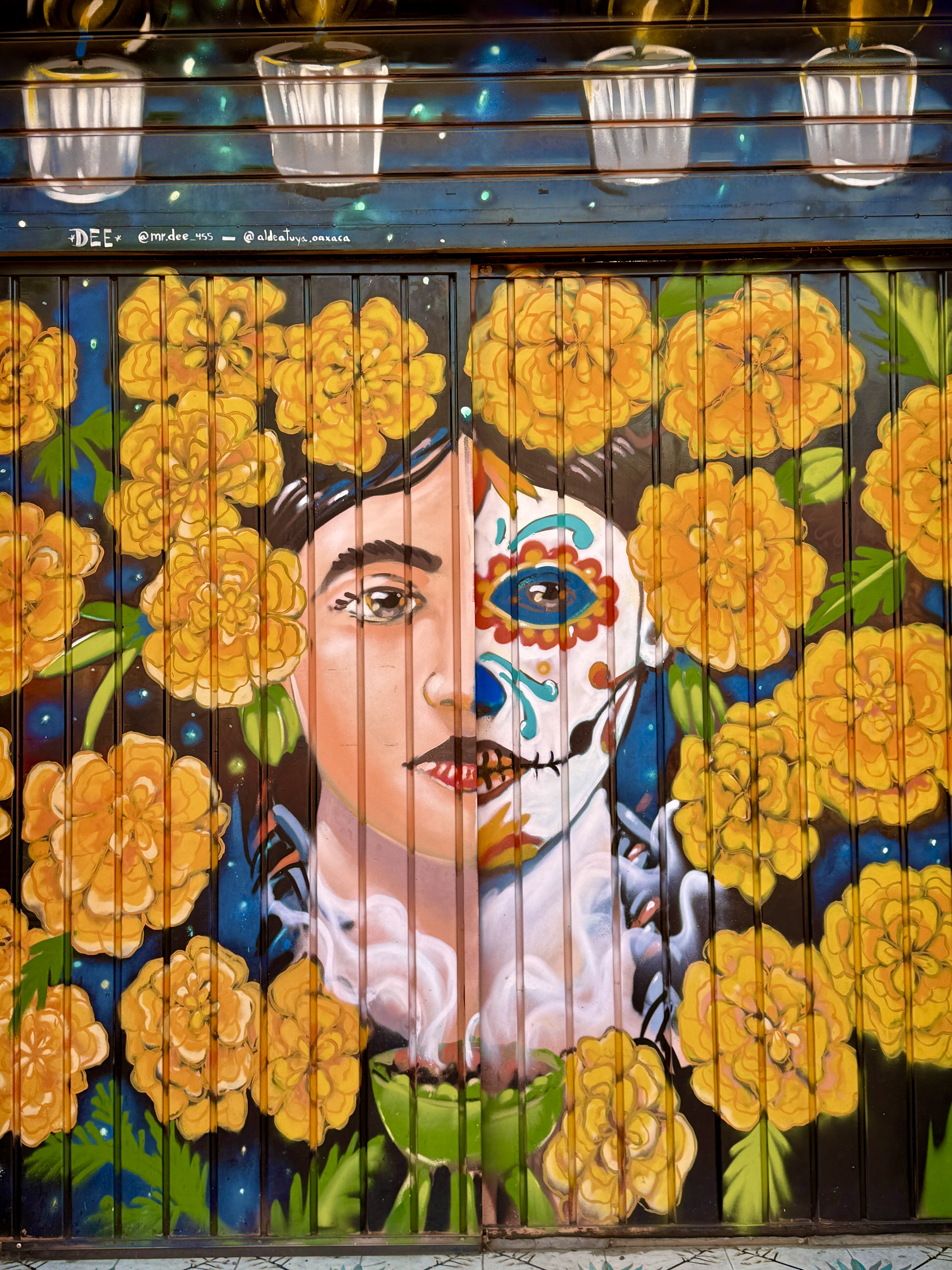

Hola!
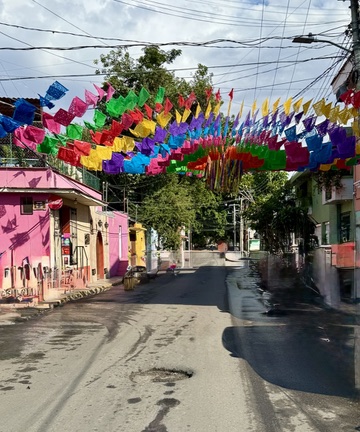
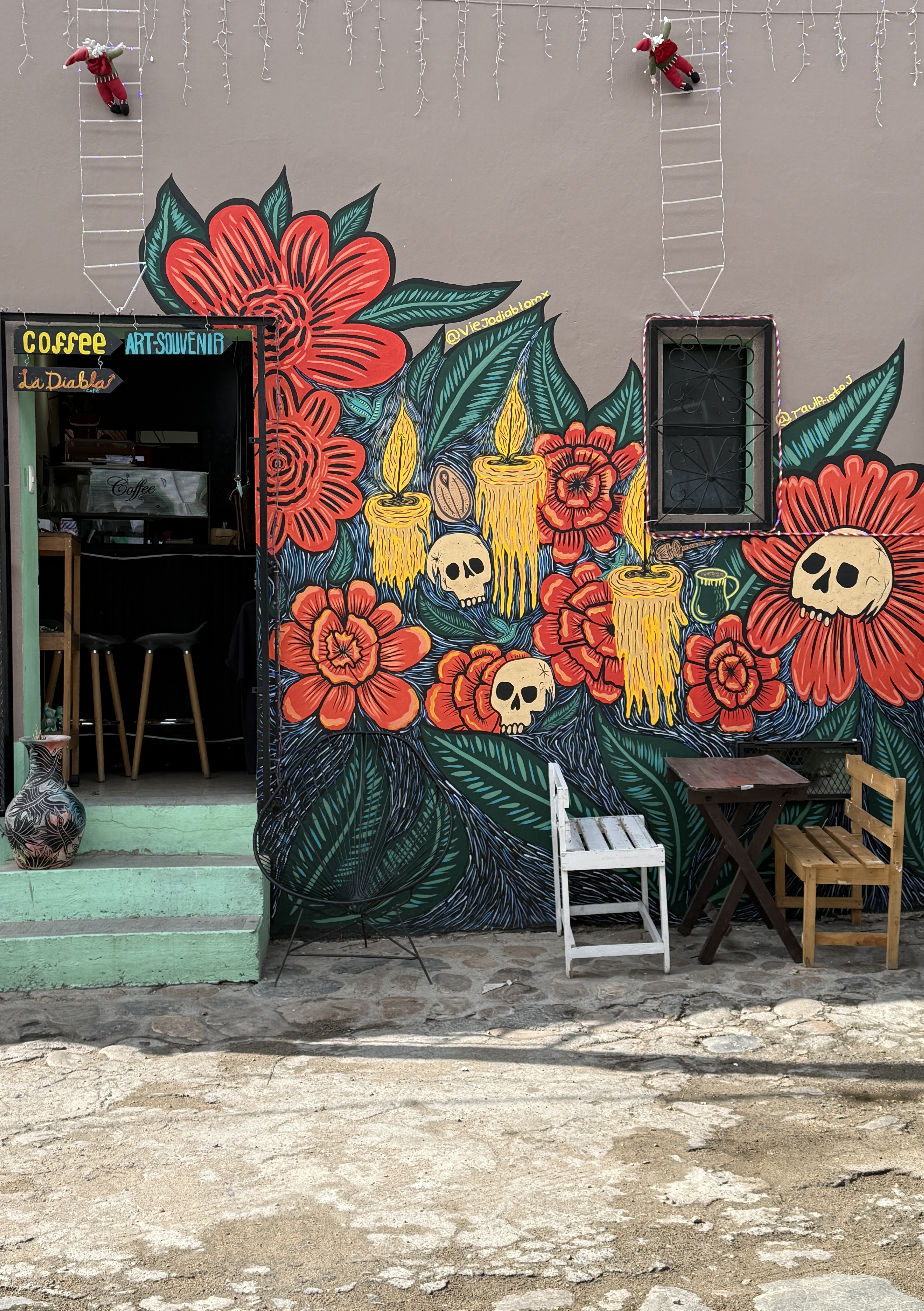
Got off to a bit of a late start, and decided to try a new place for desayuno (breakfast), but it was closed. By then we were too late for the hotel’s breakfast so we strolled along and went to “a.m. siempre” (name seems to be in all lower case)–a small place along the way to our destination for the day. After some spicy huevos rancheros for me (and pancakes for Mike), we headed to the Jalatlaco neighborhood, which was about a 30-minute walk, which we knew would take longer because there’s always so much to see along the way to any destination. And sure enough, after just a block or two we stumbled on an intereting building which is now a large hotel (very fancy) called the Quinta Real — a sprawling 16th-century compound that was a former convent. Pergolas draped in bougainvillea, a large grass patio with a swimming pool, and traditional fountains; stone archways, what seemed like dozens of patios, it takes up an entire city block.
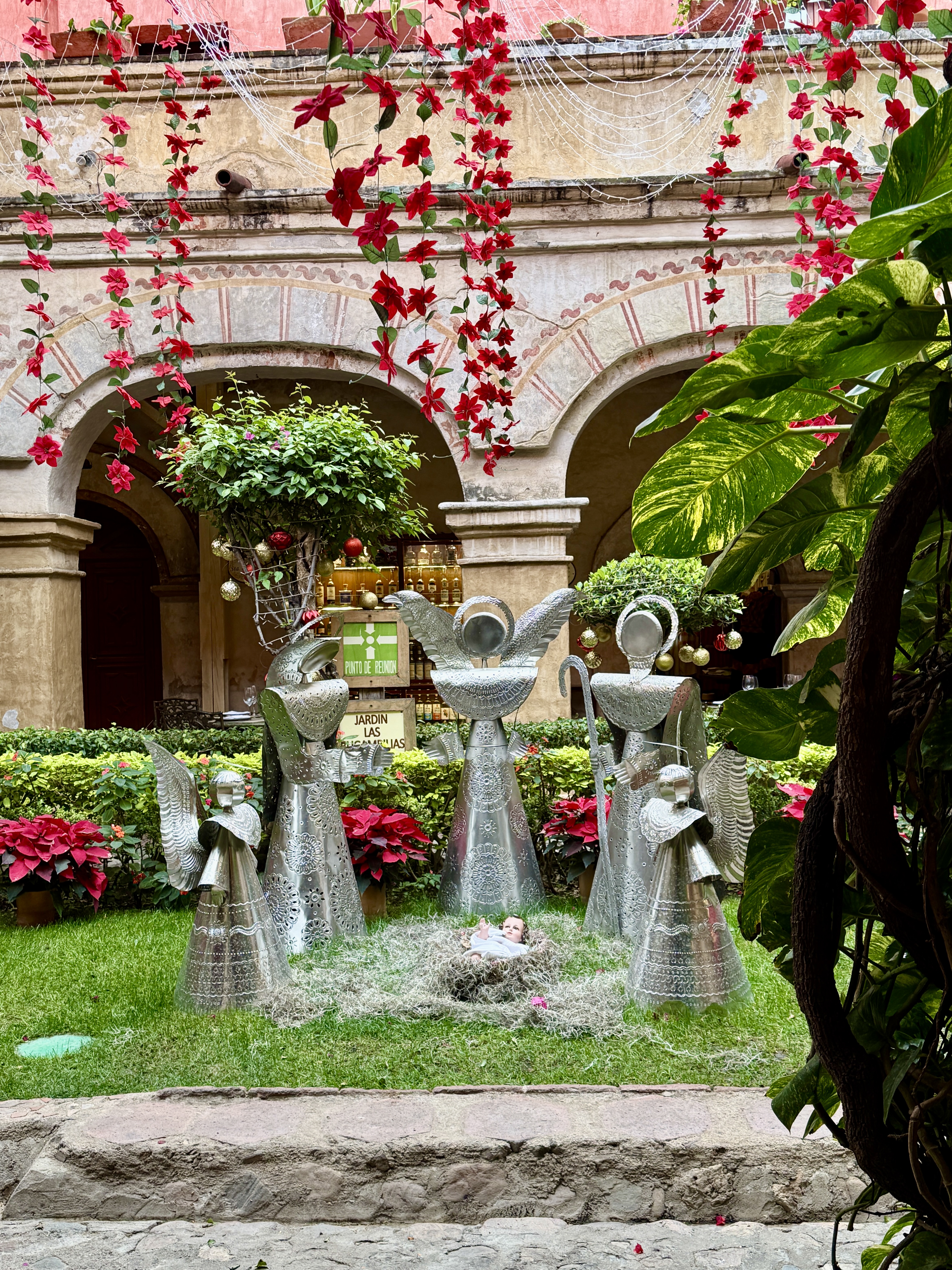
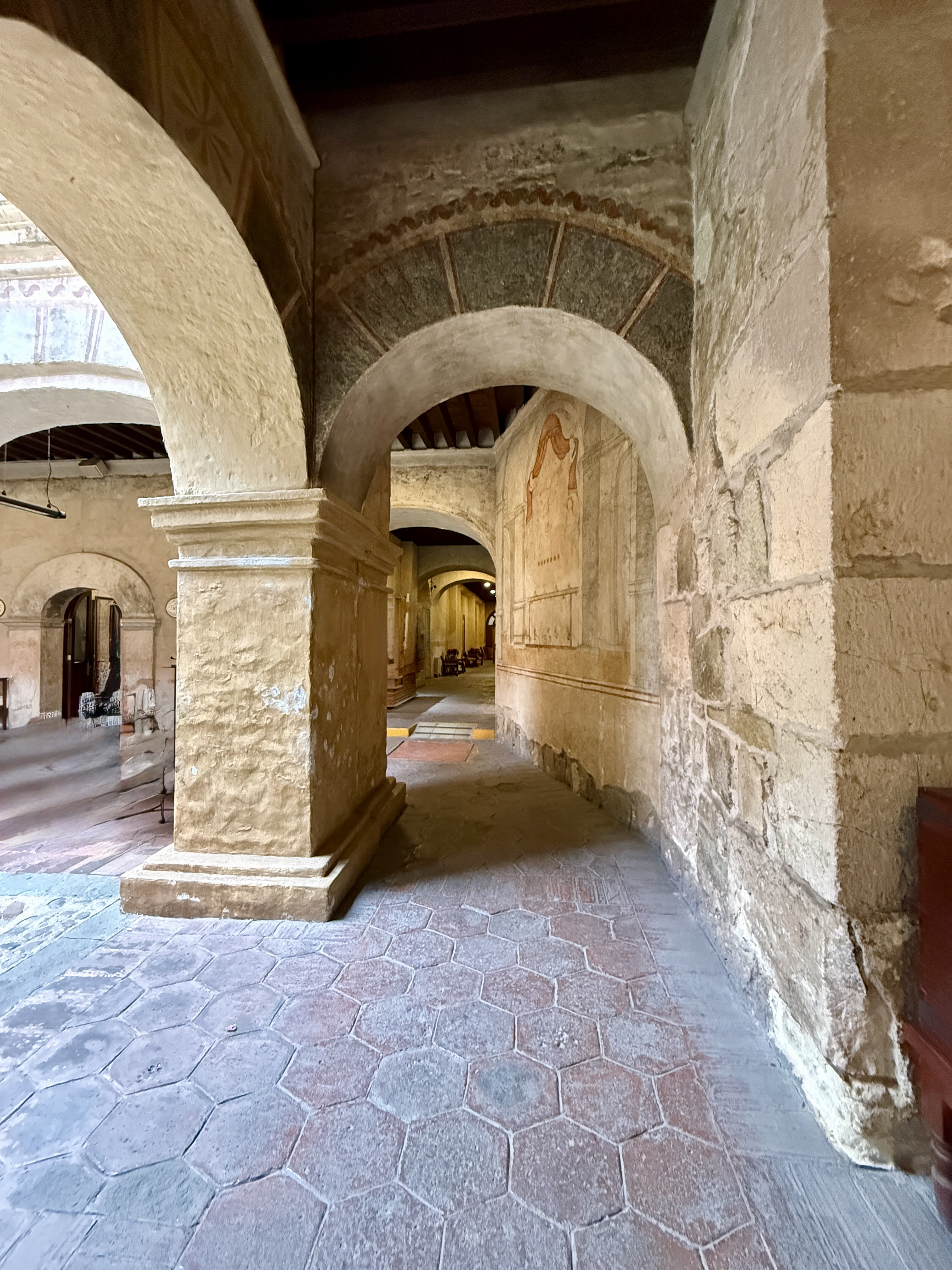
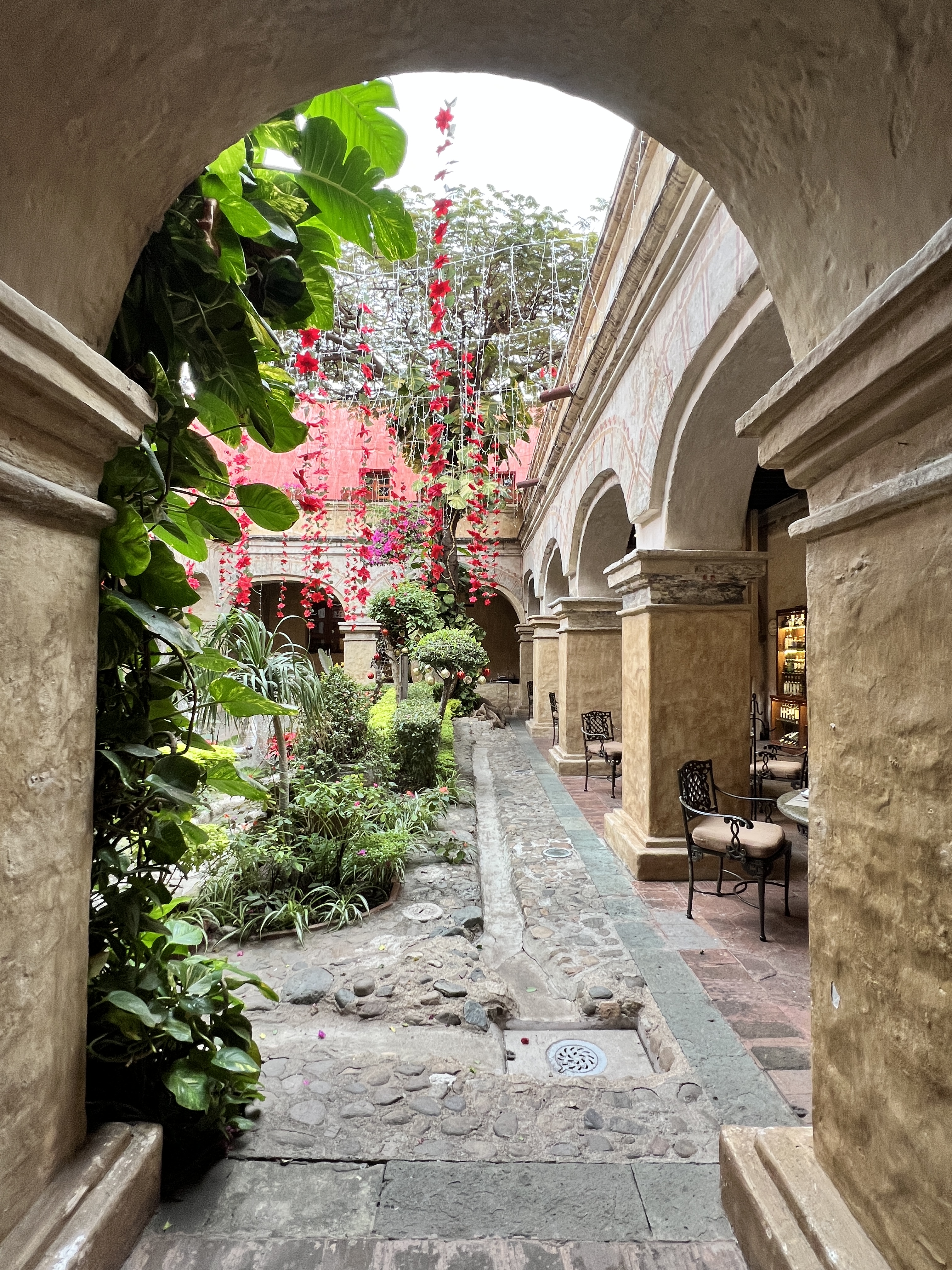
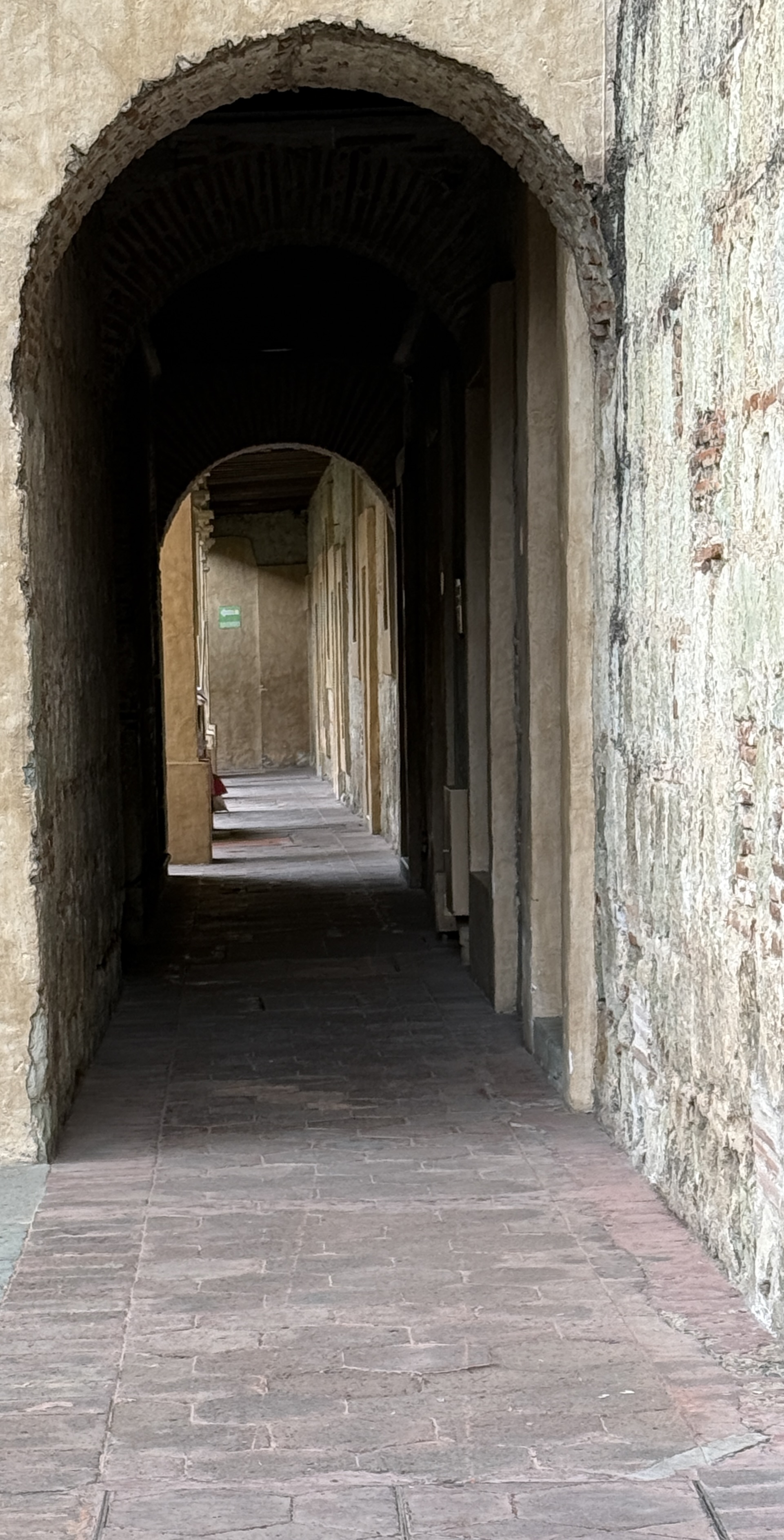
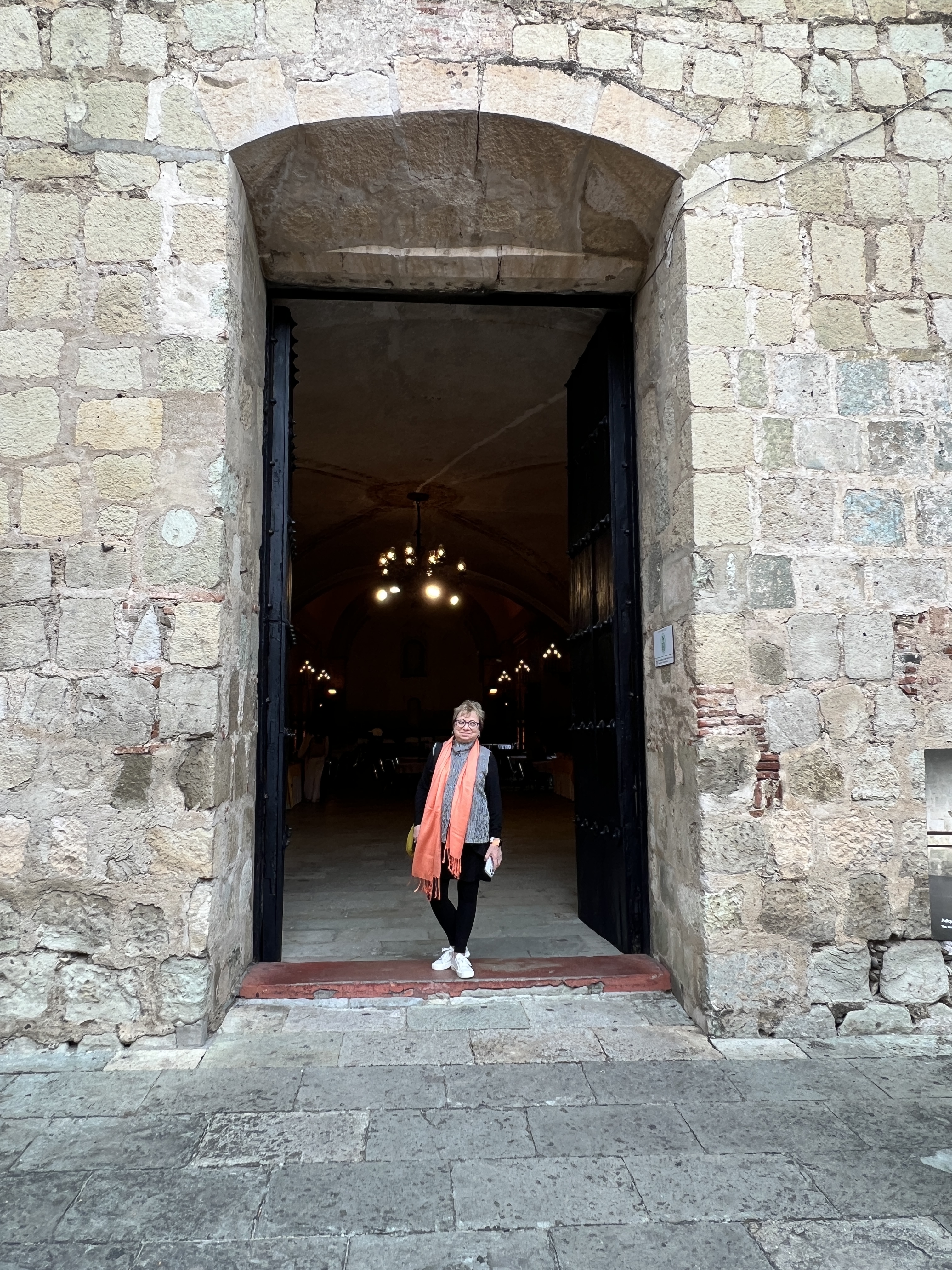
The guards were very nice and let us roam around and take photos. Then as we were about to leave, it started to get cooler and looked like it might rain. I went into the shop at the hotel and bought a tangerine-colored scarf which I felt could do double service—keep me warm and maybe dry. We strolled a bit further and then it really did rain, so we found ourselves huddled under an archway that led into the Quinta Real on another side of the hotel. We waited for about 30 minutes when the rain turned to a simple mist.. and headed on our way.
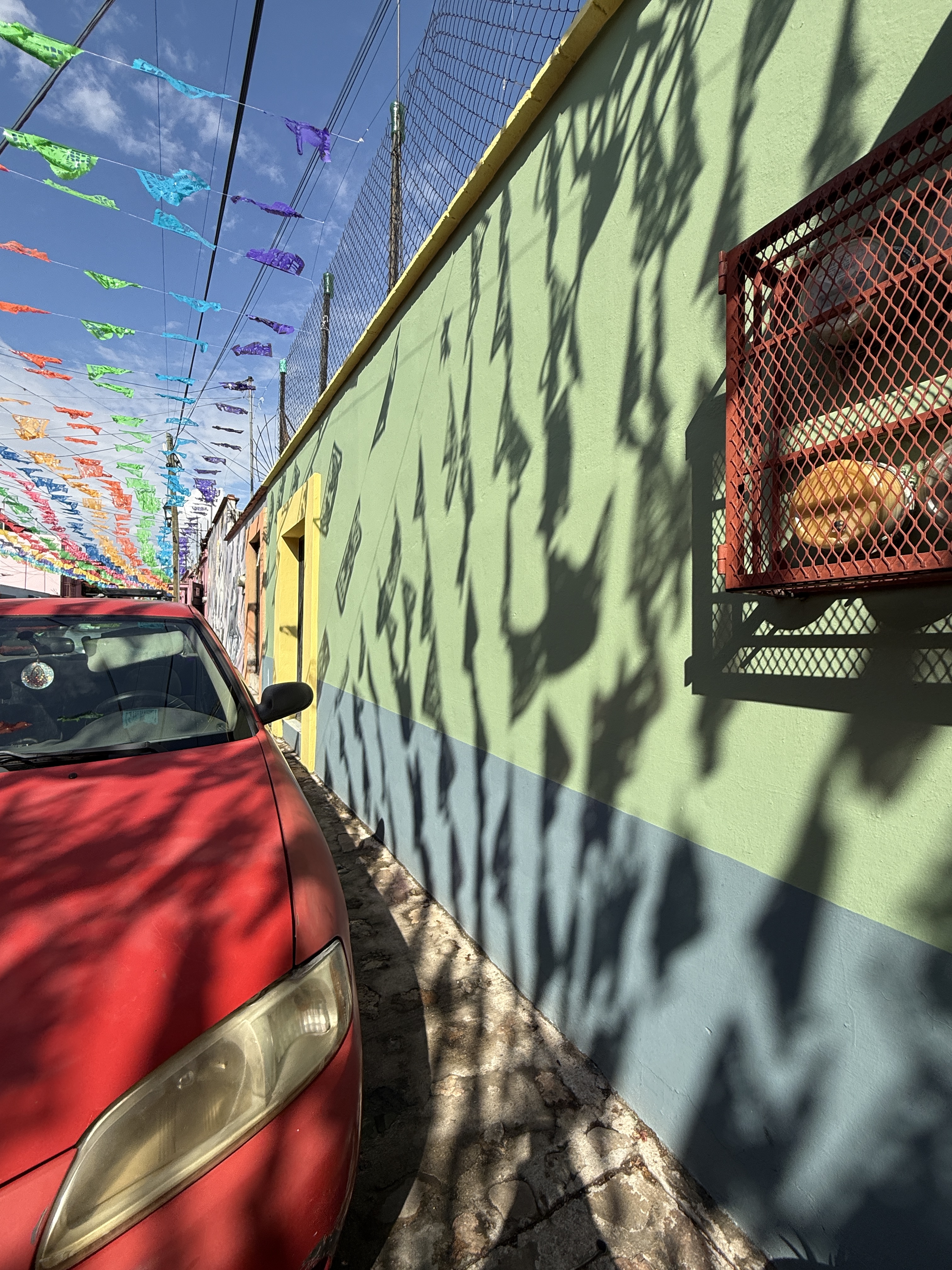
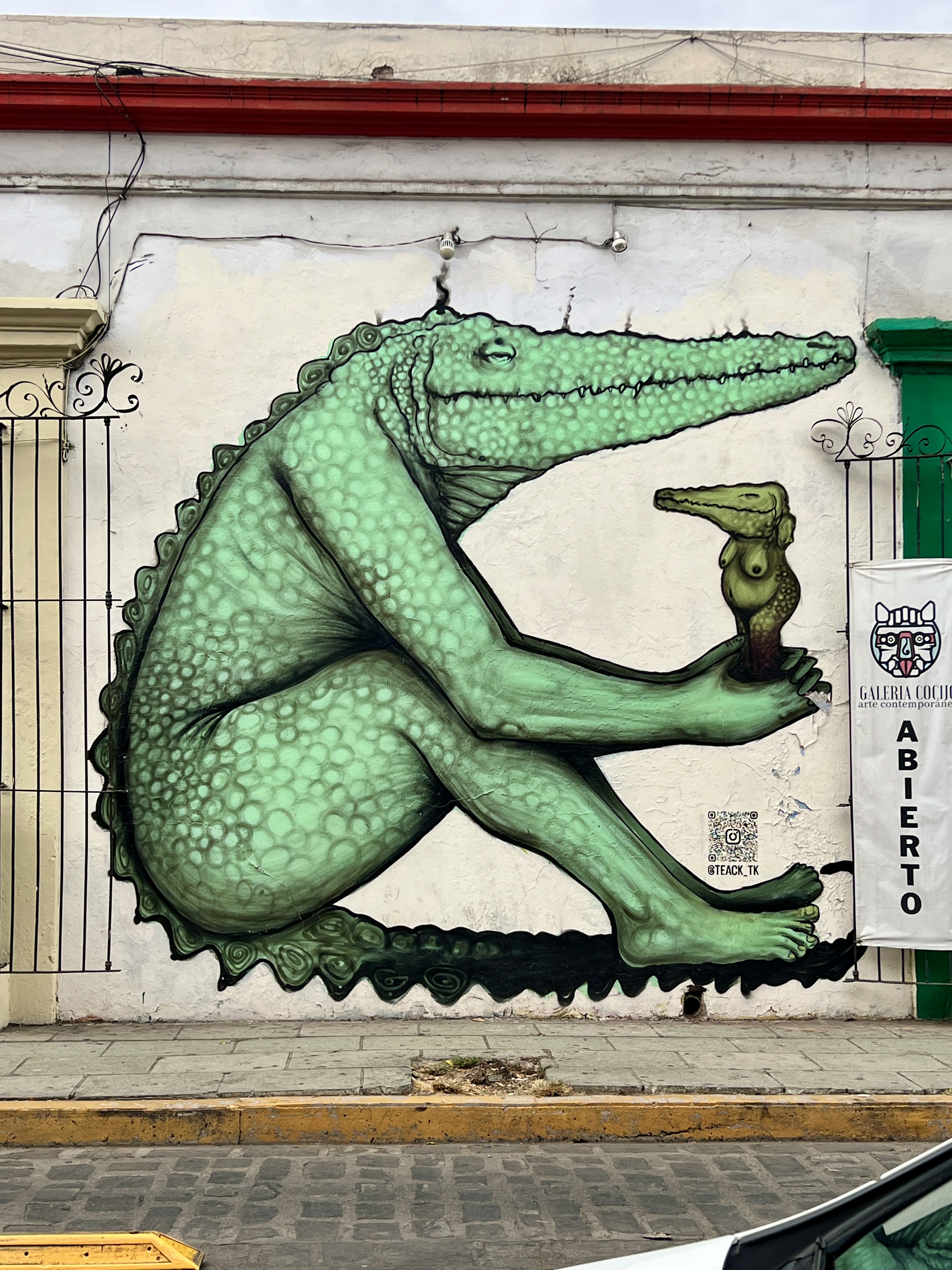
As is always the case in Mexico, the rain was brief and then the sun returned. So off we went to Jalatlaca; the route was pretty direct and we strolled through much less “manicured” areas of the city (but wouldn’t be surprised if they get gentrified in the coming years). Jalatlaco is one of the oldest neighborhoods in Oaxaca (from the 15th century); complete with cobblestone streets and very colorful murals. Apparently it had been a center for leather tanning. The neighborhood did not disappoint.
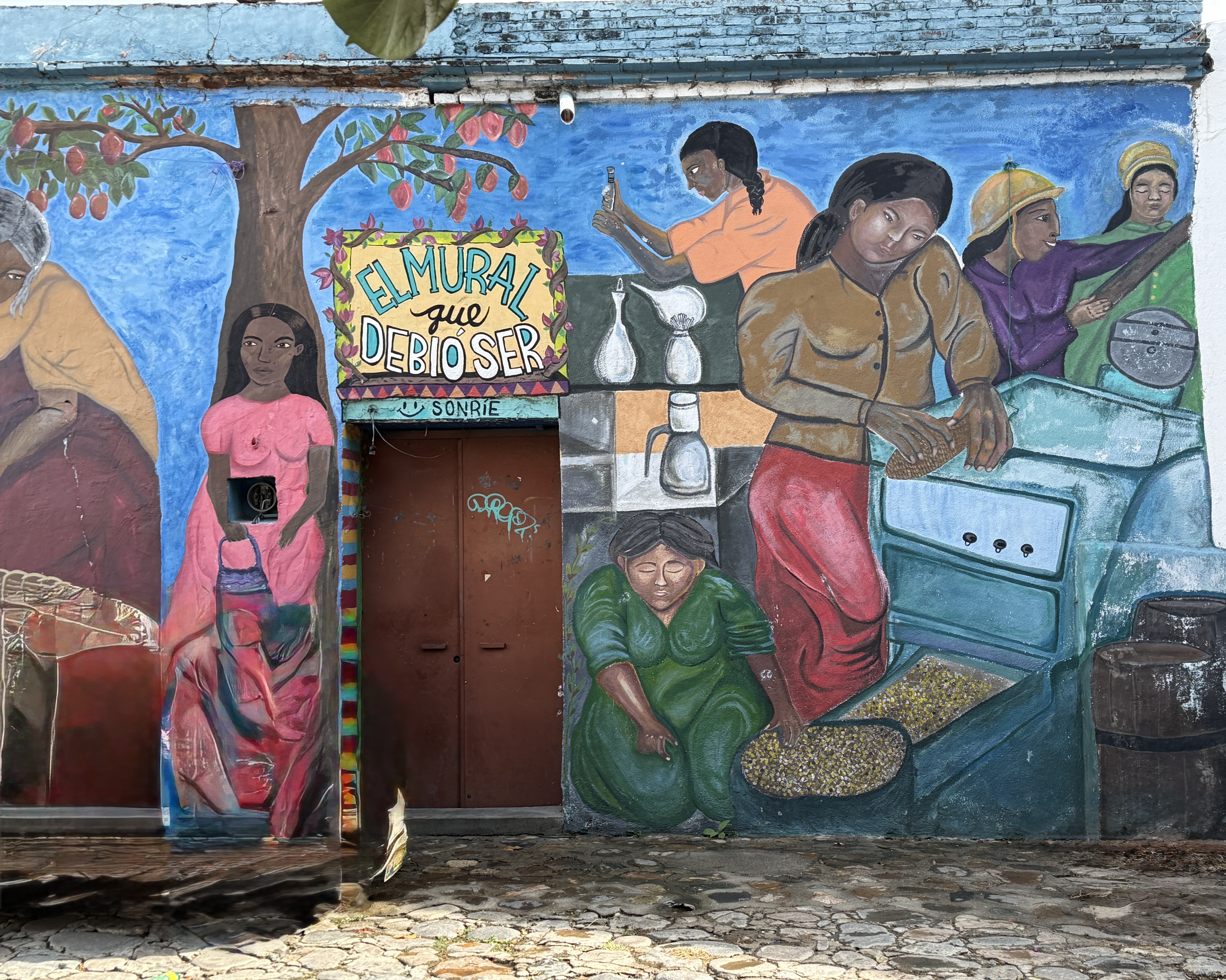
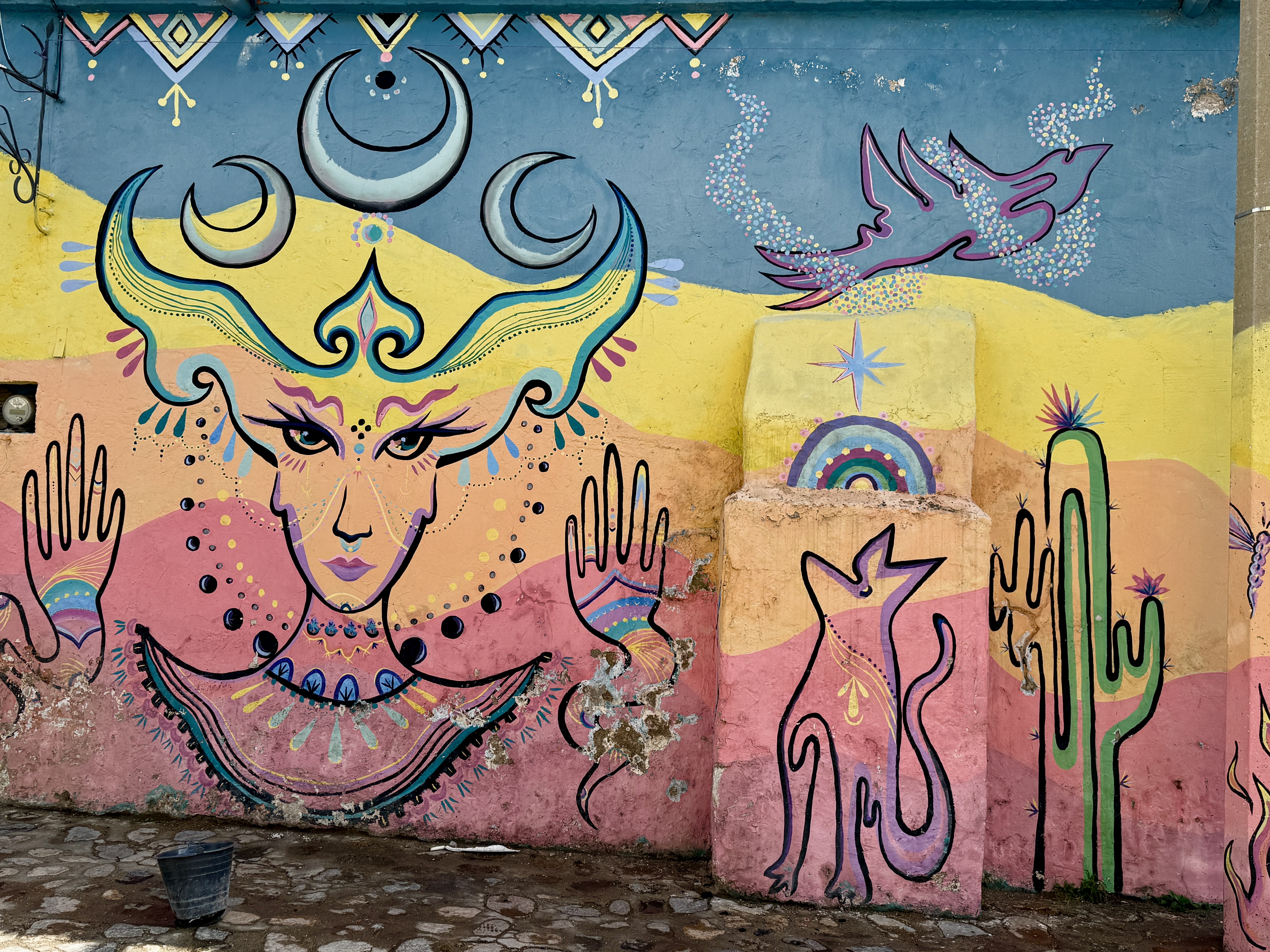
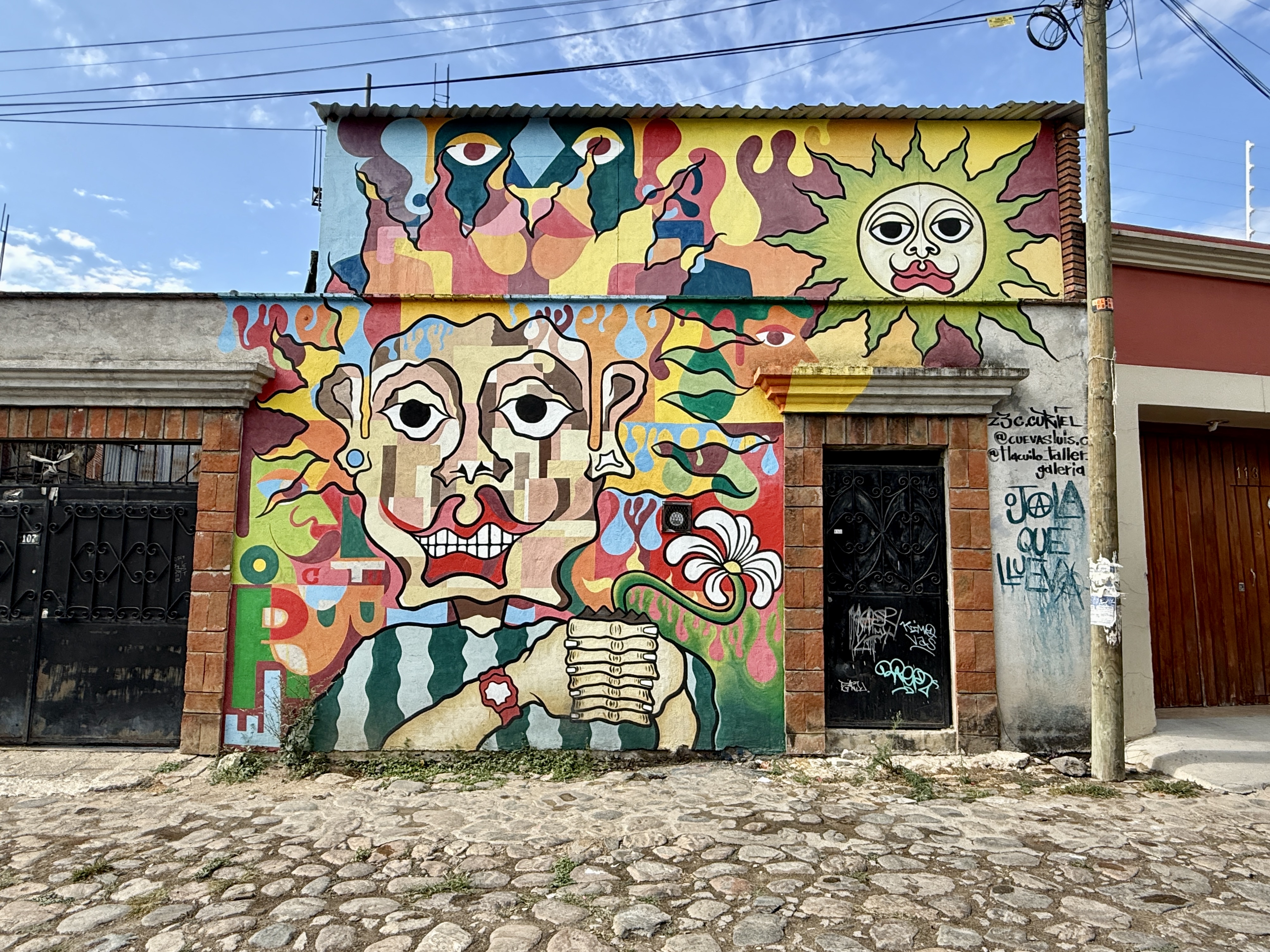
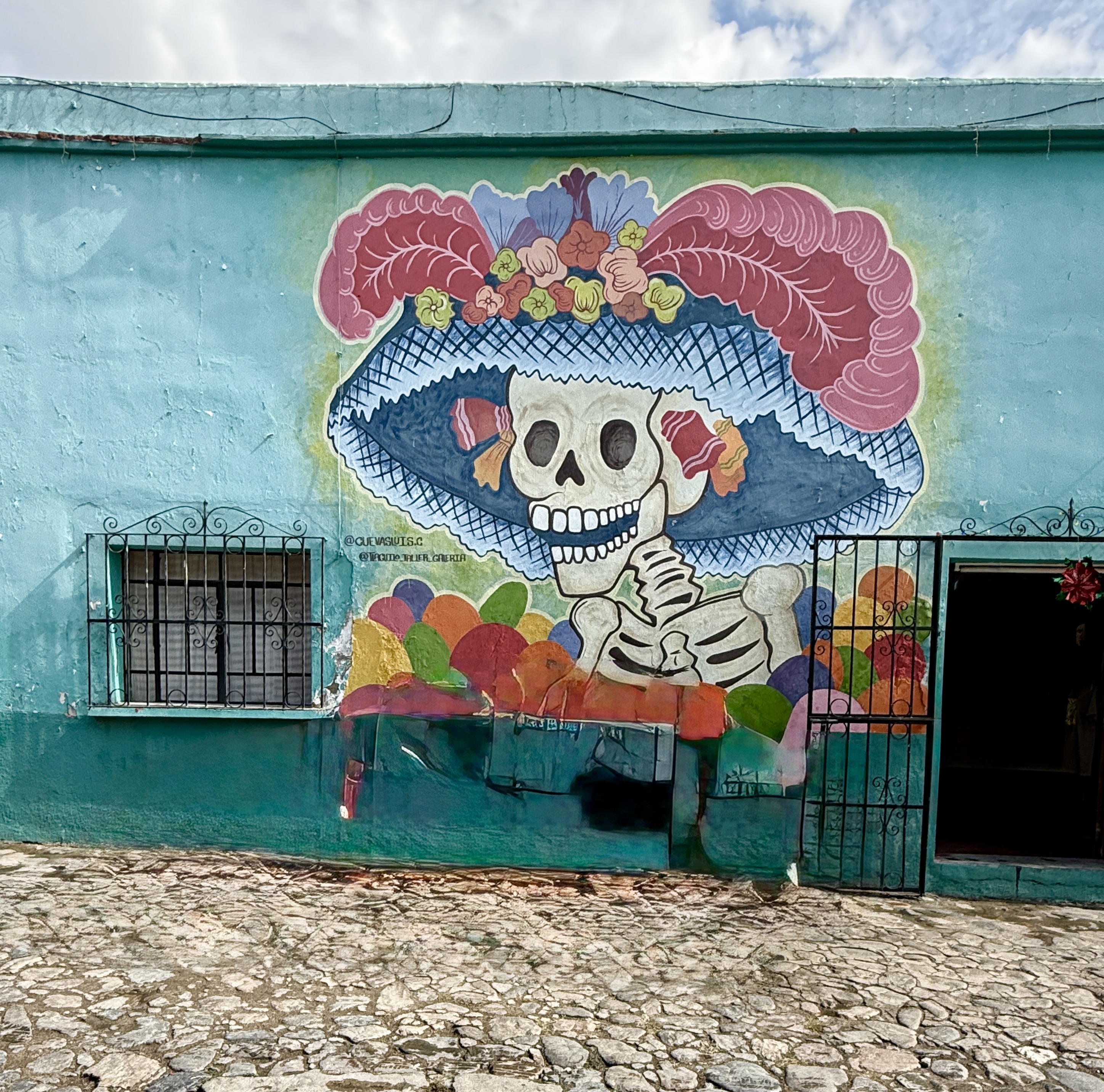


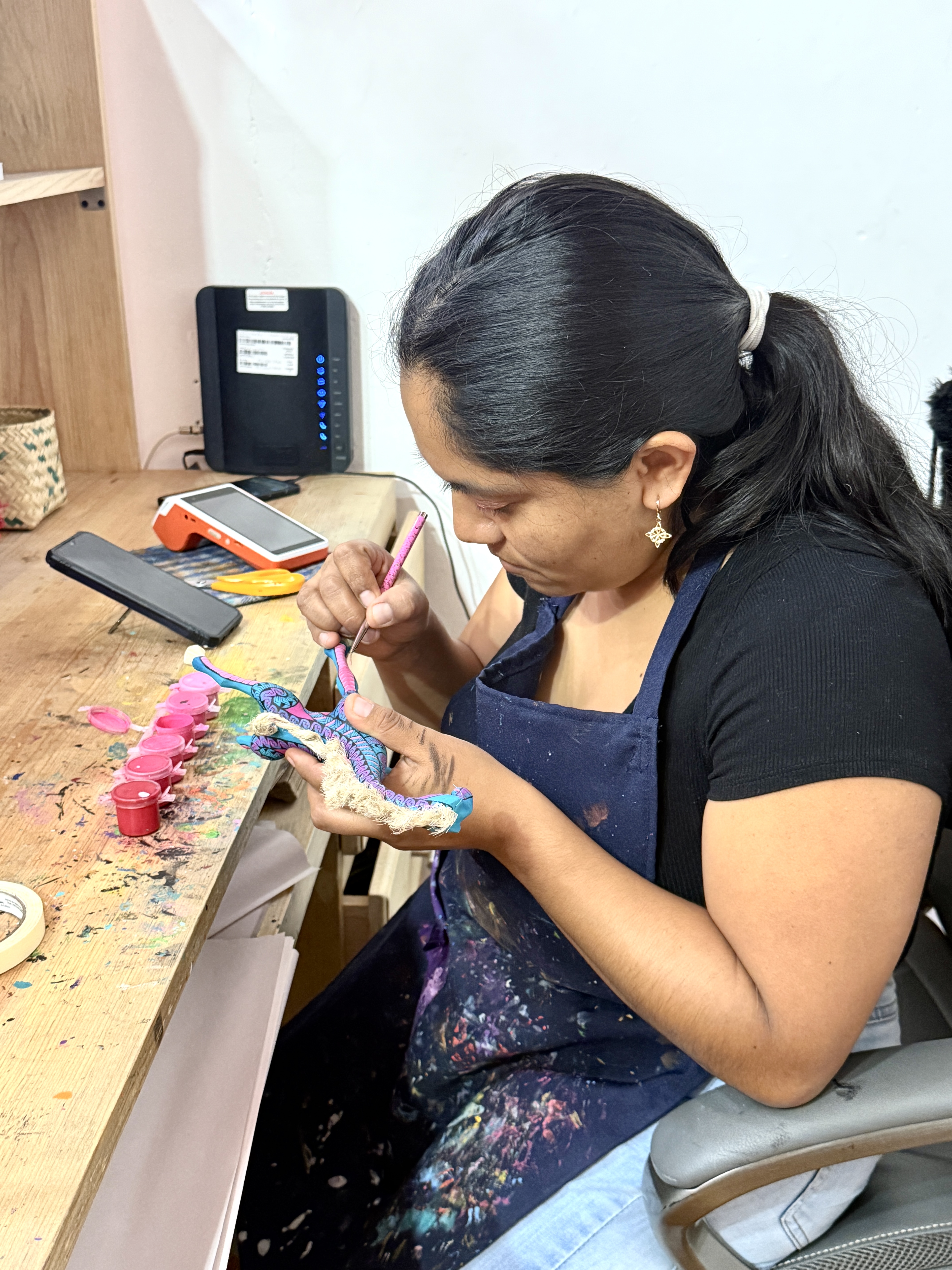
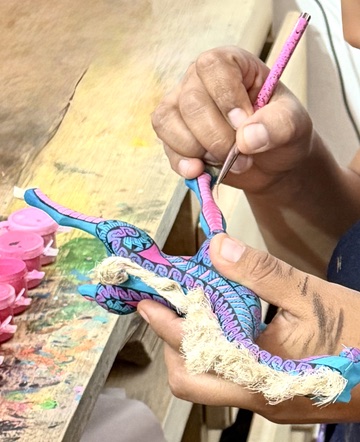
As we walked, I stopped into several shops (hadn’t bought anything yet, except the scarf). Many shops have the same items and the market also has those craft items. Anyway, in this little shop (about 100 sq ft) the woman was actually painting the details on one of the “alebrijes.” We’ve bought a few of these when traveling in other parts of Mexico, but I believe the story is that this folk art was begun in Mexico City in the 1930s and adopted by Oaxacan artists who carve them out of copal wood and then handpaint all the amazing detail. I spoke to the woman and found out that her brother-in-law does the carving–a craft he lerned from his father and grandfather. She does the painting of these animals that are only sold in this little shop (I’m sure this story repeats itself in many other little shops). She was painting a giraffe or maybe a dragon which she said would take her about 15 hours; other alebrije take even longer. We decided to buy three small birds that can hang in our house.
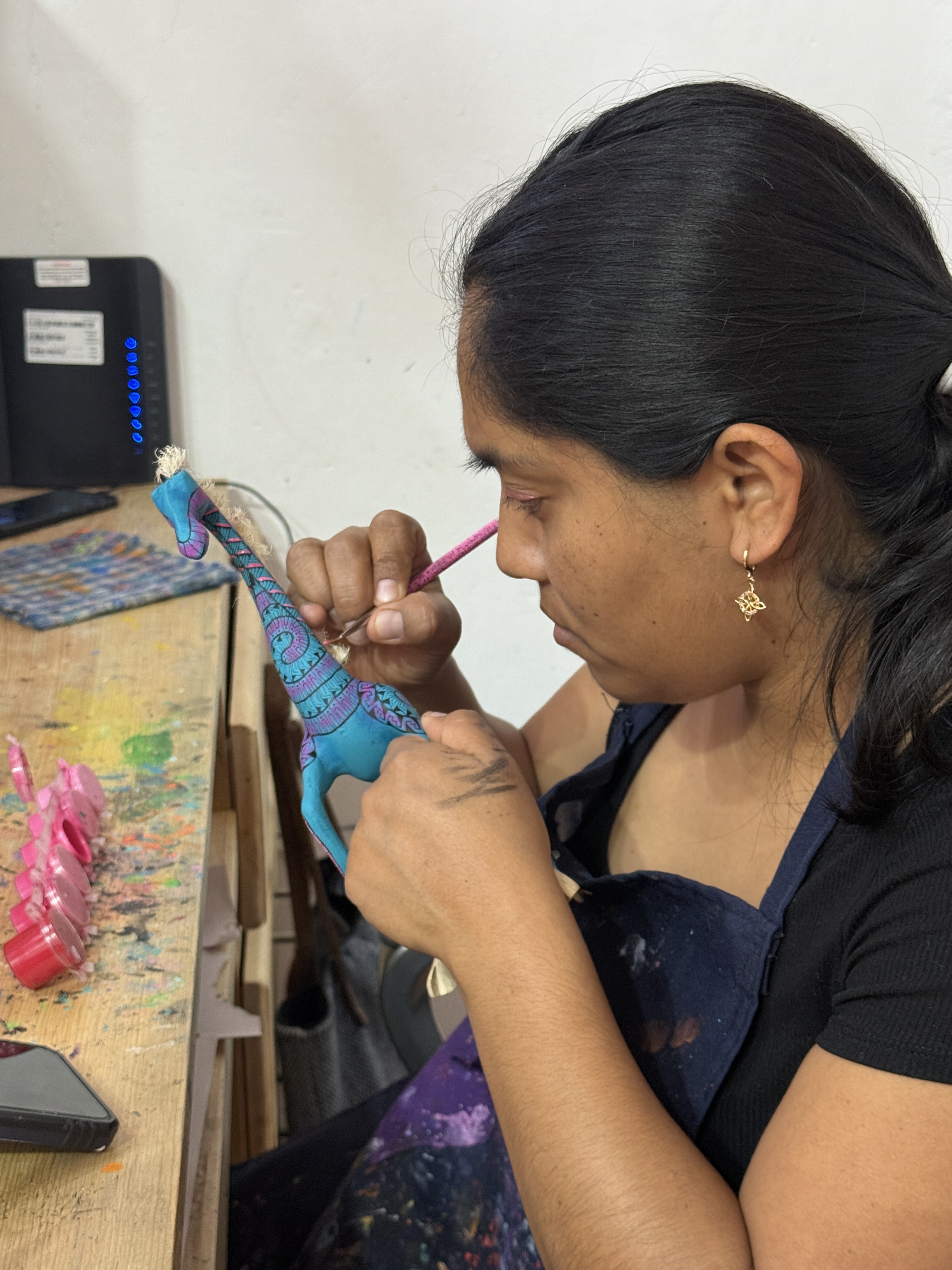
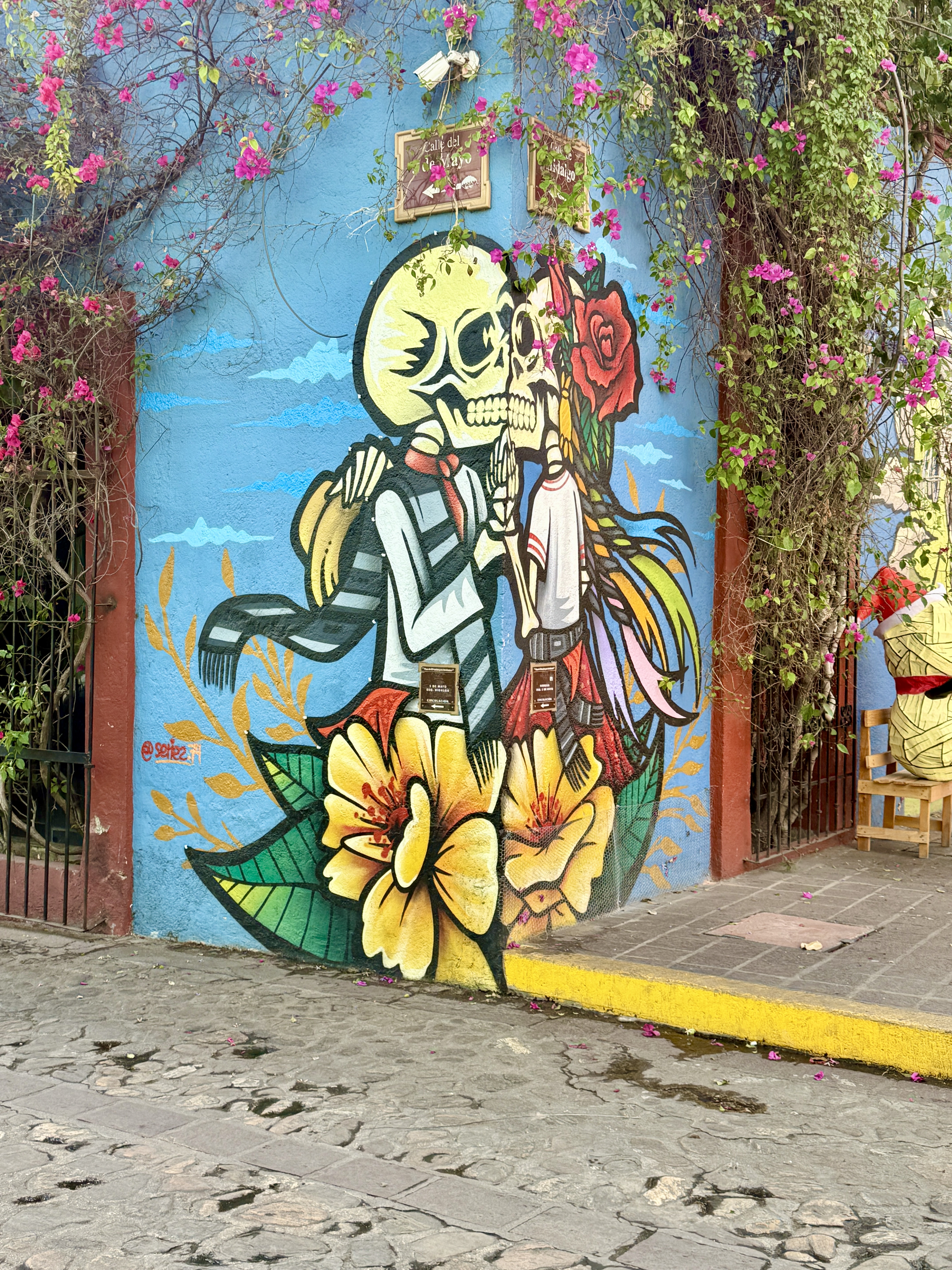
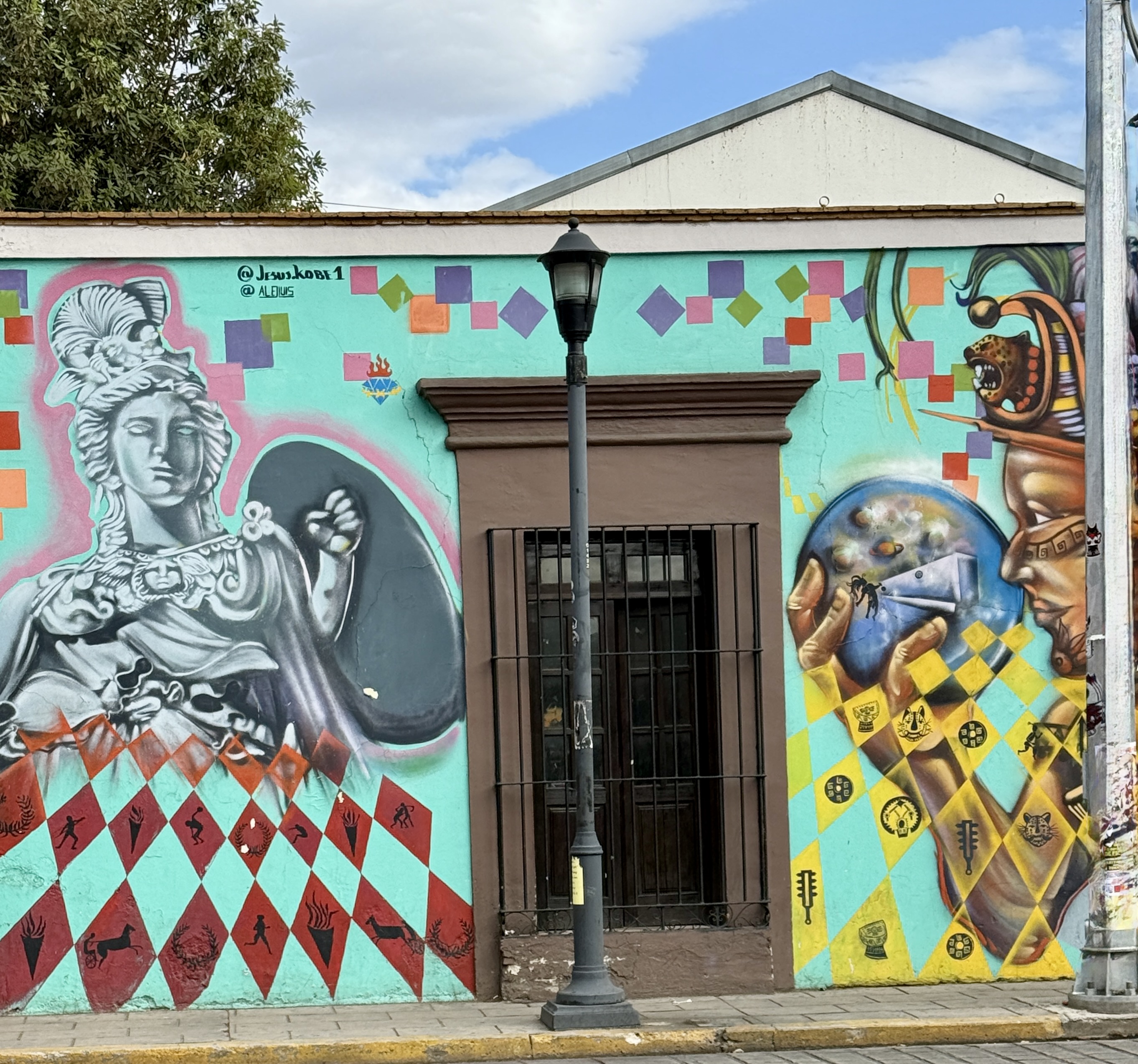
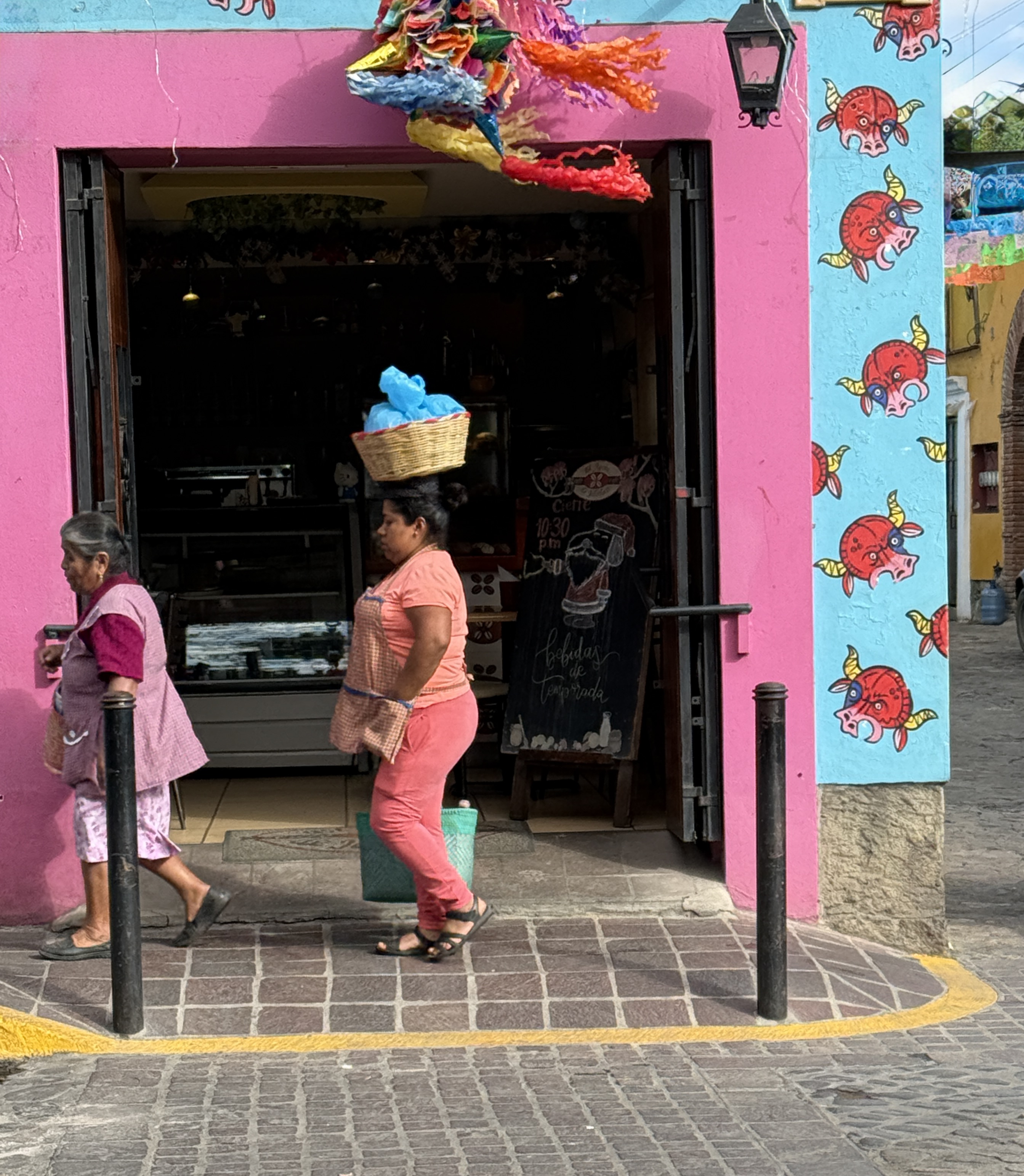
And just a few more images… can’t control myself.
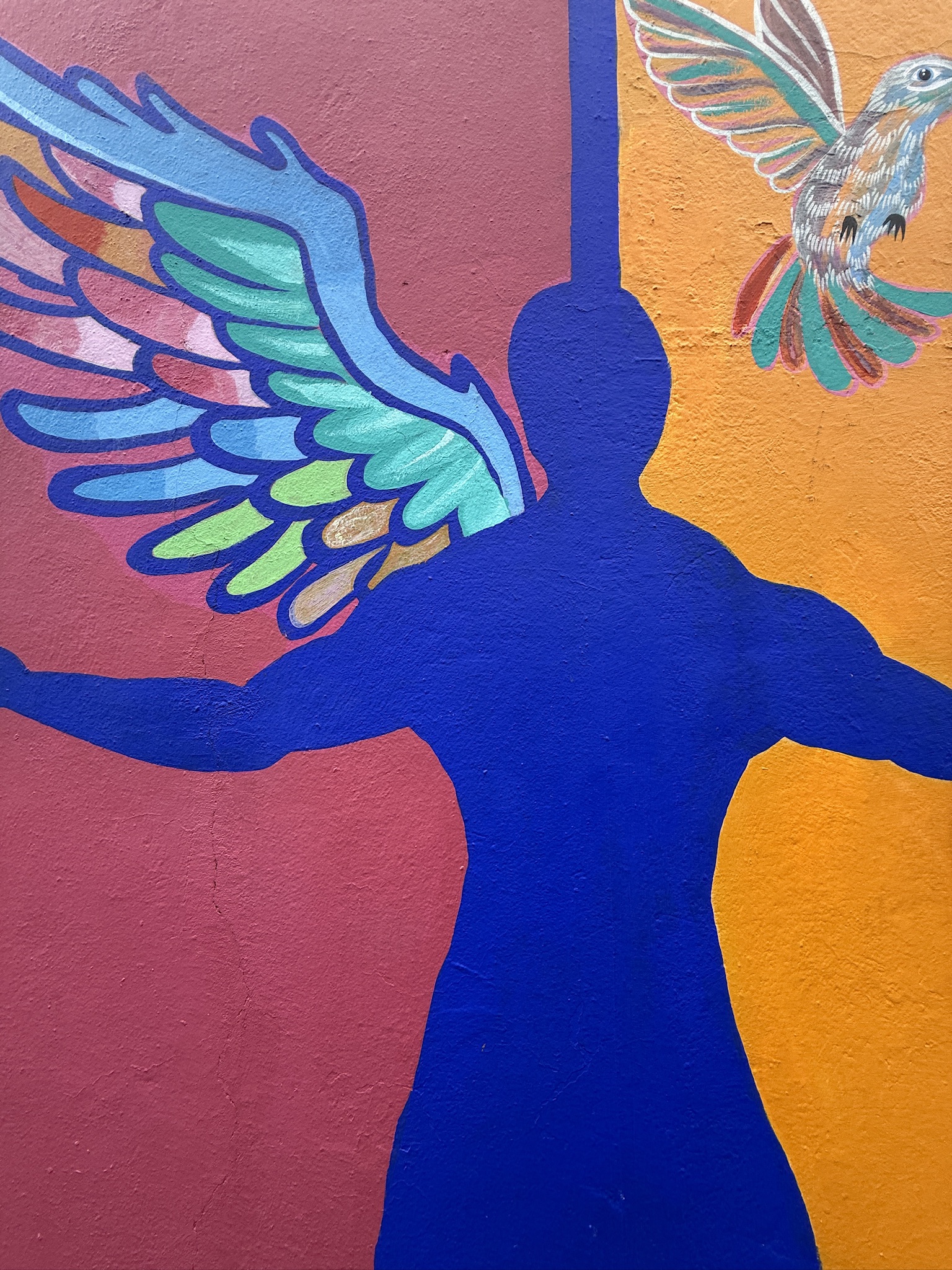
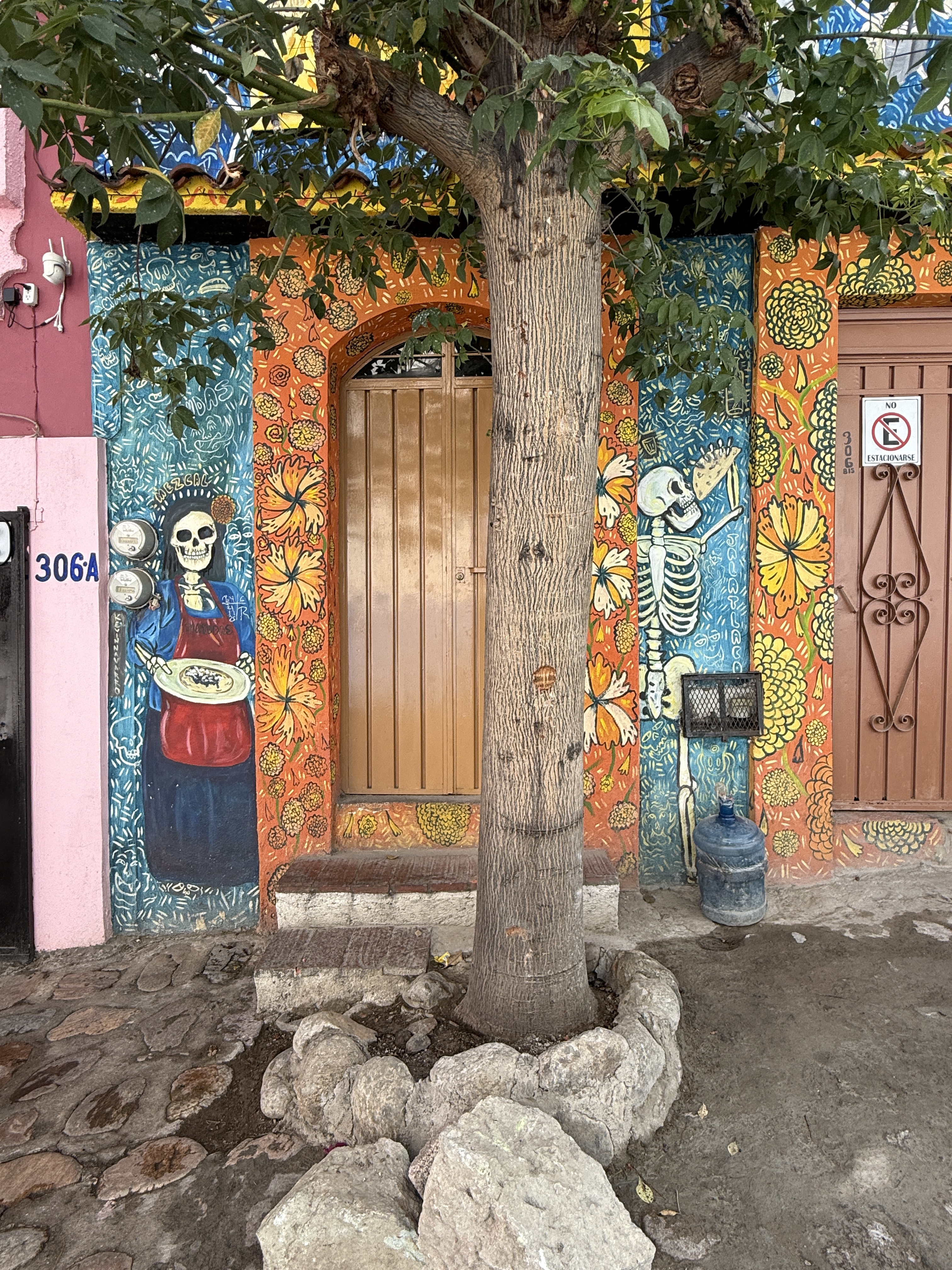
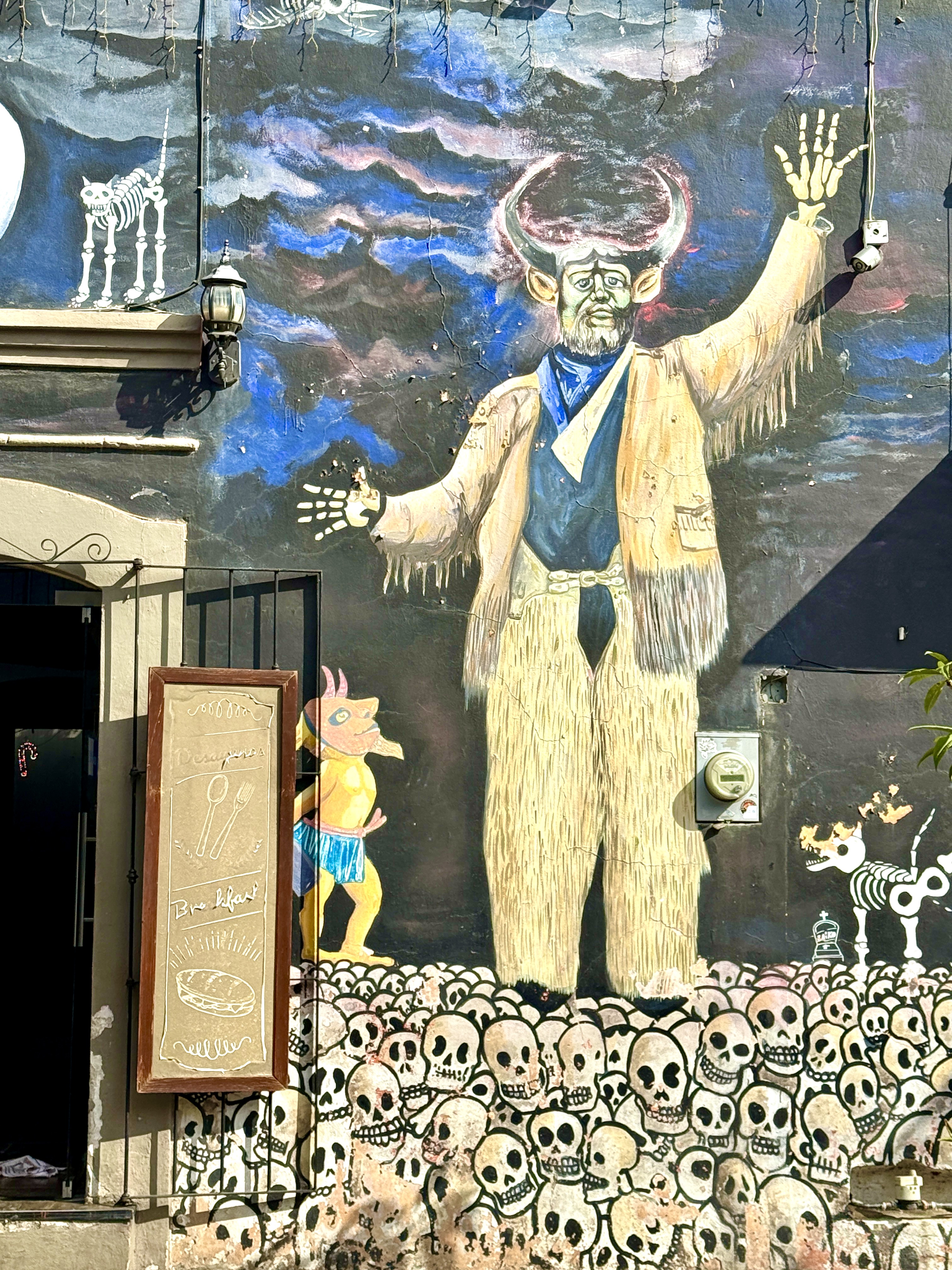
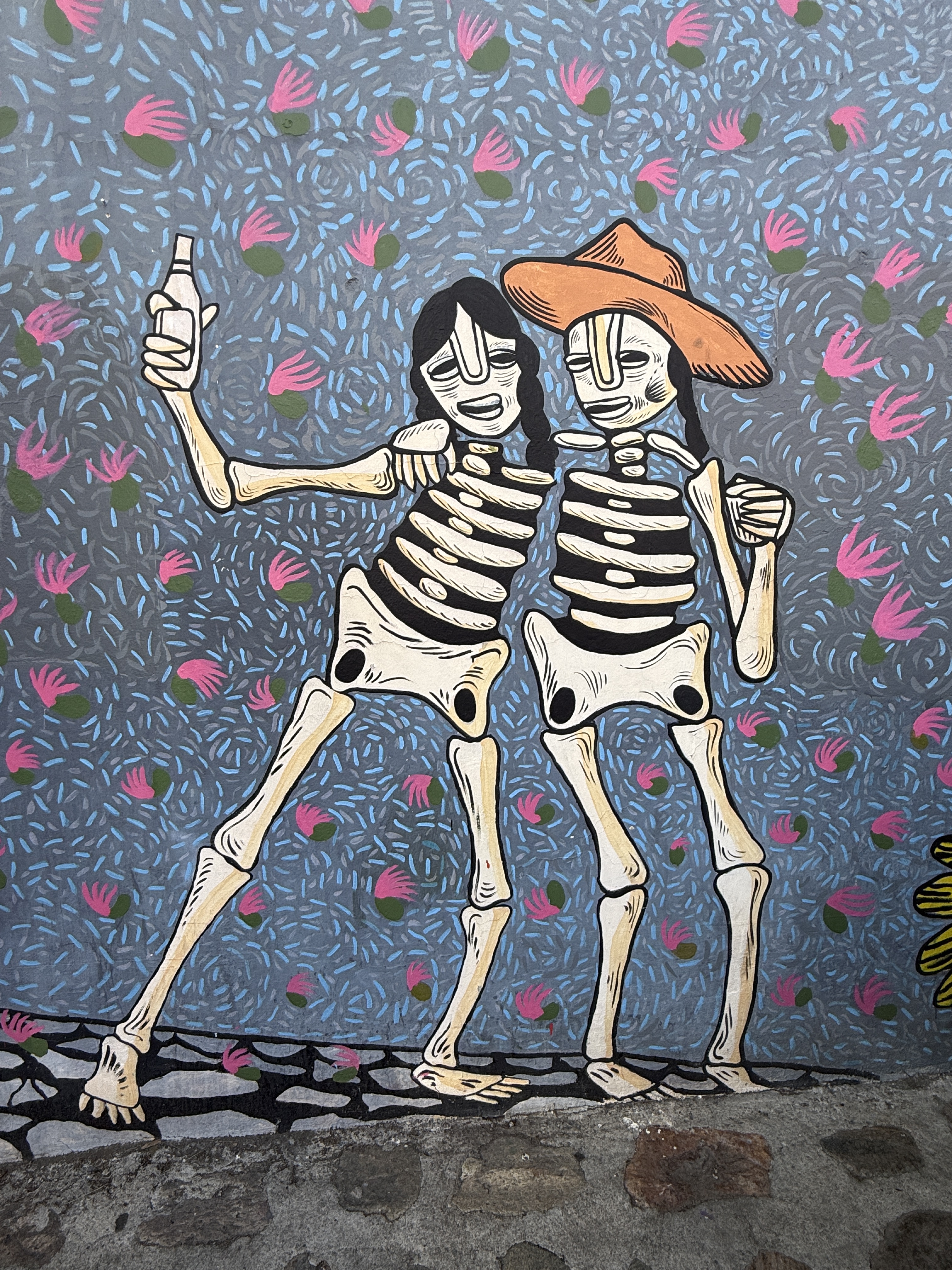
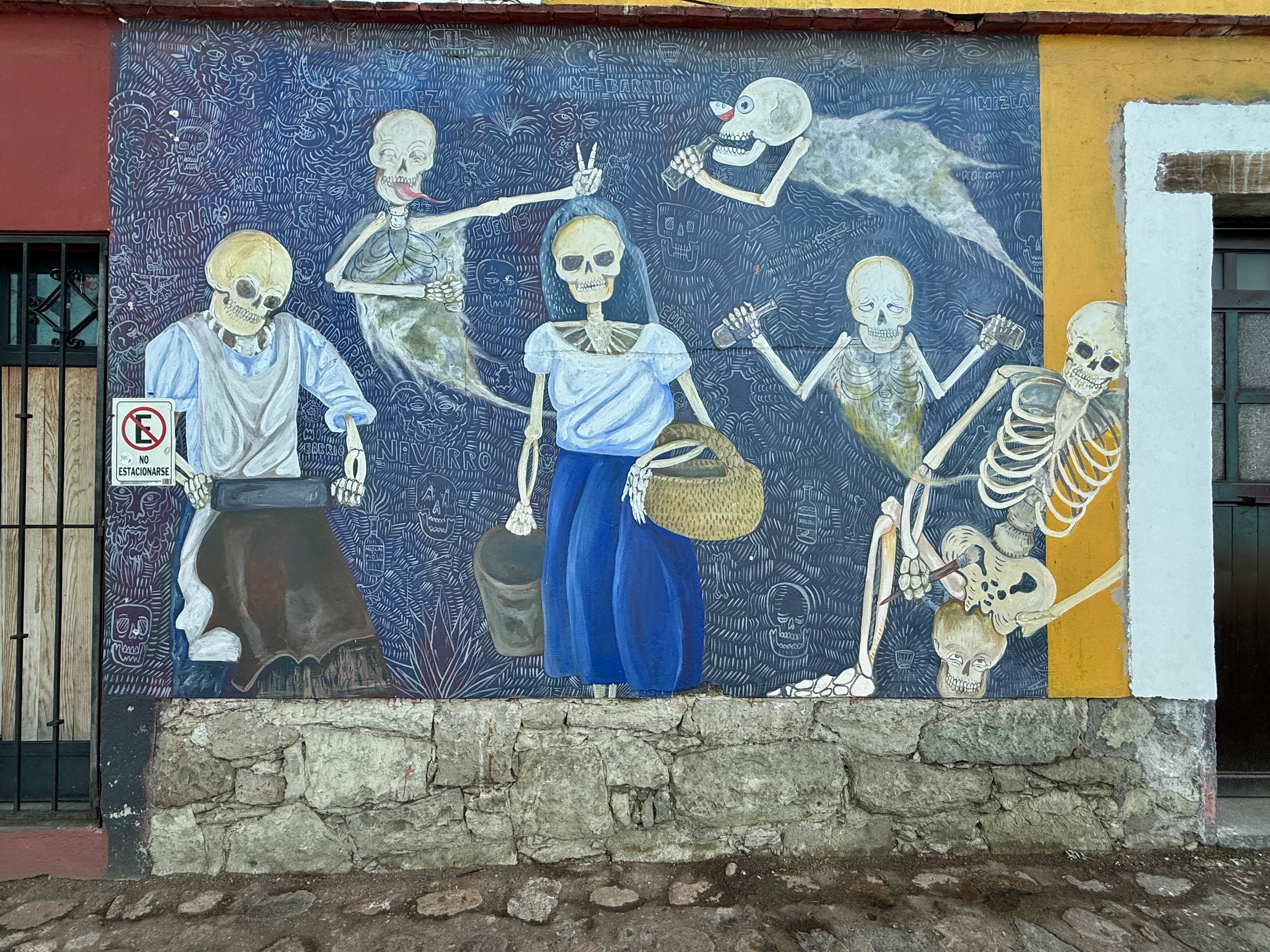

We then tried to find the street that supposedly has mostly political murals; we found the street but there weren’t any political murals. Might need to do some more research and try again when we return to Oaxaca next week.
We then made a pitstop at the hotel; had the snacks they were offering (very nice goat cheese spread on a thin piece of homemade bread topped with very thinly sliced apple and topped with a walnut– quite yummy). Then I made an effort to start packing, which I’ll have to finish tonight, so that we will be ready for the drive to Puebla tomorrow morning. We’ve hired a driver (no tour, just driving) to make the 5-hour drive to Puebla. Then as we leave Puebla we will rent a car and self-drive to Tehuacan and back to Oaxaca.
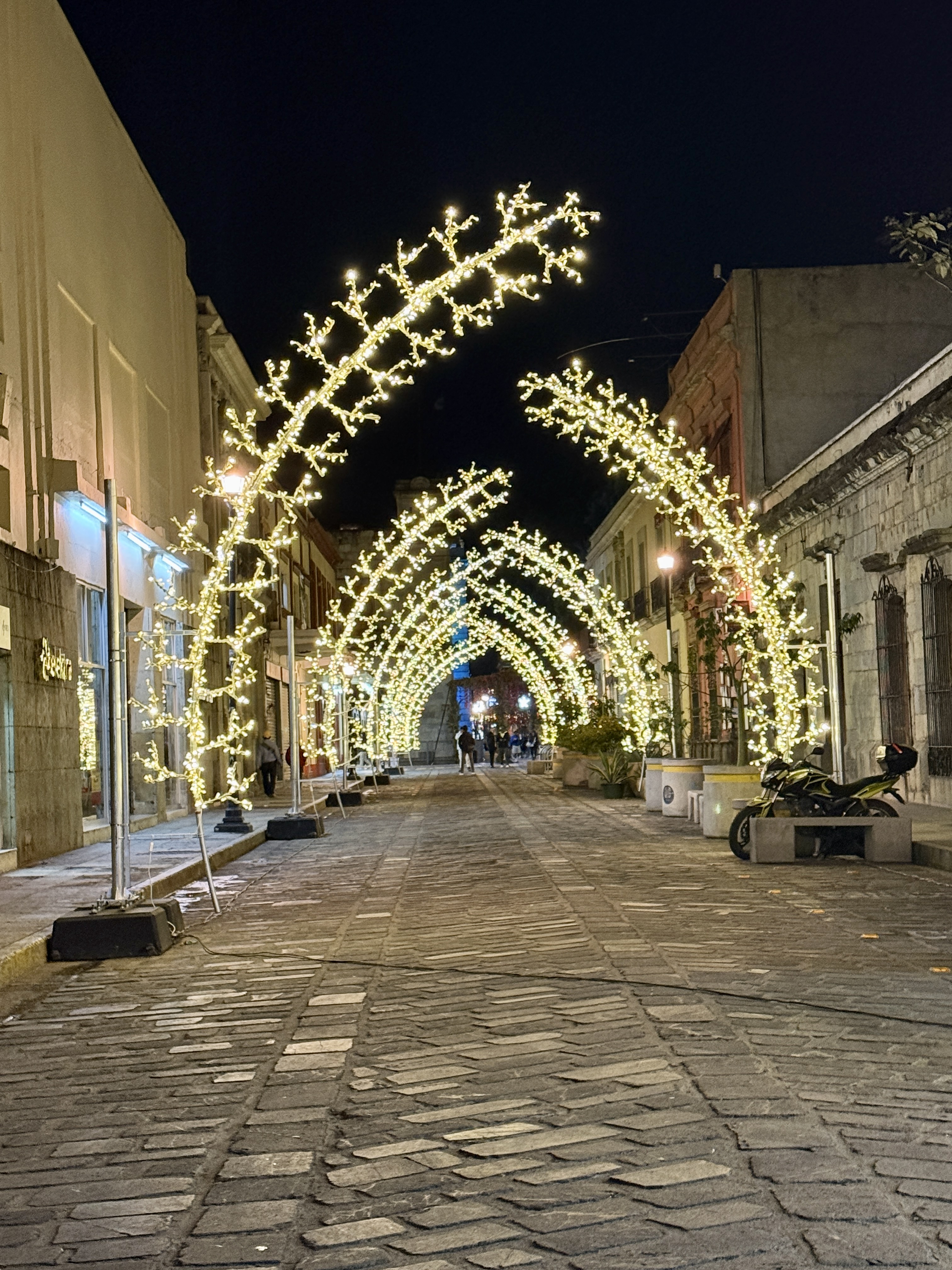
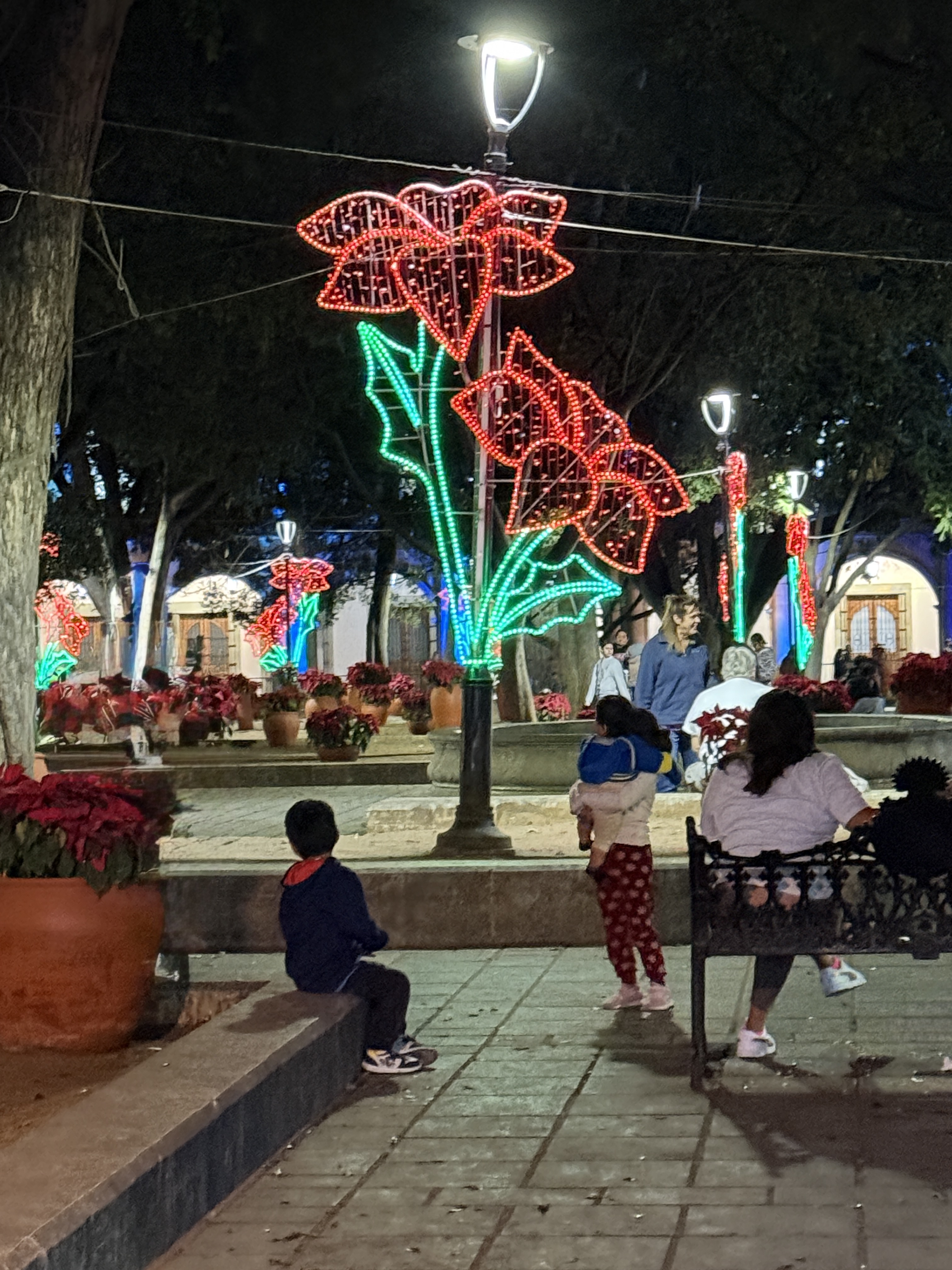
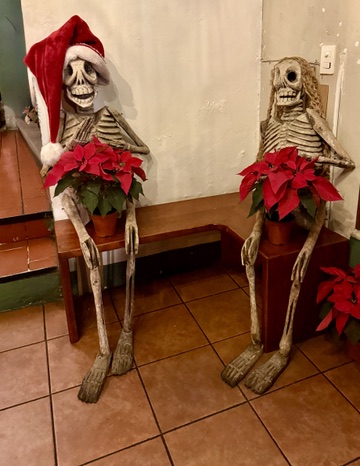
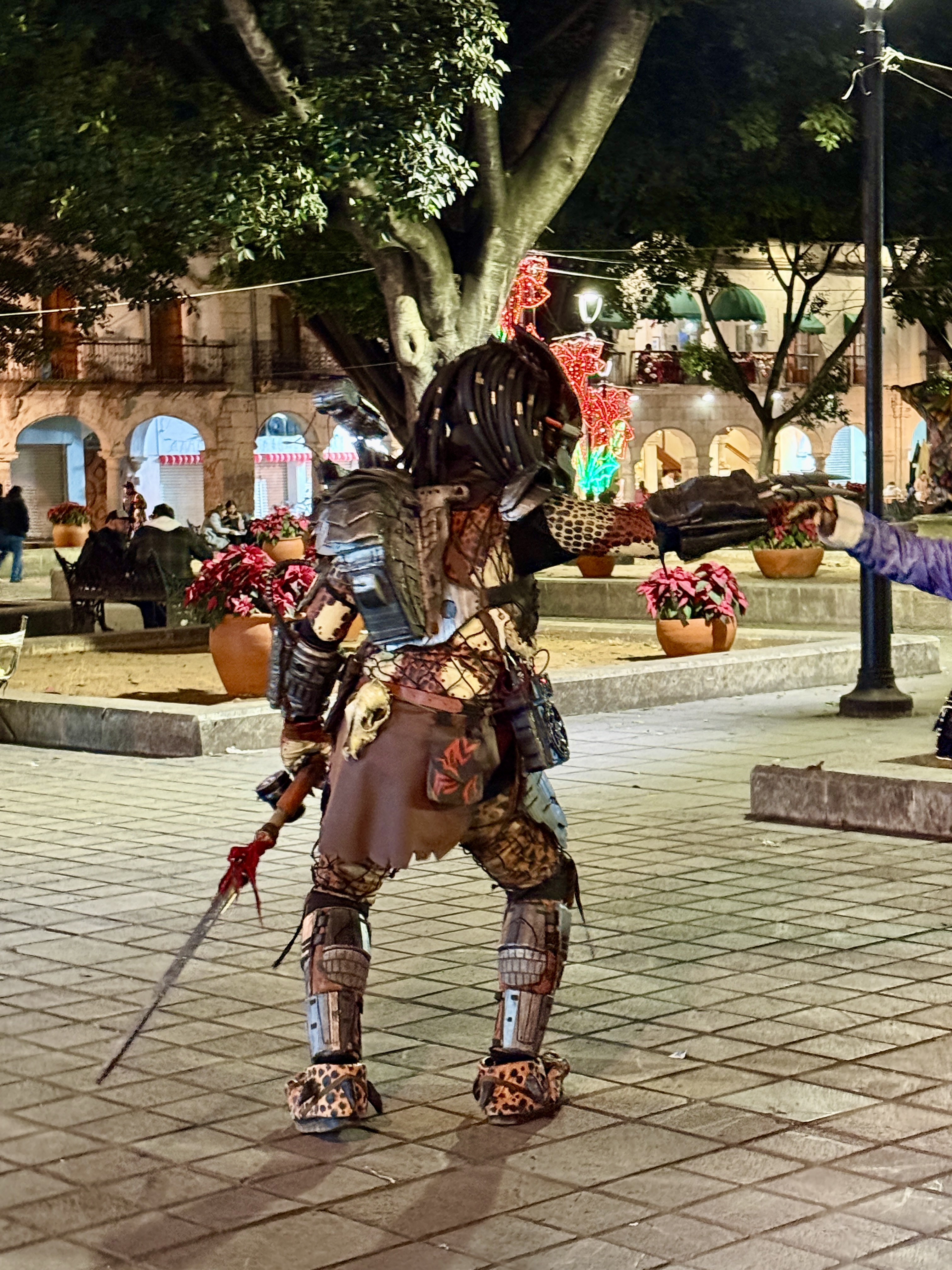
As we walked across the Zocalo once again, it was packed with all sorts of bands, families, pop-up eateries and shops and ambitious sellers offering watches and clothing and hats and food. And the guy from yesterday who was teaching the men to dance was also there again with a new batch of folks volunteering or being cajoled to join in. Tonight they were all Mexicans!
We strolled to Brio, where we ate on the upper level terrace. It was in the mid 50s at best, so we ate with coats and had two heaters going —that worked intermittently. Brio was a last minute decision as we tried to get into a few other restaurants that were booked. We had only re-booked Xmas Eve, Xmas Night, and New Years. But Brio was actually quite good and now we are booked for all the nights next week when we return to Oaxaca.
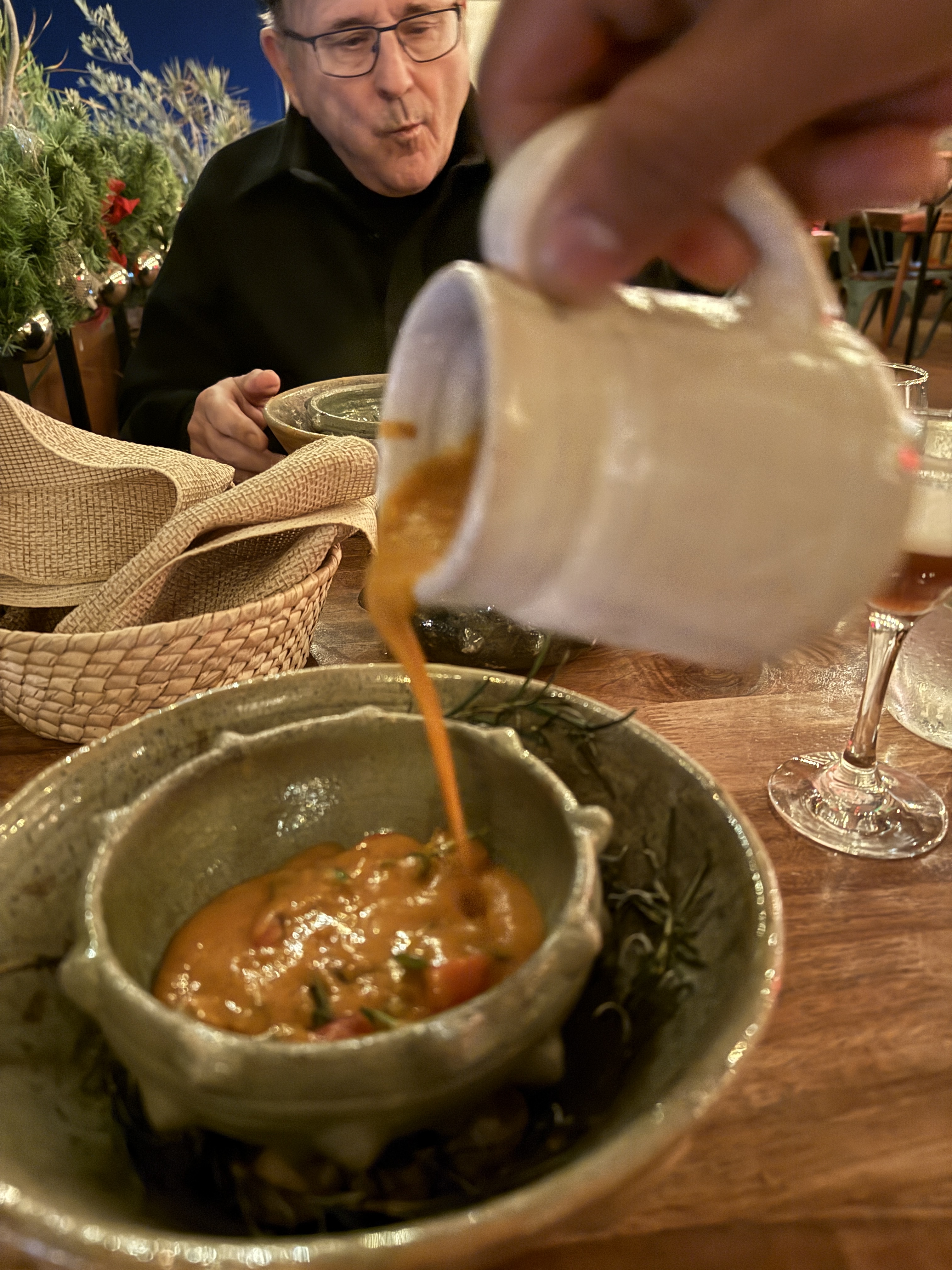
We started with Brio’s version of a Oaxacan Margarita (with mezcal of course). It was sweeter than a typical margarita and also served more like a martini. It had a foam and some local herbs. We ordered the roasted tomato cream soup which was fantastic and then shared the short ribs which were in a black mole and cooked with some vegetables. It, too was very good. And we ended with cheesecake served with a caramel mousse on the side. Brio was a good choice.


We strolled back through the Zocalo at about 11:00pm and families were still out there–kids running around, bands playing. It was full of life. Imagine a city in the US
Ending now to finish the packing and get ready for an early start tomorrow. More from Puebla. Buenss Noches!
Fern
 Fern's Travel Notes